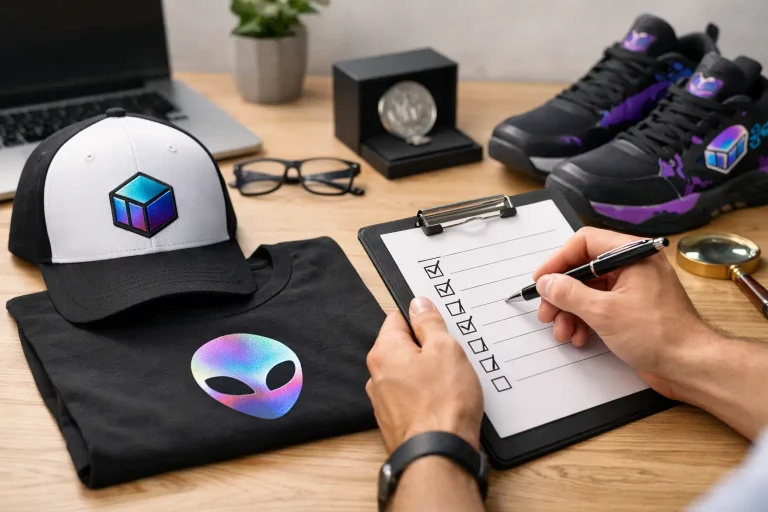
Is Official NFT Merch Worth Buying? A Real Test
The screenshot lives on your wallet profile. The hoodie lives in the room. That difference is exactly why people ask, is official NFT merch worth buying when a thousand unofficial tees can copy the same visual for less? For collectors and Web3 natives, the answer is not just about fabric. It is about whether the piece carries real cultural weight once it leaves the timeline.
Official merch can turn an online affiliation into an offline signal. Done well, it gives a digital community a uniform, gives art another canvas, and gives fans a way to represent without explaining their entire wallet history to strangers. Done badly, it is an expensive logo printed on a blank that never earns a second wear.
The real test is simple: does the item feel like a genuine extension of the project, artist, or community you back?
What makes official NFT merch different?
“Official” should mean more than a familiar character or a blue-chip name in the product title. It means the artwork, branding, and use of the project identity are authorized by the people who own or manage it. That authorization matters because it connects your purchase to the culture you are representing instead of to a random seller farming attention around it.
In NFT culture, provenance is the point. Collectors care about who made an asset, where it came from, and why it matters. Physical merch should follow the same logic. An authorized collection, an artist-approved graphic, or a collaboration built with a recognized Web3 brand has a story behind it. A copied design does not.
That does not mean every official item is automatically rare, valuable, or perfect. It means it has a legitimate place in the project’s world. Think of it less as a promise of resale profits and more as proof that the brand chose to put its name on the piece.
Is official NFT merch worth buying for collectors?
It can be, but only if you buy it for the right kind of value. A hoodie is not an NFT, and buying one does not automatically grant token ownership, commercial rights, access, or a future payout. Unless a drop clearly says otherwise, treat it as physical apparel or an accessory first.
The value comes from a mix of design, context, and personal connection. If you held through the loud months, joined the Discord before it was polished, or simply respect the artist’s visual language, an official piece can become a tangible timestamp of that era. It is culture you can actually use.
For some buyers, a limited collaboration has collector appeal because quantities, timing, or artist involvement create a real sense of scarcity. For others, on-demand production is the better fit. You can buy the design you genuinely want without a forced rush, excessive inventory, or a closet full of pieces purchased only because a countdown clock said so.
The trade-off is clear. On-demand merch may not have the hard supply cap of a numbered collectible. In return, it is often more accessible, less wasteful, and easier to buy in the size and format you will actually wear. Scarcity matters, but so does whether the piece gets worn beyond one launch-week post.
The four checks before you buy a drop
Streetwear logic applies here. Do not let a project logo do all the work. Before you check out, look at the piece with the same standards you would use for any wardrobe purchase.
- Authenticity: Is the merch clearly tied to the artist, NFT brand, or approved collaboration? Official channels, consistent branding, and transparent product information are stronger signals than vague claims.
- Design: Would you wear it if nobody asked about your wallet? Great merch translates the project’s identity into a graphic, cut, color story, or detail that stands on its own.
- Product fit: Check the garment type, sizing guidance, material details, and print placement. A heavyweight hoodie, relaxed tee, cap, poster, or bag serves a different role in your rotation.
- Purchase terms: Review pricing, production timing, shipping expectations, and return policies before the excitement takes over. Global community does not mean every delivery experience is identical.
These checks protect you from the most common regret: buying a logo, then realizing you do not like the item underneath it.
Quality is part of the signal
Web3 has moved beyond the era when a pixelated avatar slapped on a shirt was enough. Communities have taste. They notice color, silhouette, print quality, packaging, and whether the creative direction feels native to the project instead of borrowed from generic crypto merch.
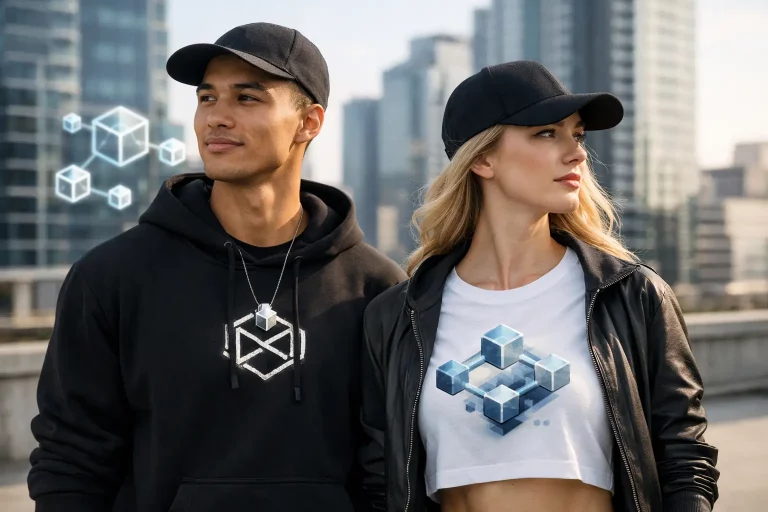
A strong official release respects that. It might use a quieter mark that only holders recognize, a bold character graphic built for a back print, or an artist-led design that feels closer to a gallery edition than promotional swag. The best pieces do not beg for attention. They create a double take from people who get it.
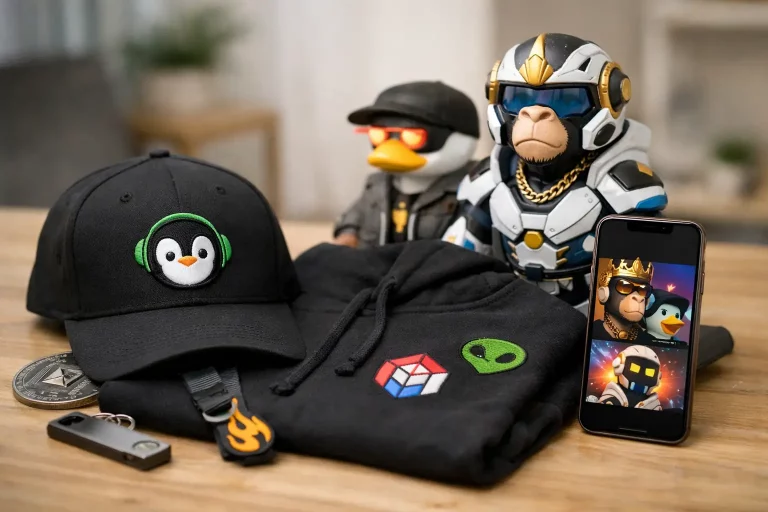
Quality also has a practical side. A design that cracks after a few washes, a shirt that fits unpredictably, or a low-resolution print can make even an authorized item feel disposable. That is why it pays to read product details rather than judging from a mockup alone. Buy with your actual lifestyle in mind. If you live in hoodies, choose the hoodie. If your style is cleaner, a cap, patch, or tote may carry the reference with more impact.
Community signal without the cringe
The appeal of NFT merch is not limited to flexing. It can be a low-key handshake. At an event, a coffee shop, or on a late-night group call, a recognizable graphic can start a conversation faster than an ENS name ever could.
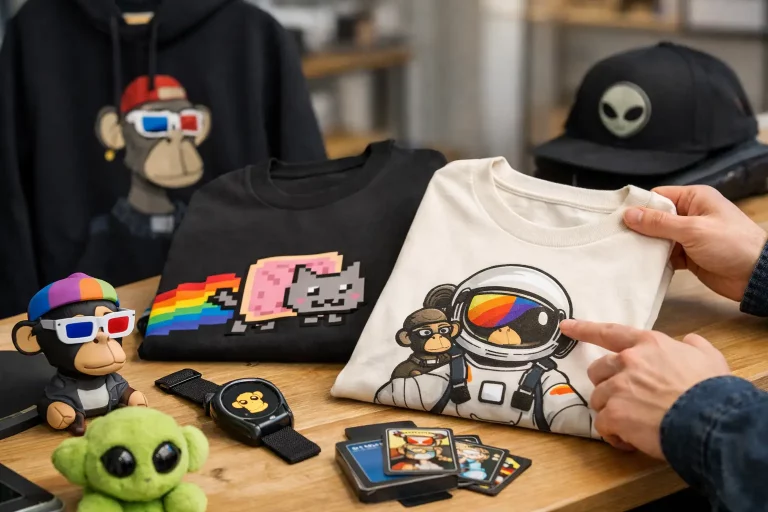
But context matters. Some projects have visuals that translate naturally into fashion. Others work better as desk accessories, wall art, mugs, stickers, towels, or limited-use collectibles. The smartest buy is not always the loudest one. It is the object that fits how you move through the world while still carrying the community code.
This is where curated stores matter. NFT Merch brings recognized NFT brands and Web3 artists into a physical format designed for real life, from streetwear staples to accessories and home pieces. That creates a better alternative to generic crypto apparel: designs rooted in actual digital communities, produced when they are ordered rather than mass-stocked for landfill risk.
When official merch is not worth it
Skip the drop if the only reason you want it is fear of missing out. A timer can make anything look historic for fifteen minutes. If the design feels rushed, the product details are unclear, or the price pushes past what the item is worth to you as an item, walking away is the better collector move.
Also pass if you are treating a shirt like a guaranteed investment. A small run can create demand, but physical merch is not a magic path to resale value. Fashion trends change, communities evolve, and condition matters. Buy a collectible piece because you want to own it, display it, or wear it, not because you need someone else to validate the purchase later.
There is no shame in choosing unofficial fan art when it is clearly presented as fan art and you simply like the design. But if your goal is to support the project, represent an artist accurately, or own a piece with real connection to the brand, official is the cleaner choice.
Buy the piece you will keep reaching for
The strongest NFT merch does not ask you to choose between digital culture and personal style. It lets you carry both. Pick the drop that feels true to the project, works with your wardrobe, and still hits after the mint hype has cooled. That is when a physical piece stops being merch and starts becoming part of the legacy you chose to wear.