NFT Accessories That Actually Mean Something
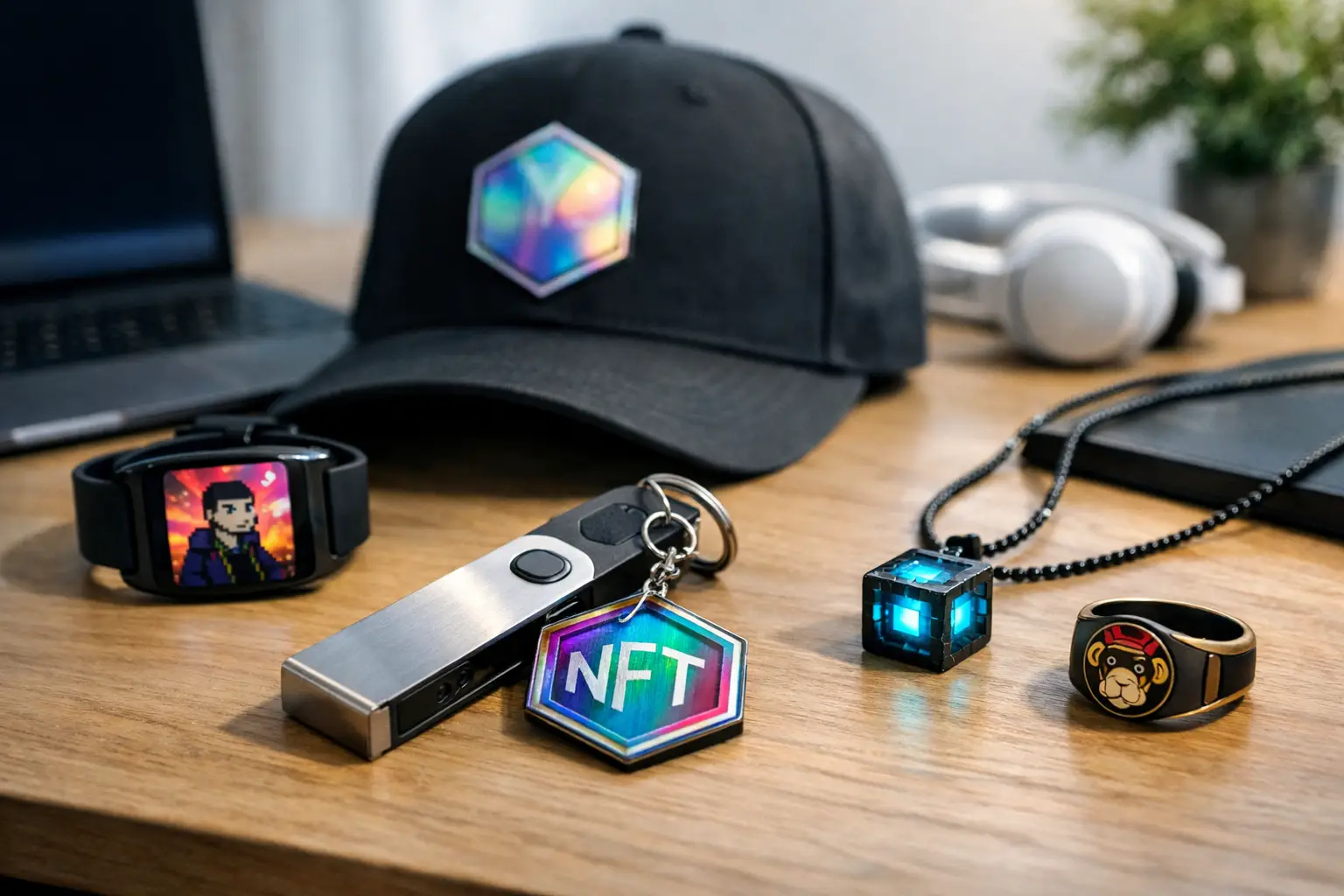
The gap between your wallet and your wardrobe is gone. NFT accessories are no longer random add-ons with a logo slapped on top – they are the physical layer of digital identity, the pieces that let holders, collectors, and community members wear what they actually stand behind.
That shift matters because Web3 culture has moved past novelty. People do not just want proof they bought into a project. They want pieces that feel legitimate in the real world, hold up in daily use, and still carry the signal of the community behind them. A good accessory does all three. A bad one looks like merch. A great one looks like belonging.
What makes NFT accessories different
The best NFT accessories are not trying to imitate generic crypto merch. They come from a different idea entirely. In Web3, identity is already public, portable, and tied to ownership. Physical accessories extend that identity offline, where a cap, bag, patch, or mug can say more about your taste and affiliations than a profile picture ever could on its own.
That is why design matters so much here. If an accessory only works because the buyer already knows the project, it has limited reach. If it works as an object first and a community marker second, it has staying power. The strongest pieces land in that sweet spot. They feel clean enough for streetwear, specific enough for insiders, and collectible enough to matter after the drop is over.
There is also a trust factor. Official merch tied to recognized NFT brands and artists carries weight because it reflects the source culture. Unofficial products might copy an image, but they miss the context, the collaboration, and the permission that makes ownership culture feel real. In a space built around provenance, that difference is not small.
The NFT accessories people actually use
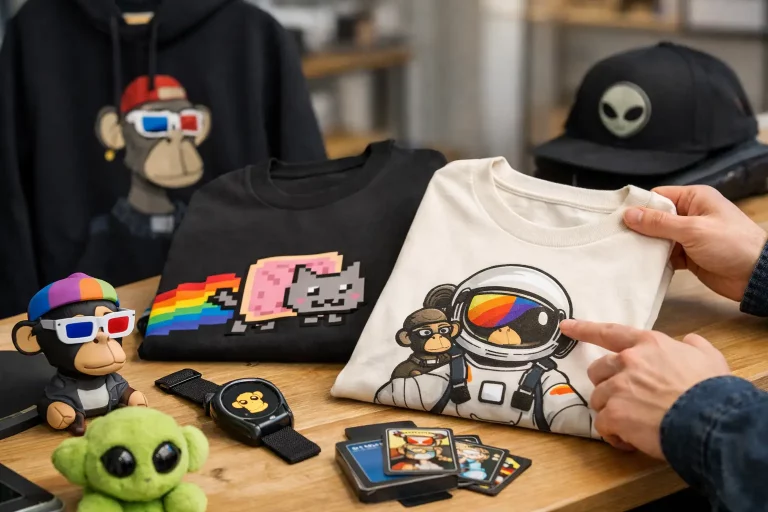
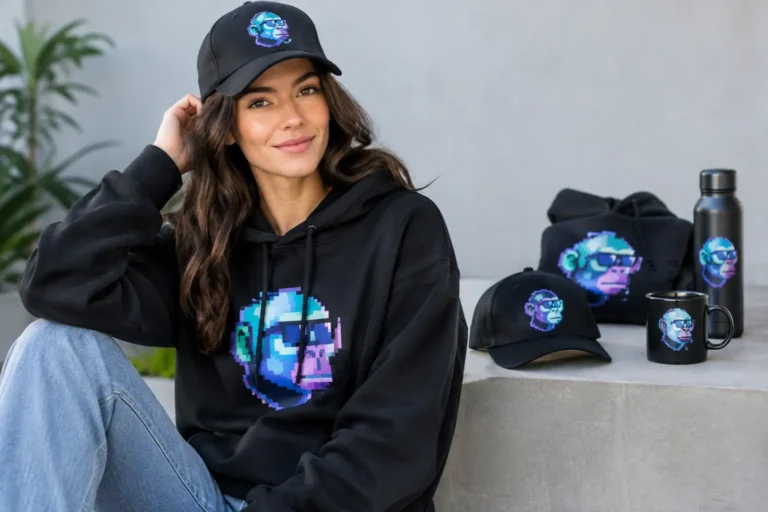
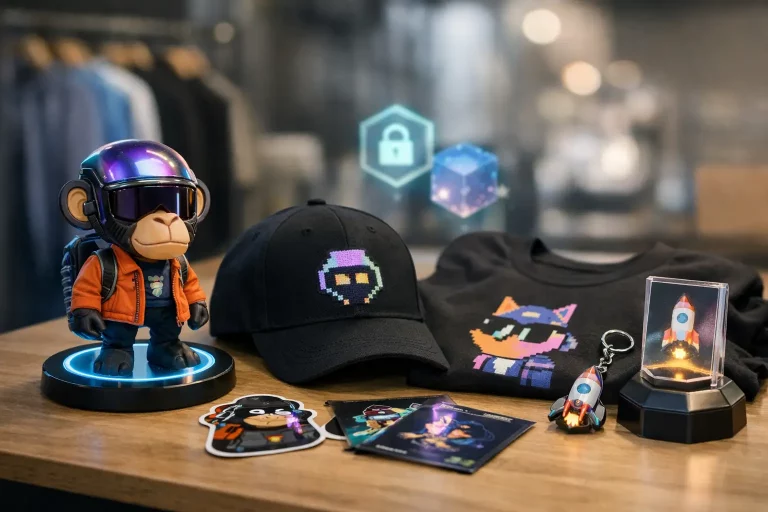
Some categories hit because they fit naturally into everyday life. Caps work because they are low effort and high visibility. Bags land because they mix function with statement. Patches and stickers have a DIY energy that still feels native to internet culture. Mugs, posters, and small desk pieces play well with creator setups, gaming spaces, and home offices where digital life already spills into the physical.
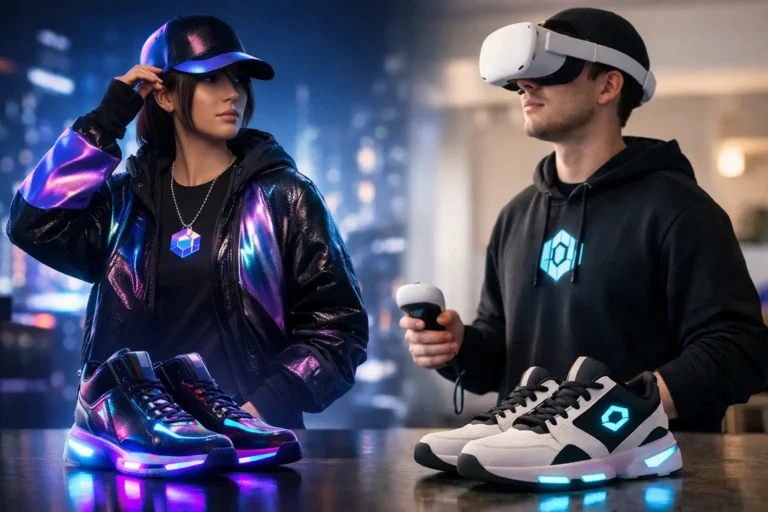
Then there are the more fashion-led items. Shoes, towels, and more niche lifestyle accessories can work, but only if the design is strong enough to justify the category. Not every NFT brand should be on every product. That is where a lot of collections lose momentum. Expansion looks exciting, but too much product without a clear point of view makes the whole thing feel diluted.
What tends to perform best is a focused range. A few well-made accessories tied to a recognizable visual identity will usually beat a giant catalog of forgettable items. Scarcity helps, but coherence matters more. People remember drops with taste.
Why bags, caps, and patches keep winning
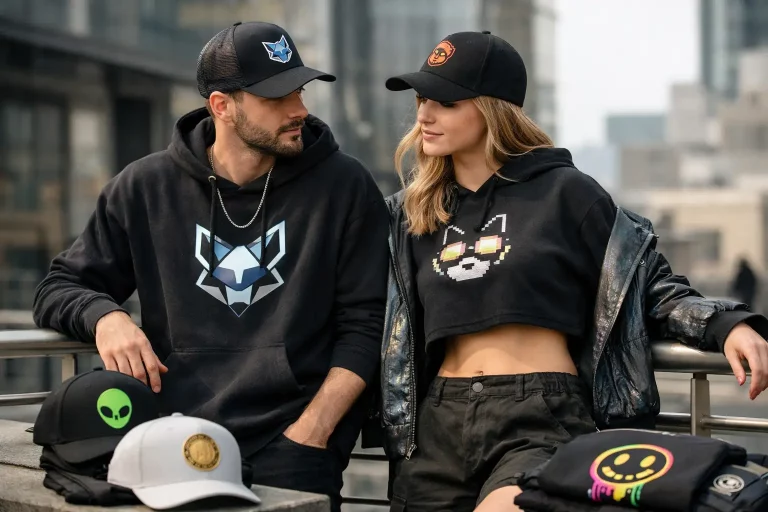
These categories sit right at the intersection of utility and status. A cap is easy to wear, easy to style, and instantly visible in photos, events, and meetups. A bag gets daily use and carries more design real estate without demanding a full outfit commitment. A patch has collector energy – small, specific, and highly customizable.
They also work across price points. Not everyone wants to commit to a premium hoodie or limited shoe release, but accessories create an easier entry point into the culture. That matters for growing communities. It gives new supporters a way in without lowering the brand.
How to tell if NFT accessories are worth buying
Not every drop deserves your attention. In this category, the difference between collectible and clutter shows up fast.
Start with the source. Is the accessory tied to an established NFT project, artist, or community with a real audience, or is it built around vague crypto aesthetics? There is a big gap between merchandise that represents a known culture and products that just borrow the visual language of Web3. The first has context. The second usually has a short shelf life.
Next, look at the design discipline. Does the accessory stand on its own, or does it rely entirely on the NFT name to carry it? Good accessories can be worn outside the bubble. They should feel intentional, not like leftover campaign art dropped onto blank inventory.
Production matters too. On-demand fulfillment is a smart model for this space because it reduces waste and opens access without forcing bulk runs. But the trade-off is consistency. The brand has to care about materials, print quality, fit, and finishing, or the product loses credibility the second it arrives. In Web3, people talk. Weak quality does not stay quiet.
Finally, ask whether the piece fits your version of the culture. Some buyers want loud affiliation. Others want subtle signals that only other holders will catch. Neither approach is wrong. It depends on whether you are dressing for recognition, collectibility, or everyday wear.
NFT accessories as status, not just merch
Streetwear figured this out years ago. Accessories are often the smartest way to build a brand presence because they move fast, layer into different lifestyles, and create repeat buying behavior. NFT culture adds another dimension – ownership lore.
When an accessory is attached to a respected project, a known artist, or a limited collaboration, it becomes more than a product. It becomes a receipt for participation. It says you were there for the drop, aligned with the aesthetic, and close enough to the culture to care.
That status can be loud or quiet. A graphic tote from a recognizable project makes a public statement. A subtle embroidered cap can work more like a nod between insiders. The point is not always flexing hard. Sometimes it is about carrying the code in a way that feels natural.
This is also why exclusive collaborations hit differently. They compress multiple signals into one item – the NFT brand, the artist, the merch platform, the timing of the release. For the buyer, that creates a stronger story. And story is what gives physical product staying power after the timeline moves on.
Where the category gets it wrong
There is still plenty of noise in the space. Some NFT accessories fail because they chase hype without understanding product. Others over-design everything and forget that wearability matters. A piece can be technically limited and still feel disposable.
Another common mistake is treating all communities the same. A high-energy PFP project, a digital artist brand, and a more experimental Web3 collective do not need identical accessory strategies. Their audiences buy for different reasons. One might want bold graphics and obvious affiliation. Another might prefer understated pieces with art-first credibility. The right product mix depends on the culture you are serving.
Price positioning can get messy too. If an accessory is expensive, buyers expect premium materials, sharp execution, and some real sense of exclusivity. If it is more accessible, that is fine, but the value has to be obvious. Web3 buyers understand scarcity. They also understand when scarcity is being used to hide weak fundamentals.
How to choose NFT accessories that fit your style
The smartest buy is usually the one you will actually use. Start with your daily rotation. If you wear hats constantly, a cap with the right project signal will do more for your style than a poster you never hang. If your setup is part of your identity, desk accessories, mugs, or art pieces may hit harder.
Think about how visible you want your affiliation to be. Some people want pieces that announce the project immediately. Others want accessories that look clean to everyone else but carry meaning for the community. Subtle branding often lasts longer, but a louder item can be perfect around events, conventions, or launch windows.
Also pay attention to how a brand handles curation. Strong stores do not just stock products. They shape an ecosystem around recognized projects and artists, making it easier to find accessories that feel official, current, and worth the spend. That curatorial layer matters because it filters out the generic stuff and keeps the category tied to real culture. NFT Merch understands that lane well by focusing on authentic Web3 collaborations instead of empty logo farming.
Why NFT accessories keep growing
This category works because it solves a real desire in Web3. People want to carry digital ownership into physical life without losing taste. Accessories are the easiest bridge. They are flexible, collectible, easier to gift, and easier to style than full apparel drops.
They also meet the moment. As NFT culture matures, buyers are less interested in proving they know the space and more interested in representing the specific communities they believe in. That pushes demand toward better design, stronger partnerships, and products with a clearer reason to exist.
The next wave will likely be sharper, not bigger. Fewer filler items. More thoughtful releases. More accessories that feel like part of a real brand universe instead of random merch expansion. That is good news for collectors and for anyone who wants their physical pieces to carry the same weight as their digital ones.
Own the culture if you want. But wear the pieces that still make sense when the hype cools.