Print on Demand vs Inventory Merch Compared
A hoodie is never just a hoodie when it carries the mark of a project your community helped build. It is a signal in the coffee line, at a conference, in a Discord selfie, or on the street. That makes the choice between print on demand vs inventory merch bigger than a fulfillment decision. It determines how your brand handles demand, protects cash, controls the product, and turns online belonging into physical culture.
For NFT projects, digital artists, and Web3 communities, merch needs to move at internet speed without feeling disposable. The right model depends on what you are dropping, how certain you are about demand, and whether the goal is broad access, hard-to-get scarcity, or both.
Print on Demand vs Inventory Merch: The Core Difference
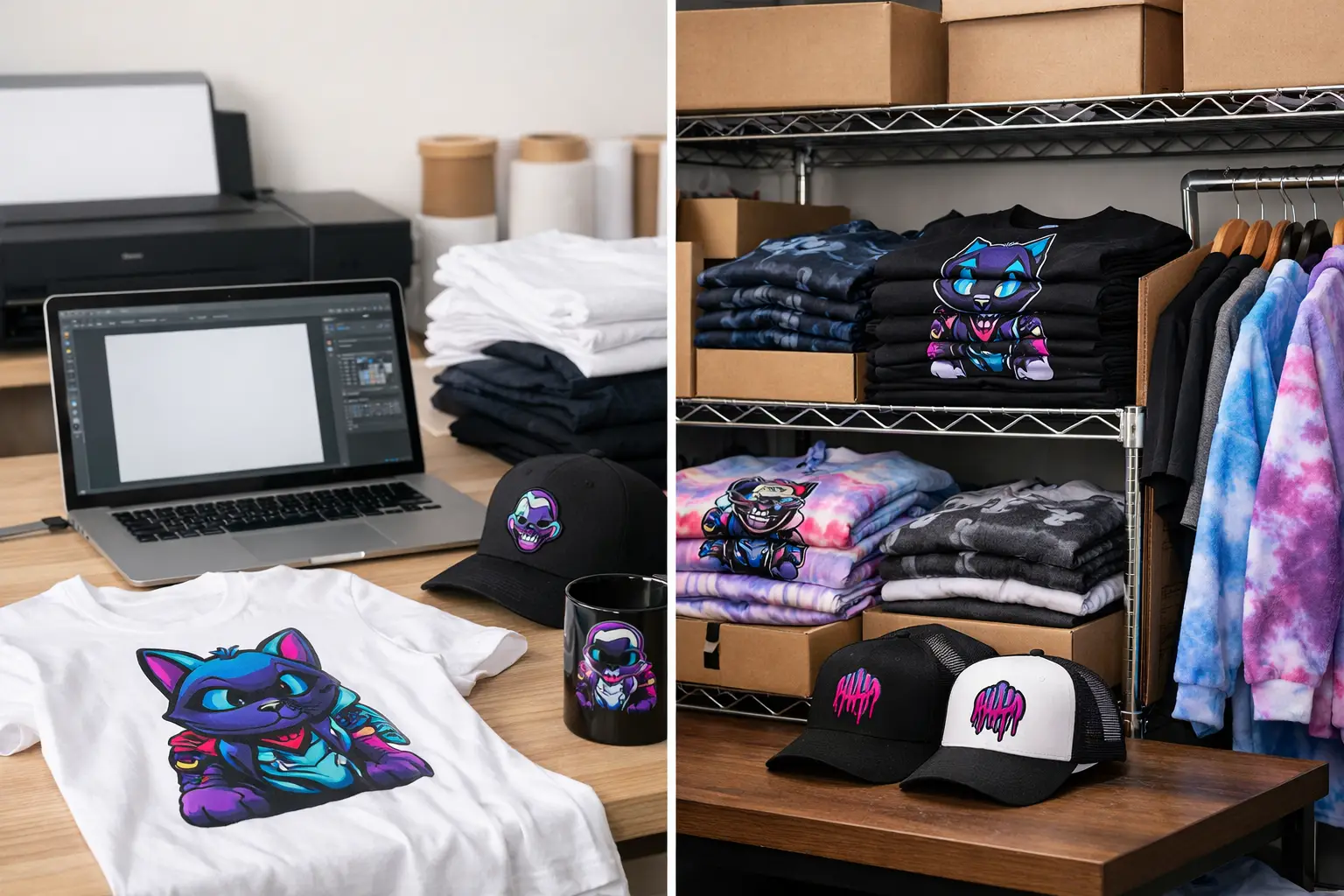
Print on demand means an item is made after a customer places an order. There is no warehouse full of tees waiting for a buyer. A community member chooses their size, pays, and the product enters production. This model is built for flexibility: more designs, more product options, less capital trapped in unsold stock.
Inventory merch works the other way around. You order products in bulk before sales happen, hold them yourself or with a fulfillment partner, and ship from existing stock. It requires a stronger upfront commitment, but it can create a more controlled, premium drop experience.
Neither route is automatically more legitimate, more sustainable, or more profitable. A clean, on-demand graphic tee can be the right move for a global artist collab. A numbered heavyweight hoodie with custom labels may deserve an inventory-led release. The question is not which model wins forever. It is what your community expects from this moment.
Why Print on Demand Fits Fast-Moving Web3 Culture
Web3 culture does not wait for seasonal buying calendars. A new collection can mint overnight, a meme can become community lore by the weekend, and an artist can have a breakout moment before the next major event. Print on demand lets merch respond while the signal is still loud.
The biggest advantage is low inventory risk. Instead of paying for 300 shirts and hoping holders show up, a project can offer the design without a minimum order quantity. That matters for emerging communities, niche collector groups, and creators testing a visual direction. It also means less dead stock when a concept does not land as expected.
On-demand production makes global access easier, too. A fan in Los Angeles and a collector in London should not have to compete for a limited pile of inventory held in one place. Depending on fulfillment coverage, products can be made closer to the buyer, reducing the operational burden on a project team that would rather be building, creating, and shipping digital experiences.
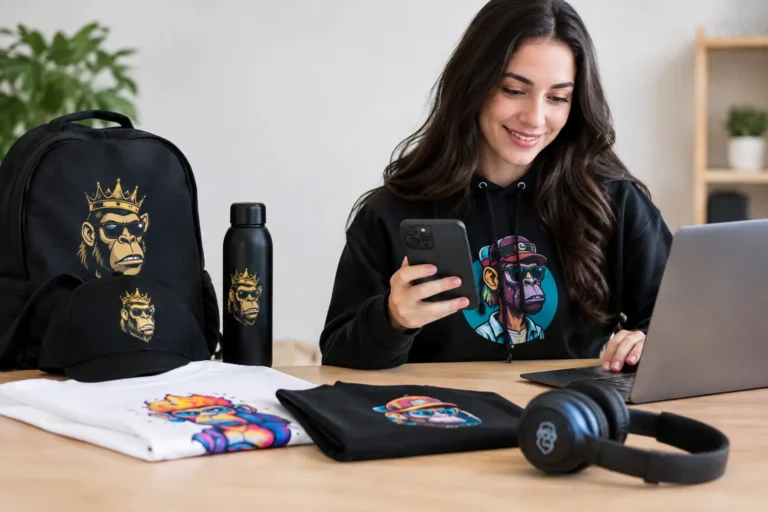
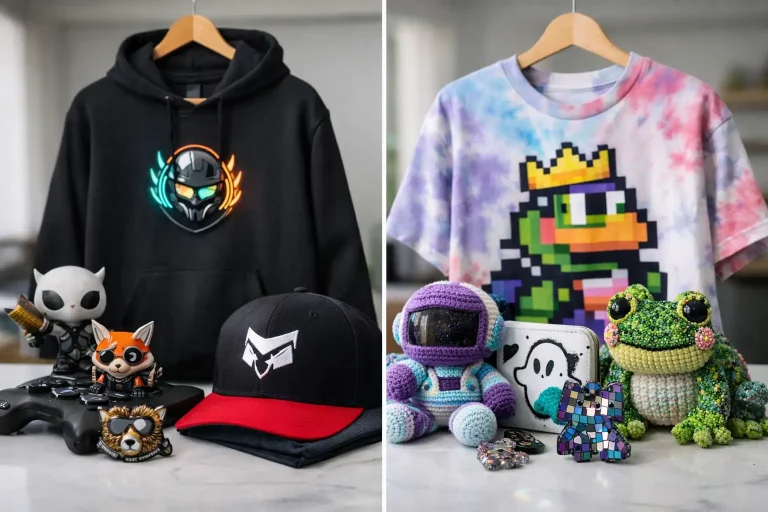
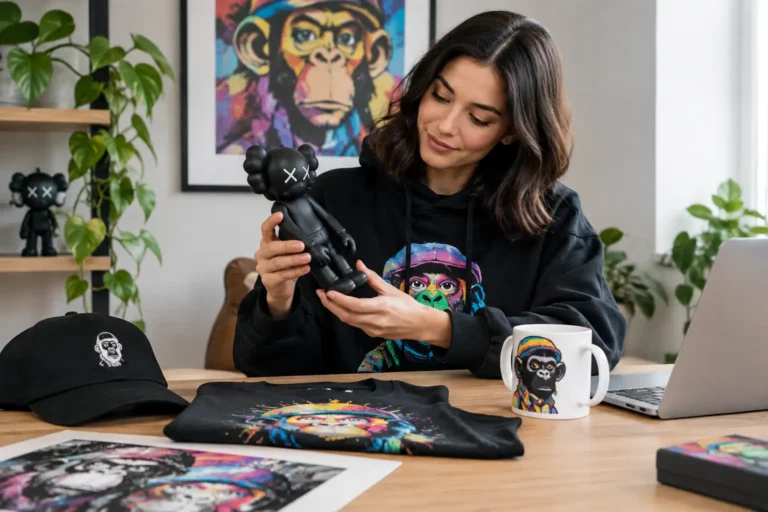
It also supports a wider catalog. One core artwork can live on tees, hoodies, caps, posters, mugs, bags, blankets, and more without forcing the brand to pre-buy every size, color, and category. That range gives community members a way to choose how they wear the culture. Some want the loud front-print hoodie. Others want a subtle patch, tote, or desk piece.
There is a sustainability angle, but it should be framed honestly. Producing after purchase can reduce overproduction because fewer unwanted units are made. It does not make every product impact-free. Materials, shipping routes, packaging, and production standards still matter. The practical win is simple: make fewer guesses, and make more of what people actually choose.
The Trade-Offs of On-Demand Merch
Speed to launch is not always speed to doorstep. Production begins after checkout, so delivery can take longer than shipping a product already sitting in a warehouse. For a collector who expects instant gratification after a hyped drop, that needs to be communicated clearly.
Unit costs can also be higher. Bulk ordering normally gives brands a better per-item price, while on-demand production trades some margin for lower risk. If you are selling a standard tee at a very low price point, the economics can get tight quickly.
Customization has limits as well. Print on demand is excellent for print-led apparel and accessories, but more elaborate construction details may not be available. Think custom garment dyeing, embroidered neck labels, specialty hardware, unique fabric blends, or fully cut-and-sew silhouettes. If the product itself is the art object, inventory may be worth the investment.
When Inventory Merch Earns Its Place
Inventory merch is built for certainty and control. If your project has an established audience, a clear demand signal, and a drop that needs to feel collectible from every angle, buying in bulk can elevate the result.
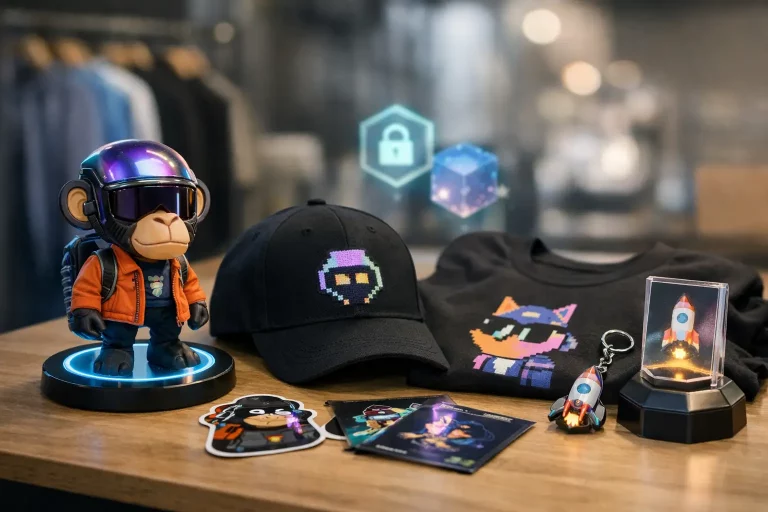
A stocked collection can ship faster because the units are already made. That is powerful around a physical event, a conference, a token-gated launch, or a holiday window. It also gives you more room to build a distinct product rather than simply applying a design to a blank. Custom embroidery, woven labels, specialty packaging, color-matched garments, and limited-edition details can turn a piece into a real artifact of the community.
Bulk pricing can improve margins when sales volume is proven. If you know 500 members will buy the same tee, ordering 500 at once may create enough cost savings to fund better materials, more ambitious design, or a more accessible retail price.
Inventory also creates genuine scarcity. A run of 100 numbered jackets is finite because there are exactly 100 jackets. That can make sense for a major anniversary, a high-profile artist partnership, or a holder-only release where the physical object is meant to feel as considered as the digital collectible.
The Inventory Risk Is Real
The downside is not subtle: unsold merch costs money and takes up space. Size curves are especially unforgiving. You may sell out of medium while sitting on a stack of extra-small and 3XL units. Color preferences can shift. A campaign can underperform. The community may love the artwork online but not buy it on a sweatshirt.
Inventory also asks someone to manage receiving, storage, packing, returns, customer support, and international shipping. That can pull a lean Web3 team away from its actual product and community work. Using a logistics partner can reduce the workload, but it adds another layer of cost and coordination.
There is a brand risk, too. Excess stock often leads to discounting. Nothing drains the energy from a supposedly exclusive drop faster than seeing it marked down weeks later. If scarcity is part of the promise, production planning needs to respect that promise.
Choose the Model Based on the Drop, Not the Hype
The strongest merch programs do not treat print on demand and inventory as opposing tribes. They use each model where it has leverage.
Choose print on demand when you are validating a new design, serving a geographically spread community, offering an evergreen collection, or giving fans more size and product choice. It is the smart lane for low-friction access. A project can keep signature pieces available after the initial attention spike, letting new members buy into the culture when they arrive rather than only when they were early enough.
Choose inventory when demand is proven and the drop needs faster shipping, higher-end construction, or clearly finite quantities. This is the lane for a flagship piece. It is also the better choice when your merch strategy depends on event distribution, influencer seeding, or carefully engineered unboxing.
A hybrid approach is often the sharpest move. Run the core collection on demand, then reserve inventory for the hero product. For example, a community might release graphic tees and accessories globally on demand while producing a limited run of heavyweight embroidered hoodies for holders. The first creates reach. The second creates a trophy.
Before choosing, ask four hard questions: Is demand measured or assumed? Does the design need special manufacturing details? How quickly must buyers receive it? And what happens if 30 percent of the run does not sell? Your answer should be based on operations, not just a mood board.
Quality Is the Non-Negotiable Signal
Web3 audiences can spot cash-grab merch fast. A generic graphic with poor print quality, thin fabric, vague sizing, and no connection to the project’s visual language does not build belonging. It burns it.
Whether a product is made on demand or from inventory, quality begins with creative direction. The art needs to feel native to the project, not pasted on. Garment choice matters. Print placement matters. So do product images, size guidance, care instructions, and the consistency of the customer experience from checkout to delivery.
This is where a curated merch partner can earn trust. NFT Merch, for example, positions on-demand products as physical extensions of recognized Web3 brands and artists, not generic crypto apparel with a logo dropped on top. That distinction matters because communities are buying affiliation, but they are also buying design.
A lower-risk production model is not an excuse for lower standards. Order samples. Check color accuracy. Wear-test the garments. Review the packaging. If the piece would not make you proud to wear it at the next community meetup, it is not ready for your supporters.
Build for Membership, Not Just Merchandise
The best merch gives people a way to carry a digital identity into real life. That can be an always-available tee for the newest member, a limited hoodie for the day-one holder, or a drop that turns a viral visual into something people recognize across a room.
Start with the promise you want the product to make. Then choose the production model that can keep it. Make the accessible pieces easy to own, make the collectible pieces worth chasing, and never manufacture scarcity or scale without a reason your community can feel.