NFT Artist Collaboration Merch That Hits
The difference between forgettable crypto apparel and a piece people actually want to wear usually comes down to one thing – authorship. Great nft artist collaboration merch does not feel like a logo pasted onto a blank tee. It feels like a real extension of an artist’s world, a community’s energy, and the kind of drop you clock instantly if you know the space.
That matters more in Web3 than in almost any other market. People here do not buy just for utility. They buy to signal taste, allegiance, early access, and cultural awareness. A hoodie tied to a respected digital artist or a recognized NFT community carries a different weight than generic “crypto merch.” One is identity. The other is noise.
Why nft artist collaboration merch stands out
The best collaborations sit at the intersection of art, status, and physical product. That mix is powerful because NFT culture has always been about more than files on a wallet screen. It is about belonging to a scene, backing a creator, and owning a piece of a movement before the wider market catches up.
When an artist collaboration is done right, the merch becomes more than branded apparel. It becomes a wearable artifact. You are not just buying a garment. You are buying into the visual language of a creator and the story of a collection. That is why the strongest drops feel closer to streetwear capsules than standard ecommerce inventory.
There is also a trust factor. Web3 audiences can spot lazy licensing fast. If the artwork feels lifted, the product quality looks generic, or the collaboration does not make sense, credibility drops hard. A real artist-led release tells a different story. The design choices feel intentional. The product categories make sense for the community. The drop carries the creator’s fingerprints.
What makes a collaboration feel authentic
Authenticity is not a vague vibe. It is usually visible in the details. The first signal is whether the artist’s visual identity survives the move from digital art to physical merch. Not every NFT image belongs on every product. Some collections translate best to oversized graphic tees and heavyweight hoodies. Others work better as patches, posters, caps, or accessories where iconography carries the design.
The second signal is whether the collaboration respects the audience. Web3 buyers are not looking for tourist merch. They want pieces that feel coded for the community. That might mean subtle references only holders understand, design treatments that mirror on-chain aesthetics, or product naming that reflects the project’s voice without forcing it.
Then there is quality. This is where a lot of brands miss. If a collaboration talks big but lands on thin blanks, weak print execution, or throwaway packaging, the whole thing loses status. In Web3, where ownership and provenance already matter, physical quality becomes part of the proof. A premium design on a bad garment is still a bad product.
The best formats for artist collab drops
Not every collaboration needs to be huge. Some of the sharpest releases are tightly edited. A focused capsule often hits harder than a bloated catalog because it feels deliberate. A few strong hero pieces can do more for culture and conversion than twenty average SKUs.
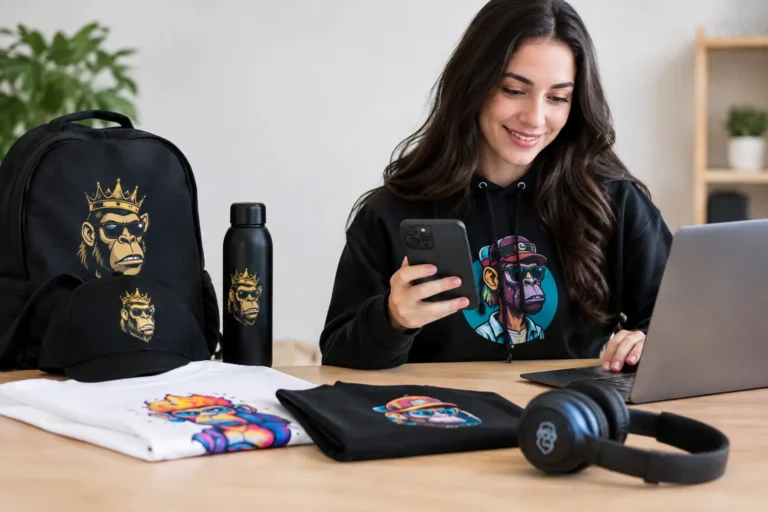
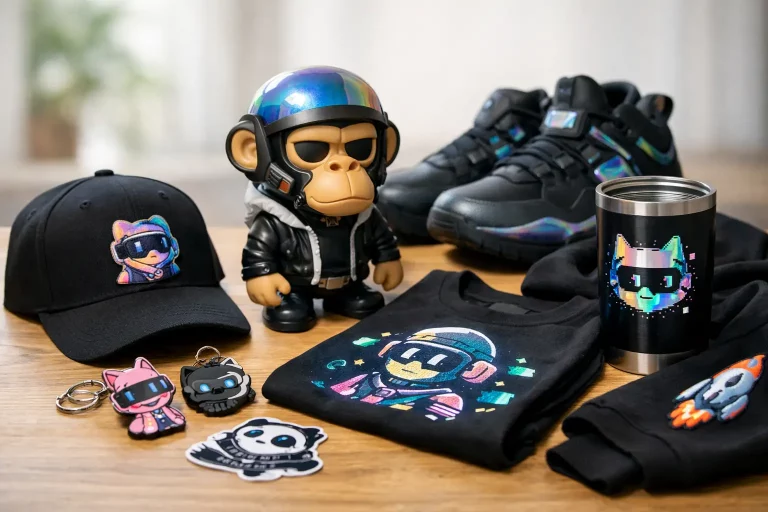
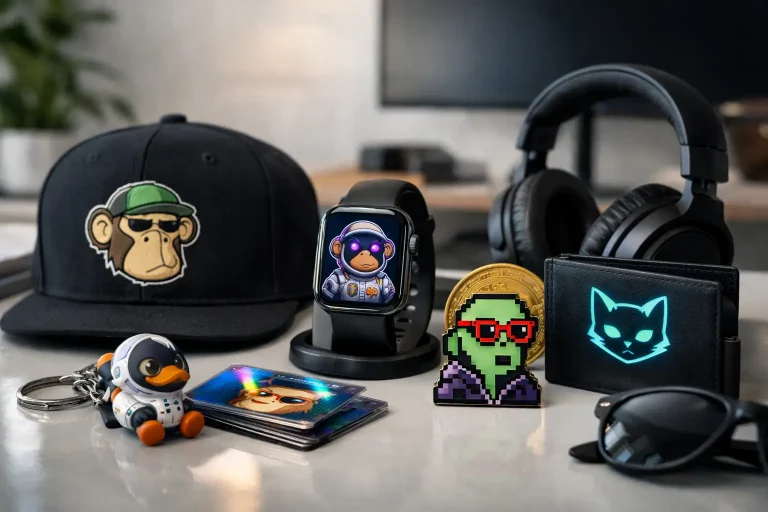
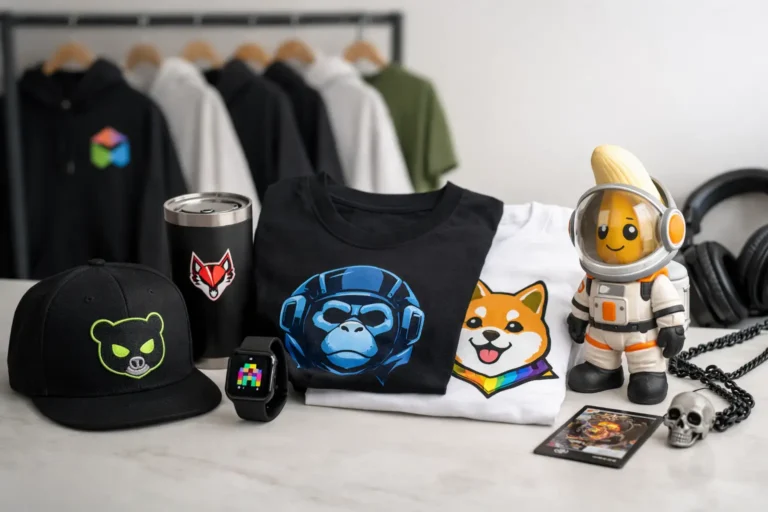
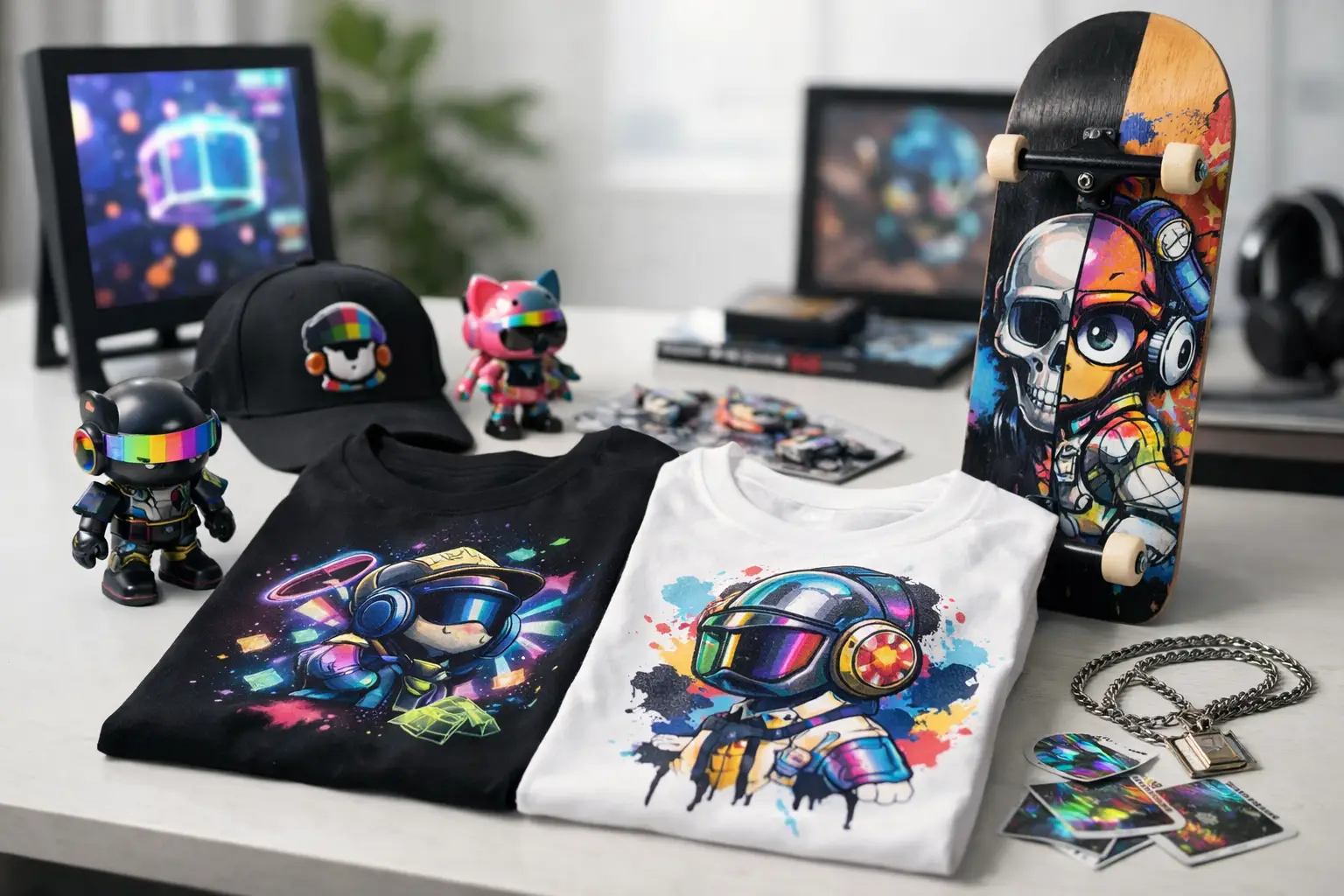
T-shirts and hoodies still lead because they sit at the center of both streetwear and community signaling. They are easy to style, easy to collect, and visible enough to carry artwork with impact. But the category has widened. Caps, bags, posters, mugs, and patches create lower-entry options for fans who want in without committing to a full apparel purchase. Blankets, towels, and even swimwear can work too, if the artist’s visual language is bold enough to justify the canvas.
That said, it depends on the creator. A highly graphic artist may thrive across apparel and wall art. A more minimal project might be stronger on accessories or understated fashion basics. The smartest merch strategy starts with the art, not the product spreadsheet.
Why exclusivity still drives demand
Scarcity works in Web3 because the audience already understands collectible logic. Limited supply, timed drops, and collaboration-only designs all tap into the same instinct that made NFT mint culture so electric in the first place. People want pieces that mark a moment.
But scarcity only works when it is believable. Slapping “limited edition” on every item trains buyers to stop caring. Real exclusivity comes from a clear reason the drop matters. Maybe it celebrates a milestone. Maybe it marks a crossover between a known NFT brand and a respected artist. Maybe it is simply the first time a digital identity has been translated into a physical capsule with the right level of execution.
That emotional charge matters because merch in this space is rarely just functional. It is memory, flex, and affiliation all at once. If the collaboration captures a specific era or inside-joke energy of a community, it gains lasting value even after the drop closes.
NFT artist collaboration merch as community infrastructure
A lot of brands talk about merch as an extra revenue stream. That is true, but it is not the full picture. In NFT communities, merch also acts like infrastructure. It gives holders and supporters a way to recognize each other offline. It turns Discord energy into real-world visibility. It helps a project move from screen-based fandom into everyday culture.
That shift matters for artists too. Physical product creates another layer of presence. Not every supporter can buy original art or hold a premium NFT, but many will buy a shirt, poster, or hat that connects them to the artist’s world. Done right, merch broadens the base without diluting the brand.
This is where on-demand production has a real edge. It allows more experimentation, lower upfront risk, and broader product range without forcing creators into massive inventory bets. For a collaboration model, that flexibility is gold. Artists can test what resonates, communities can buy globally, and the drop can stay focused on design and story instead of warehousing headaches.
How buyers can tell if a drop is worth it
Smart buyers know hype is not enough. If you are shopping nft artist collaboration merch, start by looking at who is actually behind the release. Is the artist named and clearly part of the collaboration? Does the design feel original to their body of work? Is the project or brand recognizable within Web3 culture, or is it borrowing credibility it has not earned?
Next, check the product mix. Strong drops usually feel curated. There is a clear point of view behind what made the cut. If everything from shoes to stickers to home goods is tossed in without cohesion, the release can start to feel like a print catalog instead of a collab.
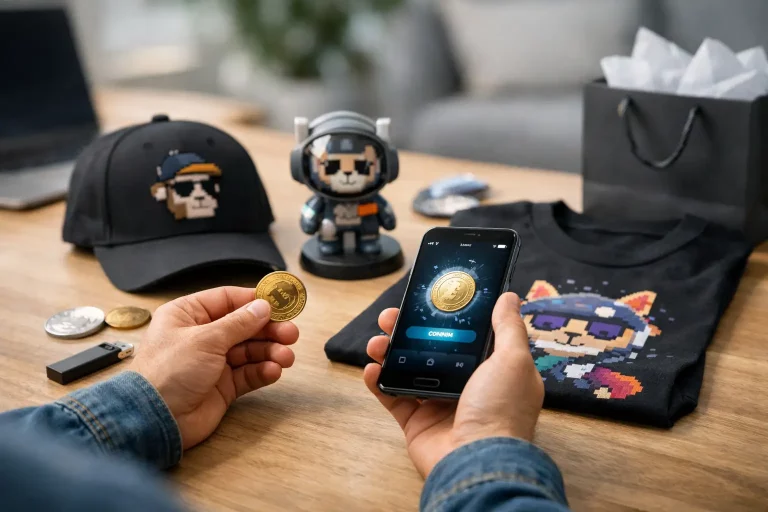
Then look at execution. Product mockups should match the aesthetic standard of the art. Descriptions should be clear about what you are buying. Payment flexibility, straightforward fulfillment, and no-minimum accessibility all matter, especially for global buyers who want the process to be easy without losing the premium feel.
The crossover with streetwear is the whole point
Streetwear built its power on drops, signals, scarcity, and subcultural fluency. Web3 runs on a lot of the same fuel. That is why nft artist collaboration merch feels so natural when it is done well. It is not forcing digital art into fashion. It is recognizing that both worlds are already built around identity and access.
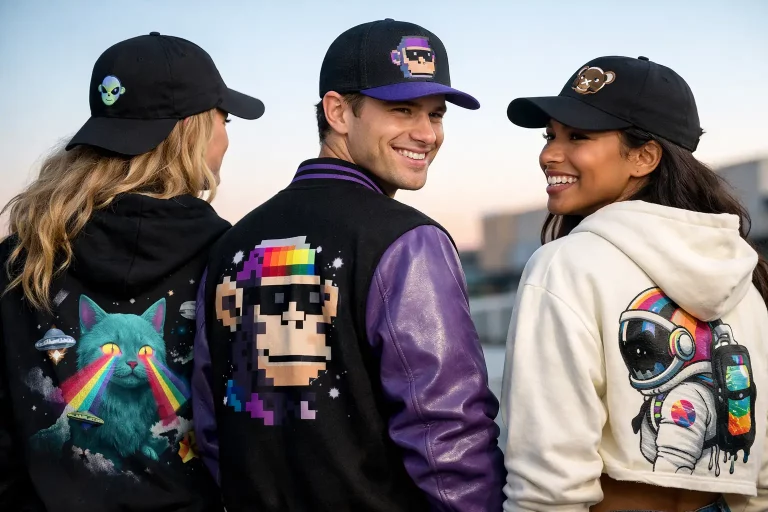
For collectors, the appeal is obvious. You get to wear the art and represent the scene. For artists, merch becomes a new storytelling layer. For communities, it is a badge system with better design. And for brands operating in this lane, the job is simple but not easy: curate real collaborations, protect authenticity, and treat every product like it has to earn its place.
That is the standard now. Generic crypto shirts had their moment. The next wave belongs to better design, clearer artist involvement, and drops that feel like culture instead of filler. If a piece can hold up both as merch and as streetwear, that is when it starts to matter.
Own the culture, sure. But wear something that actually deserves the signal.