NFT Posters and Wall Art That Hit Different
A wallet full of grails is cool. A room that actually shows what you’re about is better. That’s why nft posters and wall art have moved from niche merch to a real part of Web3 culture – not as filler decor, but as visible proof of taste, community, and ownership energy.
For collectors, creators, and anyone deep in the scene, walls matter. Your setup is part gallery, part signal. It tells people whether you’re here for floor-price noise or for the art, the lore, and the communities shaping digital culture. A clean print from a recognized NFT brand does more than fill blank space. It brings online identity into the physical world in a way that feels personal, sharp, and collectible.
Why nft posters and wall art matter now
NFT culture has always been visual first. Profile pictures, generative traits, artist drops, and collection aesthetics all live or die on image power. But screens flatten everything. A piece you love can end up looking the same size as every other post in your feed. Putting it on your wall changes the relationship.
Physical display adds weight. It gives the art a place in your daily life instead of trapping it inside a marketplace tab or social avatar. That shift matters, especially for people who see Web3 as more than speculation. If a project shaped your online identity, helped you find your crowd, or introduced you to an artist you genuinely rate, there’s a case for giving it real space.
There’s also a status layer here, and pretending otherwise would miss the point. Streetwear works because it signals affiliation. Posters do too. The right print says you know the culture, not just the headlines. It shows whether you’re aligned with an established community, a respected artist, or a visual style that actually means something in crypto-native circles.
What separates great NFT posters and wall art from generic crypto prints
Not every blockchain-themed poster deserves wall space. There’s a difference between authentic merch and random internet art with a token buzzword slapped on it.
The first thing that matters is source credibility. If the design comes from an official collaboration, a recognized NFT brand, or a legitimate artist relationship, it carries real value. That doesn’t always mean scarcity in the strict collector sense, but it does mean the piece has context. Context is what turns a poster into culture.
Design quality matters just as much. Some NFT collections are iconic on-chain but don’t automatically translate into strong print pieces. A good wall print needs composition, balance, color confidence, and enough visual presence to hold a room. Traits that work in a profile icon might not work at poster scale. The best nft posters and wall art are designed for physical display, not just copied from a marketplace image and stretched.
Then there’s production. Print finish, paper stock, resolution, and color accuracy all decide whether a piece feels premium or disposable. Web3 audiences can spot low-effort merch fast. If the art looks muddy, the black tones wash out, or the details break down, it kills the impact. A strong piece should feel intentional the second it comes out of the tube or frame.
The best spaces for NFT posters and wall art
These pieces work because they flex across environments. They are not limited to gaming rooms or hypebeast corners, even if those spaces naturally fit the aesthetic.
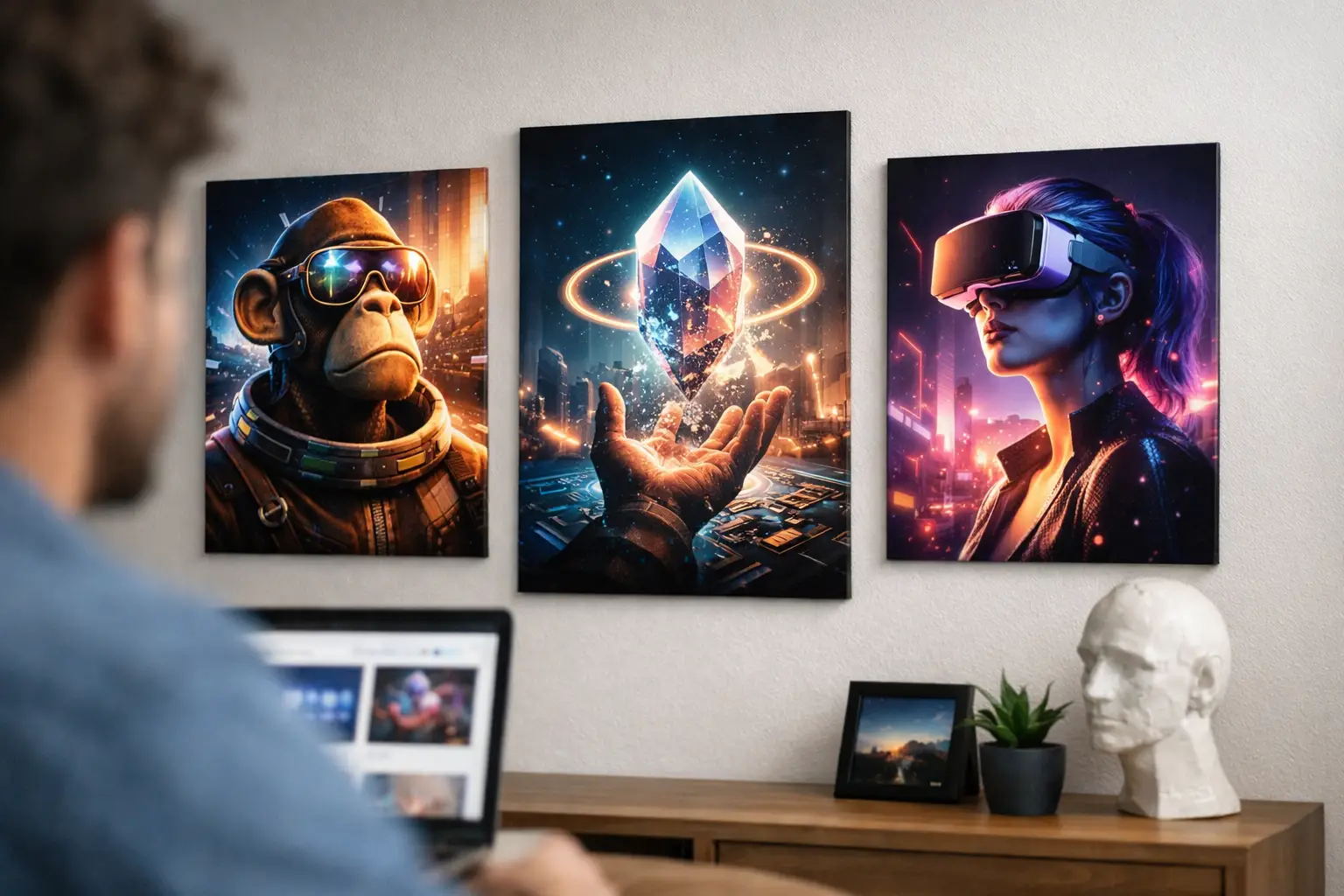
In home offices, they create a backdrop that feels more like a founder’s den than a generic desk setup. In studios, they reinforce creative identity and make the room feel built around actual taste. In bedrooms, they can bring in color, edge, or collector energy without needing a full redesign. For streamers, traders, and creators on camera, wall art becomes part of the brand. People notice what’s behind you.
The vibe depends on how you style it. A single statement piece can hit harder than a busy collage, especially if the artwork has strong character design or bold graphic contrast. On the other hand, a curated wall with a few aligned prints can create a gallery effect that feels more like a real collection than a merch shelf. It depends on whether you want the room to say one thing loudly or several things with precision.
How to choose the right piece for your space
Start with affiliation. Are you buying because you hold the project, because you respect the artist, or because the design genuinely looks strong in a room? All three are valid, but they lead to different choices. A holder may want a piece tied closely to a specific collection identity. A design-first buyer might prioritize form over community lore.
Next, think about scale. Large prints command attention, but only if the wall can support them. Smaller pieces work well in tighter setups, especially when paired with shelves, books, or other collectibles. If your room already has loud elements like LED lighting, sneakers on display, or patterned furniture, a cleaner piece may land better than a chaotic one.
Color is another real factor. Some NFT art leans neon, glitched, and aggressive. Some is minimal, monochrome, or character-led. Match the print to the energy of the room, not just the popularity of the collection. A legendary project can still feel off if the visual language clashes with your space.
Framing changes everything too. Even a strong poster can feel temporary without a proper presentation. A simple black frame usually keeps the focus on the art and fits most setups. Frameless or clipped styling can work if you want a rawer streetwear feel, but it’s less polished. There’s no single right answer. It depends on whether you want collector gallery energy or drop-culture edge.
Posters as merch, art, and identity
This is where the category gets interesting. NFT wall art sits in a unique lane because it crosses three worlds at once.
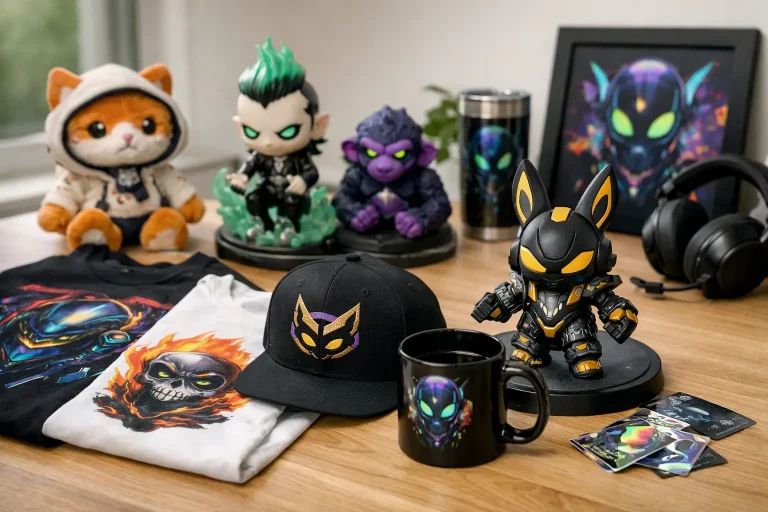
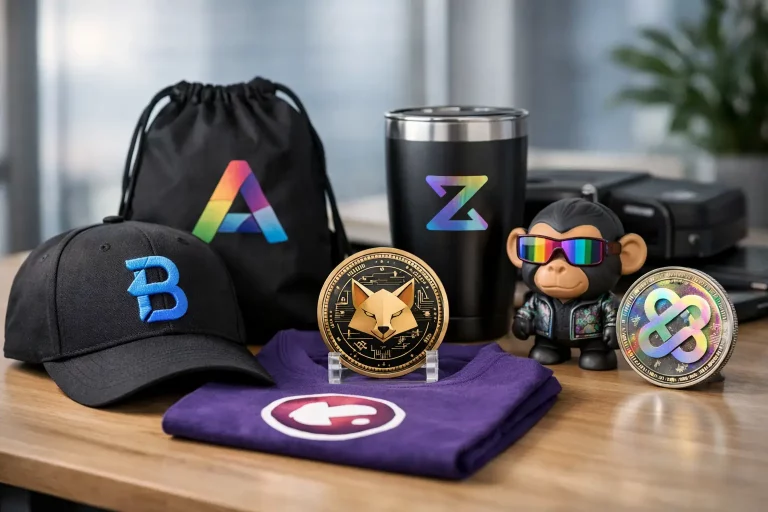
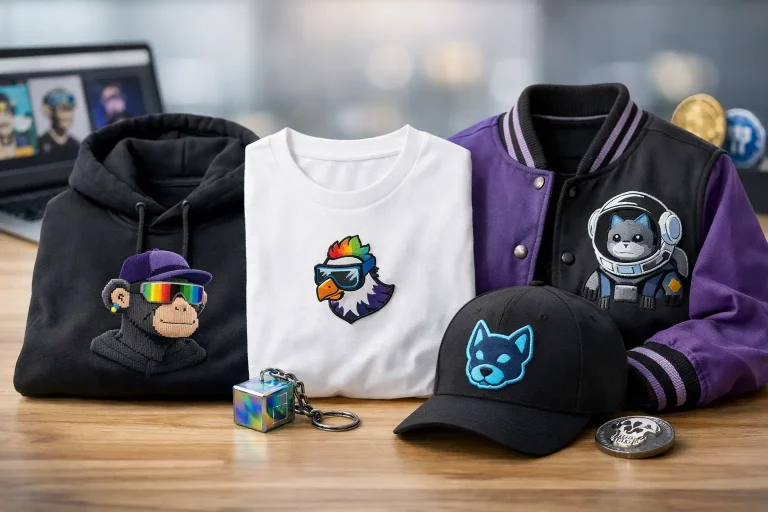
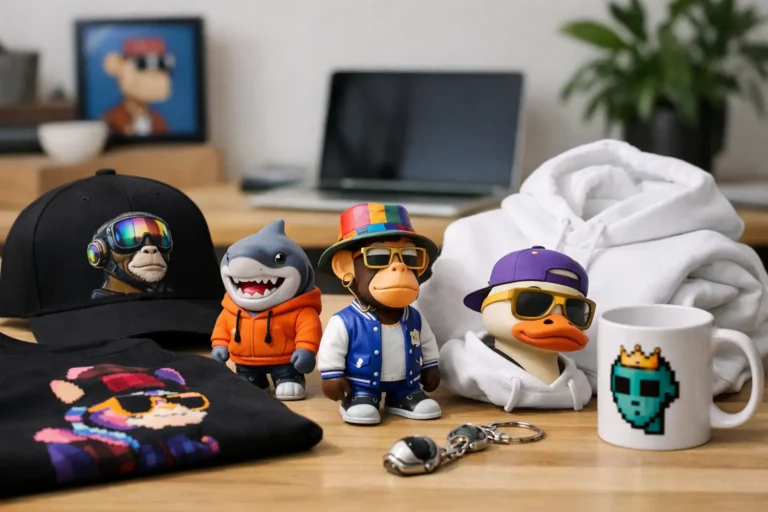
As merch, it gives fans and holders a way to support projects they care about without defaulting to apparel. Not everyone wants another hoodie. A poster can feel more permanent, more displayable, and in some cases more collectible.
As art, it gives digital work a physical afterlife. That matters for artists building recognizable visual universes. When a piece holds up off-screen, it proves the design has legs beyond the timeline.
As identity, it works almost like a flag. You’re saying this artist, this collection, this corner of the culture is part of who I am. For Web3 people, that signal is not superficial. Communities are built on shared symbols. Bringing those symbols into your living space is a natural extension of how the culture already works.
The trade-offs collectors should know
There is some nuance here. Physical NFT-inspired merch does not replace the on-chain asset. It does something different. If your main focus is provenance, token utility, or wallet flex, a poster serves another purpose. It is about environment, self-expression, and real-world presence.
There’s also a difference between broad accessibility and exclusivity. Open-edition prints make it easy for more people to rep the culture, which is good for community visibility. Limited runs carry more scarcity and can feel more special, but they may also price out newer fans. Neither model is automatically better. It depends on whether the goal is reach, rarity, or a balance of both.
And yes, trends move fast in Web3. Some collections stay iconic. Others fade. That’s why the smartest buyers usually focus on one of two things: lasting visual quality or genuine personal connection. If you have both, even better.
Why this category keeps growing
The bigger shift is simple. Web3 is no longer content staying online. People want physical expressions of digital belonging, and they want them to look good enough for real spaces. That is exactly why categories like posters, apparel, and accessories keep gaining ground.
Done right, wall art makes NFT culture feel more lived-in. It turns abstract ownership into something you can see every day. It creates a bridge between wallet identity and home identity. For a generation that grew up curating both their feeds and their rooms, that bridge feels obvious.
Brands that understand this are not treating posters as afterthoughts. They’re building them as part of a full merch ecosystem, with better design standards, more official collaborations, and cleaner production. That’s the lane NFT Merch plays in – not generic crypto decor, but physical pieces made for people who actually know the culture.
The best nft posters and wall art do not ask for attention with loud buzzwords. They earn it through design, authenticity, and the story behind the piece. If it reflects your community, sharpens your space, and still feels right when the hype cycle moves on, it belongs on your wall.