10 Best Accessories for NFT Holders
The best accessories for NFT holders do one job better than almost anything else in fashion – they make digital identity visible in the real world. That matters more than most people admit. In Web3, what you wear, carry, pin, or post on your wall is part of the signal. It says you were early, you know the culture, and you are not here for generic crypto merch that could belong to anyone.
That is the difference between random logo products and accessories that actually hit. Good NFT accessories carry community weight. They connect ownership, taste, and status in a way that feels authentic offline. If your wallet is public but your style is private, you are missing half the flex.
What makes the best accessories for NFT holders?
Not every product with a token-inspired graphic deserves a spot in your rotation. The best pieces do more than reference crypto. They feel connected to a real project, artist, or community. They also need to work as actual accessories, not just novelty items you forget after one wear.
For NFT holders, the strongest accessories usually land in the middle of three things: cultural relevance, design quality, and daily usability. If a cap looks clean but has no connection to a recognized project, it can feel empty. If a poster is deeply niche but badly printed, it loses value fast. And if a bag is all statement with zero function, it ends up as shelf decor.
That balance is why branded merch from established NFT communities carries more energy than generic print-on-demand crypto graphics. Authenticity still wins. In a market built on provenance, that should not be surprising.
10 best accessories for NFT holders right now
1. Caps that carry the project without trying too hard
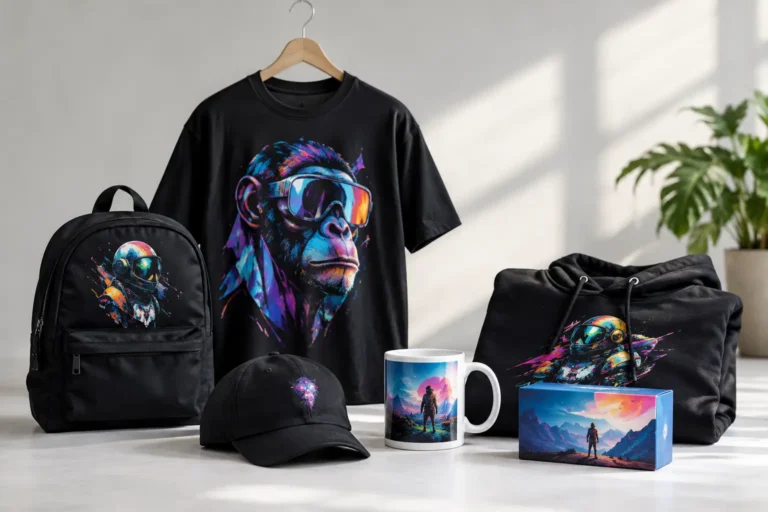
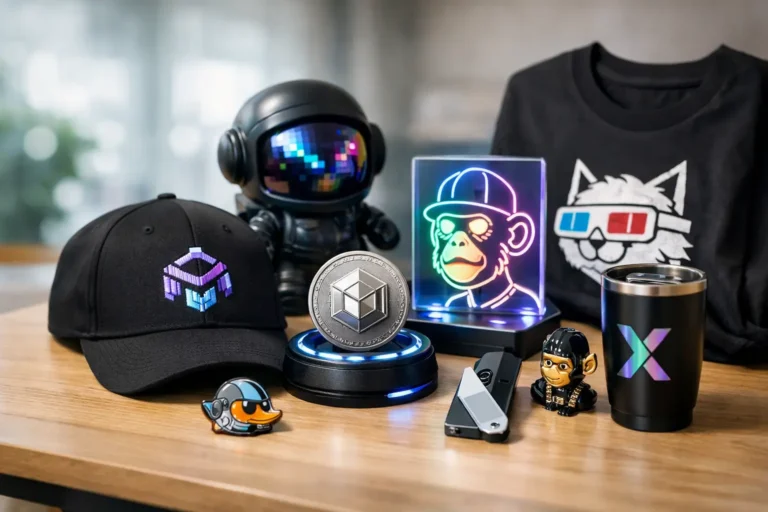
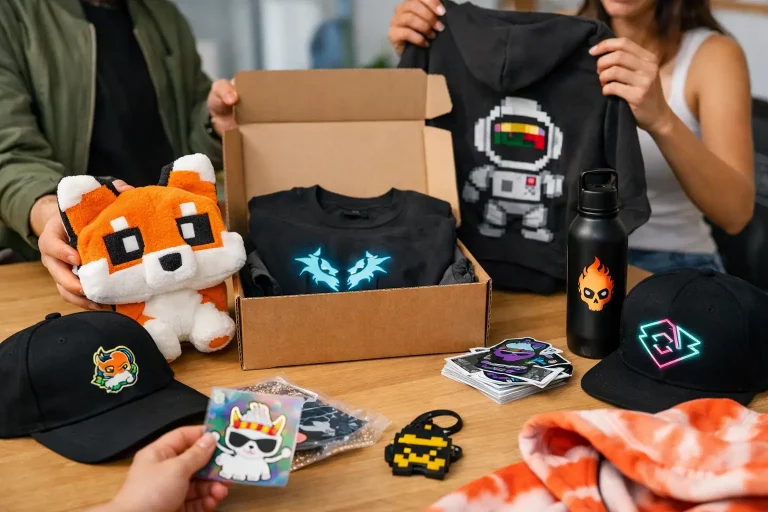
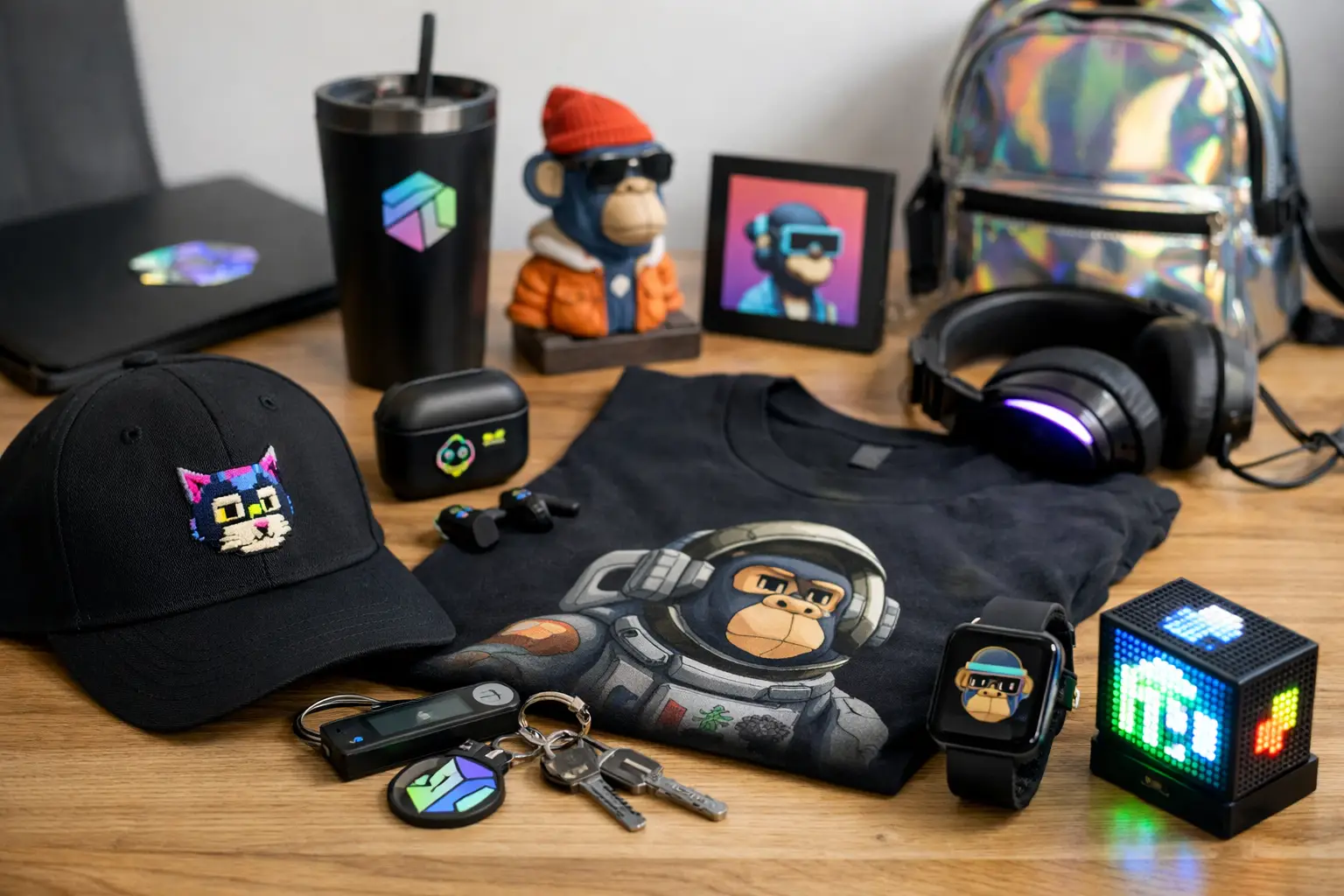
A good cap is probably the easiest entry point into NFT merch. It is wearable, visible, and easy to style with streetwear basics. The right one gives you enough project identity to get recognized by your people without turning the whole fit into a billboard.
This is where design matters. Clean embroidery, strong color choices, and a recognizable but not overworked mark usually beat loud all-over graphics. If you are thinking long-term, a cap also ages better than trend-heavy items tied to one hype cycle.
2. Bags that move between events, travel, and everyday carry
Tote bags, crossbody bags, and backpacks make a lot of sense for NFT holders because the audience is already used to carrying tech, chargers, notebooks, and event essentials. A bag tied to a known NFT brand does more than store your gear. It puts your affiliation in motion.
There is a trade-off, though. A minimal tote can be more versatile for daily use, while a heavily branded crossbody hits harder at conferences, meetups, and art events. The best choice depends on whether you want subtle recognition or a stronger community signal.
3. Patches that let you build your own uniform
Patches are underrated in Web3 fashion. They are flexible, collectible, and personal. You can add them to jackets, backpacks, or hats and create a setup that feels earned rather than off-the-rack.
For holders who collect across multiple communities, patches make even more sense. Instead of picking one project to wear head to toe, you can layer your identity in a way that reflects your actual wallet history and taste. It feels more real, and honestly, more stylish.
4. Posters that turn a room into a statement
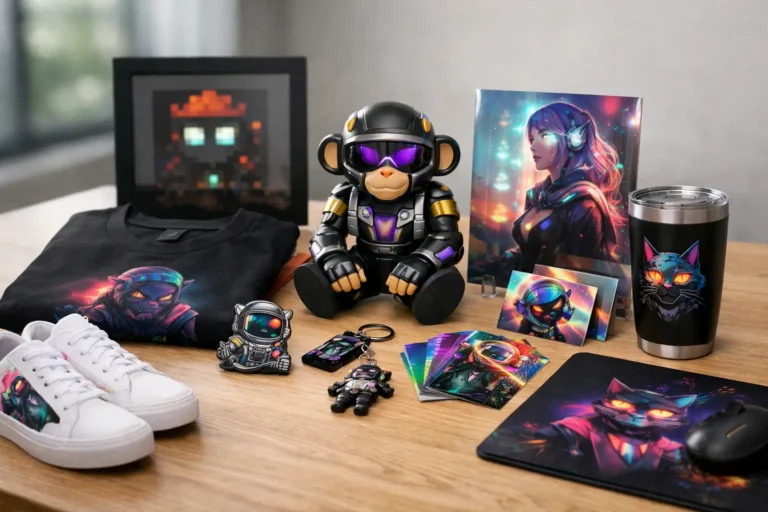
NFT culture has always had a display instinct. Wallet screenshots were one version of that. Wall art is the physical upgrade. A strong poster based on a respected collection or digital artist gives your space the same social function as your profile picture – it shows what you back.
The catch is quality. Posters only work when the print feels deliberate and the artwork deserves scale. Cheap reproductions flatten the whole concept. Good ones make your room, studio, or office feel like an extension of your on-chain identity.
5. Stickers for laptops, cases, and low-key flex spots
Not every accessory needs to be expensive or central to your outfit. Stickers still matter because they travel well and stick to the surfaces people actually see – laptops, water bottles, phone cases, notebooks, and hard-shell luggage.
For NFT holders, stickers work best as a low-commitment signal. They are less about status by price and more about cultural literacy. They say you are plugged in. If the design is sharp and the project is respected, that small detail can do a lot.
6. Mugs that bring Web3 into the routine
A mug might not sound like a flex item, but that depends on how you use it. For remote workers, creators, traders, and collectors, desk accessories are part of the ecosystem. A well-designed NFT mug can turn a work setup into a branded space that feels more personal.
This category is less about public visibility and more about daily connection. If you want something practical that still reflects your community, mugs make sense. They are not the highest-status piece on this list, but they are one of the easiest to live with.
7. Beanies and seasonal headwear for colder fits
When the weather changes, the accessory rotation changes with it. Beanies are a natural move for holders who want project merch that fits into winter streetwear without feeling forced. They work especially well for collections with bold iconography or compact logo marks.
Compared with caps, beanies can feel slightly more fashion-forward depending on the styling. But they are also more seasonal. If you live somewhere warm, they may be more occasional than essential.
8. Towels and blankets for lifestyle-driven collectors
This is where NFT merch starts moving beyond clothing and into environment. Towels and blankets are not everyday public flex pieces, but they do something else well – they make the culture feel lived in. A blanket in a studio, streaming room, or lounge space brings project identity into the background in a way that feels intentional.
These products are also good for holders who care more about aesthetic continuity than constant outward branding. Not every signal needs to happen outside the house.
9. Shoes if the design is strong enough to carry the fit
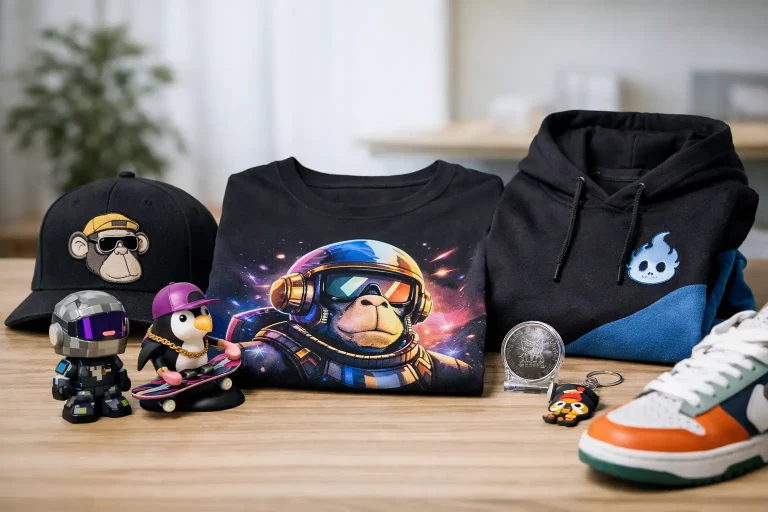
Shoes are high-risk, high-reward. When done well, they become the centerpiece. When done badly, they look like gimmicks. For NFT holders, the best footwear merch is usually graphic enough to feel distinctive but restrained enough to stay wearable.
This category depends heavily on execution. If the artwork, color placement, and print quality are there, shoes can be one of the hardest flexes in the whole lineup. If not, a cap or bag is usually the smarter buy.
10. Limited collaboration pieces that actually mean something
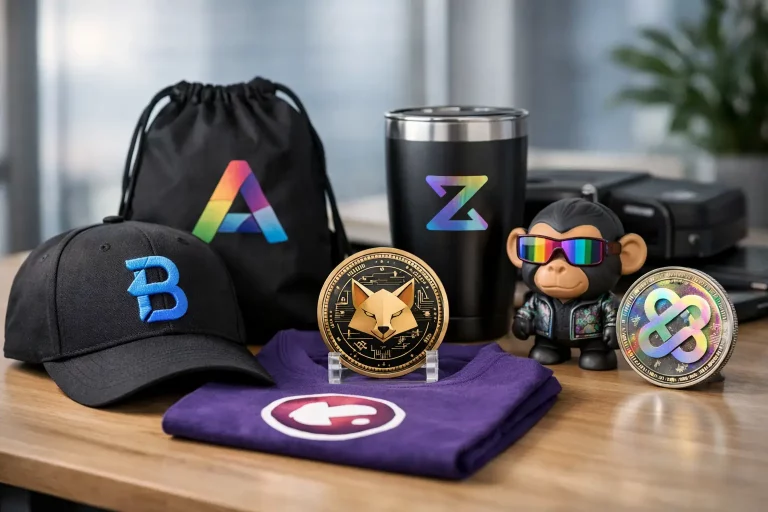
The strongest accessories in Web3 are often the ones tied to official collabs, artist drops, or recognized community partnerships. That is where the story, design, and credibility line up. You are not just buying an object. You are buying a piece of a moment.
That matters because NFT culture runs on context. A limited accessory tied to a respected brand or artist says more than ten generic products ever could. It signals taste, proximity, and awareness. Those are the details this audience notices fast.
How to choose the right NFT accessory for your style
The right accessory depends on how you want to show up. If your style is understated, go for pieces that blend into everyday wear but still reward recognition – a cap, patch, or clean tote. If you are building a louder identity around your favorite project, posters, standout bags, and statement footwear give you more room to push.
You should also think about where the item will live. Conference wear is different from everyday city wear. Home setup pieces are different from travel gear. The best accessories for NFT holders are not just about what looks good in product photos. They need to fit your actual routine.
There is also the question of permanence. Some holders want seasonal pieces tied to a specific drop. Others want timeless accessories they can wear even when market sentiment changes. Neither approach is wrong, but they serve different goals. One captures a moment. The other builds a lasting personal uniform.
Why authenticity matters more in NFT merch
Web3 people can spot fake culture fast. That is why official, community-connected accessories carry more value than generic crypto slogans or copied artwork. In this space, provenance is not just for tokens. It shapes physical merch too.
When an accessory is tied to a legitimate artist, collection, or community, it hits differently. It feels earned. It carries the energy of participation rather than imitation. That is also why curated destinations matter more than random mass-market stores. If you are shopping for pieces that represent actual NFT culture, the source shapes the signal.
A brand like NFT Merch makes sense in that lane because the focus is not just printing graphics on products. It is translating recognized digital culture into wearable, collectible physical pieces that people actually want in rotation.
The real flex is wearing the culture well
Owning the NFT is one layer. Wearing it well is another. The strongest accessories do not scream for attention. They tell the right story to the right people, and they still hold up as design objects when nobody knows the reference.
That is the sweet spot. Pick pieces that feel connected, well-made, and true to your place in the culture. If it fits your life and your community can read it instantly, you are not just buying merch – you are putting your digital identity into the real world where it can actually move.