12 Best Merch Products for Community Drops
A community drop should not feel like a logo pasted onto a blank tee. The best merch products for community drops give members something bigger: a physical signal that says, “I was here. I’m part of this.” For NFT projects, creator collectives, and Web3-native brands, that signal carries weight both online and off.
The right product mix turns a Discord role, wallet hold, or shared visual language into something people can wear, collect, gift, and post. The wrong mix becomes forgettable inventory. The difference comes down to cultural fit, product quality, and knowing whether your community wants daily uniform pieces, limited collectibles, or both.
What Makes a Community Drop Worth Owning?
Merch is strongest when it gives a community a recognizable silhouette, not just a recognizable graphic. A great drop considers where the item will live: on the street, at an event, in a desk setup, or in the background of a collector’s next post.
Start with the identity your project has already built. Is it irreverent, polished, surreal, gaming-led, art-first, or quietly exclusive? That should guide the garment weight, color palette, print placement, and number of units in the collection. A loud PFP project may earn an all-over graphic. A high-status art community may be better served by tonal embroidery and a small mark only holders recognize.
On-demand production also changes the game. It lets a community launch without forcing a giant inventory bet, while keeping the drop accessible to global members. Scarcity can still come through limited artwork, a defined order window, numbered editions, or holder-only access. Scarcity does not have to mean leaving the whole community out.
Best Merch Products for Community Drops
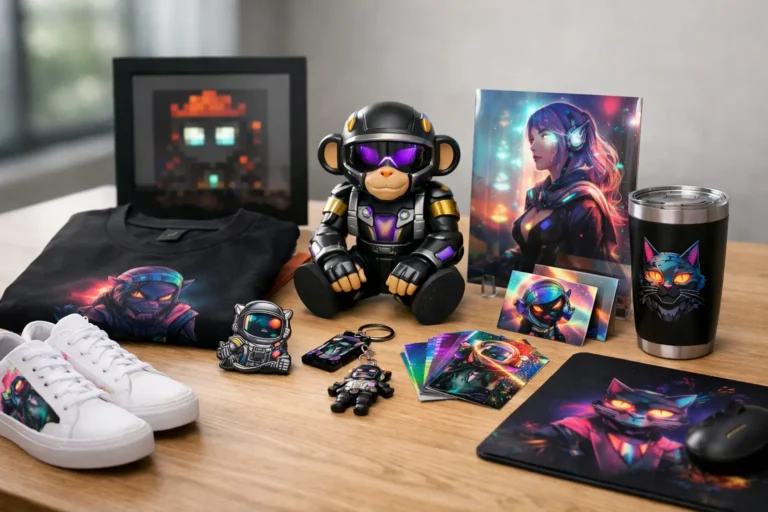
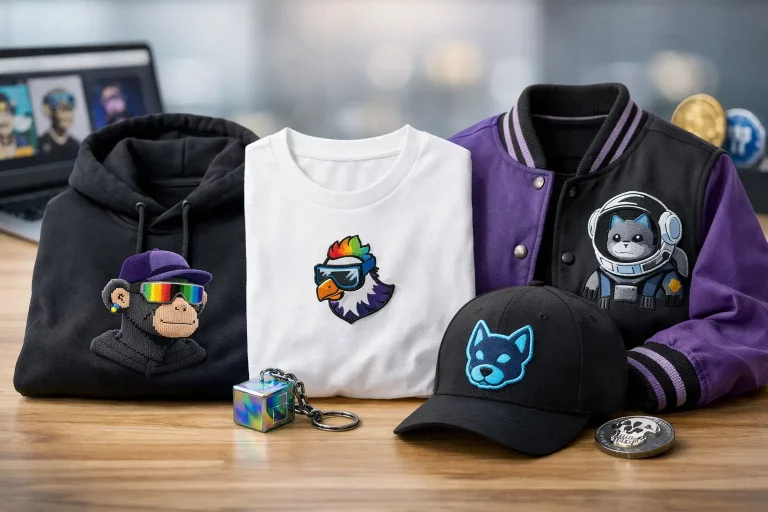
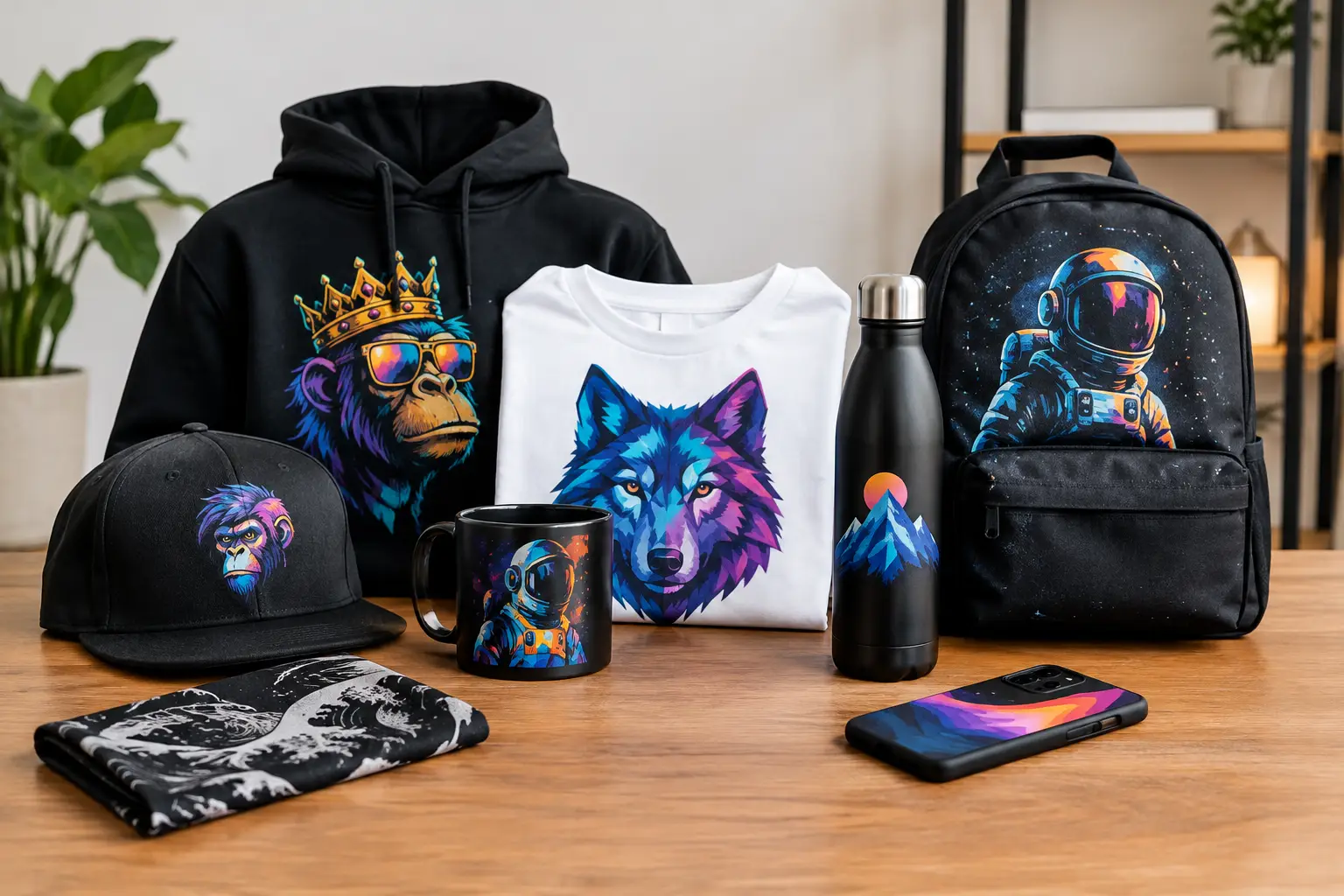
The most effective collections balance a hero product with lower-cost entry points and a few unexpected pieces for collectors. Not every community needs all 12 products below. A focused three-piece capsule can hit harder than a crowded catalog, especially for a first drop.
1. Heavyweight hoodies
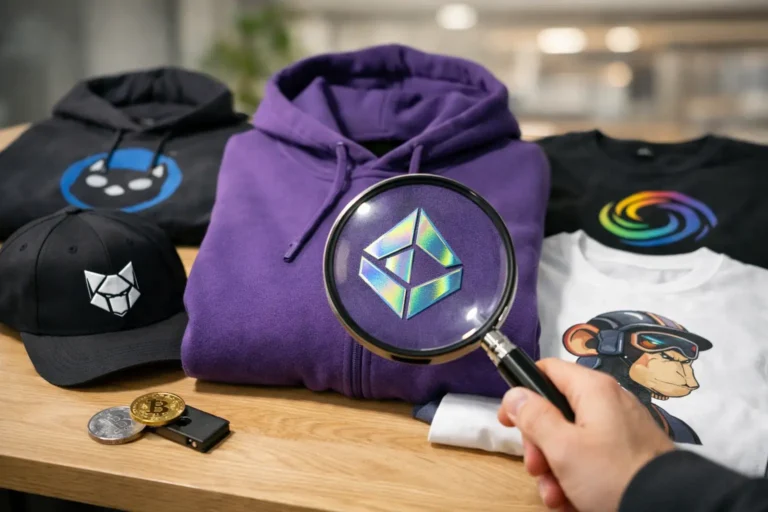
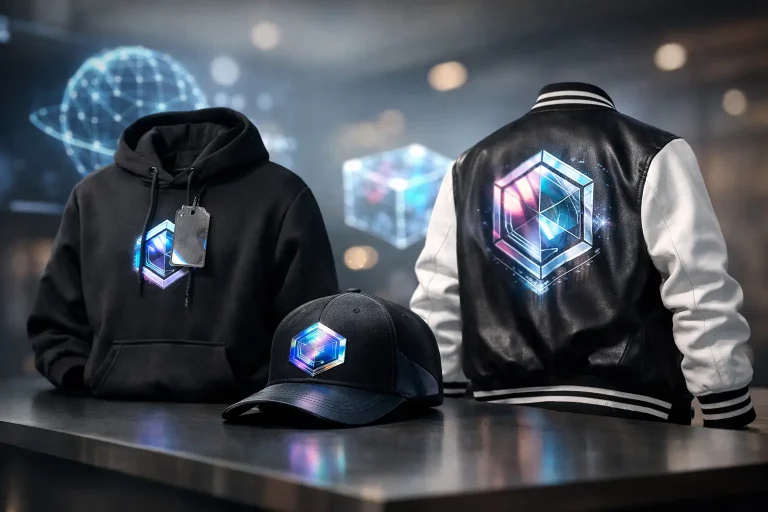
A heavyweight hoodie is the cornerstone of Web3 streetwear for a reason. It has presence, earns a premium position, and gives artists room to build a full visual statement across the chest, back, sleeves, or hood.
Choose hoodies for colder-season launches, milestone drops, and projects with members who want a daily-wear flex. Keep the design considered. An oversized front logo can work for a high-energy community, while a small chest detail with a bigger back graphic feels more like a collectible garment than promotional apparel.
2. Graphic T-shirts
T-shirts are the easiest way into a drop. They are lower commitment than a hoodie, simple to style, and ideal for bringing new members into the visual universe of a project.
The trade-off is that tees are everywhere. Make yours matter with great blank selection, intentional colors, and artwork that reads from more than one distance. A subtle front hit can reward close attention, while the back becomes the moment people notice across a room.
3. Crewneck sweatshirts
Crewnecks land in the sweet spot between polished and relaxed. They work especially well for art-led communities, collector groups, and brands that want a more elevated uniform without the casual profile of a hoodie.
Use them for understated drops: tonal embroidery, small chest icons, woven-label energy, or graphic systems pulled from the collection’s visual lore. A crewneck can make a digital brand feel established in the physical world.
4. Caps and beanies
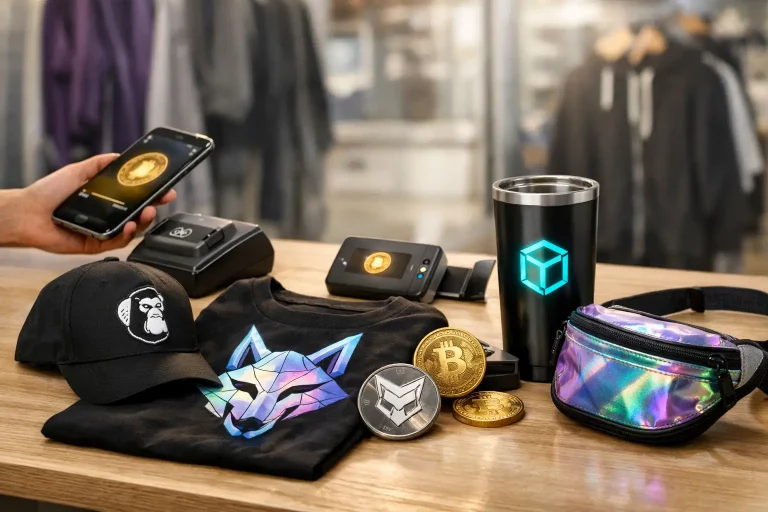
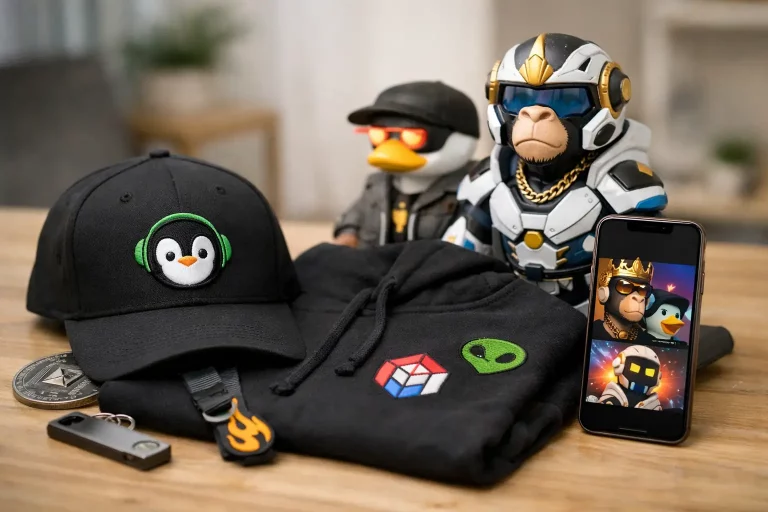
Headwear builds recognition fast. A cap is a clean entry-level product for warm-weather events and everyday rotation, while a beanie gives winter drops a more underground, street-driven edge.
These items are ideal when the community has a strong symbol or wordmark. Keep the execution crisp. Embroidered marks, short phrases, and discreet side details generally age better than busy full-panel graphics. They also make useful add-ons for members who already own the core apparel.
5. Posters and art prints
For digital artists and NFT communities, wall art is not an afterthought. It is a direct bridge between a collector’s online gallery and their real space.
Posters work best when the artwork can stand alone without needing an explanation. Think landmark characters, trait-driven compositions, limited drop art, or visuals that mark a major chapter in the project’s story. A poster is also a strong option for members who want to participate but do not wear branded clothing.
6. Stickers and patches
Small goods can carry huge cultural value. Stickers belong on laptops, water bottles, travel cases, notebooks, and event giveaways. Patches let members customize jackets, backpacks, and hats with a more DIY signal.
These products are particularly useful as a community’s first physical touchpoint. They can also act as a reward layer in a larger launch: a patch included with a premium order, or a sticker sheet built around inside jokes that only the core knows.
7. Tote bags and crossbody bags
Bags give a drop utility. They move through cities, conferences, airports, and meetups, which means more organic visibility than something that stays in a closet.
A tote bag suits art fairs, creative communities, and daily errands. A crossbody bag feels more streetwear-forward and can justify a more premium visual treatment. In both cases, avoid treating the bag as a fallback product. Design it around how people actually carry it, with graphics that remain visible when worn.
8. Mugs and desk accessories
Not every piece of identity needs to be worn. Mugs bring the community into a desk setup, home studio, or late-night trading session. They are accessible, giftable, and naturally suited to character art, memes, and sharp one-liners.
They are less effective as the hero of a fashion-led drop, but they can add personality to a broader collection. If your community lives on screens, a well-designed desk piece makes the digital world feel closer without forcing another apparel purchase.
9. Shorts and sweatpants
Matching bottoms can turn a hoodie or crewneck release into a true set. Sweatpants deliver comfort and a premium lounge-to-street feel. Shorts are a strong choice for summer drops, resort-style art, or communities built around bold color.
The challenge is fit. Bottoms are more personal than tees, so clear sizing matters. Use recognizable details in places that feel intentional: an embroidered thigh mark, a side print, or a small back-pocket detail. Full-leg graphics can work, but only when they match the project’s visual confidence.
10. Towels and blankets
Towels and blankets are unexpected, which is exactly why they can become the drop’s conversation piece. A towel can carry vibrant art at festivals, pools, or beach events. A blanket becomes a collectible home item for communities with strong illustration, character worlds, or iconic compositions.
These are not universal products. They work when the art is visually rich enough to fill a larger canvas and when the community appreciates collectible design beyond standard streetwear.
11. Shoes and statement footwear
Footwear is a high-impact product category. It can turn familiar community art into something genuinely rare in a person’s wardrobe, especially when color blocking and graphic placement are handled with restraint.
Because sizing adds complexity, shoes make more sense for an established audience or a special collaboration rather than a first test. When the fit is right, though, they create the kind of product members photograph, wear to events, and remember years later.
12. Limited-edition bundles
Bundles are not a product by themselves, but they are often the smartest way to frame a community drop. Pair a hero garment with a cap, patch, or art print to create a collector tier without overcomplicating the shopping experience.
The key is real value, not filler. A bundle should feel curated around a theme, such as a “chapter one” set or event-ready kit. Give the bundle an exclusive colorway, special artwork, or a piece unavailable individually so the premium has meaning.
Build the Drop Around One Hero Piece
A collection does not need to launch with every category. Start with one product that carries the identity of the moment, then support it with two or three pieces that make sense beside it. For example, a heavyweight hoodie, cap, and sticker pack is a natural cold-season streetwear capsule. A summer art drop might lead with a tee, towel, and poster.
Think about price ladders, too. Give committed collectors a premium hero item and give newer members a lower-cost way to join the culture. That mix grows participation without making the collection feel mass-produced.
Most of all, protect the visual language. Community merch should feel official because it understands the references, the artwork, and the people behind the movement. NFT Merch is built around that translation from digital identity to real-world presence, with products made to carry culture further than a profile picture ever can.
The next time your community reaches a milestone, do not ask what product you can put a logo on. Ask what people will still want to wear, use, or display after the timeline has moved on.