Designing NFT Project Uniforms That Get Worn
A great hoodie can do what a profile picture cannot: carry a community into the real world. Designing NFT project uniforms is not about putting a token logo on a blank tee and calling it culture. It is about giving holders, collectors, and day-one supporters a recognizable way to signal they are part of something with weight.
The best Web3 merch feels earned. Someone should want to wear it at a gallery opening, a conference, on a flight, or while grabbing coffee – not only during a Discord meetup. That is the standard. Build for real closets, then let the blockchain provenance and community lore make the piece hit harder.
Start With the Community Signal
A uniform is a visual shorthand. Think of the recognizable codes behind skate crews, music scenes, football firms, or iconic streetwear labels. You notice the silhouette, color treatment, type, or symbol before you read a name. NFT projects need that same instant recognition, but they should not copy a traditional brand playbook without asking what their community actually values.
Start with three questions. What does membership mean in this project? Which visual assets do holders immediately recognize? And what feeling should wearing the piece create: access, mischief, rarity, creative independence, optimism, or status?
A high-energy generative art project may have a loud palette and expressive character traits worth pushing forward. A more design-led DAO may need restrained graphics, premium blanks, and subtle iconography. Neither direction is automatically better. The right answer depends on the project’s visual equity and how its members already present themselves online.
Avoid treating the collection artwork as a product catalog. A full character print has a place, especially for collector-facing drops, but it is rarely enough to create a uniform. Pull out the codes beneath the artwork: a recurring shape, a custom eye treatment, a color pair, a phrase, a texture, or a piece of lore. Those are the building blocks that can repeat across apparel without getting stale.
Build a System, Not a Logo Placement
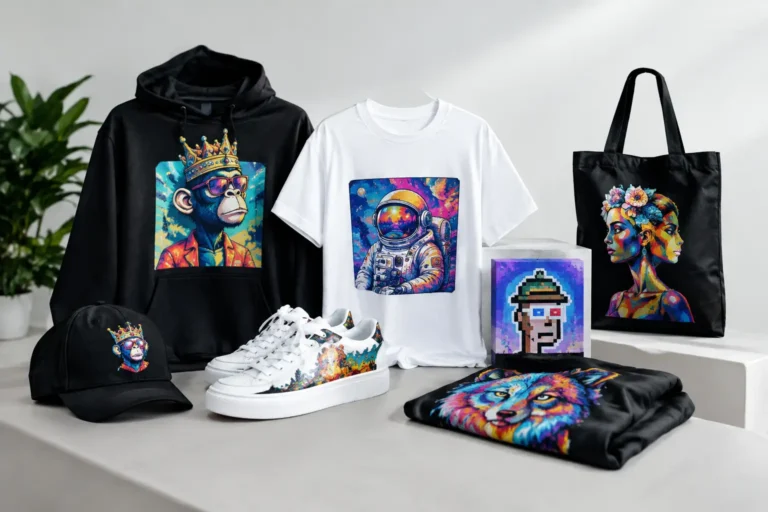
The strongest project merch works as a system. It has a primary mark, supporting graphics, a typography direction, a color hierarchy, and rules for how loud or quiet each item should be. This makes a cap, hoodie, tote, patch, and poster feel related even when they are not identical.
Your primary mark is the one symbol that can survive at small scale. It should work embroidered on a cap, printed on a chest, or placed discreetly near a cuff. Supporting graphics can go bigger: a full-back illustration, a cryptic trait reference, a blockchain-inspired grid, or a date tied to a defining community moment.
Color does heavy lifting here. A project with a familiar palette should own it, but do not force every garment into the same high-saturation treatment. Use a core range of easy-wearing base colors – black, washed charcoal, cream, navy, or forest – then reserve the project color for hits that create recognition. A neon accent on a black heavyweight hoodie can feel more intentional than a full neon garment that only works in product photos.
Typography deserves the same discipline. Generic futuristic fonts age fast. If the project already has a recognizable type style, refine it for apparel. If it does not, choose a direction that matches the culture: clean editorial sans serif, raw marker lettering, industrial condensed type, or playful bubble forms. Keep it consistent long enough for people to associate it with the project.
Give Members Different Ways to Represent
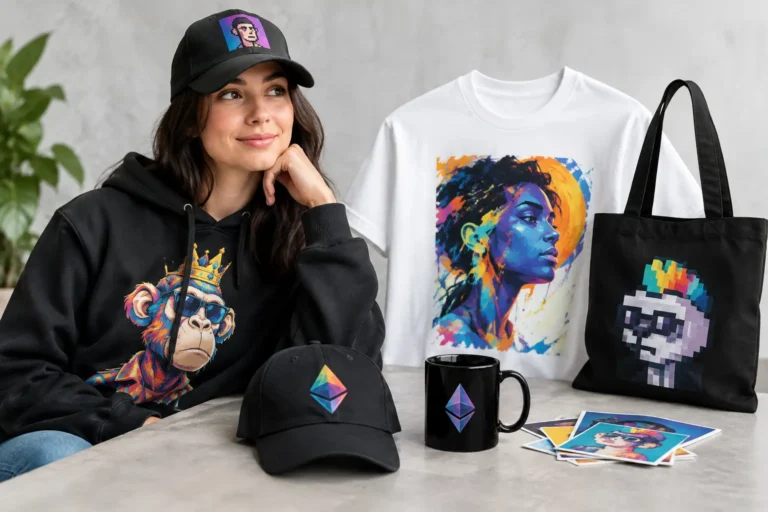
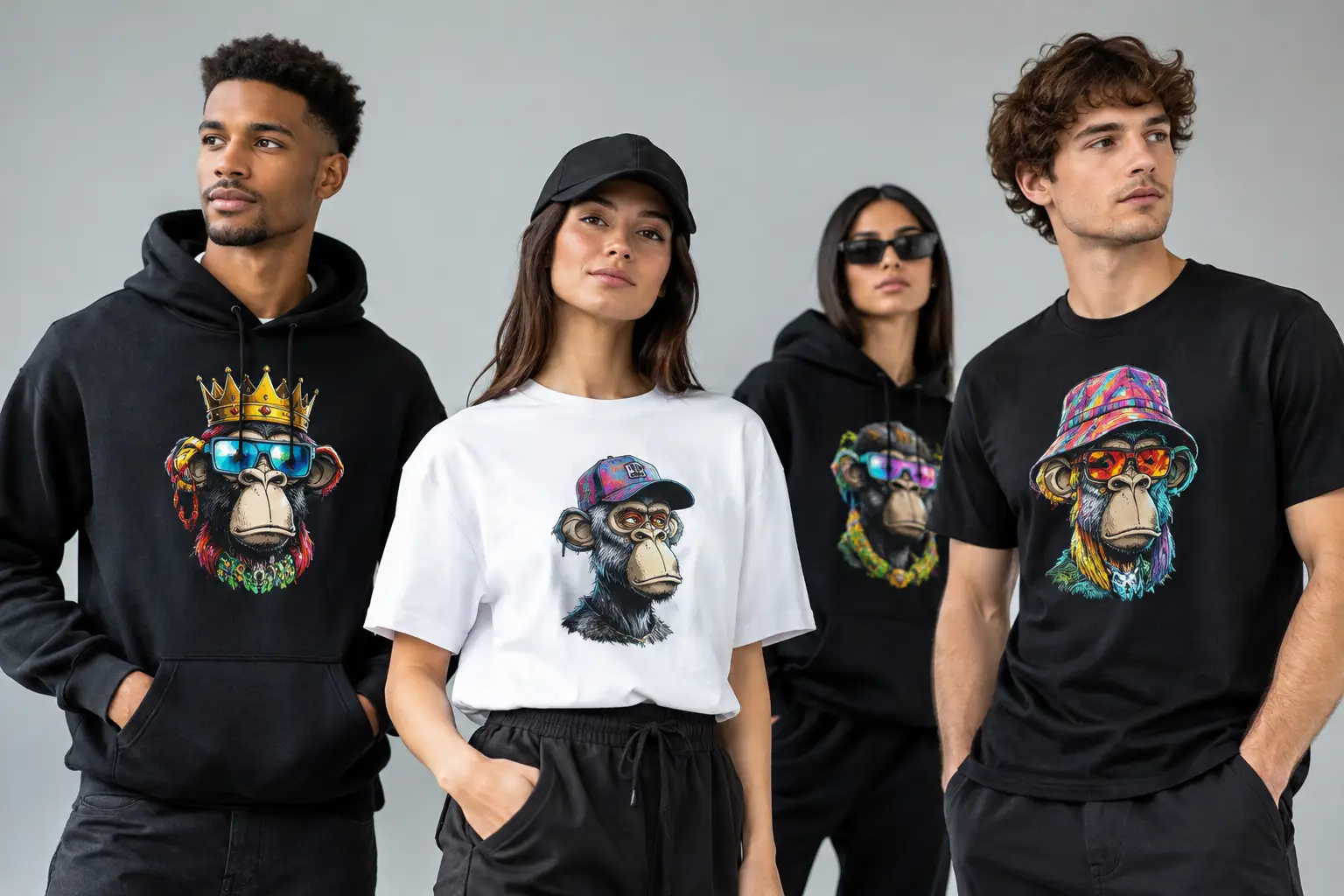
Not every holder wants the same volume. Design a range that lets people choose their level of signaling. A quiet embroidered cap may become the daily driver. A graphic tee can carry the drop. A heavyweight hoodie might become the premium piece reserved for a milestone, an event, or an exclusive holder release.
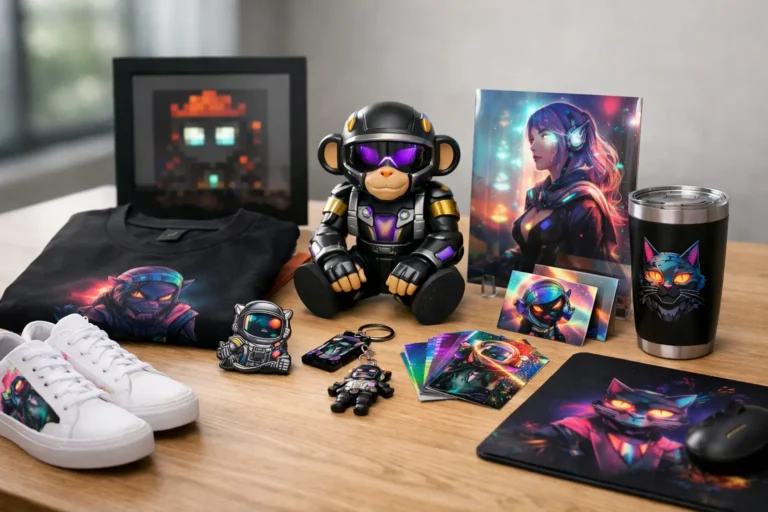
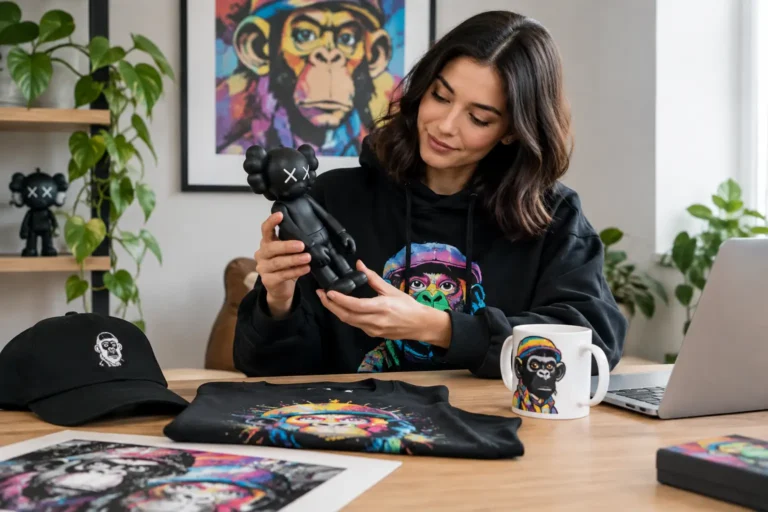
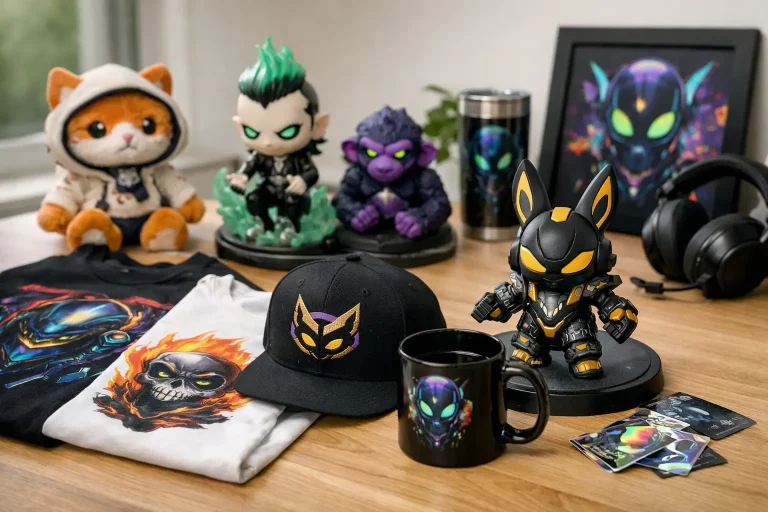
This is where accessories matter. Patches, bags, mugs, stickers, towels, and blankets give supporters lower-commitment entry points while expanding the project’s physical world. They also make the visual system more visible across different settings. The goal is not to flood the market with objects. It is to make each format feel like it belongs.
Choose Pieces People Already Wear
Streetwear credibility starts with the garment, not the graphic. If the blank feels thin, awkward, or generic, even excellent artwork loses force. Build around the items your audience reaches for repeatedly: substantial T-shirts, relaxed hoodies, crewnecks, caps, and bags. These are not safe choices. They are the foundation of a real uniform.
Fit is a strategic decision. Oversized silhouettes can suit a younger, fashion-forward community, but a single exaggerated cut can exclude people who want an easier everyday fit. Consider a balanced assortment: relaxed tees and hoodies as the core, with accessories and classic-fit pieces broadening the entry point.
Print technique should follow the design. Fine line art and detailed digital illustrations need clarity. Big, simple symbols can take texture and distressing better. Embroidery adds tactile status to compact marks, while oversized back graphics give narrative artwork room to breathe. Do not add effects because they are available. Use them because they reinforce the project’s personality.
On-demand production changes the economics in a useful way. You can test a colorway or supporting graphic without gambling on pallets of inventory, and members can buy what they will actually wear. The trade-off is that every product page, mockup, and sizing detail has to be clear. When there is no warehouse clearance culture, the design and purchase experience have to earn the order upfront.
Design for Lore, Not Just Launch Day
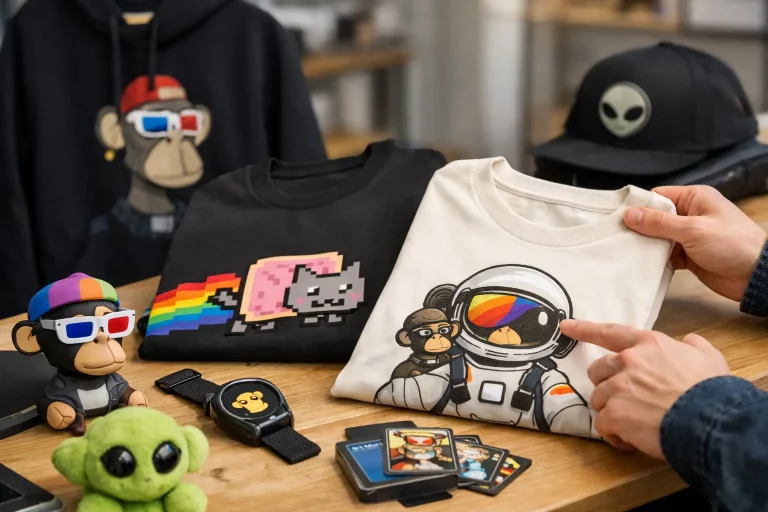
The best NFT project uniforms have a reason to exist beyond announcement week. Tie designs to the community’s mythology: mint dates, landmark proposals, famous memes, seasonal events, traits, side characters, or phrases that only true members understand. That inside knowledge is part of the value.
Still, keep the reference legible enough to look good to outsiders. A stranger does not need to understand every code, but they should recognize that the garment has an intentional point of view. The wearer gets the deeper layer. That is how cultural signaling works.
Limited drops can amplify this feeling, but scarcity needs restraint. If every piece is labeled exclusive, the word stops carrying weight. Reserve truly limited treatments for anniversary capsules, artist collaborations, event-specific items, or holder-gated moments. Keep a smaller evergreen range available for new members who want to rep the project without chasing a resale market.
A thoughtful release rhythm beats constant product churn. Start with a core capsule, watch what gets worn and shared, then extend the system. Maybe the embroidered mark wins over the large front print. Maybe the community wants washed fabrics instead of bright colors. Treat that feedback as creative direction, not just sales data.
Make Authenticity Visible
Web3 communities can spot opportunism fast. Official project approval, credible artist collaboration, accurate visual assets, and clear product storytelling all matter. The merchandise should feel connected to the people who built the culture, not extracted from it.
That also means being honest about the product. Show the garment details. Explain the fit. Use imagery that makes the scale and finish easy to understand. Premium positioning is not a slogan pasted over a standard blank. It is the result of design choices members can see and feel.
For projects building a broader physical presence, NFT Merch can help turn established digital codes into wearable collections without losing the edge that made the community gather in the first place. The strongest outcome is not a one-off souvenir. It is a piece someone reaches for because it looks right – and because the people who know, know.
A project’s uniform becomes powerful when it outlives the feed. Give your community clothing with enough style to stand alone, enough lore to reward belonging, and enough consistency to become part of the legacy.