Authentic NFT Apparel Checklist
You can spot fake NFT merch in about ten seconds once you know what to look for. The real challenge is catching the stuff that looks close enough to pass in a fast scroll. That is where an authentic nft apparel checklist matters – not as a gatekeeping exercise, but as a way to protect your money, your identity, and the culture you are choosing to wear.
Web3 fashion is not just graphic placement on a blank tee. It is affiliation made physical. If a hoodie claims a project name, an artist collab, or community status, it should carry that weight in the details. When it does not, the product usually gives itself away.
Why an authentic NFT apparel checklist matters
In streetwear, authenticity has always been part product and part signal. In NFT culture, that signal gets even sharper because the merch often represents more than taste. It points to ownership, participation, and proximity to a specific community.
That means bad merch does more than disappoint on fabric quality. It can misrepresent the artist, dilute a project, and make the buyer look disconnected from the source culture they are trying to back. A random print-on-demand mockup with lifted art is not the same thing as a genuine brand drop, even if the image looks similar at first glance.
There is also a practical angle. Official merch tends to have cleaner production standards, clearer store policies, and better consistency across sizing and print quality. Unofficial sellers often overpromise, underdeliver, and disappear once the package lands.
The authentic NFT apparel checklist
Start with the source
If the merch is legitimate, the seller should be easy to place. You should be able to tell who is behind the store, which NFT brand or artist they work with, and why they have the right to sell that design. Real Web3 merch does not need to hide behind vague language like “inspired by the blockchain lifestyle” when it is actually borrowing a known project’s identity.
Look for clear project naming, artist attribution, and collaboration framing. If a store sells products tied to recognized collections, there should be some evidence that the relationship is intentional. The strongest signal is a curated storefront built around actual NFT brands rather than a giant catalog stuffed with trend-chasing designs.
That said, not every legit shop will present proof in the same way. Some lead with brand storytelling, others with drop language, and others with product pages that reflect a direct retail partnership. It depends on how the merch business is structured. The key question is simple: does this feel like a brand-led release or a fast flip on someone else’s cultural equity?
Check the design integrity
Real NFT apparel usually respects the original visual language. That does not mean every piece has to be a literal PFP print across the chest. In fact, the best collections often avoid that. They translate digital identity into wearable design choices – typography, iconography, color cues, placement, and references that the community would recognize without turning the garment into a billboard.
When a product feels off, it often is. Watch for stretched artwork, muddy print files, awkward cropping, or graphics that look ripped from a screenshot. If the design does not match the project’s actual aesthetic standards, it is a red flag. Strong NFT merch feels intentional, not improvised.
This is also where taste matters. Some official merch will go minimal. Some will go loud. Both can be authentic. What matters is whether the design feels aligned with the project, not whether it matches your personal style.
Read the product construction, not just the graphic
A real merch play should stand up even if you stripped the artwork away. That means the blank, fit, fabric weight, print method, and finishing details all deserve attention. If a product page gives you nothing beyond a mockup and a generic one-line description, you are buying blind.
Look for specifics on materials and fit. Streetwear buyers know the difference between a lightweight promo tee and a piece built to stay in rotation. The same goes for hoodies, caps, and accessories. Good Web3 merch should feel like real apparel first, branded product second.
On-demand production is not a red flag by itself. It can actually be a smart model for limited communities and lower-waste fulfillment. The issue is whether the seller is transparent about what is being made and how. If the construction details are missing, the product starts to look disposable.
Authentic NFT apparel checklist for trust signals
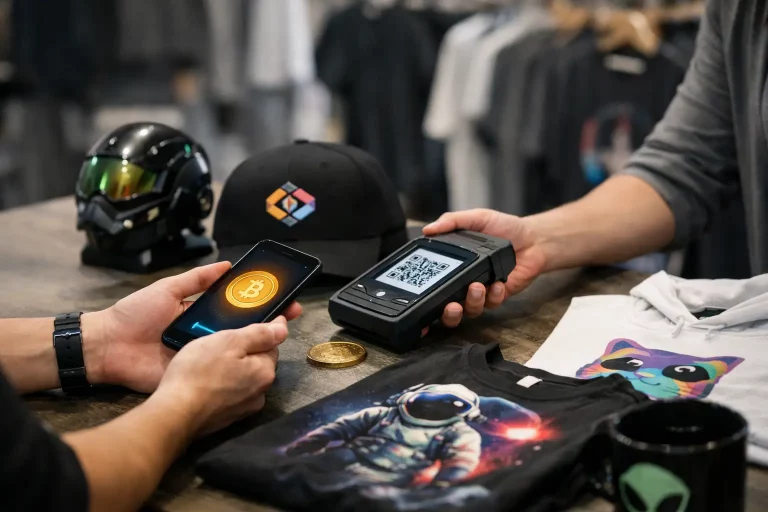
Trust signals in Web3 retail are different from old-school ecommerce, but they still matter. Strong stores make it easy to understand payment options, production timing, returns or exchange expectations, and shipping coverage. If a brand offers crypto payments, that should feel like an added convenience, not a substitute for basic retail standards.
Pay attention to how the store speaks. Authentic operators usually sound like they know the culture and the product. Scammy or low-effort sites lean on hype without substance. They overuse words like exclusive and limited while saying almost nothing about the garments themselves.
You should also be able to tell whether the seller has a real point of view. A curated merch destination usually has stronger credibility than a generic shop trying to monetize every trending project at once. Curation signals standards. Clutter usually signals opportunism.
Watch the pricing logic
Price alone does not confirm authenticity, but weird pricing can expose weak merch fast. If a so-called premium NFT hoodie is priced like a bargain-bin giveaway, something is probably off. If a basic tee is priced at luxury level with no collaboration story, no quality signals, and no design depth, that can be just as suspect.
Good pricing feels connected to the product reality – brand equity, garment quality, print execution, and drop positioning. Community-backed merch can carry a premium, especially when it comes from an established NFT brand or artist. But that premium should be supported by substance.
The trade-off here is real. Some buyers want the lowest possible entry point into a community look. Others want collectible-level merch that feels closer to a fashion drop. Neither mindset is wrong. Just make sure the product matches the ask.
Check how the merch fits the culture
Authenticity is not only legal permission and decent cotton. It is cultural fluency. The best NFT apparel understands what the community values and turns that into something wearable. Sometimes that means understated pieces that reward insider recognition. Sometimes it means bold graphics built for events, meetups, and flex moments.
If a design feels like it could be swapped onto any random crypto buzzword and still make sense, it is probably generic. Real merch has a sharper point of view. It knows the difference between Web3 style and lazy internet branding.
That is why recognized partnerships matter. When an artist or NFT brand is actually involved, the merch tends to carry more than surface aesthetics. It carries context. That context is what makes the piece feel earned.
What buyers usually miss
A lot of shoppers focus so hard on the front graphic that they ignore the buying experience. But authentic merch should feel credible from first click to delivery. Product imagery should be consistent. Descriptions should sound informed. Sizing should be clear. The overall store should feel intentional rather than stitched together overnight.
Another common miss is assuming unofficial merch is harmless if the design looks cool. Sometimes that is a style choice. More often, it drains value from the creators and communities that built the culture in the first place. If ownership means anything in Web3, that principle should extend to apparel too.
For buyers who want fewer question marks, a focused retailer with established Web3 collaborations is usually a stronger bet than a marketplace full of disconnected sellers. A platform like NFT Merch works because it treats NFT apparel as brand merchandise, not just printable traffic bait.
Before you buy, ask one blunt question
Would this still feel worth wearing if nobody asked about it?
That question cuts through a lot of noise. If the answer is yes, you are probably looking at a piece with real design value, not just temporary hype. And if it also comes from a trusted source with clear brand ties, solid product details, and a store experience that respects the buyer, you are not just buying merch. You are backing the culture in the right way.
Own the piece because it connects. Wear it because it holds up.