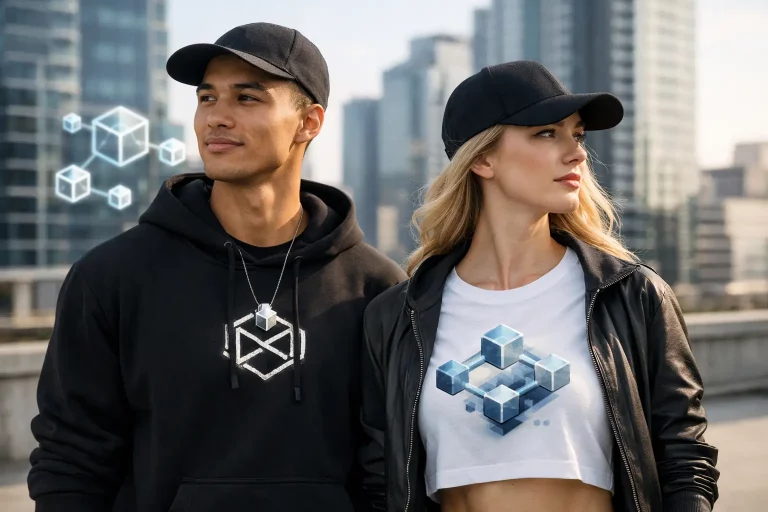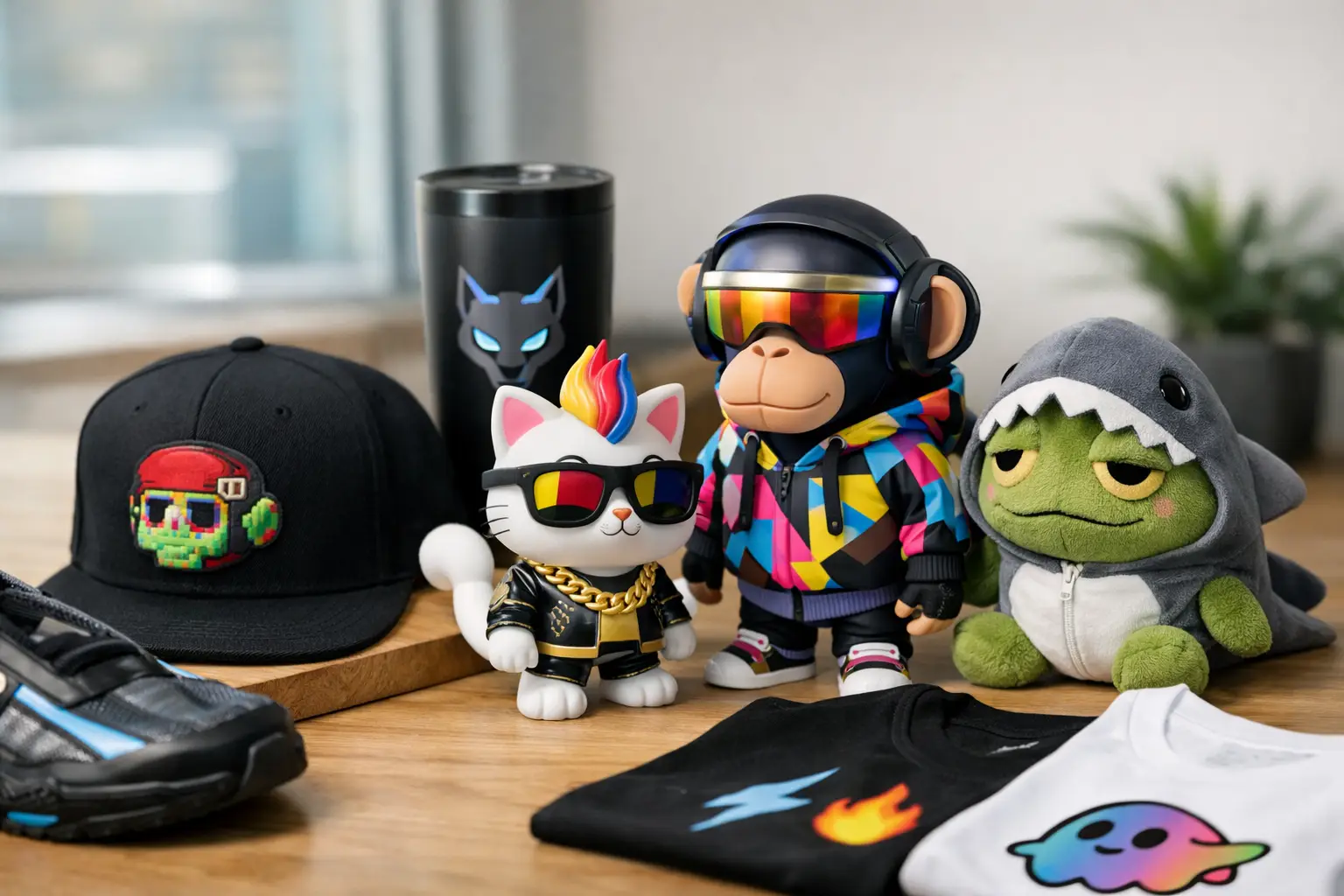
Why NFT Brand Merch Collaborations Matter
A random logo on a blank tee is not the move anymore. In Web3, people can spot forced merch from a mile away, which is why nft brand merch collaborations have become the standard for projects that want real cultural weight offline, not just another product page.
When a drop is done right, it does more than sell hoodies. It gives a community a physical uniform. It turns a PFP, an artist signature, or a shared meme into something you can wear to an event, post on your feed, or keep in rotation long after the market cools off. That shift matters because NFT culture has always been about identity. Merch is where that identity stops living only on-screen.
What makes nft brand merch collaborations different
The difference is authenticity. Generic crypto apparel usually treats Web3 like a trend. Strong nft brand merch collaborations treat it like a culture with its own symbols, aesthetics, and status markers.
That means the best partnerships are not built around slapping art onto fabric. They start with a real brand universe. The collection reflects the project’s visual language, its community energy, and the tone that holders already recognize. If the source brand is playful, chaotic, dark, clean, rebellious, or luxury-coded, the merch has to carry that same signal.
This is where many projects miss. They assume ownership of digital assets automatically creates demand for physical goods. It doesn’t. People buy merch when it feels like an extension of the brand, not an afterthought. A good collaboration understands that fashion has its own rules. Fit matters. Material matters. Graphic placement matters. Timing matters. The product has to stand on its own even before the Web3 context enters the conversation.
The real value is cultural, not just commercial
There is a revenue angle, sure. But the stronger play is cultural expansion. NFT communities live online first, yet their biggest moments often happen when digital identity shows up in the real world.
A strong merch collaboration gives holders and supporters a way to signal membership without explaining themselves. That’s powerful. Streetwear has always worked this way. The right piece tells people what scene you’re part of, what codes you understand, and where your taste sits. In Web3, that same logic applies, just with newer symbols.
For brands, this creates a different kind of staying power. Floor prices move. Timelines move faster. Narratives change every week. Physical merch slows things down in a good way. It gives the brand something tangible, collectible, and wearable. It becomes part of how the project is remembered.
That also makes merch useful beyond holders alone. The best collaborations create an on-ramp for people who may not own the NFT but still want to buy into the culture. A tee, cap, poster, or patch can be the first entry point. It lowers friction while keeping the brand aspirational.
Why streetwear is the natural lane
NFT communities and streetwear have always made sense together. Both run on drops, scarcity, status, and insider recognition. Both reward people who catch signals early. Both care about belonging, originality, and the feeling that you’re part of something before everyone else catches up.
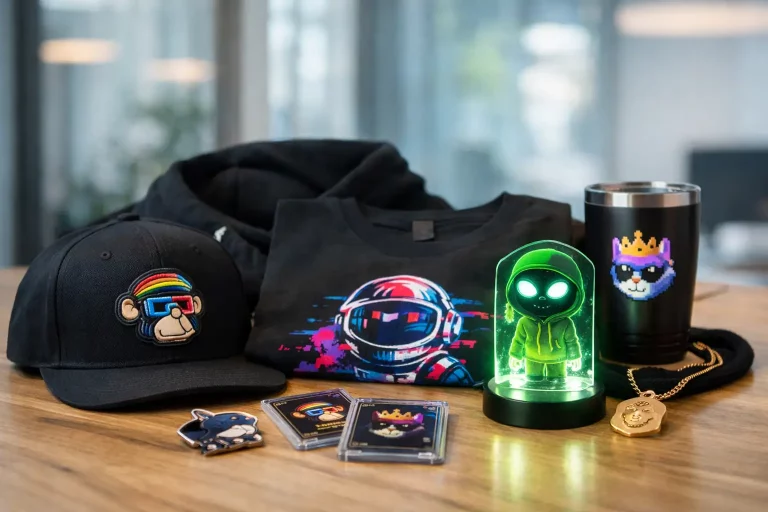
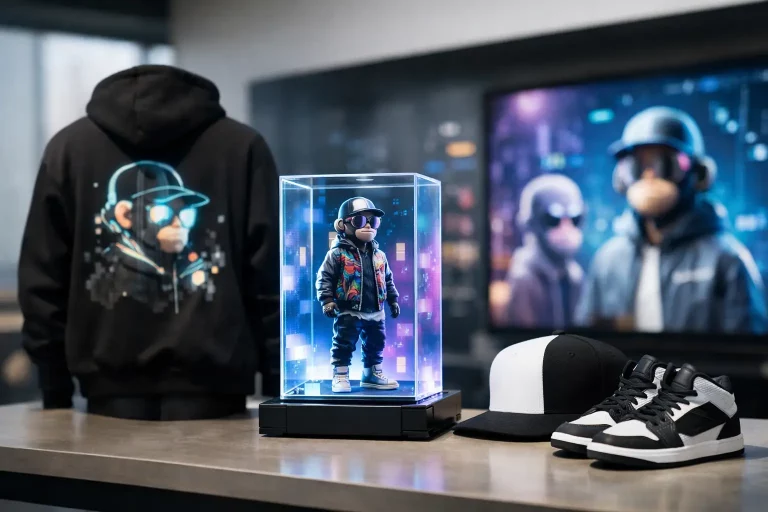
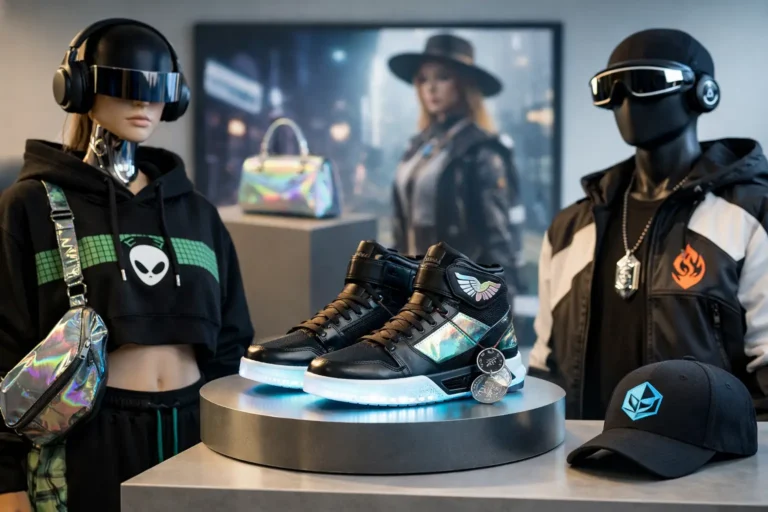
That is why the strongest merch collabs rarely look like corporate promo items. They look like actual pieces people want in their closet. Oversized hoodies, heavyweight tees, statement graphics, embroidered caps, collectible accessories – these formats fit the culture because they already carry social meaning.
There is also a practical advantage. Streetwear gives NFT brands room to express themselves across basics and statement pieces. Not every buyer wants loud graphics. Some want subtle insignias, limited patches, or icon-based designs that only the community recognizes. Others want full-art prints and bolder silhouettes. A good collaboration leaves space for both.
What separates a strong collab from a weak one
First, the partnership has to be credible. If the merch seller has no connection to the space, the collection feels opportunistic. Web3 buyers care who is behind the drop. They want to know the brand relationship is real and the artwork is authorized.
Second, the design has to respect the source material. That doesn’t mean copying the NFT as-is onto every product. Usually, that is the laziest route. Better collaborations translate the project’s aesthetic into apparel language. They remix traits, symbols, color systems, slogans, and visual references into a collection that feels designed, not printed.
Third, the product range needs discipline. More SKUs do not automatically make a better drop. Sometimes a focused release with a few sharp pieces lands harder than a bloated catalog. It depends on the audience, the size of the community, and how collectible the collaboration is meant to feel.
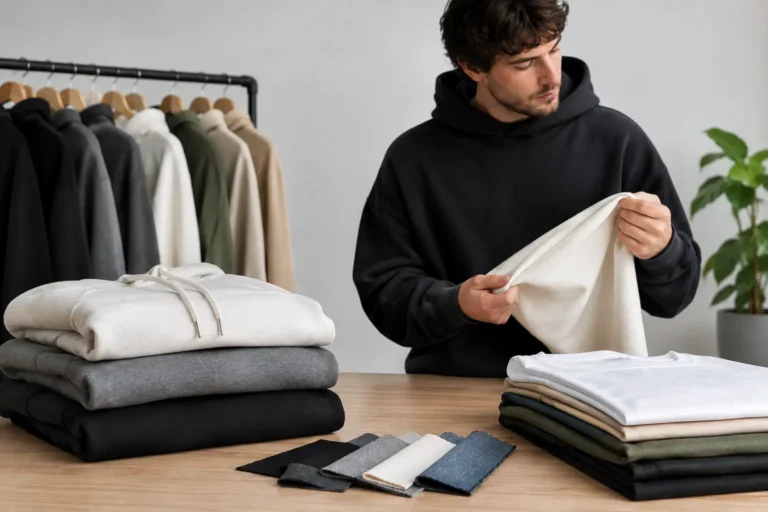
Quality is the other line you cannot cross. In Web3, trust is fragile. If the blank feels cheap or the print washes out fast, the damage is bigger than one bad order. It hits the brand itself. Physical merch is a real-world proof point. If the item feels premium, the project feels premium.
Why on-demand production fits Web3 brands
Not every collaboration needs a massive inventory bet. In fact, on-demand production makes a lot of sense for NFT-native brands because it keeps launches flexible and lowers waste.
That matters when communities are global and demand is hard to predict. One artist may have a tight, high-intent audience that wants a limited capsule. Another project may need broad access across multiple categories, from hoodies to mugs to stickers and home goods. On-demand allows that range without forcing a brand into dead stock or risky minimums.
There is a trade-off, though. On-demand works best when quality control, fulfillment speed, and product curation stay tight. Too many options can dilute the drop. Long wait times can kill momentum. So the model only works when the operator understands both ecommerce and culture.
That is where curated platforms have an edge over generic print shops. They are not just processing designs. They are translating brand equity into product assortments people actually want to buy.
NFT brand merch collaborations as community infrastructure
The smartest projects do not treat merch as a side quest. They treat it as part of community building.
A collaboration can support an event, a milestone, a subcommunity, or an artist release. It can mark a limited chapter in the brand timeline. It can reward early supporters or create a visible layer of identity that strengthens recognition across IRL meetups and online content.
This is bigger than commerce. Merch can become community infrastructure. When people wear the same project in different cities, post fit pics, collect pieces from specific drops, or recognize each other through design cues, the brand gets stronger. The connection becomes lived, not just posted.
That is why exclusivity has to be used carefully. Scarcity can add value, but if every release is too closed off, growth stalls. Open-access merch has a role too. The balance depends on the goal. Holder-only pieces work when the brand wants to reward status. Wider releases work when the brand wants reach and visibility. The strongest merch programs know how to do both without blurring the hierarchy.
Where the category is headed
The next wave of nft brand merch collaborations will be less about novelty and more about maturity. Buyers are getting sharper. They expect better cuts, stronger design systems, clearer brand storytelling, and products that belong in real wardrobes.
That raises the bar in a good way. It pushes NFT brands to think beyond quick cash grabs and into long-term worldbuilding. It also creates space for artist-led drops, cross-community capsules, and collections that feel closer to fashion releases than souvenir merch.
We are also seeing the gap close between collectible and wearable. A poster, blanket, patch set, or limited accessory can hold the same emotional value as a tee if the concept is right. The category is widening, but the standard is getting tighter. People want pieces with proof of culture behind them.
For a retailer in this space, that means curation matters as much as production. Not every project deserves a collab, and not every design deserves a drop. The winners will be the brands that can spot real communities, respect the source material, and turn digital belonging into physical product with taste.
NFT Merch sits in that lane because the point is not to print anything for anyone. The point is to back recognized NFT brands and Web3 artists with merch that feels official, wearable, and worth owning.
If Web3 is building the next layer of identity online, merch is still where that identity gets tested in public. The projects that understand that will not just make products. They’ll own the culture people actually choose to wear.