What the Future of NFT Merchandise Looks Like
A profile picture used to live on a screen. Now it shows up at meetups, on city streets, in creator collabs, and inside everyday wardrobes. That shift is exactly why the future of nft merchandise matters – not as a novelty, but as the next layer of how Web3 identity gets seen, recognized, and worn in public.
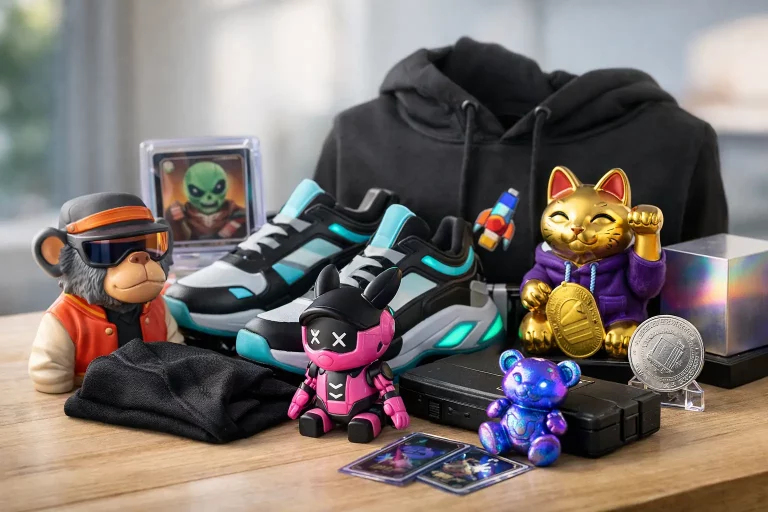
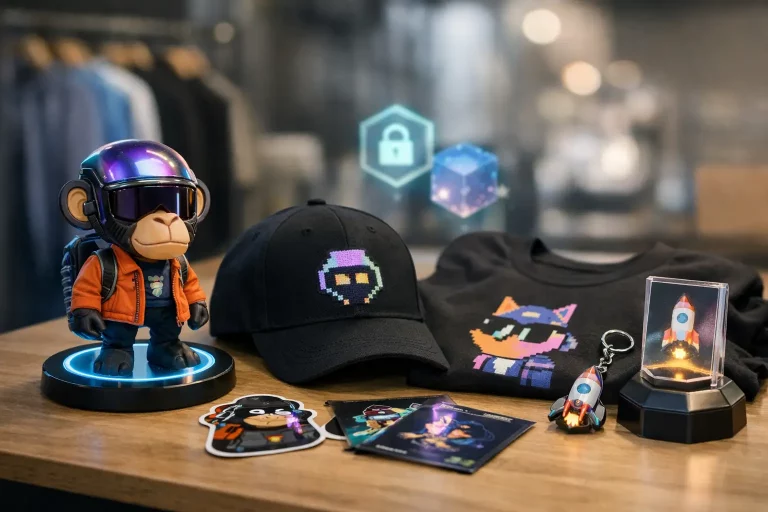
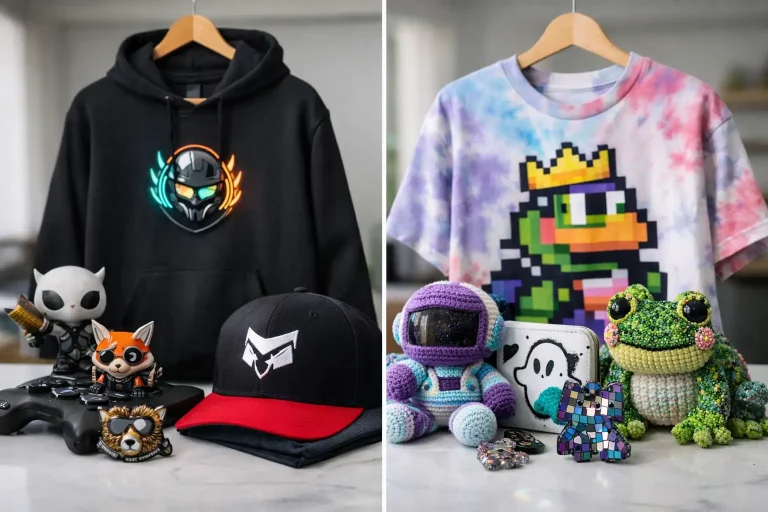
For holders, fans, and collectors, merch is no longer filler. It is proof of belonging. It turns wallet-based culture into something tangible, whether that means a heavyweight hoodie tied to a known collection, a limited poster drop from a digital artist, or accessories that carry the visual language of a community people already know on-chain. Own the culture. Wear the legacy.
Why the future of nft merchandise is bigger than hype
The first wave of NFT merch often felt obvious. Put a popular character on a T-shirt, launch a quick drop, and ride attention while the market was hot. That model still works for some projects, but it is not the direction serious brands are heading.
The future is more selective. Strong NFT merchandise will come from communities with real staying power, recognizable aesthetics, and enough cultural gravity to mean something offline. In other words, the merch has to stand on its own. If it only works because a token price is rising, it will not last. If it still looks good, feels premium, and signals membership in a respected digital scene, it has room to grow.
That is a major difference. The next era of NFT merch is less about cashing in on a moment and more about building products people actually want to wear, collect, and keep.
From token flex to identity layer
Web3 has always been driven by identity. Wallets, PFPs, badges, communities, and digital collectibles all tell people who you are and what circles you move in. Physical merchandise extends that language into real life.
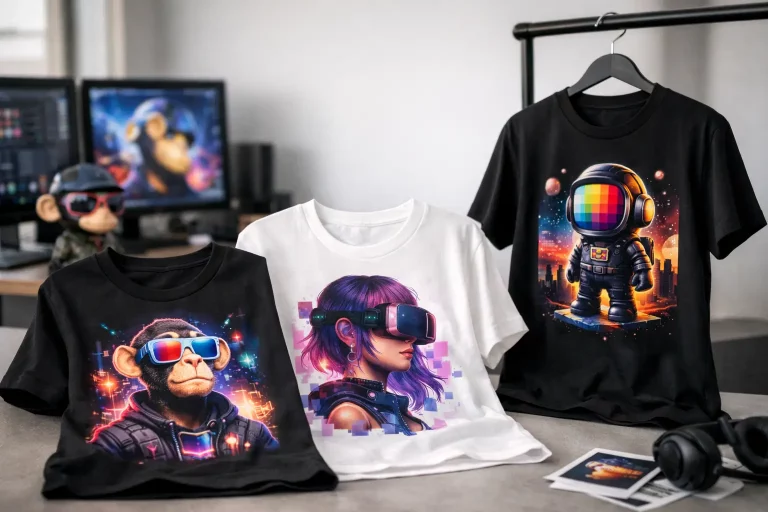
This is why streetwear is such a natural fit. Streetwear has always been about coded affiliation – knowing the drop, knowing the reference, knowing the culture behind the graphic. NFT merchandise works the same way. A cap, patch, or sweatshirt tied to a respected project can say more than a loud logo ever could.
That does not mean every buyer wants the same thing. Some want obvious branding because the point is visibility. Others want subtler design that reads like insider culture. The smartest brands will serve both. Loud pieces help communities rally around a shared visual identity. Quiet pieces create longevity and broader wearability.
The future of nft merchandise will be curated, not crowded
One of the biggest problems in digital merch is oversupply. When everyone can upload artwork and print it on anything, the market fills up with generic products fast. That is bad for trust, bad for design quality, and bad for the long-term value of the brand.
The answer is curation.
As the category matures, buyers will care less about raw quantity and more about whether a store carries recognized projects, official collaborations, and creators with real cultural weight. That shift favors platforms and retailers that act more like merch destinations than generic print shops.
Curation does two things at once. First, it protects authenticity. Second, it raises the fashion standard. Both matter. Web3 buyers are not just shopping for products. They are shopping for affiliation they can trust.
That trust becomes even more important when projects expand globally. A community member in New York, London, Seoul, or Dubai should be able to access real merchandise without guessing whether it is licensed, well made, or shipped reliably. The brands that win here will be the ones that reduce friction while keeping their drops credible.
Utility will matter, but design will matter more
There is always excitement around merch that connects to token-gated access, redemption mechanics, or ownership verification. Those tools can absolutely add value. A product tied to holder benefits or limited eligibility can increase exclusivity and make a drop feel earned.
But utility alone will not carry weak design.
People may buy a token-gated item once for access. They will wear it repeatedly only if it looks and feels right. That is the trade-off many projects are still learning. On-chain functionality is powerful, but the product still has to compete in the real world, where fit, fabric, print quality, and silhouette decide whether something becomes part of a wardrobe or just another souvenir.
The future belongs to brands that treat merch like fashion and collectible design at the same time. That means premium blanks, stronger art direction, tighter edits, and fewer throwaway pieces.
On-demand production fits where Web3 is headed
Fast culture does not have to mean wasteful culture. One of the most practical advantages in the future of nft merchandise is on-demand production.
For buyers, that means more access and less friction. You do not need massive inventory bets or rigid minimums to release pieces tied to specific communities, artists, or moments. For brands, it creates room to test capsules, launch exclusive collabs, and keep a wider range of products live without drowning in unsold stock.
That flexibility is a serious advantage in Web3, where attention moves quickly and communities want fresh drops without waiting on traditional retail calendars. At the same time, on-demand only works if the quality is there. If fulfillment is slow or the final product feels cheap, the model loses its edge. Convenience gets people to checkout. Trust brings them back.
Expect more artist-led and community-led collabs
The strongest NFT merchandise will not come from lazy logo placement. It will come from collaboration.
Digital artists already know how to build worlds, symbols, and visual systems people connect with emotionally. Community-led brands know how to create demand, status, and narrative around a release. When those two forces meet, merch becomes more than product. It becomes an event.
This is where exclusivity still matters. Limited runs, recognizable creative direction, and official partnerships can turn a hoodie or poster into a piece of community history. But there is a balance to strike. If every drop is impossibly scarce, brands leave money and community goodwill on the table. If everything is always available, the energy fades.
The best approach depends on the project. Some collections should live as evergreen staples. Others should stay seasonal, rare, and tied to milestones. Smart merch strategy is not one-size-fits-all.
Physical products will carry digital meaning
The line between physical and digital will keep getting thinner. That does not mean every T-shirt needs a chip, QR code, or token attached to it. Sometimes that added layer helps. Sometimes it is just extra noise.
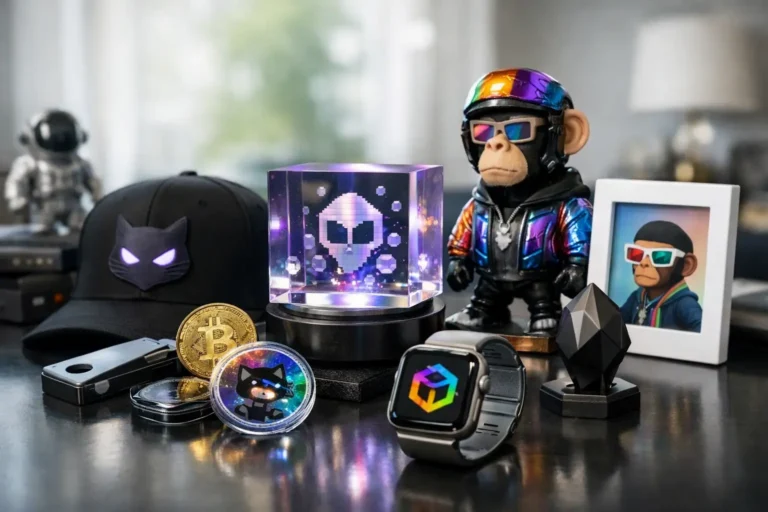
What matters more is that physical products carry digital meaning clearly. A well-made garment tied to a known NFT brand can function as social proof, conversation starter, and collector object all at once. It gives online identity a real-world surface.
That is the bigger story here. NFT merchandise is not trying to replace digital ownership. It is extending it. The wallet shows what you hold. The merch shows what you stand with.
For retailers operating in this space, that means the bar is rising. Product selection, collaboration quality, brand legitimacy, payment flexibility, and worldwide fulfillment all shape whether the category feels premium or disposable. A store like NFT Merch fits naturally into that shift because the value is not just printing graphics on apparel. It is translating real Web3 culture into products people are proud to own.
What buyers will expect next
As the market matures, buyers will become less forgiving. They will expect official merch, better cuts, stronger materials, cleaner graphics, and product pages that feel like retail instead of crypto chaos. They will also expect more choice in how they pay and fewer barriers to getting merchandise delivered wherever they are.
Just as important, they will expect authenticity. Not every project deserves merch. Not every artist should be put on every product. The strongest stores and brands will know when to say no, when to tighten a collection, and when to make a drop feel earned.
That is good for the space. It pushes NFT merchandise away from gimmicks and closer to what it can actually become – a serious category where fashion, fandom, status, and digital ownership meet.
The next wave will not be powered by noise alone. It will be built by brands that understand a simple truth: people do not wear merch just to advertise a project. They wear it to signal taste, allegiance, and presence. Get that right, and the future is not abstract at all. It is already showing up in closets, conventions, airports, and every place online culture becomes real life.