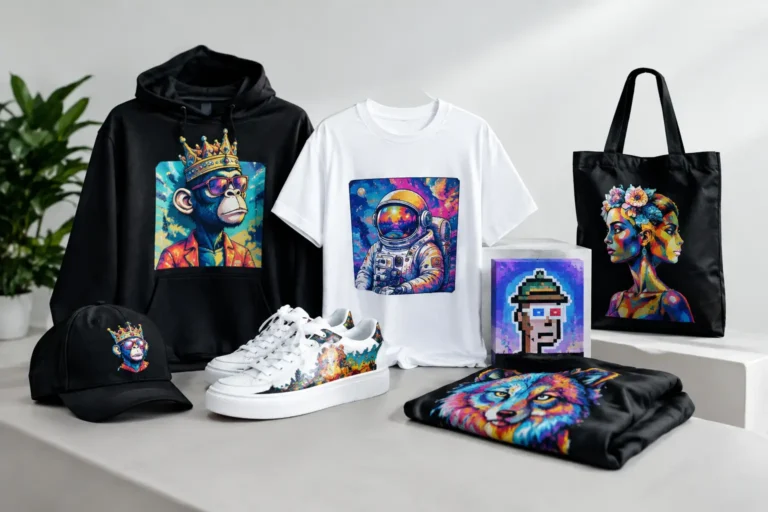
A Guide to NFT Merch Quality That Holds Up
A hoodie can carry a legendary PFP, a cult artist’s mark, or the signal that tells other holders you were there early. But if the blank feels thin, the print cracks after two washes, or the artwork looks like it was dragged from a low-res screenshot, the flex disappears fast. This guide to NFT merch quality is for collectors who want their physical pieces to represent the culture with the same conviction as their digital assets.
Quality is not one thing. It is the relationship between the garment, the artwork, the production method, the fit, and the legitimacy of the collaboration. Get those elements right and merch becomes a wearable artifact. Get them wrong and it is just another forgettable graphic tee.
What NFT Merch Quality Really Means
NFT merch is often judged first by the artwork, and that makes sense. The visual world is the point. Yet a great design cannot rescue a cheap base garment or a poor print. The strongest pieces feel intentional before anyone reads the tag: the fabric has weight, the proportions make sense, the colors have depth, and the graphic looks built into the garment rather than pasted onto it.
For Web3 communities, quality also includes authenticity. A design tied to a recognized project, creator, or collection should be licensed, approved, or clearly connected to the people behind the culture. Official merch is not about gatekeeping a look. It is about respecting the artists and communities that gave the imagery its value in the first place.
There is also a practical distinction between collectible merch and everyday merch. A limited poster may prioritize color accuracy and archival handling. A heavyweight hoodie needs to survive repeat wear. Neither is automatically better. The question is whether the product is made for its stated purpose.
Guide to NFT Merch Quality: Start With the Base
The blank is the foundation. Before looking at a graphic, check what the item is actually made from and how it is constructed. For tees, fabric weight, cotton composition, collar structure, and side seams tell you more than a product mockup ever will. A lightweight shirt can be perfect for summer or layering, but it should be sold as a lightweight shirt, not framed as premium streetwear.
For hoodies and crewnecks, look for fabric weight, fleece composition, ribbing at the cuffs and hem, and whether the garment is likely to keep its shape. A substantial cotton blend generally offers warmth and structure, while a lighter blend may feel softer but can lose its silhouette sooner. Oversized cuts should be intentional too. Oversized is not the same as simply sizing up a standard fit.
Fit is personal, so product information matters. A quality retailer gives a size chart, identifies whether an item runs true to size, and uses clear fit language. If you want a clean, everyday profile, choose your normal size where the cut supports it. If you are after a streetwear silhouette, confirm the garment is designed to drape that way instead of gambling on an oversized number.
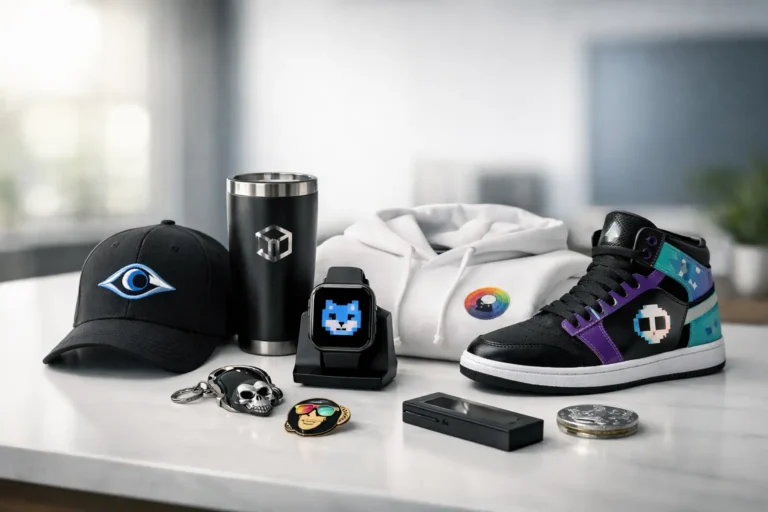
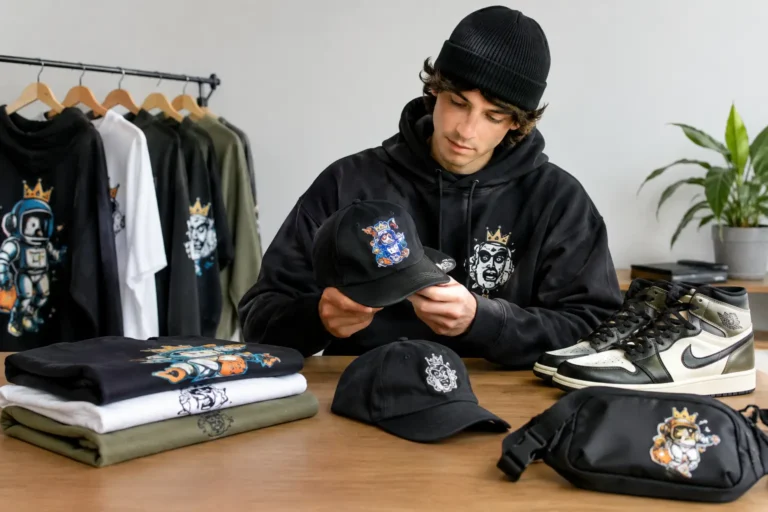
Accessories deserve the same scrutiny. A cap should have solid stitching, a stable crown, and an adjustable closure that does not feel disposable. A tote or bag should have usable straps and enough fabric density for real carrying. Mugs should be made and printed for regular washing, not treated like fragile display pieces unless that is explicitly the brief.
The Print Should Match the Art
The best NFT artwork is often detailed, color-heavy, and full of visual texture. Translating it from a screen to fabric is a production challenge, not a copy-and-paste exercise. Fine lines, gradients, tiny text, and neon palettes need the right method and the right source file.
Direct-to-garment printing can reproduce full-color artwork with impressive detail and works especially well for complex illustrations. Its hand feel is usually softer than a thick transfer, though results depend on the garment color, pretreatment, and artwork preparation. Screen printing can deliver bold, durable color for simpler designs and larger-volume runs, but it is less suited to every intricate, painterly image. Embroidery creates texture and dimension, making it a strong move for symbols, type, and icons, but overly detailed artwork may need to be simplified first.
No method is magic. A massive, dense chest print can feel heavier on the body than a smaller graphic. Bright ink on dark fabric may require a base layer for color payoff. Some vintage-inspired designs are meant to have a softer, worn-in character. The standard is not always maximum brightness. The standard is whether the finish serves the design and is honestly represented.
Check the product images for close-ups when available. Look at line clarity, placement, and whether the graphic sits straight. A centered design should be centered. A full-back print should feel balanced across the shoulder blades. These details sound small until you wear the piece outside the house.
Demand Better Color and File Discipline
Digital artists work in luminous RGB color. Fabric printing operates in a physical world where inks, fibers, and garment tones can shift the result. A high-quality production process accounts for that reality instead of promising that every screen color will look identical in person.
Good merch begins with production-ready files. High-resolution artwork, clean edges, appropriate transparency, and deliberate color choices help prevent fuzzy details and muddy prints. This matters most for generative art, intricate PFP traits, and designs that include small lettering. If a collection’s visual language relies on razor-sharp geometry, the physical version should be tested with that standard in mind.
Garment color also changes the outcome. Black creates contrast and gives a graphic a classic streetwear frame. Natural cotton can soften colors and create a more analog feel. White makes detail visible but is less forgiving in daily rotation. Choose the mood you want, but do not assume the same artwork will behave identically on every blank.
On-Demand Does Not Have to Mean Disposable
On-demand production is a different model from a warehouse full of preprinted inventory. It reduces overproduction, lets communities access a wider range of designs, and makes it possible to buy without waiting for a giant run to sell through. That is a meaningful advantage in a culture built around niche identities and fast-moving creative moments.
The trade-off is that each item is produced for the individual order. Fulfillment times can be different from an item already sitting on a shelf, and minor variation may occur between production batches. That is normal. It should not mean loose quality standards, unclear communication, or careless packaging.
A trustworthy merch experience sets expectations around sizing, production, and care. Follow washing instructions, especially for printed garments: turn them inside out, wash cold when practical, avoid aggressive heat, and do not iron directly over the graphic. Care will not turn weak merch into strong merch, but it will preserve a well-made piece far longer.
Authenticity Is Part of the Product
Web3 has made ownership visible. Merch extends that visibility into streets, events, studios, and group chats that turn into real-world meetups. That only works when the piece carries a legitimate connection to the culture it references.
Be cautious with generic slogans, copied traits, and designs that borrow a project’s visual identity without clear permission. The issue is bigger than branding. Unofficial merch can flatten original art into a trend and redirect value away from the creators and communities who built it.
At NFT Merch, curated collaborations are designed to make that connection clear. A recognized brand or artist relationship gives the buyer more than a graphic. It gives the piece context, credibility, and a place in the wider story of the collection.
A Fast Quality Check Before You Buy
Before committing to a drop, use four signals together: material details, fit information, print close-ups, and collaboration clarity. If those basics are easy to find, the retailer is treating the product like a real garment rather than a mockup with a checkout button.
Then consider how you will actually wear or use it. A heavy hoodie earns its place when you want structure and warmth. A lighter tee may be the smarter everyday choice. A detailed art print might belong on a wall, while an embroidered cap can become the low-key piece you wear on repeat. Buying with a purpose beats buying just because the mint was memorable.
The best NFT merch does not ask you to choose between digital identity and real-world quality. It gives your community signal a physical form worth keeping, wearing, and passing through the culture with pride.