Web3 Fashion Trends 2026 That Earn Their Place
A wallet flex used to live behind a profile picture. Now it shows up at the coffee shop, the airport, the pop-up, and the group photo. The strongest web3 fashion trends 2026 are not chasing a futuristic costume. They are making digital affiliation physical, wearable, and instantly legible to the people who get it.
That shift matters. Anyone can put a token logo on a tee. The pieces worth owning carry a real community story, sharp artwork, and enough quality to survive more than one mirror selfie. For collectors, creators, and onchain communities, fashion is becoming the most human way to take a digital identity offline.
Web3 Fashion Trends 2026: Less Hype, More Signal
The loudest era of generic crypto graphics is losing ground. Not because Web3 identity has become less relevant, but because its audience has developed better taste. A hoodie does not need to scream “blockchain” to prove that its wearer belongs. In fact, the most convincing pieces often use coded references: a character silhouette, a color system, a visual trait, a phrase only holders recognize, or an artist’s signature language.
This is the move from obvious branding to insider signal. Think of it like streetwear’s long-standing relationship with scarcity and subculture. The right graphic can start a conversation with another community member while still looking considered to everyone else. That balance gives a piece longevity.
It also separates official culture from copy-paste merch. Authenticity is not a buzzword when a project, artist, or collection has built a recognizable visual world. It is the difference between wearing something connected to the source and wearing a random internet reference with no stake in the culture.
Wearable IP Is Becoming Community Uniform
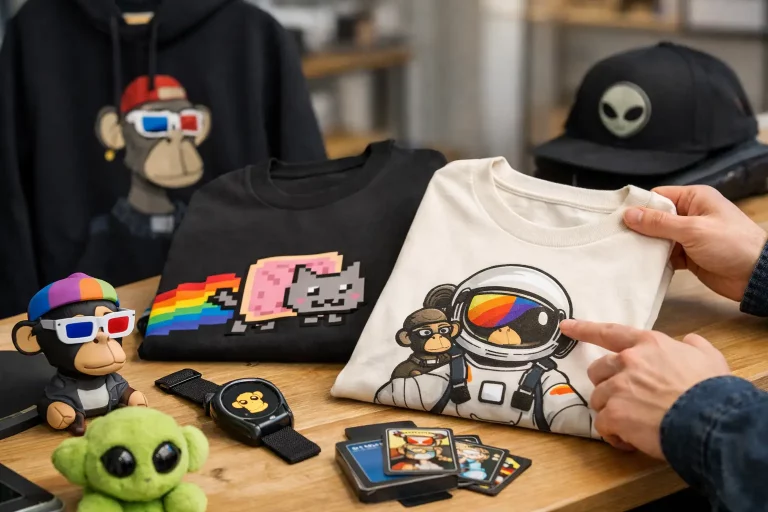
NFT collections and digital artists have something traditional apparel brands spend years trying to create: built-in visual IP and a distributed audience that already feels ownership. In 2026, more communities are treating physical goods as part of their identity system, not as an afterthought after a mint.
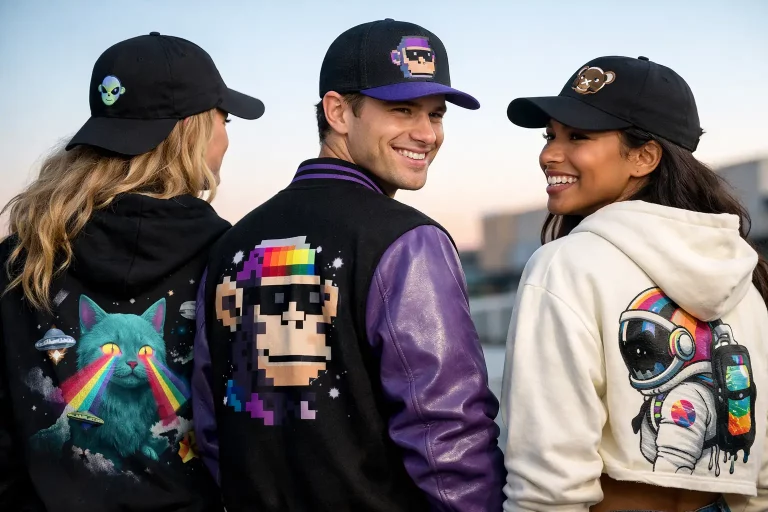
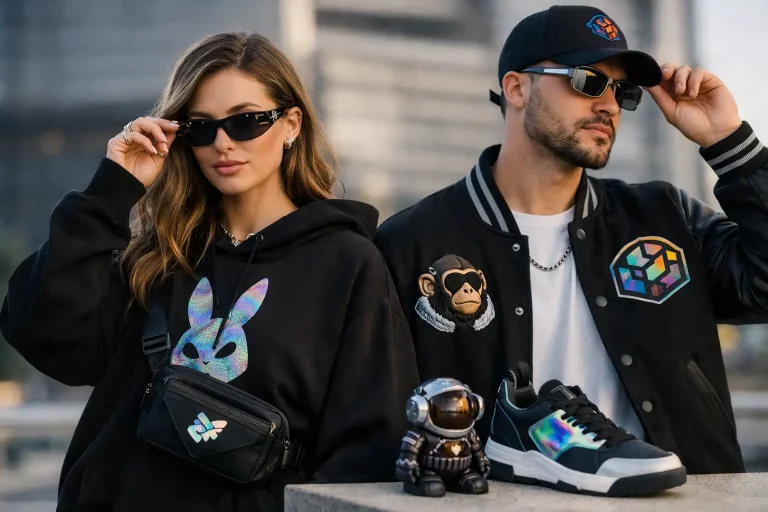
The best drops work as a uniform without becoming uniform. A core tee or cap gives members an easy entry point. Premium hoodies, all-over prints, outer layers, and limited accessories give collectors more room to build a look. The goal is not to dress everyone the same. It is to make affiliation visible in different ways.
For projects, this changes what merch can do. It can reward early supporters, support an event, mark a collaboration, or give an online community a real-world presence. For the wearer, it turns a digital collectible into something with utility beyond a wallet display. You can wear it, gift it, photograph it, and carry the story into places where a token gate cannot.
The drop still matters, but the product matters more
Scarcity remains powerful, especially when it reflects a genuine moment: an artist collaboration, a community milestone, a conference activation, or a seasonal release. But artificial scarcity cannot rescue weak design. A 24-hour countdown may create attention; it will not create a favorite hoodie.
The smarter play is a layered release. Keep a few truly limited pieces for collectors who want the rarest expression, while letting strong evergreen staples remain available on demand. This respects urgency without shutting out newer members who find the community after the first wave.
Better Blanks, Better Graphics, Better Repeat Wear
Web3 fashion is getting judged by the same standard as any serious streetwear purchase. Is the fabric comfortable? Does the print sit right? Does the cut work with the rest of a wardrobe? Would someone wear it when nobody at the party knows the project?
That last question is useful. It forces brands to move past merch that feels like an event giveaway. In 2026, oversized heavyweight tees, substantial hoodies, clean embroidery, tonal graphics, washed finishes, and intentional placement are more compelling than a giant front logo by default. Loud can work, especially for maximalist art communities. It just needs purpose.
Graphic language is widening too. Character art will always have a place, but it is now sharing space with typographic systems, abstract motifs, archival-style prints, digital glitch textures, and subtle patches. A project with a strong visual universe can release multiple design directions without losing recognition.
There is a trade-off. Minimal pieces tend to get more repeat wear, while statement pieces can be more collectible and immediately social. A good collection needs both. Give the everyday wearer a clean option, then give the person building a full look something that hits harder.
Accessories Are the New Entry Point
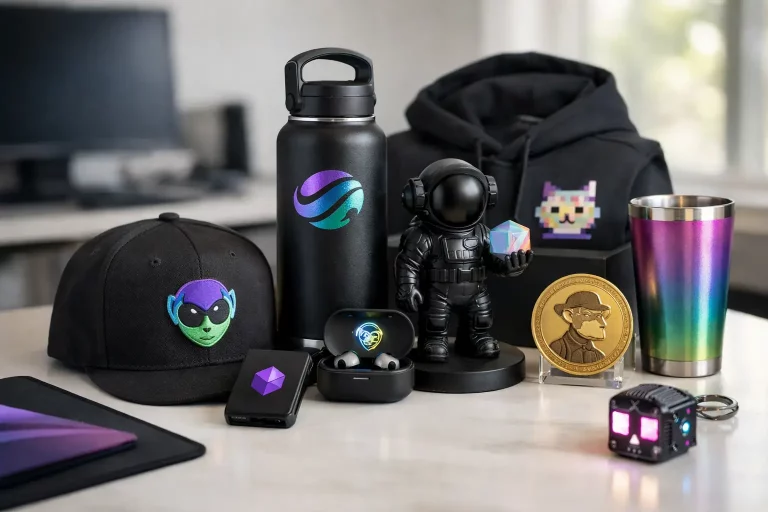
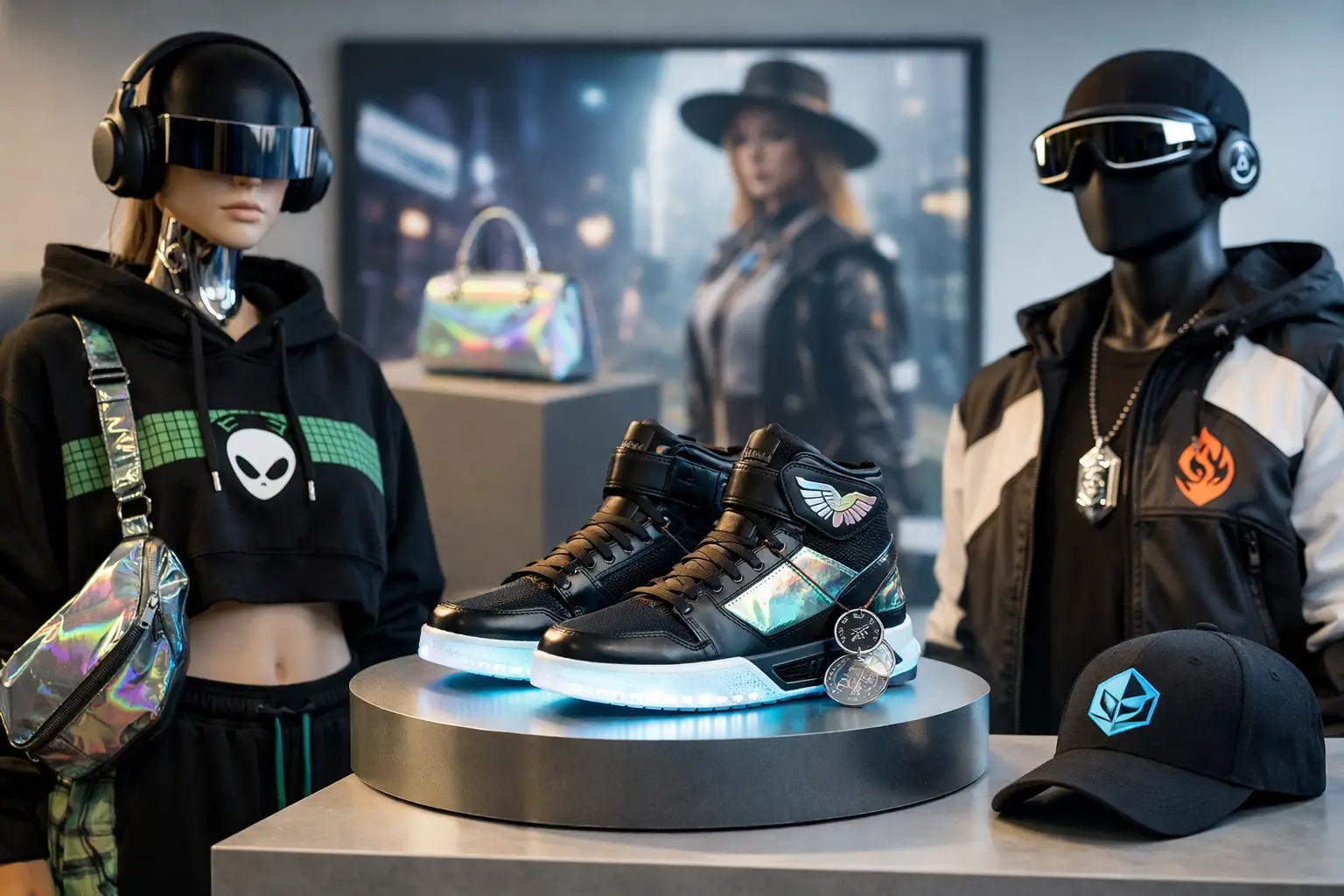
Not every community member wants to make a hoodie their first purchase. Accessories are doing serious work because they bring Web3 identity into daily routines with less commitment. Caps, tote bags, patches, stickers, mugs, phone-friendly graphics, and small collectible add-ons let people participate at different price points and in different style lanes.
They also make sense for global communities. A patch or cap is easier to gift, easier to pack for an event, and easier to wear repeatedly than a one-off novelty item. Small products can be the first physical touchpoint with a digital brand, then lead naturally into apparel once the connection is established.
This is where curation matters. A random catalog full of every possible product can dilute a drop. The strongest accessory lineup feels like an extension of the collection’s world. If the tee has a specific icon, the cap, bag, and patch should build on that same visual vocabulary rather than introducing three unrelated ideas.
On-Demand Production Is Moving From Compromise to Strategy
For Web3 communities, demand is unpredictable by nature. A project can gain momentum overnight. An artist can reach a new audience after one post. A seasonal meme can become the visual reference everyone wants to wear for a month, then disappear.
On-demand production fits that rhythm. It lets brands test designs, serve global supporters, and avoid filling a warehouse with guesses. It is also a more responsible answer to overproduction, especially when a community wants choice across sizes, colors, and products.
Still, on-demand does not mean design without discipline. File quality, garment selection, print technique, sizing guidance, and fulfillment expectations all shape whether a buyer comes back. The operational model is flexible, but the brand experience has to feel deliberate. When done well, it gives a digital-first community physical merch without the friction of minimums or dead stock.
Ownership Is Showing Up in the Details
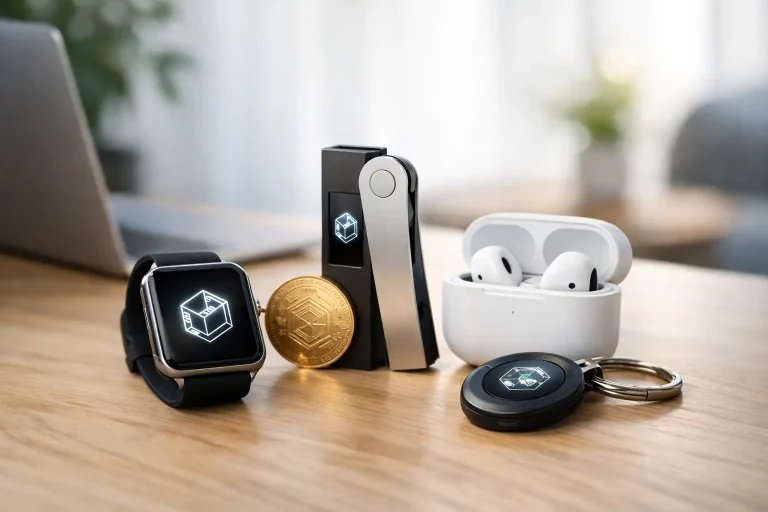
The deepest fashion shift is not that every garment needs a chip, a QR code, or a token claim. Those tools can be useful, but they are not automatically valuable. The better question is whether a digital layer adds meaning to the physical piece.
A verification element can help establish official provenance. A holder-only colorway can reward a committed community. A digital collectible paired with apparel can mark a moment in a project’s history. But if the garment has no design value on its own, technology becomes decoration.
The most credible Web3 fashion treats ownership as a relationship, not a gimmick. You own an asset, but you also belong to a creative network with shared references, artists, and memories. Physical merchandise makes that relationship visible in public.
The real flex is recognition
Status in this space is evolving. It is less about announcing a floor price and more about being recognized by the right people. A well-designed piece from a respected artist or established collection communicates taste, participation, and proximity to culture without needing an explanation.
That is why official collaborations carry weight. They connect the garment to a source that community members already trust. At NFT Merch, curated drops built around recognized Web3 brands and artists aim to preserve that connection, turning digital culture into apparel that belongs in rotation.
What to Look for Before You Buy
Before adding Web3 apparel to your closet, ask whether the piece gives you more than a logo. Look for a real relationship to the artist, collection, or community. Check whether the artwork feels native to the IP rather than lifted from a trend cycle. Then consider the practical part: fit, material, care, delivery expectations, and whether you can picture wearing it more than once.
A collectible can be rare and still be badly made. A clean staple can be widely available and still become the piece you reach for every week. The best choice depends on what you want from it: a visible membership badge, a design collectible, an event memory, or simply a strong addition to your everyday lineup.
Wear what carries a story you actually want to represent. In a culture built online, that is how the right piece becomes more than merch: it becomes proof that your community has a life beyond the screen.