Why Do NFT Projects Sell Merch? It’s More Than Hype
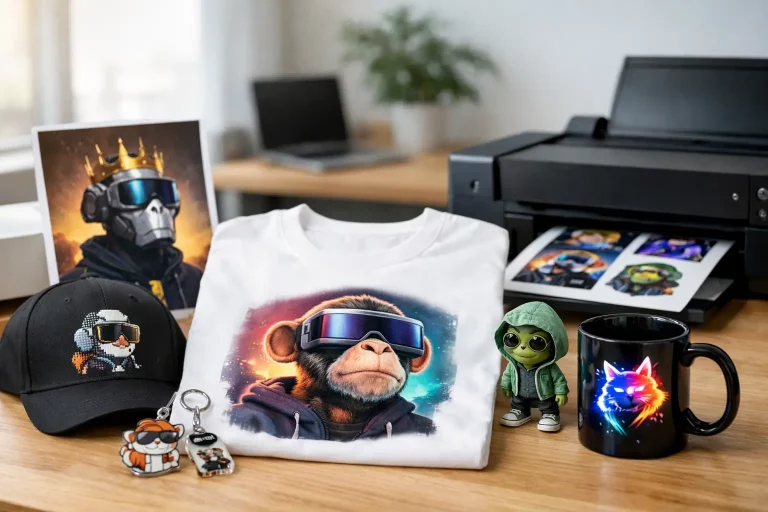
A wallet full of NFTs can signal conviction online. A hoodie, cap, or patch takes that signal to the street, the festival, the coffee shop, and the group chat selfie. That is the real answer to why do NFT projects sell merch: Web3 communities do not just want to hold culture in a wallet. They want to wear it, recognize it, and make it part of real life.
For the strongest projects, merch is not an afterthought with a logo slapped on a tee. It is a physical extension of the collection’s visual language, its members-only energy, and the identity people bought into from day one. Done right, it turns an NFT project from a digital asset into a brand people can actually live in.
Merch makes digital identity visible
NFT ownership is powerful, but it is often invisible outside crypto-native spaces. Your wallet may prove provenance, access, or status, yet most people will never see it unless you show them a screen. Merch changes the format.
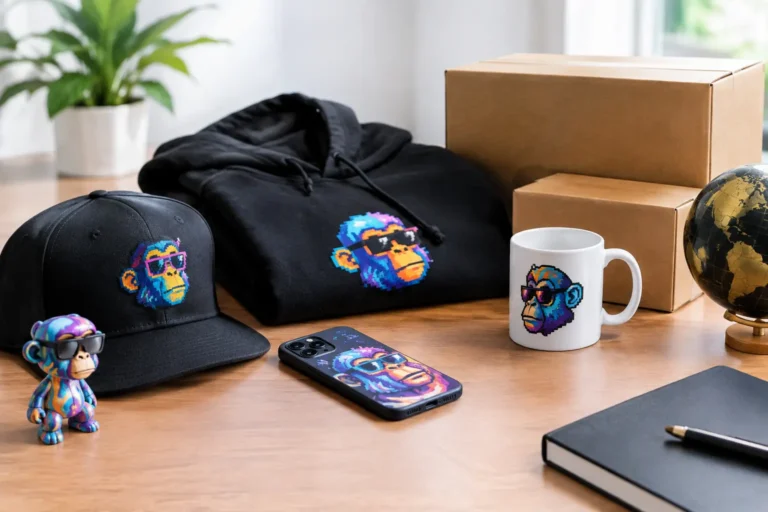
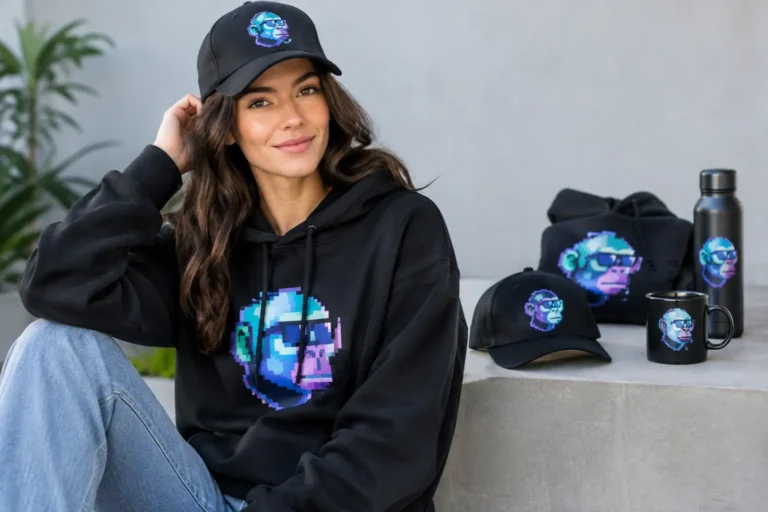
A recognizable graphic on a heavyweight sweatshirt can start a conversation without asking anyone to scan a wallet. A cap can signal that you were early, that you understand the reference, or that you belong to a specific corner of internet culture. It gives collectors a way to carry a digital affiliation through the physical world.
That matters because NFT projects are built around more than tokens. Their value often lives in shared taste: the art style, the humor, the lore, the memes, the Discord references, and the feeling that a community found something before everyone else did. Apparel makes that shared language legible.
There is a difference, though, between making branded clothing and making something people genuinely want to wear. A low-effort tee may create a quick revenue spike, but it does little for long-term identity. Design-led drops, considered color palettes, good blanks, and artwork that stands on its own give the community a piece worth reaching for even when no one asks what an NFT is.
Why NFT projects sell merch beyond revenue
Yes, merch can create another income stream. It helps projects diversify beyond initial mint revenue, creator royalties, or token-driven economics. That is useful, especially when market cycles are unpredictable. But treating merchandise as a cash grab is the fastest way to drain its cultural value.
The bigger opportunity is brand building. Physical products create recurring touchpoints with members who may not be trading, posting, or attending online events every day. Someone wearing a project hoodie is reminded of the community each time they put it on. Someone seeing that hoodie may become curious enough to look up the art, the creator, or the movement behind it.
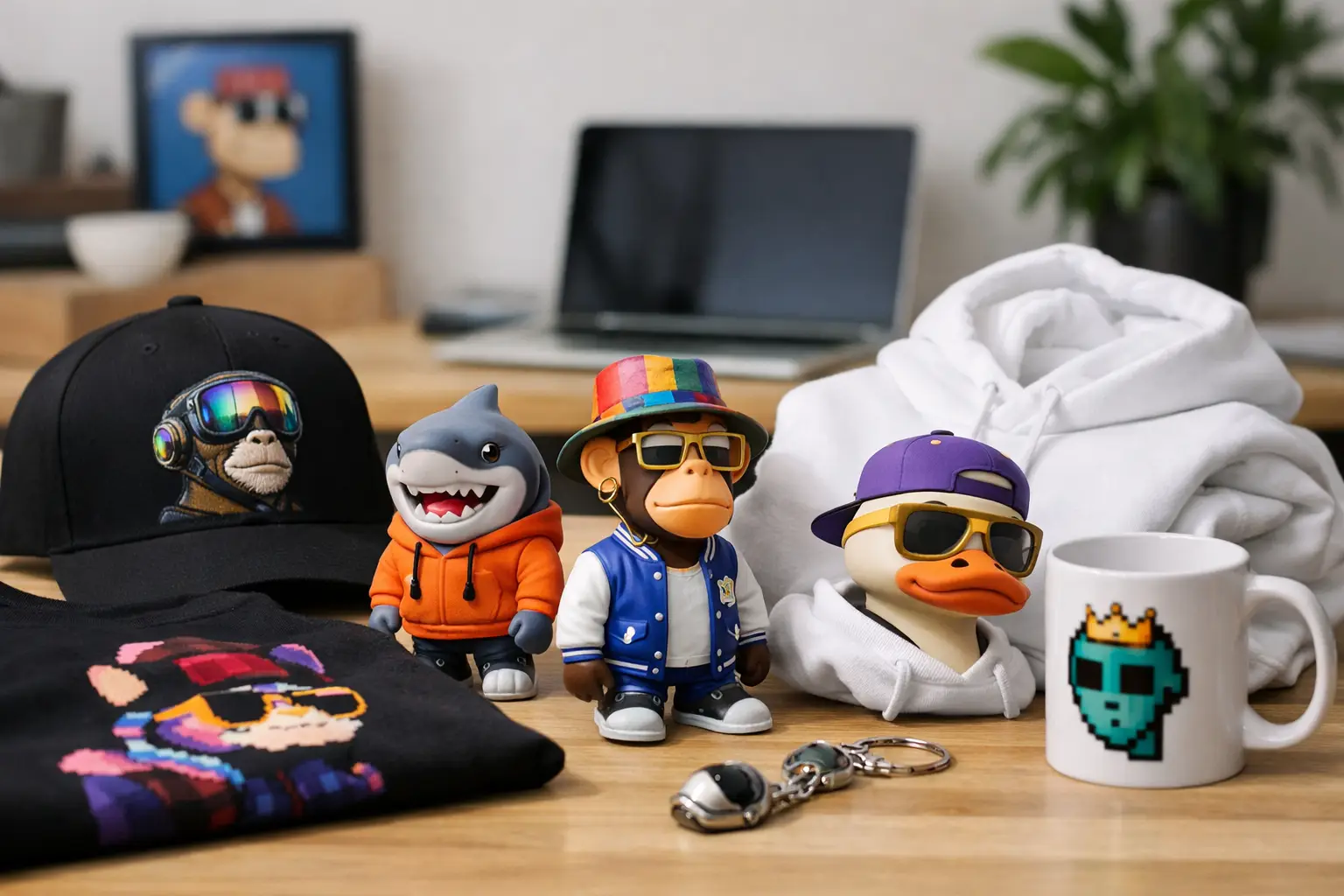
Merch also broadens the circle. Not every supporter owns an NFT, and not every future collector is ready to enter a wallet, buy crypto, or navigate a marketplace. A poster, mug, sticker pack, or tee offers a lower-friction way to participate. It lets fans support the project’s creative universe without pretending that everyone needs to be a holder first.
That is not a dilution of ownership when it is handled with intention. It can be a funnel into the culture. Holders may receive first access, limited colorways, special artwork, or authenticated editions, while newcomers can still buy a piece of the world and earn their way closer to the community.
Physical drops create real-world community signals
Online communities move fast. Timelines reset, servers get noisy, and attention gets scattered across new platforms. Physical merch has staying power. It sits on a shelf, hangs in a closet, travels through airports, and appears in photographs long after a campaign ends.
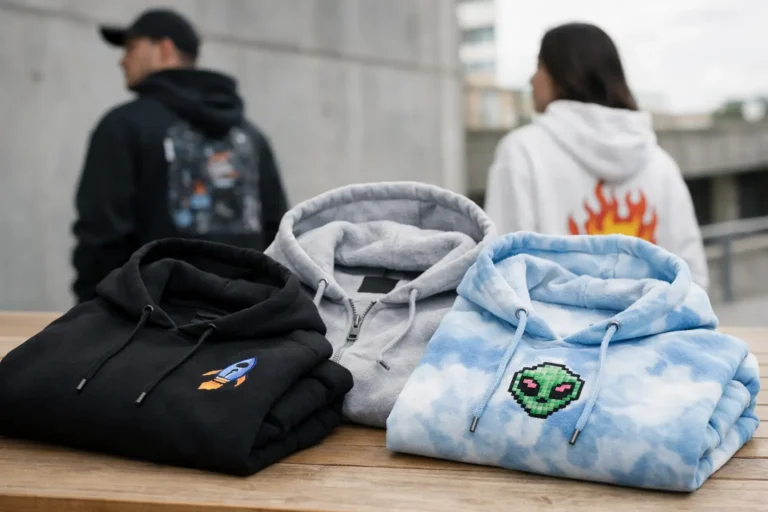
That persistence turns garments and accessories into social objects. At conferences, art events, meetups, and pop-ups, a recognizable piece can create instant familiarity. You may not know someone’s handle, but you know the character embroidered on their jacket. That small recognition can become a conversation, a collaboration, or a new connection in the community.
Streetwear has always understood this. The best pieces are not simply advertisements. They are badges of taste and access. NFT projects can use the same principle, but with an added layer: ownership culture. Members are not only buying a design. They are showing affiliation with a creative network they helped fund, shape, and spread.
This is why limited drops often work better than permanently available, generic-looking merchandise. Scarcity should not be manufactured for its own sake, but a well-timed release can mark a meaningful moment: a collection anniversary, an artist collaboration, a community milestone, or an in-person event. The item becomes a timestamp people can wear.
The best merch protects the project’s creative DNA
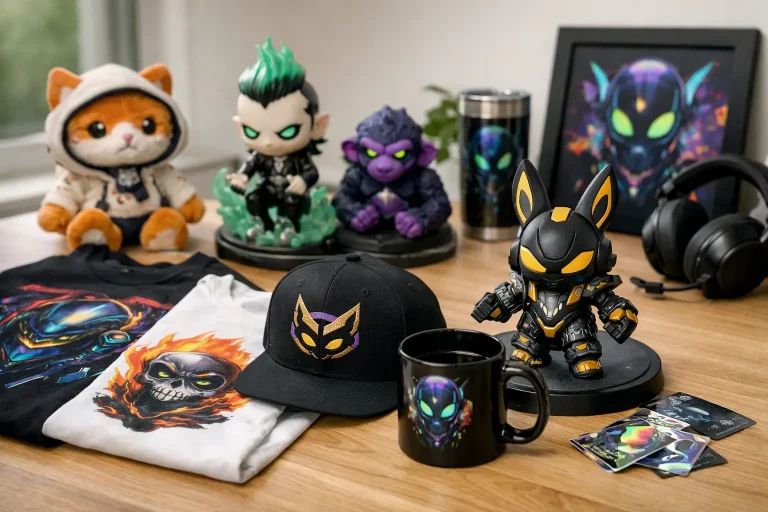
A project’s art is its fingerprint. If the merch ignores that fingerprint, it can feel like a licensing deal with no soul. The strongest collections translate their visual world into product design rather than just placing a PFP in the center of a shirt.
Sometimes that means a loud all-over graphic. Sometimes it means a minimal chest mark, a woven label, a back print with lore, or a patch only longtime community members will understand. The right direction depends on the project and its audience. A maximalist digital art brand can go bold. A more refined collector community may want understated pieces that work beyond a convention floor.
The product itself matters too. A great illustration printed on a thin, poorly finished tee will not build trust. Quality is part of the message. When a project asks members to wear its name, it is placing its reputation on the fabric, the print, the fit, and the fulfillment experience.
On-demand production can be especially smart for projects testing demand across a global audience. It reduces the risk of sitting on boxes of unsold inventory and allows more flexible product selection. The trade-off is that projects must stay disciplined about product standards, clear sizing, and delivery communication. Sustainability claims also need to be honest: producing to order can reduce excess stock, but it does not automatically make every supply-chain decision low impact.
Merch can reward holders without shutting everyone out
Token-gating is one of the most useful tools in NFT merchandising when it serves a real purpose. Holder-only access can reward early believers with a limited edition, a private pre-sale, a special print, or customization unavailable to the wider public. That turns digital ownership into a tangible benefit without making the product itself complicated.
Still, exclusivity has a ceiling. If every physical product is locked behind ownership, a project can miss the fans who amplify its culture and may become future collectors. A layered approach is usually stronger: open products for the wider audience, early access for members, and genuinely rare pieces for holders or major milestones.
The key is clarity. Do not imply that a standard hoodie is an investment. Do not use vague scarcity language to pressure people into buying. State what is limited, why it is limited, and what the buyer receives. Web3 communities are quick to spot a forced drop. They also know when a release feels earned.
From collection to lasting cultural brand
The question is not simply whether a project can print merch. Almost anyone can. The real question is whether the project has a point of view worth wearing.
Projects that last tend to build worlds, not just floor-price conversations. They give people symbols, stories, characters, and values they want to bring offline. Merchandise makes that transition concrete. It can turn a digital artwork into a daily uniform, a community joke into a collectible patch, or a moment in Web3 history into something that remains in rotation years later.
For collectors, that is the appeal. You are not buying generic crypto apparel. You are choosing a piece that says where your taste lives and which creative movement you back. Curated, authentic drops from platforms like NFT Merch help keep that signal intact by putting recognized project art on products designed to be worn, not discarded.
The next time a project releases a tee, look past the logo. Ask whether it carries the art, the story, and the community forward. If it does, wear it like proof that digital culture has a life beyond the screen.