Print on Demand Apparel Review for Web3 Creators
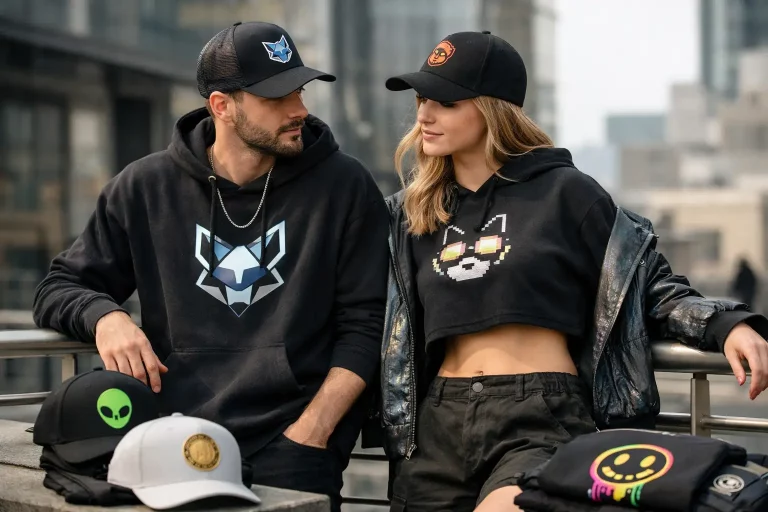
A hoodie is not just a hoodie when it carries the visual language of a collection, DAO, or digital artist people recognize. It is a real-world signal. This print on demand apparel review looks past the generic promise of “custom merch” and asks what on-demand production actually delivers for Web3 communities that care about provenance, design, quality, and status.
For creators and collectors, the appeal is obvious: no warehouse full of unsold blanks, no massive upfront run, and no reason to wait for a community to become enormous before giving it something wearable. But print on demand is not a cheat code. The best results come from treating apparel as a brand extension, not a logo placement exercise.
What a Print on Demand Apparel Review Should Measure
Most reviews stop at product range and price. Those matter, but they miss the bigger question: does the final piece feel worthy of the culture behind it?
A strong on-demand apparel operation should be judged on four connected areas: the quality of the base garment, the sharpness and durability of the print, the accuracy of the product presentation, and the reliability of fulfillment. If one breaks, the customer feels it immediately. A heavyweight graphic can look expensive online, then lose its energy if the tee is thin, the print is dull, or the fit is nothing like the mockup.
For Web3 merch, authenticity belongs in that list too. A graphic might be technically well printed and still feel wrong if it comes from an unofficial source or uses a project’s visual identity without context. Communities know the difference between a borrowed aesthetic and a real collaboration. The former is a transaction. The latter is a wearable receipt for belonging.
Where On-Demand Apparel Wins for Web3
The strongest case for print on demand is not convenience alone. It is flexibility with less waste. A project can release a limited visual concept, test which silhouettes its holders actually wear, and avoid guessing demand six months ahead.
That matters in a culture that moves quickly. A new artist collaboration, a collection milestone, an IRL event, or a meme that takes over the timeline can become a physical drop while the moment still has heat. Traditional bulk production can make sense for a proven bestseller, but it requires forecasts, storage, capital, and a tolerance for leftovers. On-demand production keeps the entry barrier low without making the product feel low effort.
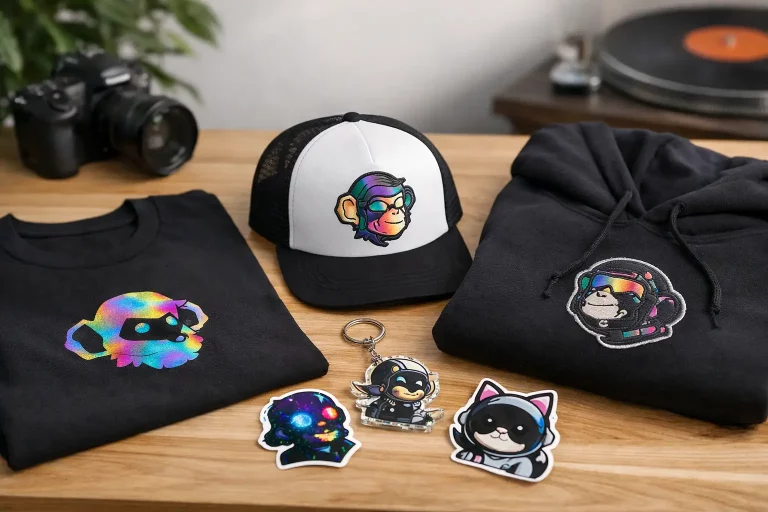
It also gives smaller communities a fairer starting point. You do not need to commit to hundreds of units before finding out whether your members want washed black tees, oversized hoodies, embroidered caps, or something beyond the usual merch formula. Buyers can order one piece. Creators can focus on the art direction. The community gets a choice instead of a compromise.
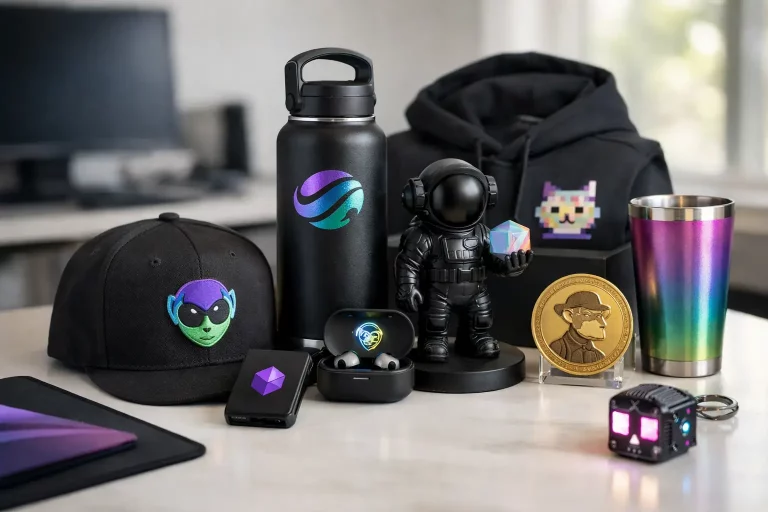
For a curated destination such as NFT Merch, that model supports a broader mix of recognized NFT brands and Web3 artists without turning every collection into a risky inventory bet. The opportunity is not endless products for the sake of it. It is giving distinctive digital identities a credible route into physical culture.
The Quality Test: Blank, Print, and Fit
The base garment sets the ceiling. No graphic can rescue a poor blank. A good print on demand apparel review should tell buyers whether a shirt feels lightweight or substantial, whether a hoodie has structure, and how the item is likely to fit in real life. Streetwear buyers often want room through the body, a sleeve that sits right, and fabric that holds its shape after repeat washes. A slim, lightweight promotional tee serves a different purpose than a heavy cotton piece meant to become part of someone’s rotation.
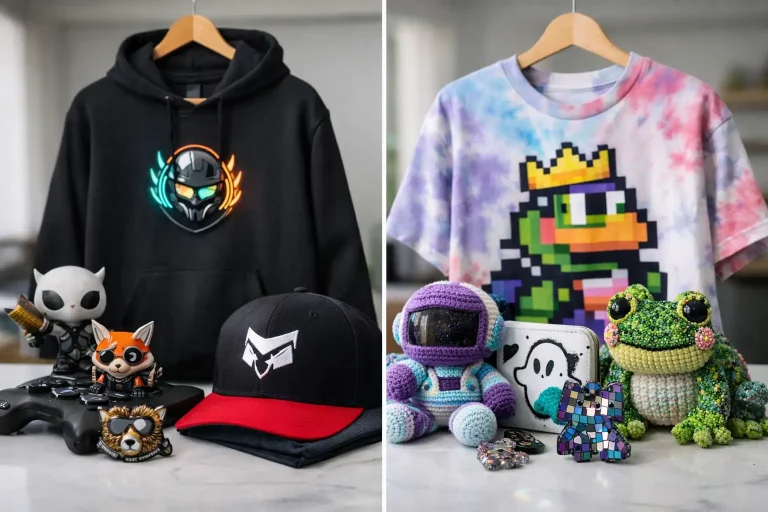
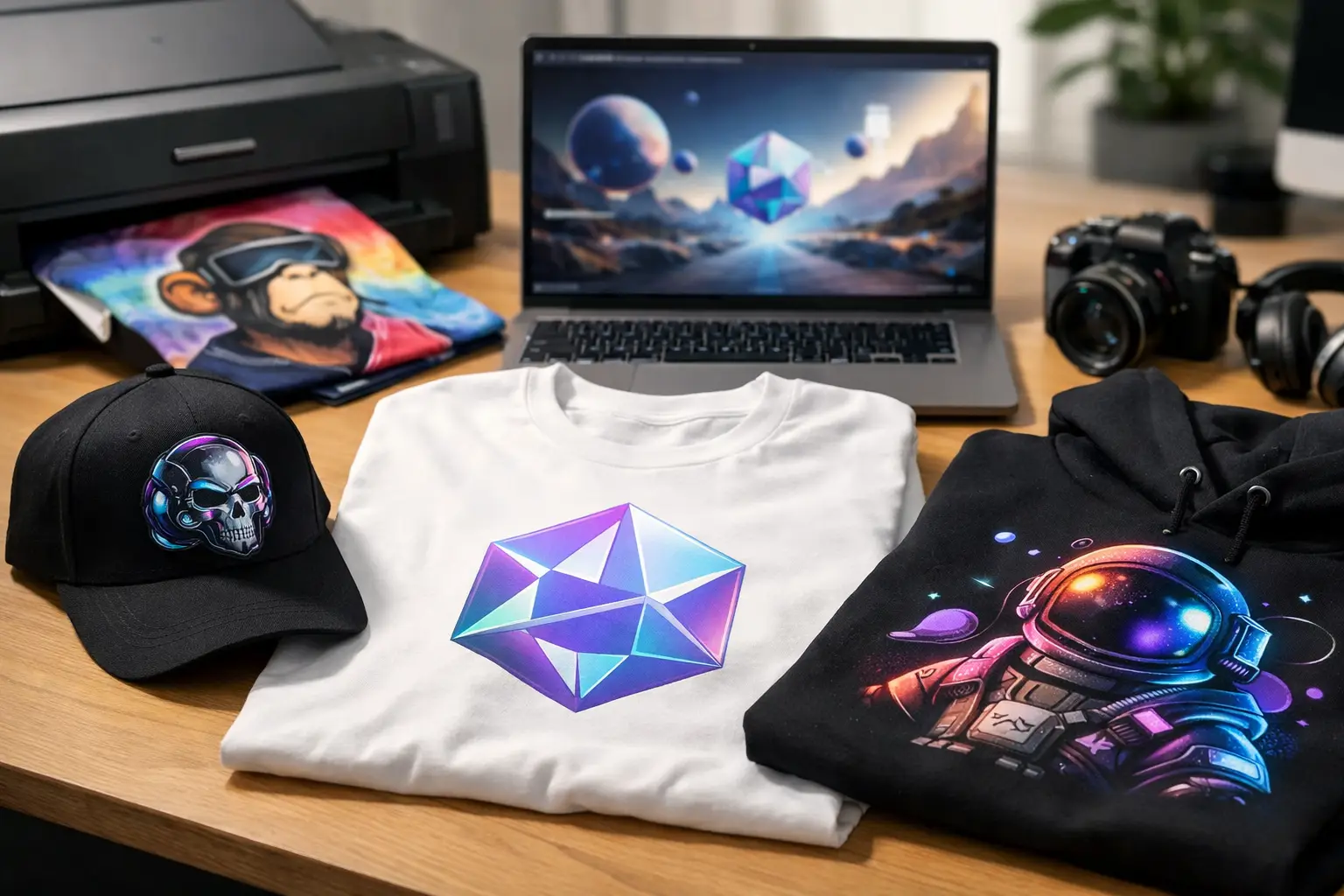
Print method is equally important. Direct-to-garment printing works especially well for detailed digital artwork, gradients, and full-color designs. It lets artists preserve the strange, layered, high-definition energy that makes much of Web3 art compelling. The trade-off is that the result can vary with garment color, fabric composition, and file preparation. Fine details need contrast. Dark garments may need a white underbase. Low-resolution source art will still look low resolution when printed.
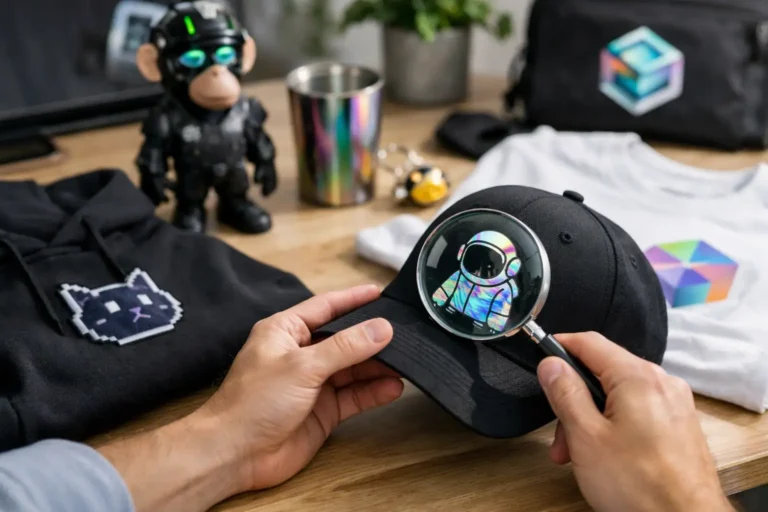
For simple, bold marks, embroidery or a clean single-color treatment may carry more authority than a full-front illustration. A woven patch on a cap, a restrained chest logo, or a large back graphic can feel more collectible because the design has room to breathe. This is where art direction earns its place. More ink does not always mean more impact.
Fit needs the same care. Product photos and size charts should help customers decide whether they are buying a classic fit, an oversized streetwear silhouette, or something cropped and fashion-forward. There is no universal “premium” fit. There is only an accurate description and a garment that meets the buyer’s expectation.
The Trade-Offs Are Real
On-demand merch is built for agility, not every possible production scenario. Per-item pricing is usually higher than ordering a large bulk run. That is the cost of avoiding minimums and dead stock. If a design has proven it can move hundreds or thousands of units, bulk production may offer more control over materials, custom labels, packaging, and margin.
Fulfillment can also take longer than pulling a finished item from a shelf. The garment is made after the order is placed, then packed and shipped. That is a reasonable exchange for reduced waste and wider product choice, but customers should be told clearly what to expect. Transparency is part of premium service.
Color consistency is another area to approach with clear eyes. Screens are backlit; fabric is not. A neon render, a subtle black-on-black treatment, or a delicate pastel can shift once it becomes ink on cotton. Strong stores use realistic mockups, clear garment color names, and designs tested for the material rather than assuming every digital file translates perfectly.
Finally, on-demand does not automatically make a product sustainable. It can reduce unsold inventory, which is meaningful, but blank sourcing, ink, packaging, shipping distance, and return rates all have an impact. The honest claim is better inventory discipline, not guilt-free consumption. Buy the piece because it means something and because you will wear it.
How to Spot Merch Worth Ordering
Before you add an item to cart, look for signals that the brand understands the gap between digital art and physical apparel. The product page should make it easy to identify the garment type, fabric feel, fit, care guidance, and production timeline. Vague language usually produces vague expectations.
Four practical checks make a difference:
- Study the artwork placement. A chest print that is too small or a back graphic that sits too high can make an otherwise strong design feel accidental.
- Match the design to the garment. Detailed art needs enough print area, while a minimal mark may look best on a heavier blank with a considered silhouette.
- Check that the collaboration is legitimate. Official project relationships protect both collectors and artists, while giving the item cultural weight beyond the graphic itself.
- Think about your actual wardrobe. A piece that works with your everyday layers will outlast a hype purchase that never leaves the closet.
For creators planning a drop, order samples before presenting a collection as finished. Wear them. Wash them. Photograph them in natural light. Check the print after a few cycles and make sure the scale still hits when someone is standing across the room, not just when the product image is zoomed in. A sample is not an extra step. It is the line between merch that feels collectible and merch that feels rushed.
The Verdict for Digital-Native Streetwear
Print on demand apparel is at its best when it gives a community a physical uniform without forcing a creator to gamble on inventory. It is ideal for artist-led capsules, holder communities, event merch, and evolving collections where identity moves faster than a traditional supply chain. It is less ideal when the goal is highly customized construction, ultra-specific fabric development, or a massive run of one established design.
The difference between generic print-on-demand clothing and real Web3 streetwear is intention. Choose official collaborations. Demand honest product information. Put the artwork on garments that deserve it. Then wear the signal beyond the feed, because the culture only becomes real when it shows up in the room.