How to Spot Counterfeit Blockchain Apparel
That rare hoodie in your feed might carry your favorite project’s logo, but it does not automatically carry its permission. Learning how to spot counterfeit blockchain apparel protects more than your wallet. It protects the artists, holders, and communities that made the culture worth wearing in the first place.
Web3 fashion lives at the intersection of identity, ownership, and attention. That makes it a natural target for copycats. A bootleg may look convincing in a cropped product image, especially when it borrows a familiar PFP, a hype phrase, or the visual language of an established collection. But authentic merch is not just a graphic printed on cotton. It is a licensed expression of a community’s IP, creative direction, and legacy.
Why Counterfeit Web3 Merch Hits Different
Counterfeit apparel has existed as long as streetwear has. Blockchain culture adds a new layer because people buy merch to make digital belonging visible offline. The cap, tee, or heavyweight hoodie says something about the rooms you are in, the art you collect, and the builders you back.
When an unlicensed seller reproduces a project logo or an artist’s work, they are selling that signal without contributing to the ecosystem behind it. There is also a practical cost. Counterfeit listings often use mockups instead of real garments, vague size charts, thin blanks, low-resolution prints, and fulfillment that disappears once payment clears.
Not every independent, fan-made item is a scam. Some creators make original work inspired by crypto culture without claiming a formal affiliation. The line is whether the seller is presenting protected project art, official marks, or a recognizable collaboration as authorized when it is not. Context matters, and so does transparency.
How to Spot Counterfeit Blockchain Apparel Before You Buy
The fastest test is simple: ask who gave this seller the right to make it. A legitimate retailer or official brand store should be able to show a clear connection to the project, artist, or collaboration. If that connection is impossible to find, treat the drop as unverified rather than exclusive.
Start With the Source, Not the Mockup
Counterfeiters are good at copying images. They are much less reliable at maintaining a credible brand presence. Check whether the item appears in the NFT project’s official announcements, recognized community channels, artist posts, or the brand’s established retail destination.
Be careful with social accounts that look almost right. A swapped letter, extra underscore, recently created profile, or follower count inflated by obvious bot engagement can point to an impersonator. Real projects can move fast, but a legitimate drop still leaves a trail: launch posts, design credits, campaign imagery, or community conversation from accounts people already recognize.
If a seller says an item is “official” but provides no information about the license, the project relationship, or the creator, that is not a trust signal. It is a prompt to keep looking.
Look Closely at the Design Details
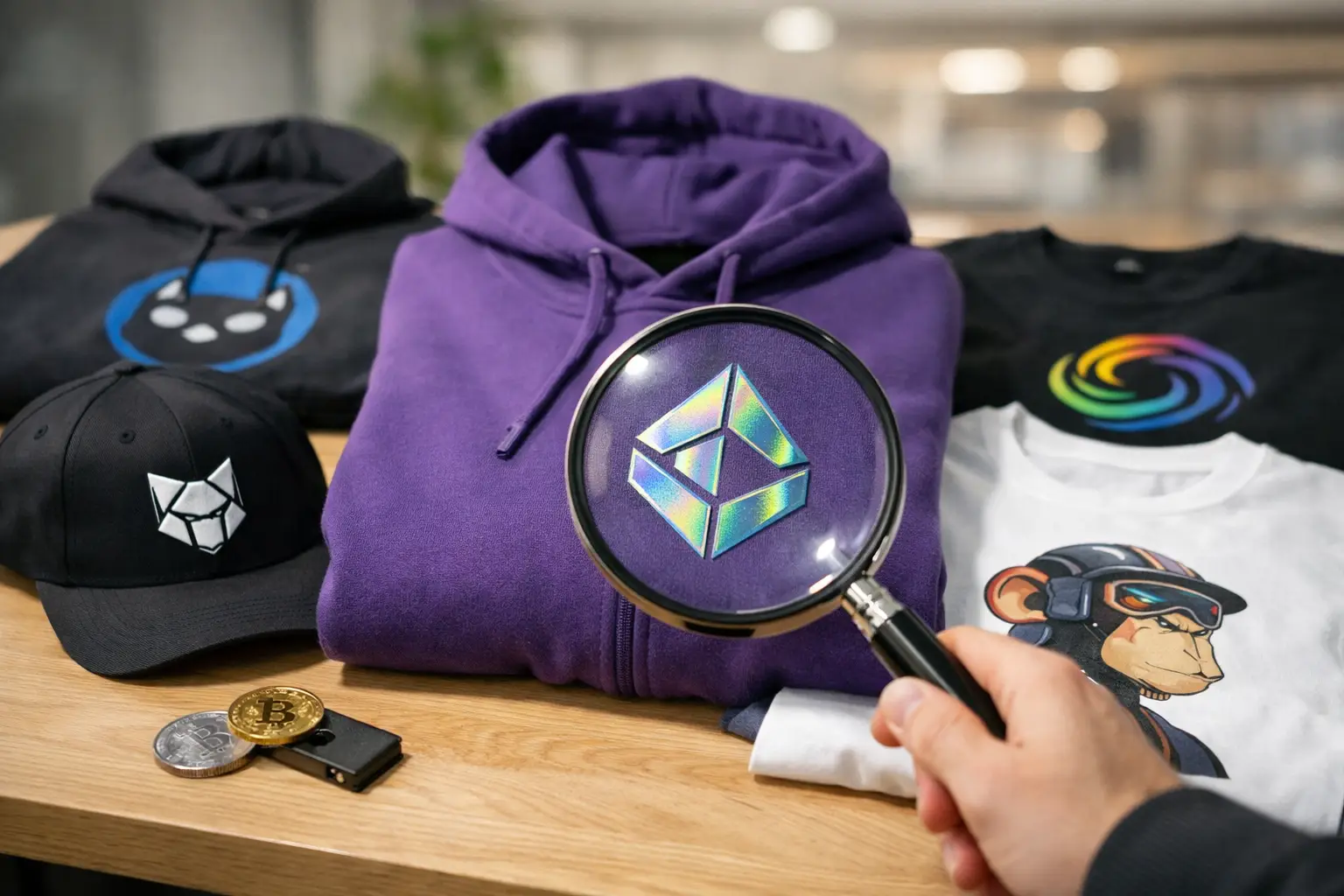
Web3 communities notice details. Counterfeiters often do not. Compare the garment art with approved project visuals. Watch for altered character traits, off-brand colors, warped logos, missing symbols, incorrect typography, or a wallet address that does not belong to the project.
A fake may use a low-resolution version of an NFT image stretched across a shirt. On a product page, that can show up as blurry edges, muddy colors, jagged outlines, or artwork that looks lifted from a profile picture rather than prepared for print. Official drops usually use production-ready files and intentional placements, whether the design is loud, minimal, or collector-coded.
This does not mean every authentic item must look identical to a token image. Good collaborations often reinterpret an artist’s world for apparel. The difference is creative intent. A licensed collection feels designed, not copied and pasted.
Read Product Information Like a Collector
Authentic commerce has specifics. Look for material composition, fit guidance, sizing, print method, care instructions, production timelines, and return terms. On-demand production is not a red flag by itself. In fact, it can reduce unnecessary inventory and let communities access drops globally. The key is whether the seller explains the process clearly.
A listing that promises a premium hoodie but never names the fabric weight, garment type, or fit deserves skepticism. So does a store where every product, from shoes to towels, uses the same generic description and suspiciously identical mockup style.
Pay attention to pricing as well. A dramatic discount on a supposedly limited drop can be bait, particularly if the price is far below comparable official pieces. Authentic merch can run promotions, but it rarely needs a permanent 80% off banner, a countdown clock that resets every day, and a claim that only two units remain in every size.
Check the Store’s Signals
Before you check out, spend two minutes on the seller itself. A credible store has a consistent identity, real customer support information, clear policies, and product photography that matches its positioning. Its social content should make sense for the brands it says it represents.
These five signals are worth checking together:
- A visible relationship to the NFT project, artist, or authorized collaboration
- Complete product specifications, sizing details, and fulfillment expectations
- Consistent branding across the store, emails, and social accounts
- Secure, recognizable payment options without pressure to send funds to a personal wallet
- Customer service and policies that explain what happens if an order arrives damaged or incorrect
One missing signal is not automatic proof of a fake. A new artist-led shop may be small, and an on-demand retailer may have longer production windows. But several missing signals create a pattern. Treat that pattern seriously.
Do Not Let Crypto Payments Remove Your Standards
Paying with crypto can be part of the culture, but it should never replace basic buyer protection or common sense. A seller demanding payment to a personal wallet, refusing to provide an order confirmation, or pushing you to act before you verify the drop is creating risk by design.
Use the same standards you would use for a high-demand sneaker release. Confirm the store address. Screenshot the product page and order details. Review the checkout total before approving a transaction. If something feels rushed, vague, or too convenient, it probably is not the grail you think it is.
Verification Is More Than a QR Code
A QR code, NFC tag, or blockchain certificate can add a useful proof layer, but none of these are magic. Counterfeiters can print QR codes. They can link a tag to a polished landing page. They can even mint a token that has no relationship to the rights holder.
What matters is where the verification leads and who controls it. Does the code resolve to a known official domain or a verified project account? Is the issuing wallet publicly associated with the artist, project, or authorized retailer? Does the product page explain what the digital proof actually represents?
For limited collaborations, provenance can be valuable. A numbered run, authenticated digital collectible, or holder-gated release may strengthen the story behind a garment. Still, the garment’s legitimacy begins with the licensing relationship, not the technology attached after the fact.
What to Do If You Bought a Fake
If you suspect counterfeit blockchain apparel has landed in your hands, document everything. Save the product listing, confirmation emails, payment record, packaging, and clear photos of the item. Contact the seller through the channel they provided and state the issue plainly.
If the seller misrepresented the item as official, report the listing to the marketplace or payment provider where possible. You can also flag it to the project or artist’s legitimate team so they can warn the community and pursue takedowns if appropriate. Avoid turning it into a public pile-on before you have the facts. Clear evidence helps real teams act faster.
If you received a poor-quality item that was not explicitly sold as official, your options may depend on the store’s policies and payment method. That is another reason to read the fine print before buying rather than after the package arrives.
Wear the Work, Not the Knockoff
The best Web3 merch does more than borrow a logo. It gives a digital community a physical language: a sharp graphic, a meaningful detail, a piece that starts a conversation at a show, meetup, or mint-day group chat. Licensed drops also give artists and projects room to keep building the worlds you want to be part of.
That is why curated destinations such as NFT Merch focus on recognized collaborations rather than generic crypto graphics. The goal is not to put blockchain buzzwords on a blank. It is to turn real digital culture into pieces with a claim to the story.
Before your next purchase, slow the scroll for one extra minute. Verify the source, inspect the details, and buy from the people connected to the work. Your wardrobe can carry the culture forward without handing its value to someone who only copied the image.