8 Best Artist Merch Collaborations That Set the Bar
A great merch collaboration does more than put a famous name on a hoodie. It gives a community a uniform, makes an era physical, and turns a fan purchase into a real piece of cultural currency. The best artist merch collaborations do all three. They feel specific enough for core supporters, wearable enough for everyday rotation, and considered enough to hold value after the launch-day rush.
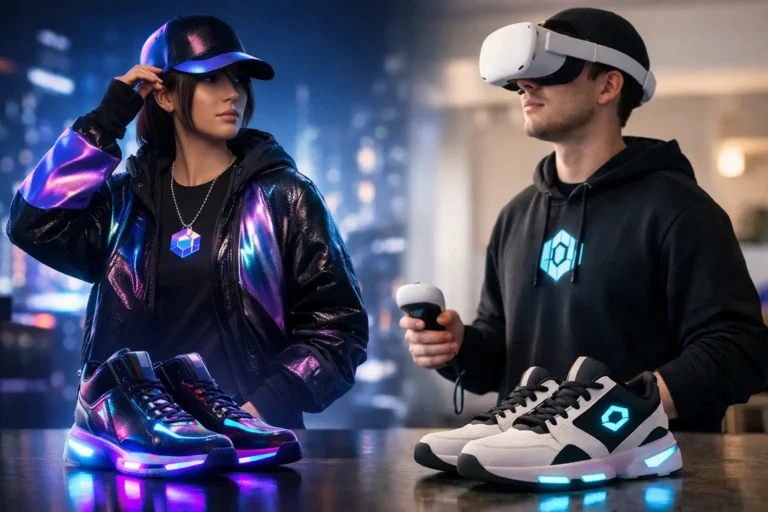
For Web3 collectors, that standard hits differently. You already understand that ownership is not just a transaction. It is proof of taste, participation, and belonging. Physical merch gives digital identity a life beyond the wallet screen. The strongest drops translate an artist’s world into garments and objects people want to keep, wear, photograph, and recognize in public.
What Makes the Best Artist Merch Collaborations Work?
The name gets attention. The creative direction earns the purchase.
The best collaborations have a clear point of view from every angle: the silhouette, fabric, graphics, packaging, release timing, and community story all feel connected. A random logo swap can move units, but it rarely becomes a piece people remember. Real collaboration looks like two visual languages meeting and creating something neither could have made alone.
Scarcity matters, but only when it supports the product. Limited runs, numbered editions, event-only capsules, and collectible extras can create urgency. Still, artificial scarcity cannot rescue weak design. Fans can spot a lazy cash grab instantly, especially in communities built around provenance and authenticity.
There is also a practical test: would someone wear it if the artist’s name were not printed across the front? The answer does not have to be yes for every piece. Statement merch has its place. But the drops with the longest lifespan balance recognizable affiliation with strong standalone design.
8 Artist Merch Collaborations That Set the Standard
1. Kanye West and Takashi Murakami
The visual partnership around Graduation showed how album art could become an entire world rather than a square image on a streaming service. Murakami’s bright, surreal visual language gave Kanye West’s music a collectible identity that traveled across posters, apparel, and fan culture.
Its influence is still everywhere: artist merch that treats a release as a universe, not a logo file. The lesson is simple. Give fans a symbol they can recognize from across the room, then make it feel inseparable from the music or moment that inspired it.
2. KAWS and Uniqlo
KAWS proved that accessible pricing does not have to mean disposable design. His Uniqlo collections brought a globally recognizable art language to tees, sweatshirts, and everyday staples without flattening the work into generic graphics.
The drops created a genuine collision of art collecting, streetwear, and mass retail. Some collectors showed up for the artist, others for the wearable design, and both groups understood they were buying into a shared visual code. That is collaboration at scale without losing cultural signal.
3. Travis Scott and McDonald’s
Travis Scott’s McDonald’s collaboration was bigger than a meal promotion. It transformed a familiar American brand into a tour-like merch moment, complete with product references, playful graphics, and instant social visibility.
Not every artist should collaborate with a fast-food giant, obviously. The point is relevance. Scott chose a brand with deep nostalgia and global reach, then made the partnership feel native to his own universe. The merch worked because the culture had something to talk about before anyone checked out.
4. Billie Eilish and Nike
Billie Eilish’s Nike collaborations made room for an artist’s personal style inside a performance-driven footwear category. Oversized shapes, muted color stories, and a clear commitment to her aesthetic helped the releases feel like extensions of her wardrobe rather than celebrity endorsements.
That distinction matters. Fans do not only want access to a name. They want access to a point of view. When product choices reflect the artist’s real visual identity, the release carries more credibility and gives buyers a stronger reason to wear it repeatedly.
5. Bad Bunny and Adidas
Bad Bunny’s Adidas releases became a case study in how an artist can reshape a heritage sneaker through personality, timing, and styling. The product did not abandon Adidas codes, but it clearly belonged to Bad Bunny’s orbit.
The limited-release model added heat, yet the real win was broader than resale. Each launch supported a sense of cultural participation. Owning a pair meant more than following a trend. It signaled proximity to a global artist redefining the rules of pop, fashion, and Latin music.
6. Tyler, The Creator and Converse
Tyler, The Creator’s work with Converse has lasted because it feels authored. The colors are loud when they need to be loud, the details have personality, and the product carries the playful, slightly off-center energy associated with his creative world.
Longevity is the key word here. One-off hype can make noise, but recurring partnerships create a recognizable product language. For artists building a serious merch ecosystem, consistency can be more powerful than constantly chasing a new visual identity.
7. The Grateful Dead and Nike SB
The Grateful Dead Nike SB releases understood the value of a fan base with decades of symbols, stories, and visual references. The shoes did not merely print a band logo on a classic silhouette. They pulled from the Dead’s colorful iconography and psychedelic history in ways that spoke directly to collectors.
It is a useful reminder for legacy projects and established Web3 communities. Deep lore is an advantage. Your archive, traits, inside jokes, character details, and origin story are raw material. Use them with intention, not all at once.
8. J Balvin and Air Jordan
J Balvin’s Air Jordan collaboration made the classic sneaker feel newly personal through bold color, layered construction, and details that aligned with his optimistic, expressive aesthetic. It did not play safe, and that was exactly the point.
The strongest partnerships leave space for the artist to take a risk. When every decision is filtered through generic brand rules, the final product may be polished but forgettable. A memorable drop needs a little tension, a little surprise, and at least one detail fans immediately claim as their favorite.
From Digital Fandom to Physical Proof
Web3 artists and NFT communities have an unusually strong foundation for merch. Their audiences already care about provenance, rarity, shared mythology, and public affiliation. The opportunity is not to copy legacy streetwear releases beat for beat. It is to build physical pieces that make digital culture tangible.
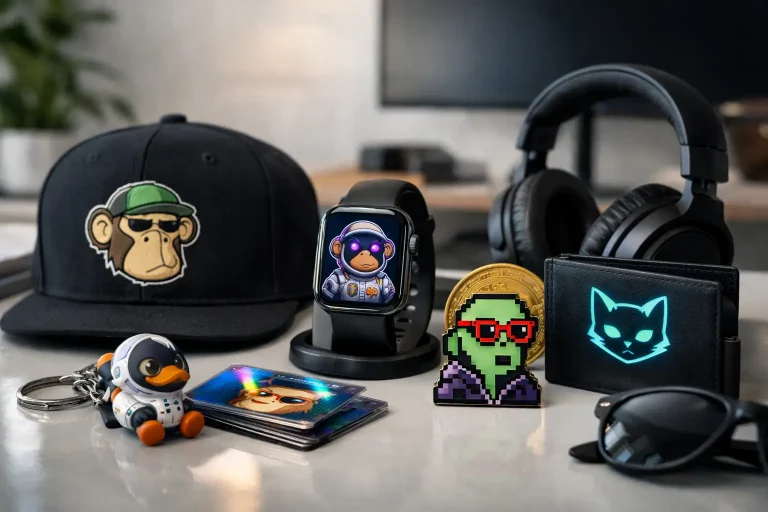
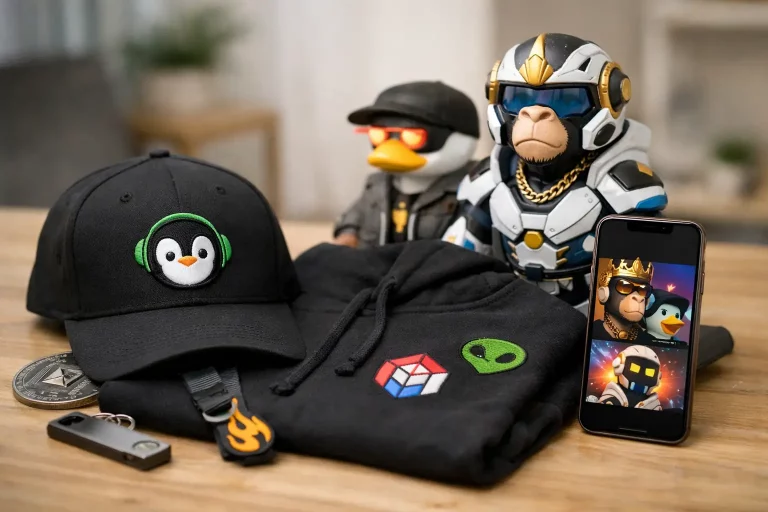
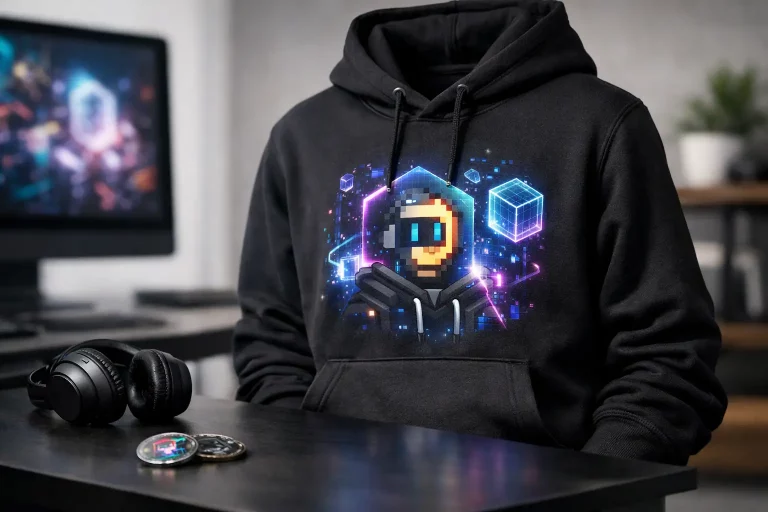
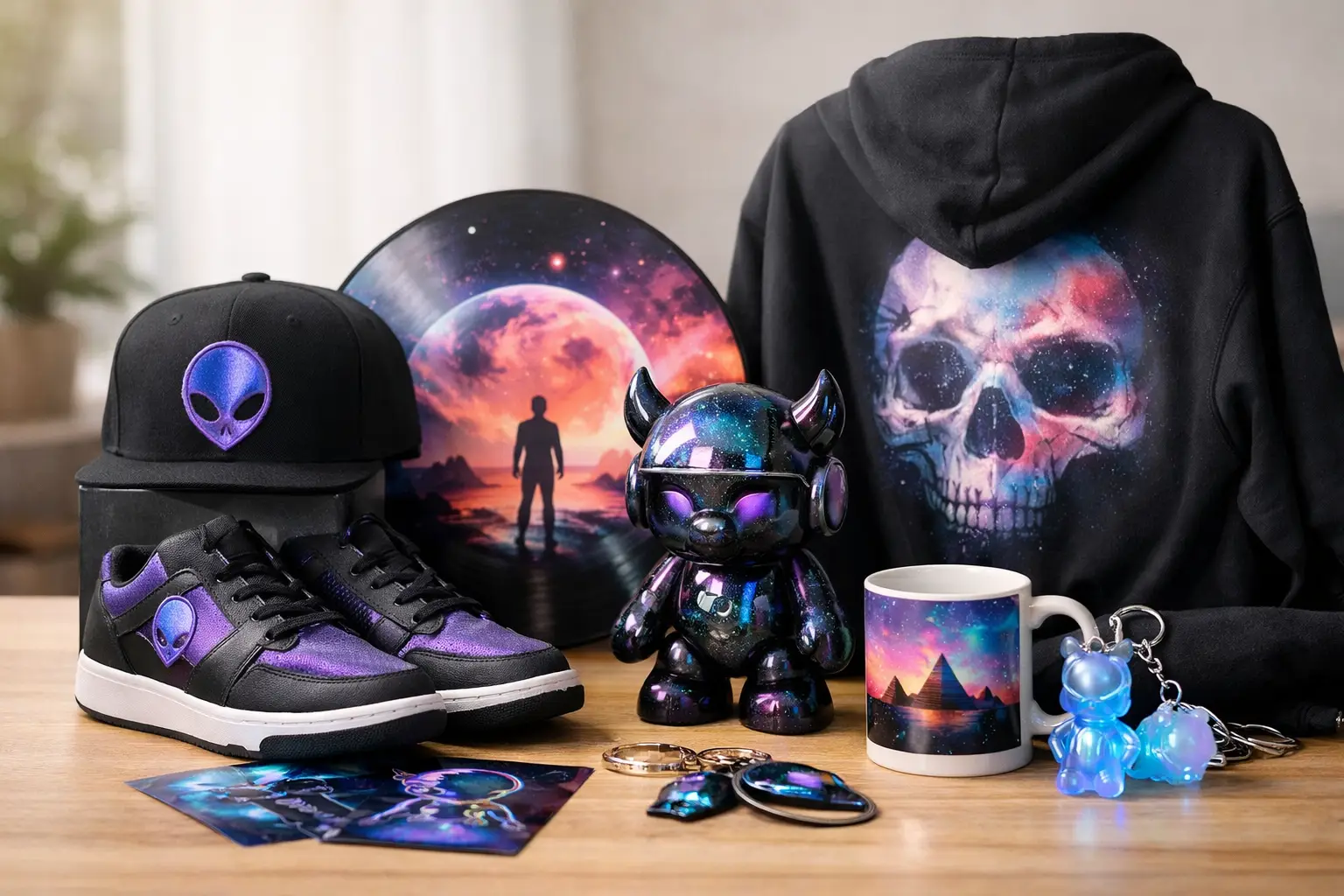
A character-led project might turn a signature trait into a repeat pattern, an embroidered patch, or a subtle label detail. A digital artist can extend a visual world across heavyweight tees, posters, caps, and accessories without making every item look identical. A community with a recognizable phrase can create an insiders-only signal that lands harder than a giant front graphic.
The trade-off is accessibility versus exclusivity. A highly limited premium piece can reward early collectors and create serious drop energy, but it may leave newer members outside the moment. An open-edition item welcomes more people into the culture, though it needs excellent design to remain special. The smart move is often a layered collection: collectible hero pieces alongside everyday essentials that let the community show up.
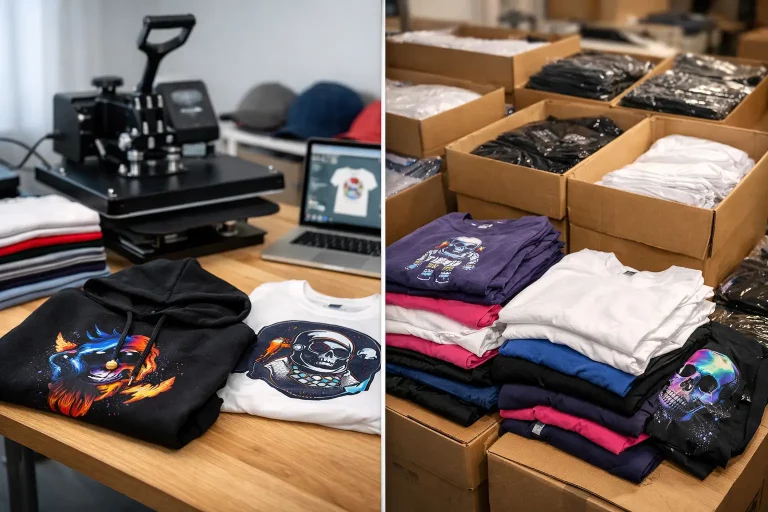
On-demand production can support this model particularly well. It lowers the risk of sitting on excess inventory, allows broader product experimentation, and gives communities a way to buy the piece that fits their lifestyle, whether that is a hoodie, tote, poster, mug, or beach towel. NFT Merch brings that digital-to-physical connection into streetwear-led products made for real-world flex.
Build for Recognition, Not Just Release Day
The next era of artist merch will not be won by the loudest logo or the shortest countdown timer. It will belong to creators and communities that understand their own visual assets, respect their supporters, and make products worth living with.
Before a drop goes live, ask one useful question: what will this piece say about the person wearing it six months from now? If the answer is clear, distinctive, and rooted in a culture people genuinely want to claim, you are not just selling merch. You are giving the community a flag to carry.