Creating Wearable Artist Portfolios That Travel
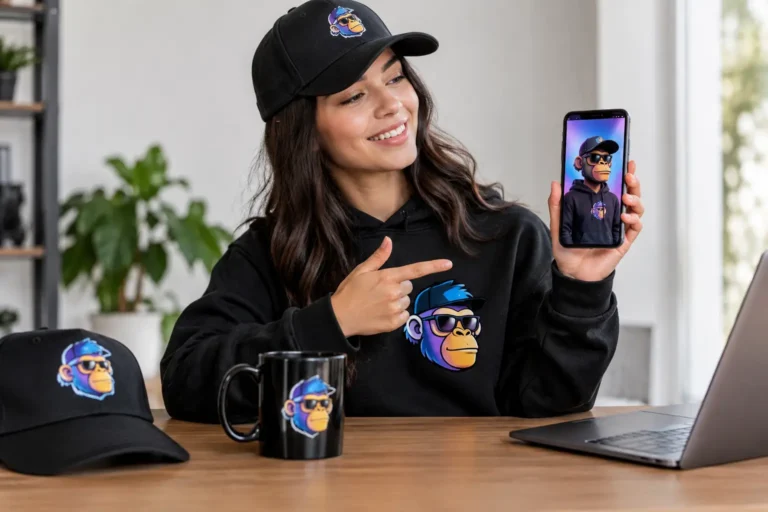
A wallet full of digital art proves ownership. A hoodie, cap, or tote puts that ownership in the room. Creating wearable artist portfolios is how digital creators turn a scrolling feed into a physical signature – one people can spot across a crowded event, a gallery opening, or the next IRL community meetup.
For Web3 artists, the portfolio no longer has to live only on a website, marketplace profile, or pinned post. Wearable work can carry a visual world further: into photos, conversations, collector circles, and the everyday places where culture actually moves. The point is not to print every piece you have ever made. It is to build a tight, recognizable body of work people want to wear.
Why Creating Wearable Artist Portfolios Changes the Game
A traditional portfolio asks for attention. A wearable portfolio earns it in motion. Someone wearing your artwork becomes a visible signal of taste, affiliation, and belief in your creative universe. That is especially powerful in NFT culture, where community has always been part of the asset.
The best wearable portfolios sit at the intersection of art direction and identity. They show that your work can hold up outside a browser window. A strong character, symbol, texture, or color language has to work on cotton, embroidery, screen print, and smaller accessory formats. If it does, you have more than an image. You have a brand asset.
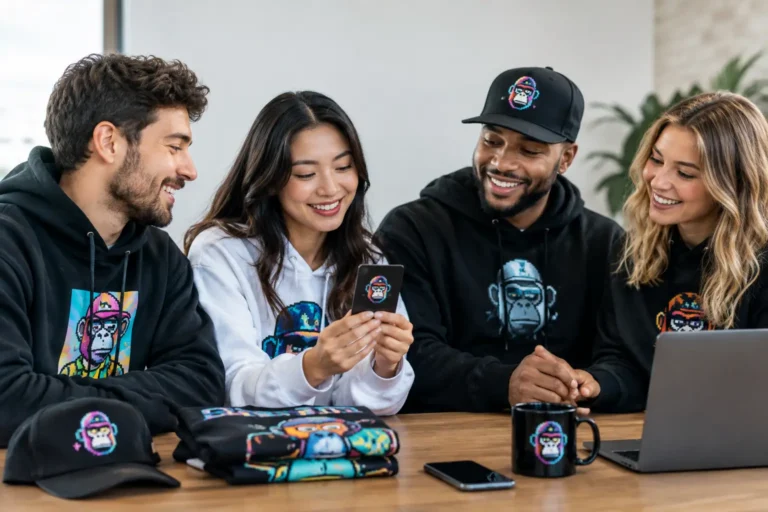
That shift creates a new kind of proof. Collectors can support an artist without buying a high-ticket original. Fans can rep a project even if they are not holders. And artists can give their existing community a physical object that makes an online connection feel real.
There is a trade-off, though. Apparel is not a wall label. A detailed 1-of-1 artwork may lose its impact when reduced to a chest print. Wearables reward clarity, composition, and a point of view that reads fast. Treat that limitation as creative direction, not dilution.
Start With the Work That Has a Signature
Do not begin by asking, “What can I put on a T-shirt?” Start with, “What makes my work unmistakably mine?” That answer might be a recurring character, a distorted type treatment, a particular line weight, a symbol collectors recognize, or a color palette that feels proprietary.
Look through your body of work for pieces that have already created a reaction. Which images get reposted? Which visual details show up in comments? What do collectors use as profile pictures, banners, or inside jokes? Those are not just engagement metrics. They are clues about what your community is ready to wear.
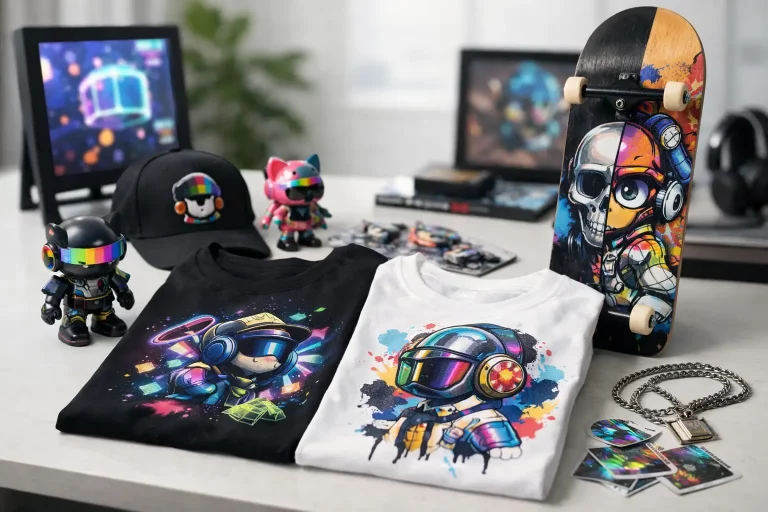
A wearable portfolio should have a visual hierarchy. Lead with one hero graphic that can carry a hoodie or poster. Build supporting designs that work on tees, caps, patches, and bags. Then create smaller marks, phrases, or icon systems for people who want a quieter flex.
This gives your collection range without making it feel random. A loud all-over visual and a discreet embroidered symbol can belong to the same artist world when the core codes remain consistent.
Build for recognition, not repetition
Repeating the same JPEG across ten products is merchandising, but it is not necessarily portfolio building. The better move is to reinterpret your visual language for each surface.
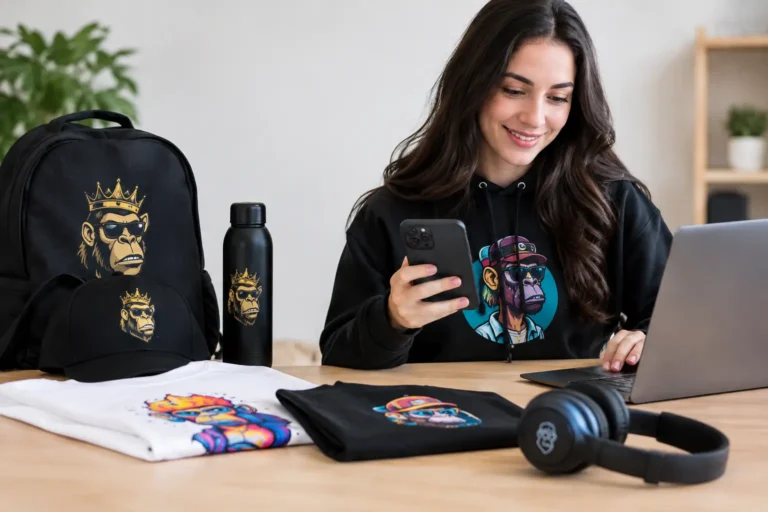
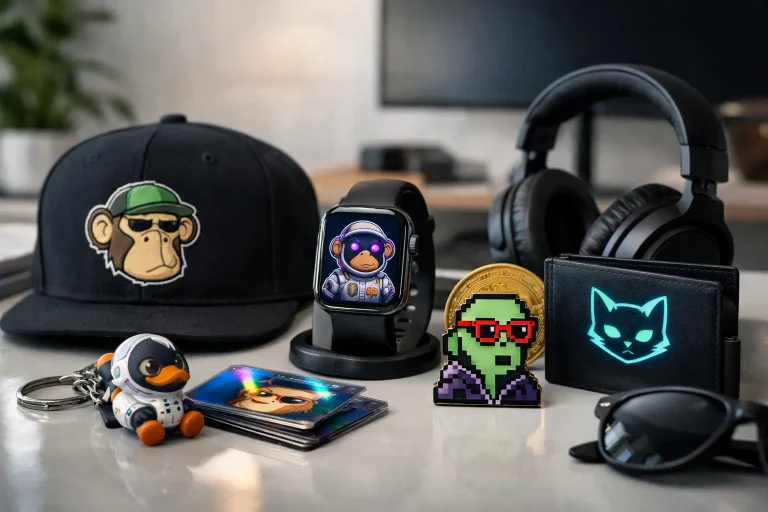
A character portrait might become a large back graphic. Its eyes or emblem could become a cap patch. A line from the artwork could become a sleeve detail. A background texture could work on shorts, a towel, or a tote. Each item should feel connected, yet give fans a reason to choose more than one piece.
This is where artists can show range. The wearer sees a garment. A creative director, collector, or potential collaborator sees that you understand systems, applications, and product thinking.
Design for the Garment, Not Just the Screen
Digital work is usually viewed with light behind it. Clothing is viewed in changing conditions: dim venues, direct sun, camera flash, wrinkled fabric, and movement. That changes what lands.
High contrast helps. So does leaving room around a central graphic. Fine gradients, tiny text, and overly subtle tonal shifts can look incredible online but disappear or muddy in production. If a design depends on microscopic details to make sense, it may be better suited to a print, poster, or digital collectible than a tee.
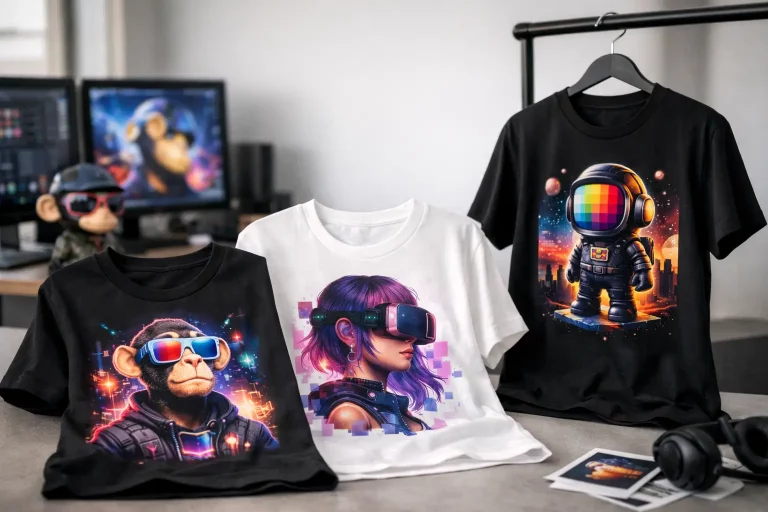
Color matters, but garment color matters just as much. A neon illustration can pop on washed black and feel completely different on white. Before setting the palette, decide what mood you are selling. Heavy black garments communicate underground credibility and make bright art hit harder. Cream, gray, and faded tones can make a drop feel more editorial. Colorful blanks can work for playful collections, but they demand more discipline from the graphic.
Placement is part of the message. A small left-chest mark can feel premium and personal. A full back print gives the art presence. Oversized fronts are direct and graphic. Sleeves, hems, and neck labels reward close inspection. Mix these formats intentionally so the collection has rhythm.
Choose products that match the artist universe
Not every artist needs every product category. If your work is clean, iconic, and logo-driven, caps, patches, tees, and bags may be the strongest entry point. If it is maximal, cinematic, or character-led, hoodies, posters, blankets, and towels can create a larger canvas.
Think about how your people actually show up. A collector who spends weekends at conventions may want a heavyweight hoodie and tote. A festival-minded community may go for shorts, swimwear, or accessories. A desk-bound digital native may want a mug, sticker pack, or poster alongside apparel.
The portfolio gets stronger when product choice says something about the audience. It should feel like culture made tangible, not a catalog filled for the sake of it.
Give Every Piece a Role in the Drop
A good wearable portfolio has an entry point, a centerpiece, and a collector signal. The entry point is the accessible piece that brings new people in. The centerpiece is the garment or object that carries the strongest artwork. The collector signal is the detail that rewards the people who already understand the reference.
That collector signal might be a hidden symbol, a numbered run, an on-chain reference, or a visual callback to an earlier series. Keep it meaningful. Fake scarcity is easy to spot, and Web3 audiences have little patience for it. If an item is limited, explain what makes it limited: a collaboration window, a specific art era, a restricted colorway, or a genuinely finite release.
On-demand production changes the calculus. You do not need to gamble on large inventory before proving demand. That is useful for artists testing new directions, expanding globally, or serving smaller but committed communities. The trade-off is that a made-to-order drop needs clear expectation-setting around fulfillment timing and product details. Confidence comes from transparency.
NFT Merch operates in this lane by translating recognized NFT projects and digital artists into physical streetwear and accessories without forcing creators into traditional bulk-order risk. The right partner should protect the art, maintain production quality, and understand that Web3 merch is about credibility as much as conversion.
Make the Portfolio Easy to Understand at a Glance
Your product page, social post, and lookbook should communicate three things quickly: who this work is for, what it represents, and why this drop exists now. Do not bury the story under generic fashion language.
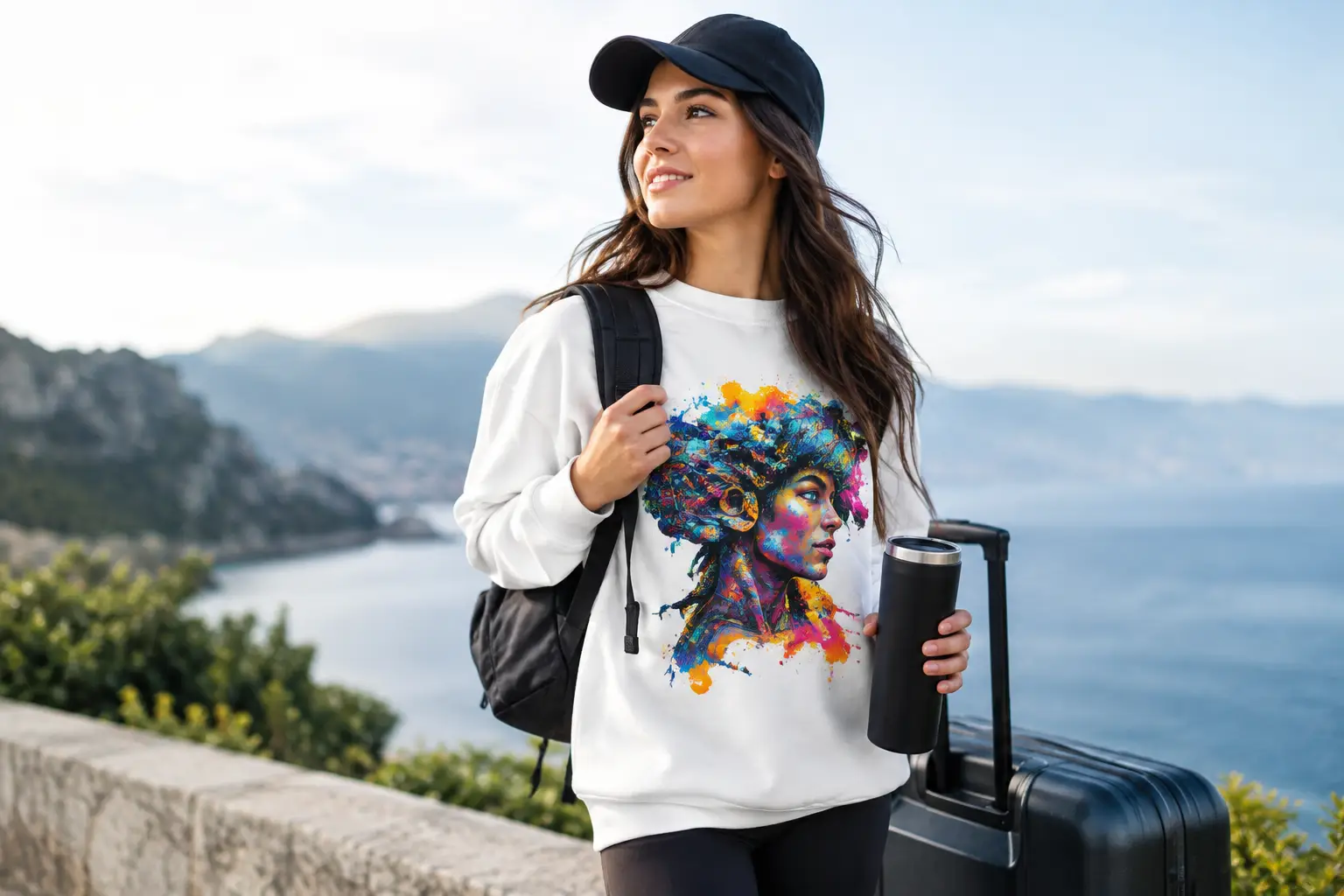
Show the art in context. A clean product mockup is useful, but a worn image tells people how the piece lives. Style a hoodie with the silhouette your community already wears. Shoot the tote at an event, in a studio, or against a setting that reflects the world behind the work. Keep the visuals consistent enough that someone can recognize your drop before reading the caption.
Copy should sound like the artist, not like a blank print-on-demand template. Name the source material. Call out the motif. Tell collectors what they are looking at. If there is a community reference, let insiders feel seen without making everyone else feel excluded.
Let Wearables Build the Next Chapter
The best artist merch does not freeze a portfolio in time. It creates a new layer of it. When fans wear the work, photograph it, trade it, and bring it into new rooms, the art gains context you could never manufacture alone.
Start small if you need to. Make one hero garment, one everyday accessory, and one detail-rich item for the people who have been there from the beginning. Watch what gets worn, not just what gets liked. Then let the next release respond to the community that is already carrying your work forward.
Your portfolio should not stay parked in a tab. Put it on the street, let it collect stories, and make every piece worth being recognized in.