Blockchain Fashion Accessories That Carry Culture
A wallet address can prove what you own. A great cap, bag, or patch shows people what you stand for before they ask. That is the real pull of blockchain fashion accessories: they give digital identity a physical presence, turning the references, communities, and art you rate online into part of your daily uniform.
For Web3 collectors, fashion has never been just an afterthought. It is a signal. The right accessory can nod to a genesis collection, a creator’s visual language, a community milestone, or the inside joke that only holders understand. It moves culture out of the feed and into the room.
Why blockchain fashion accessories hit differently
A plain logo on a generic product is not culture. It is inventory. The best blockchain accessories feel connected to something people already care about: a recognized NFT brand, a defining character, a collector community, or an artist with a point of view.
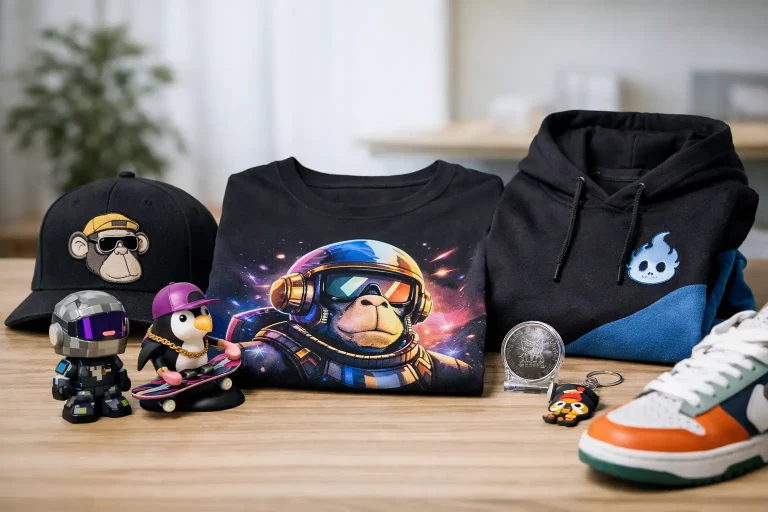
That distinction matters because Web3 audiences can spot a cash-grab fast. They want pieces that respect the source material and feel considered in their own right. A well-designed embroidered cap, for example, can carry a project mark with more confidence than a loud all-over print. A tote can use visual cues from a collection without flattening its art into merch wallpaper.
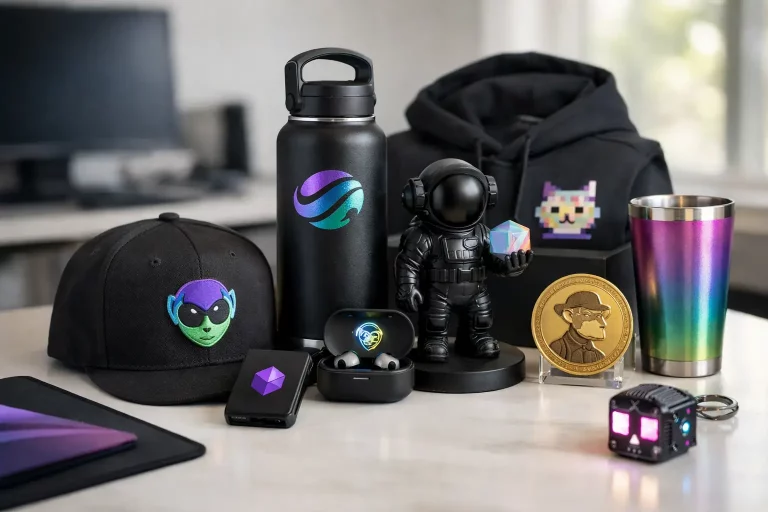
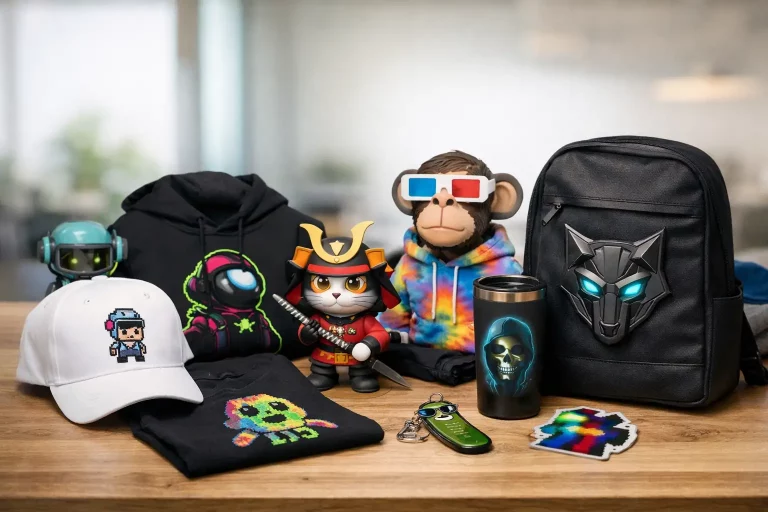
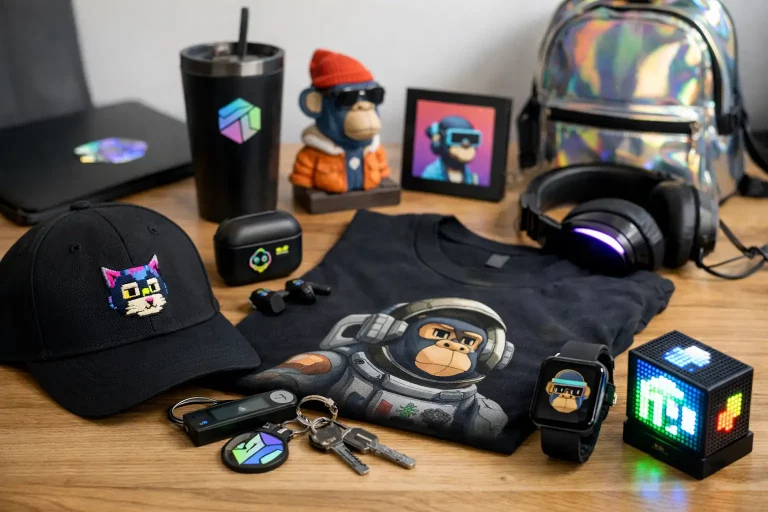
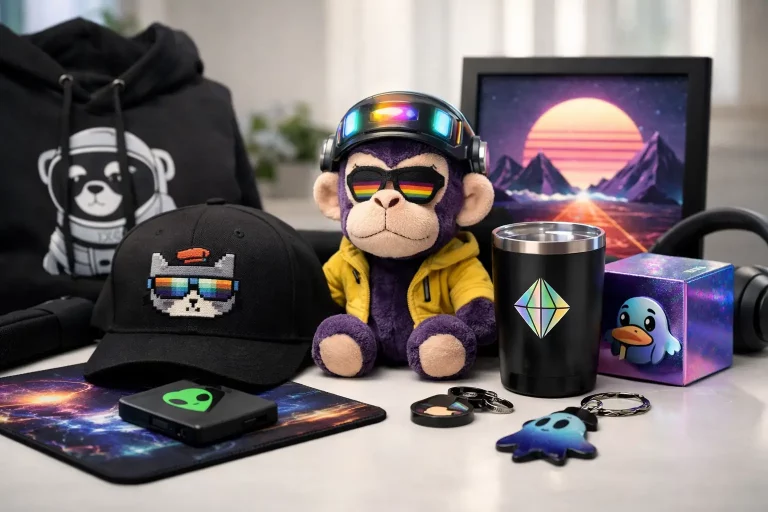
The accessory format also works because it is flexible. Not every day calls for a full statement hoodie. A bag tag, patch, hat, phone case, or sticker pack can add a quiet signal to an otherwise personal look. You choose how visible your affiliation is.
From PFP to personal style
Profile-picture projects made ownership visible online. Fashion accessories extend that visibility beyond the screen, but they should not be treated as simple physical copies of a JPEG. Digital art and real-world design speak different languages.
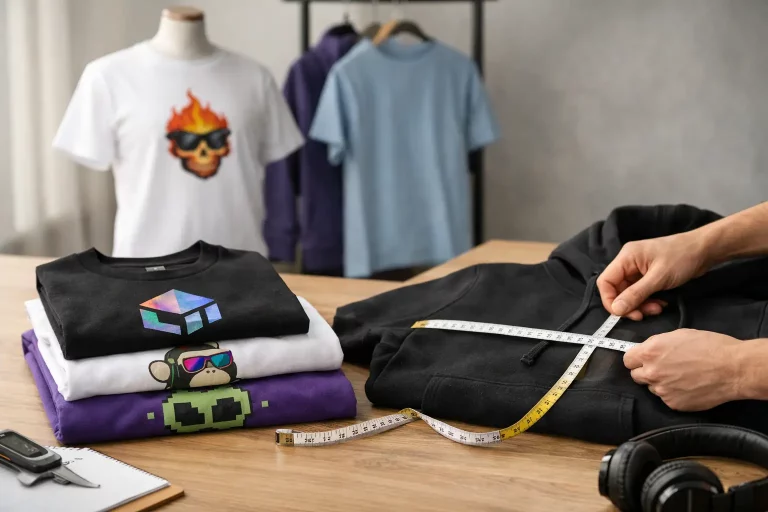
A strong physical piece considers scale, material, placement, and use. Fine-line artwork may need to become a clean woven label. A detailed character might work better as a small embroidered mark than a chest-sized graphic. A vibrant digital palette may need adjustment to retain its impact on fabric, metal, or printed canvas.
This is where curation earns its place. The goal is not to put every trait, token, or rarity mechanic on a product. It is to identify the visual DNA that makes a collection recognizable, then build an accessory around it. Think signature colors, silhouettes, symbols, type, and attitude.
That approach makes an item easier to wear and more likely to last beyond a single market cycle. The accessory remains meaningful because it represents a community and an aesthetic, not just a floor-price screenshot.
The best pieces balance recognition and restraint
There is room for loud drops. A maximalist beach towel or graphic tote can be exactly the move for an event, a festival, or a collector meetup. But everyday accessories often win when they hold back a little.
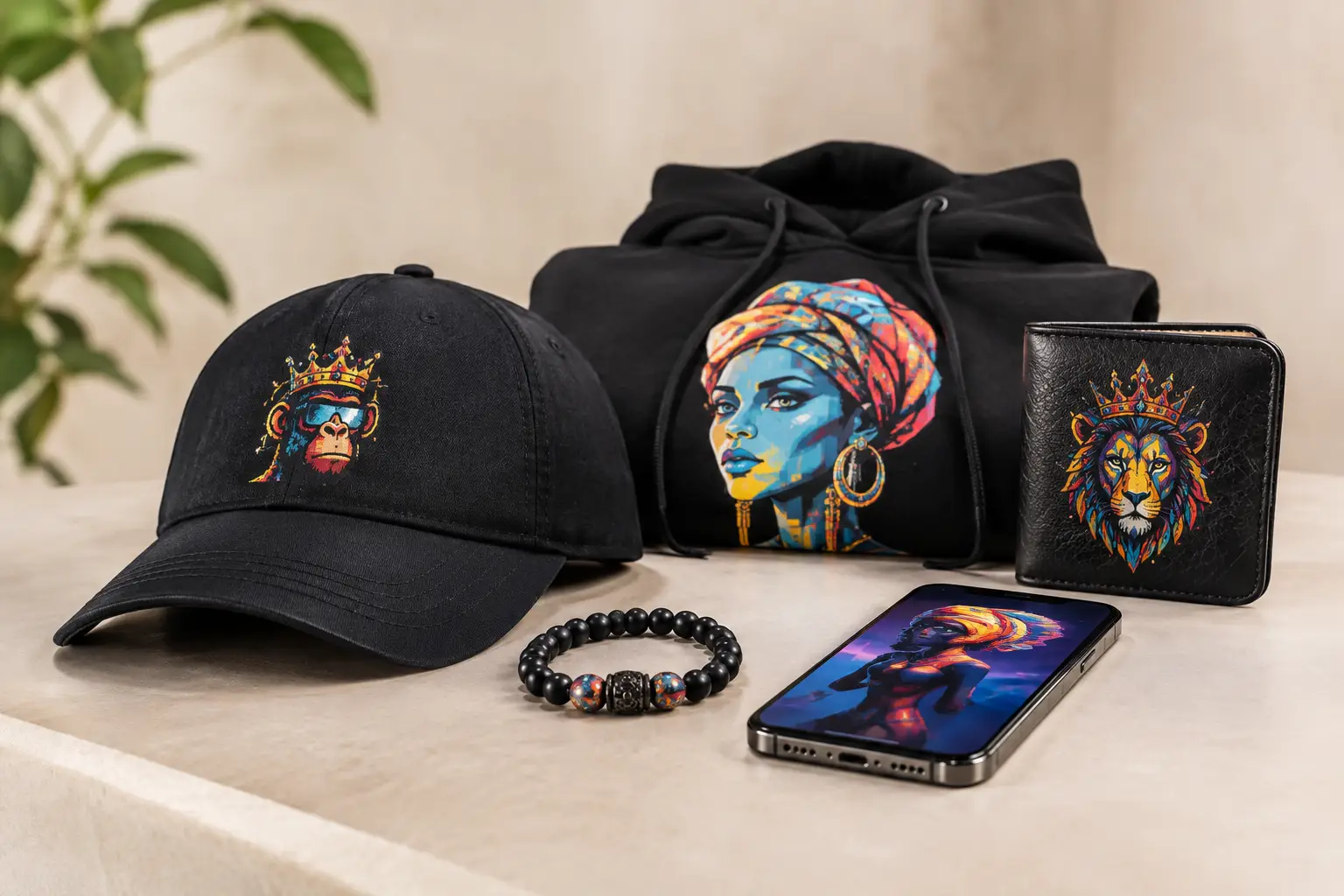
A tonal patch on a jacket, a small icon on a cap, or a clean mark on a crossbody bag lets people who know, know. That coded recognition is part of the appeal. It creates connection without requiring a speech about your wallet.
It depends on the wearer, of course. Some collectors want instant visibility. Others prefer a piece that reads as strong streetwear first and Web3 merch second. A credible collection should make space for both.
What makes a Web3 accessory worth owning?
The difference between a piece you reach for repeatedly and one that stays in a drawer usually comes down to design, legitimacy, and utility.
Design is the obvious starting point. The graphics should feel intentional, not copied from a social banner and dropped onto a product. Good composition, readable details, and a product-color choice that suits the artwork all matter. Streetwear has trained people to expect more, and Web3 should not lower that bar.
Legitimacy is equally important. Officially connected merchandise protects the relationship between the art, the project, and its audience. It means the design is part of the brand story rather than an unauthorized imitation trading on community recognition. For collectors, that authenticity adds weight. For artists and project teams, it respects the work that built the culture in the first place.
Utility keeps the item in circulation. A bag should carry what you actually bring out. A cap should fit into your rotation. A patch should be made to customize denim, outerwear, or a backpack. Accessories are not gallery objects only. Their power comes from being used, seen, and woven into real life.
Accessories create community beyond the timeline
Online communities move fast. Spaces refresh, platforms change, and conversations disappear into group chats. Physical merch gives shared culture a longer shelf life.
Wear a project cap at a conference, in a coffee shop, or on a flight and the signal can start a conversation that a profile picture cannot. It may lead to a new collector connection, a creative collaboration, or simply a quick moment of mutual recognition. That is not guaranteed, and no accessory can manufacture genuine community. But it can make belonging visible enough for community to happen.
This is particularly relevant for global projects. Members may never attend the same IRL event or live in the same city. A physical item becomes a common reference point across borders. The details are shared even when the wearers are not in the same room.
For NFT brands, that is a real opportunity. A merch drop can mark an anniversary, reward an active community, support a collaboration, or introduce the visual world to people outside the Discord. The best drops do not feel like an obligation. They give members something worth claiming and wearing.
The on-demand trade-off is worth understanding
On-demand production is a natural fit for blockchain culture because it allows more designs to exist without forcing massive inventory bets. It can reduce leftover stock, keep ordering flexible, and make global fulfillment more accessible for niche communities.
There is a trade-off: on-demand is not the same as a traditional limited, pre-manufactured capsule. Some products may have fewer material options, and production time can vary. If your priority is rare-numbered collectibles, a tightly capped run may be the better format. If your priority is access, choice, and avoiding unnecessary overproduction, on-demand has a strong case.
The smart play is not pretending one model replaces the other. Use limited drops when scarcity is central to the concept. Use on-demand accessories when the goal is letting more of the community carry the culture, without minimum-order friction.
How to build an accessory rotation with meaning
Start with the community or artist you genuinely connect with. Trend-chasing is loud, but it rarely looks convincing for long. The strongest pieces carry a story you can actually tell, whether that is a collection you have held from early days, an artist whose work changed your eye, or a Web3 crew that feels like home.
Then choose the level of expression that matches your style. A cap or patch is a low-commitment entry point. A bag can become a daily signature. Stickers and smaller add-ons are ideal for laptops, water bottles, cases, and gear that already move through your life.
Finally, consider how the item fits with what you own. Black, neutral, and tonal accessories tend to get the most wear. Brighter collectible pieces can be the hero item when the rest of the outfit stays simple. There are no hard rules, but purpose beats random logo stacking every time.
NFT Merch exists for that crossover: officially inspired physical pieces that let recognized digital culture live beyond the wallet and the timeline. The point is not to dress like an advertisement. It is to wear your affiliations with intent.
Physical culture is the next layer of ownership
Blockchain changed how communities think about provenance, participation, and digital ownership. Fashion accessories add another layer: presence. They make the art, symbols, and stories of Web3 touchable, giftable, collectible, and visible in the places where real life happens.
Pick the piece that still feels like you when the chart is quiet, the feed has moved on, and nobody is asking what it means. That is the accessory worth carrying.