12 Digital Art Merch Ideas That Move Culture
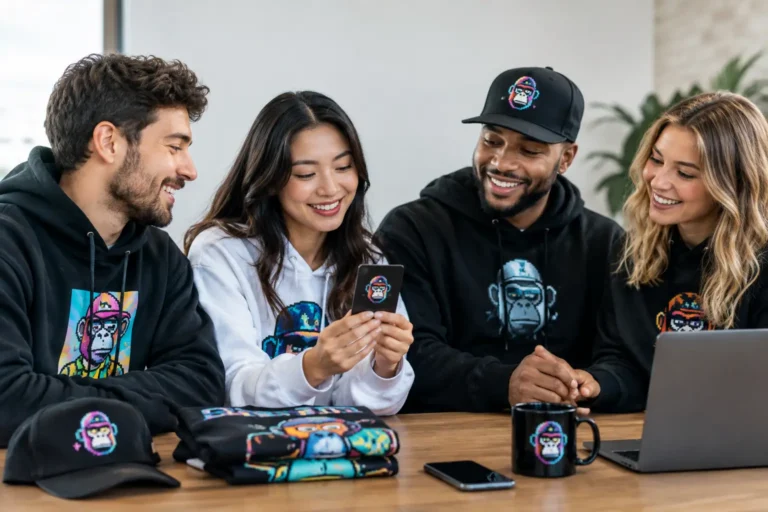
A wallet can prove ownership. A great fit makes that ownership visible. The best digital art merch ideas do more than paste a PFP onto a blank tee – they give collectors, artists, and Web3 communities a physical uniform for the culture they already live online.
That distinction matters. Digital art has its own visual language: bold traits, lore, insider references, color systems, and a fan base that knows the difference between official product and a lazy screenshot print. Merch should carry that energy into real life without looking like a conference giveaway.
Start with the artwork’s strongest signal
Not every asset needs to become every product. A detailed generative piece may shine as a poster or blanket, while a simplified emblem might work better as embroidery on a cap. Before choosing categories, identify the one visual element people recognize in half a second: a character silhouette, signature eye treatment, logo mark, phrase, or palette.
Then decide what the drop is supposed to do. Is it a wearable badge for holders? A low-cost entry point for new fans? A collectible art object? One collection can serve all three, but each product needs a clear job. Trying to make every item the hero usually creates a noisy assortment and weakens the story.
12 digital art merch ideas worth making
1. Heavyweight graphic tees
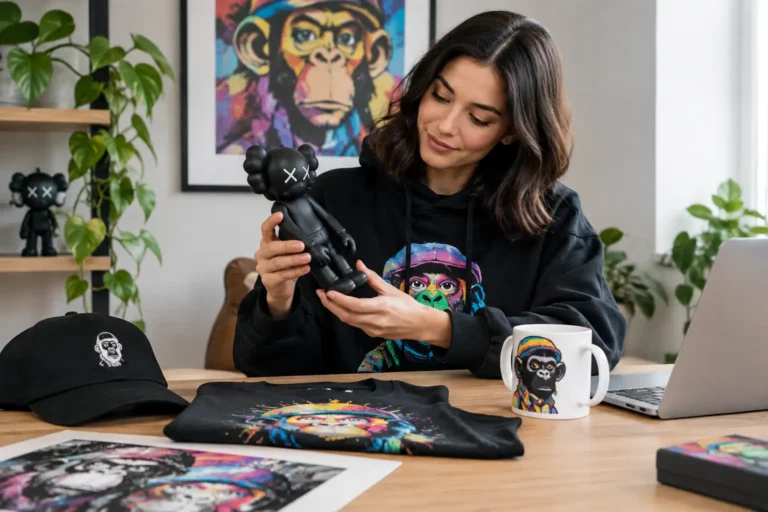
A heavyweight tee is still the most reliable canvas for a reason. Put the primary artwork on the back, then use a small chest hit, neck print, or sleeve detail to make it feel considered from every angle. It gives a big visual piece room to breathe while keeping the front wearable beyond a single event.
For character-led collections, avoid filling every inch with art. A strong crop, deliberate placement, and one clean colorway can feel more premium than a full-color collage.
2. Hoodies with lore built in
A hoodie earns its place when the details reward a closer look. Use a front symbol, a large back graphic, and a small phrase or trait reference on the sleeve. Hidden details feel especially right for communities built around discovery, alpha, and shared context.
Keep contrast in mind. Fine lines can disappear into dark fleece, and a complicated design can lose its impact from a distance. Bold outlines and intentional negative space win here.
3. Embroidered caps for everyday affiliation
Caps are low-key, practical, and built for repeat wear. They are ideal for an icon, wordmark, monogram, or simplified trait rather than a full illustration. Think of the cap as the subtle signal: recognizable to the people who know, clean enough for everyone else.
Embroidery adds texture and streetwear credibility, but it has limits. Tiny text, gradients, and highly detailed faces rarely translate well. Reduce the art to its sharpest visual code first.
4. Numbered art prints with a physical presence
For collectors, a well-produced print can be the closest physical counterpart to a digital piece. Use the original artwork, a purposeful alternate colorway, or a composition that reveals details that are easy to miss on a screen. Numbered editions can add collector appeal when the edition size and availability are communicated clearly.
A print is not just wall filler. It is a chance to treat digital art as art, with scale, finish, and framing potential that changes how the work lives in a room.
5. Woven patches that build a uniform
Patches bring a modular, earned feel to a community. They work for jackets, bags, hats, and display boards, and they make sense for trait systems, achievement tiers, event moments, or seasonal drops. A patch can feel like a badge of participation rather than just another graphic.
Keep the artwork simple and high contrast. A striking skull, hand sign, planet, pixel icon, or concise phrase often performs better than a full scene.
6. Posters that turn lore into room decor
Posters are an accessible way to bring fans in without asking them to commit to apparel sizing. They also create room for graphic experimentation: character lineups, faux tour posters, fictional advertisements, map art, comic panels, or a visual timeline of the project.
The move is to make it feel designed for a wall, not copied from a marketplace thumbnail. Add hierarchy, type, and a composition that gives the eye somewhere to travel.
7. Tote bags that carry the community outside
A tote bag is a smart canvas for a bold one-color graphic, oversized logo, or central character mark. It is also naturally visible in public – at a gallery, cafe, airport, convention, or local market. That makes it one of the strongest products for organic community signaling.
Choose art that stays readable when the bag folds or moves. Detailed edge-to-edge imagery can work, but a large central motif is usually more effective.
8. Sticker packs with real collecting energy
Stickers should feel like a set, not leftover artwork cut into squares. Build a pack around characters, symbols, expressions, phrases, and rare details. Mix large statement stickers with smaller ones for laptops, water bottles, phone cases, and notebooks.
This is also a strong entry product for curious fans. The price point is friendly, the shareability is high, and the best packs invite people to collect, trade, and show where they place them.
9. Towels and blankets for full-scale art
Some digital art deserves a large format. Towels and blankets let complex scenes, abstract color fields, and maximalist character compositions show up without being reduced to a tiny chest graphic. They are especially strong for summer drops, home setups, and art that leans surreal, playful, or immersive.
The trade-off is practical: large printed surfaces reveal weak resolution fast. Start with high-quality source files and check the artwork at product scale before committing.
10. Mugs with an inside joke
A mug is not a streetwear centerpiece, but it can become part of a fan’s daily ritual. Use a meme phrase, a compact character face, a project motto, or a graphic that wraps around the cup. It works best when the design is instantly legible during a coffee break, not when it tries to tell an entire story.
For community drops, mugs can also mark a specific moment: an anniversary, a mint milestone, a conference, or a new chapter in the lore.
11. Swimwear and shorts for seasonal drops
Seasonal categories give a community reason to refresh the rotation. Swimwear and shorts can carry repeat patterns, loud motifs, or a full-color treatment that would feel too busy on a hoodie. They also open a more playful side of a brand without losing its visual DNA.
Pattern matters more than placement here. Build a repeat that looks intentional from every angle, then make sure key symbols are not awkwardly split by seams.
12. Shoes that make the art part of the fit
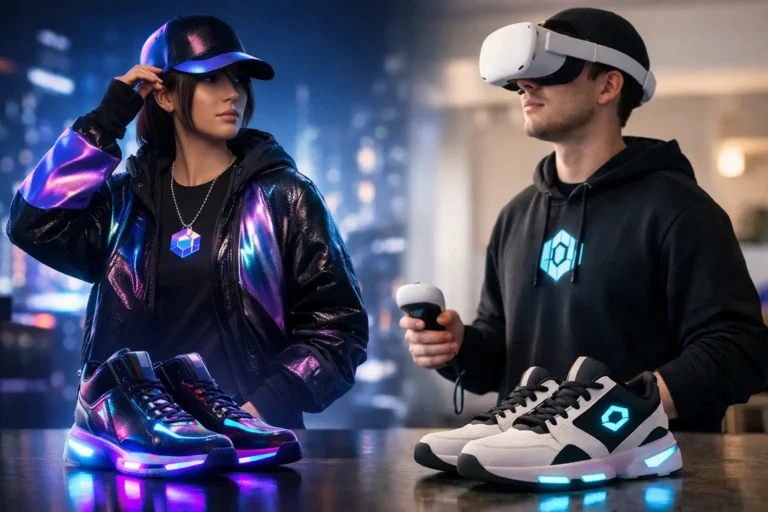
Shoes are a high-attention merch play. A digital art-inspired pair can use color blocking, a repeating icon pattern, or artwork placed across the upper for a piece that anchors an entire outfit. For collectors who already wear streetwear as identity, this is the kind of item that can turn a drop into a statement.
Because footwear is visual from up close and far away, mockups are essential. Check how the design reads on both feet, how it interacts with laces, and whether the color story still works with everyday clothing.
Build a drop, not a product pile
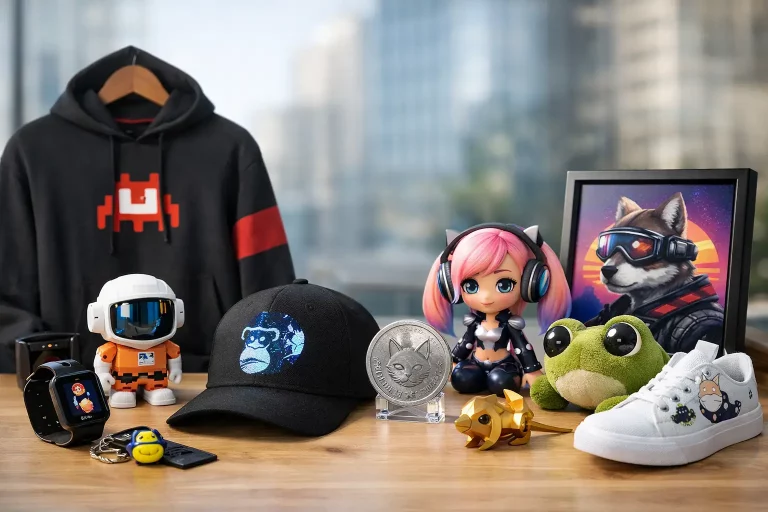
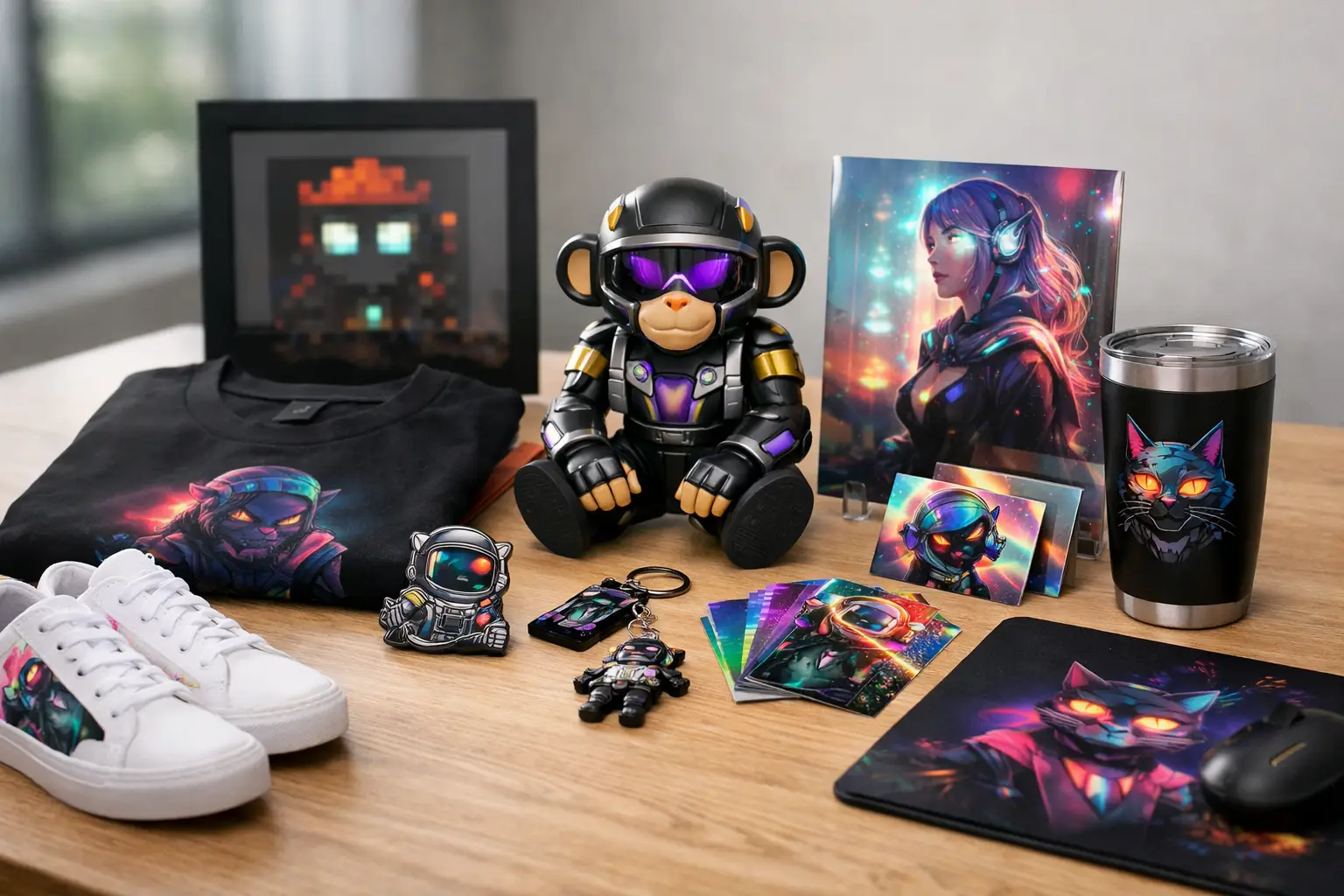
The strongest collections have a hierarchy. Start with one hero piece, usually a hoodie, jacket, shoe, or standout tee. Add an everyday layer such as a cap or tote, then give fans an accessible collectible like stickers, patches, or a poster. That creates multiple ways to join without making the release feel random.
A small capsule can outperform a giant catalog when every piece speaks the same language. Use a consistent palette, repeat one or two recognizable marks, and give the drop a reason to exist. A holder celebration, artist collaboration, seasonal chapter, or community milestone gives fans something to rally around.
Authenticity is non-negotiable. If the art belongs to an NFT project or another creator, get clear permission and work from approved assets. In Web3, provenance is part of the product. Fans notice when a release is official, and they notice even faster when it is not.
Make the physical version earn its place
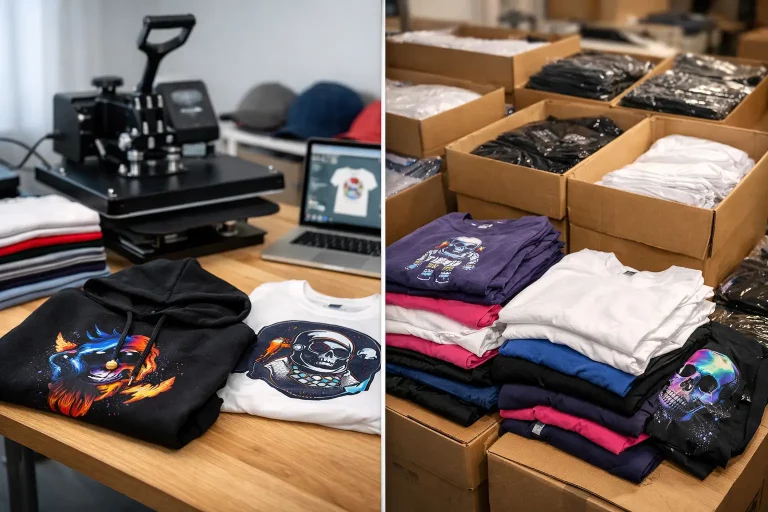
On-demand production is a smart fit for digital-first communities because it reduces the need to guess demand or hold piles of inventory. But on-demand should not mean untested. Order samples. Check print placement, color, fabric weight, and how the artwork performs after real wear. A design that looks perfect in a render can feel very different in hand.
At NFT Merch, the goal is not to turn every token into a T-shirt. It is to help digital culture show up in the real world with the confidence of a proper collaboration. Choose the pieces your community will actually wear, use, photograph, and recognize across the room. Own the culture. Wear the legacy.