How to Choose Official NFT Apparel
You can spot weak NFT merch fast. The print looks generic, the fit feels like an afterthought, and the branding has zero connection to the project it claims to represent. If you are figuring out how to choose official NFT apparel, the real question is not just what looks good on a product page. It is whether the piece actually carries the culture, credibility, and design language of the community behind it.
Official NFT apparel sits in a different lane from random crypto graphic tees. It is part fashion, part identity signal, part collectible. In Web3, what you wear offline says something about where you mint, what you hold, who you support, and whether you know the difference between a real collaboration and a fast cash-in.
How to choose official NFT apparel without getting burned
Start with the source. If a hoodie claims to represent a known NFT project or digital artist, there should be a clear relationship between the merch seller and that brand. Real official apparel usually shows up as a named collaboration, a licensed collection, or a store experience that clearly positions the project as a partner rather than a design reference.
That matters because unofficial merch often borrows aesthetics without carrying permission, context, or quality control. A shirt with a familiar PFP slapped on the chest is not the same as a piece built with the brand’s actual approval. Official merch has a stronger claim to authenticity, and in this space, authenticity is the product.
The next thing to check is whether the design feels native to the project. Strong NFT apparel does not just print a JPEG and call it a day. It translates a digital identity into something wearable. That can mean using artwork selectively, building around community symbols, or taking cues from the project’s tone, palette, and visual codes. If the product feels like anyone could have made it in five minutes, it probably does not deserve closet space.
Authenticity is more than a logo
A lot of buyers make the mistake of treating official merch as a simple yes-or-no label. It is more layered than that. The best pieces feel connected to the brand’s story, not just its assets.
If you are looking at a drop from an established NFT community, ask yourself whether the apparel reflects how that community actually presents itself. Is it loud, clean, ironic, premium, chaotic, minimal? Good merch matches the energy. That alignment is a trust signal because it shows the product was shaped with brand intent, not just commercial opportunity.
You should also pay attention to how the collection is framed. Official NFT apparel is usually presented with confidence and specificity. You will see the artist name, the project name, the collection context, or the collaboration angle made clear. Vague descriptions are a red flag. If a seller dances around where the art came from or uses broad crypto language instead of naming the brand directly, that is worth questioning.
Quality matters because bad blanks kill good art
Even the strongest NFT artwork can fall flat on low-grade apparel. A legit design printed on a cheap, stiff tee still feels cheap. If you want to know how to choose official NFT apparel that is actually worth buying, you have to look beyond the graphic.
Start with the garment itself. Check fabric weight, fit type, print method, and construction details. A heavyweight oversized tee gives a different result than a thin standard-fit shirt. A fleece hoodie with solid structure feels more premium than a lightweight one that loses shape after two washes. In streetwear and Web3 culture, the blank is part of the statement.
Print quality matters just as much. Sharp detail, durable inks, and placement that feels intentional all make a difference. Some art looks better as a large back graphic. Some works better as a subtle chest hit with stronger storytelling elsewhere. The point is not always bigger print equals better product. It depends on the piece and on how the brand wants to be worn.
There is also a trade-off between collectible appeal and everyday wearability. Some drops are made to be bold and instantly recognizable. Others are quieter and easier to style. Neither is wrong. If you want a flex piece for events, conferences, or community meetups, louder graphics might be the move. If you want something that fits into your weekly rotation, cleaner execution usually wins.
Fit, category, and your actual use case
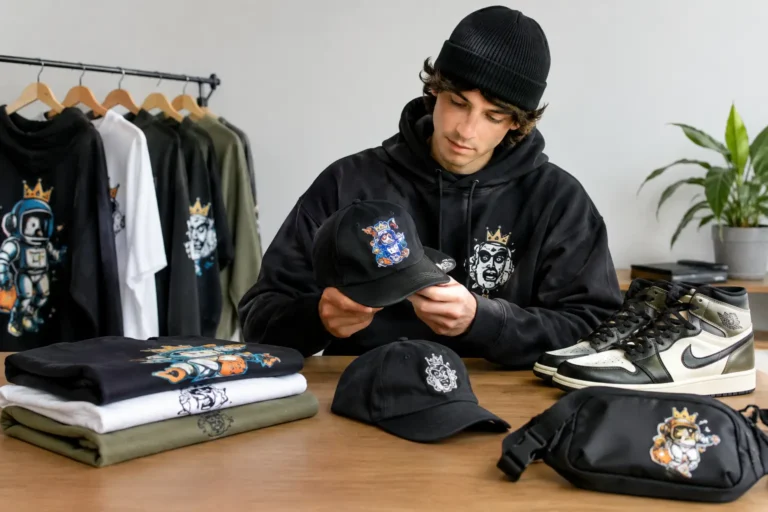
The smartest buyers do not shop NFT merch like they are buying random souvenirs. They shop with a role in mind. Are you after a statement hoodie, a clean cap, a collectible poster, or a bag that carries the brand without screaming it? Category changes the buying decision.
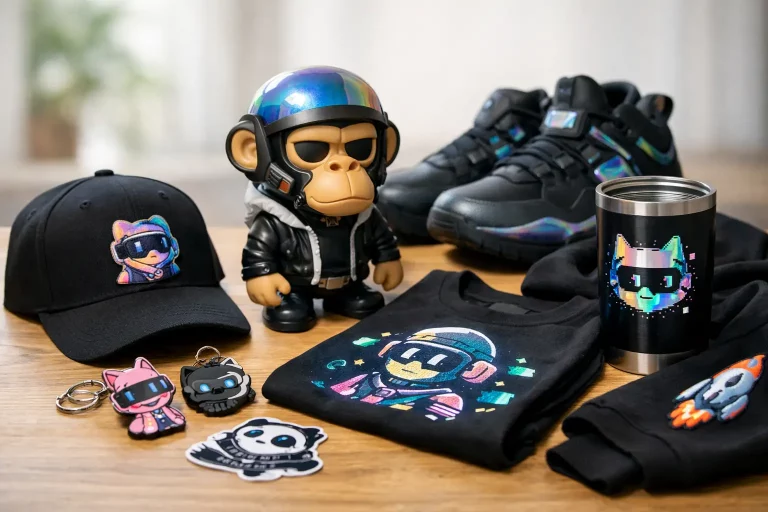
A tee is usually the easiest entry point. It is versatile, lower risk, and gives the artwork room to speak. Hoodies and sweatshirts feel more premium and often carry more status, but the price jump means quality needs to be there. Caps, patches, and accessories are strong if you want lighter branding or a smaller commitment. Mugs, blankets, and posters can work for collectors who want to extend the identity beyond fashion.
Fit matters more than people admit. If the sizing is unclear, or the product gives no real hint about silhouette, that is a friction point. Streetwear buyers care about shape. Web3 buyers care about self-presentation. If a piece does not fit the way you want to show up, the design alone will not save it.
How to choose official NFT apparel that holds value for you
Not every purchase needs to be a future grail. Still, value matters. And in NFT culture, value is not just resale. It is about relevance, scarcity, design quality, and emotional connection.
Some official drops matter because they mark a moment – a partnership launch, an artist release, a community milestone, a conference activation. That kind of merch can carry more meaning than a generic evergreen item. If you were there for the mint, the reveal, the run-up, or the cultural peak, the apparel becomes part of the memory.
At the same time, exclusivity without substance gets old fast. Limited numbers sound good, but a weak product does not become strong just because supply is low. The better question is whether the piece still feels desirable once the drop language fades away. Would you wear it if no one asked where it came from? Would it still hit if the market cooled off? If yes, that is real value.
Price should be judged in context. Official collaborations, on-demand production, premium blanks, and licensed artwork all affect cost. That does not mean every expensive piece is justified. It does mean the cheapest option is rarely the best move if you care about authenticity and build quality.
What separates curated merch from generic crypto clothing
There is a reason curated platforms stand out. When a store is selective about the NFT brands and artists it works with, the whole experience feels sharper. You are not scrolling through random token jokes and copy-paste ape graphics. You are shopping a tighter edit of real Web3 culture translated into physical product.
That curation helps buyers make better decisions. It reduces noise, raises the design standard, and gives more confidence that the merch is tied to actual communities. For a shopper who wants to wear recognized NFT culture instead of cosplay around it, that distinction matters.
This is where a platform like NFT Merch makes sense in the market. The value is not just that it sells apparel. The value is that it treats merch as an extension of NFT brand identity, with official collaborations, streetwear positioning, and product categories built for how Web3 communities actually shop.
Buy for identity, not hype alone
Hype can get you to the product page. It should not make the final call for you. The strongest NFT apparel purchases happen when three things line up: the brand is real, the design feels native, and the product itself is worth wearing.
If one of those pieces is missing, you will feel it. Maybe the collab is official but the garment is weak. Maybe the hoodie is premium but the design feels disconnected. Maybe the art is great but the project has no clear involvement. Good buyers know the difference, and that is exactly what keeps their rotation sharp.
Own the culture, but do it with taste. Choose pieces that carry real affiliation, real design intent, and enough quality to live beyond one trend cycle. When your merch actually reflects the project, the artist, and your place in the space, it stops being just apparel and starts feeling like proof you were part of it.