Merch for NFT Communities That Actually Hits
Most NFT drops live on screens. The strongest ones spill into real life. That is why merch for nft communities matters more than people outside Web3 usually get. A hoodie is not just fabric. A cap is not just an accessory. When the design is right and the project has real culture behind it, merch becomes proof of belonging, a flex, and a way to carry digital identity into the street.
That shift matters because NFT communities are not built like old-school fan clubs. They move fast, speak in references, and build status through access, taste, and shared signals. If a project has energy online but its physical merch feels cheap, generic, or disconnected from the art, people notice immediately. In a culture that values authenticity, bad merch kills momentum.
Why merch for NFT communities works differently
Traditional brand merch usually does one job – brand awareness. Web3 merch has to do at least three. It needs to represent the visual world of the collection, signal membership without feeling corny, and hold up as something people actually want to wear. If it misses any of those, it starts looking like promo swag instead of culture.
That is the main difference. NFT communities do not want throwaway pieces. They want items that feel tied to the project’s identity and worthy of the timeline, the group chat, and the fit pic. A great drop can deepen loyalty because it gives holders and supporters a physical layer of ownership. It turns abstract affiliation into something visible.
There is also a practical edge. Not everyone in a community owns the grail piece or has the same wallet size. Merch creates an entry point. A supporter who cannot buy into a collection might still buy a tee, a poster, or a patch. That broadens the ecosystem without watering down the core brand.
What makes NFT merch feel authentic
Authenticity starts with design discipline. Slapping an NFT image onto a blank T-shirt is the lazy route, and most communities can spot it in two seconds. Strong merch takes cues from streetwear, album merch, gaming culture, and limited drops. It treats the artwork as part of a system, not the whole product.
That means choosing graphics that work on fabric, understanding placement, and building around the mood of the brand. Some projects are loud and chaotic. Others have a cleaner, more minimal flex. The merch should match that energy. A dark, premium collection should not suddenly produce candy-colored basics unless that contrast is part of the story.
Quality matters just as much as design. Web3 buyers know how to spend. If they are paying for a branded hoodie, they expect a fit they will wear more than once, a print that lasts, and materials that do not feel disposable. Cheap blanks and weak finishing send the wrong message. They tell the community the drop was about squeezing revenue, not building something worth owning.
Exclusivity helps, but only when it is real. Limited runs, artist collabs, and project-specific capsules hit because they feel intentional. Forced scarcity does not. If every item is framed as ultra-rare, the effect wears off fast. The best drops give people a reason to care beyond the countdown timer.
The categories that make sense in Web3
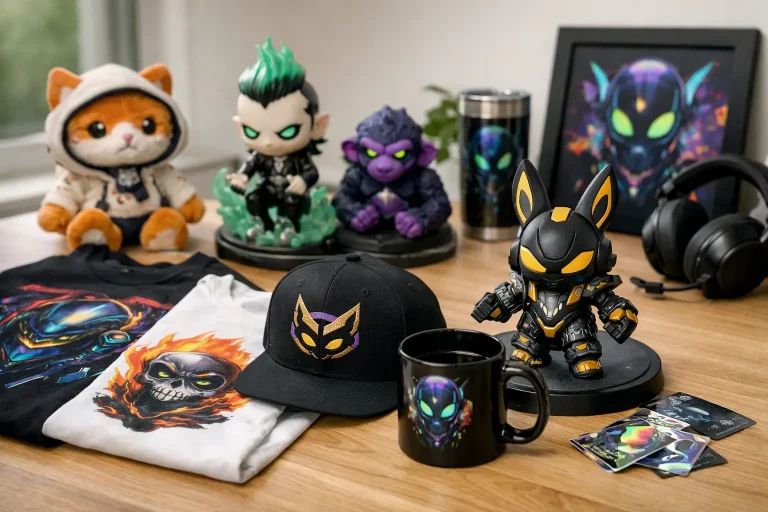
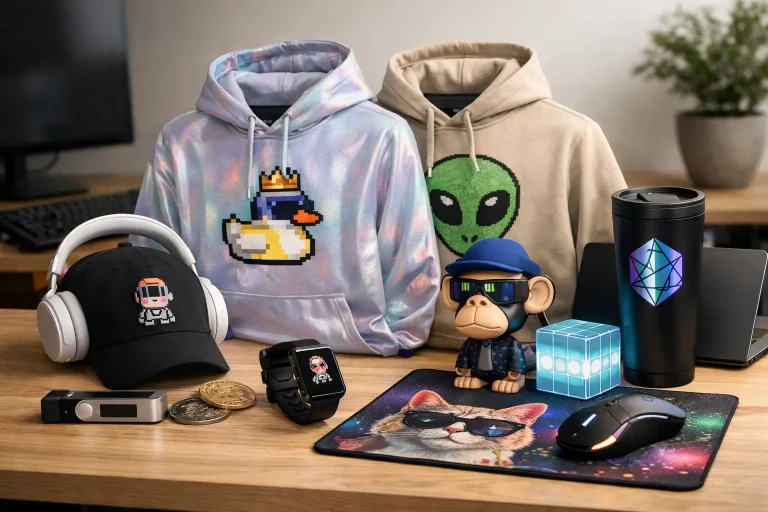
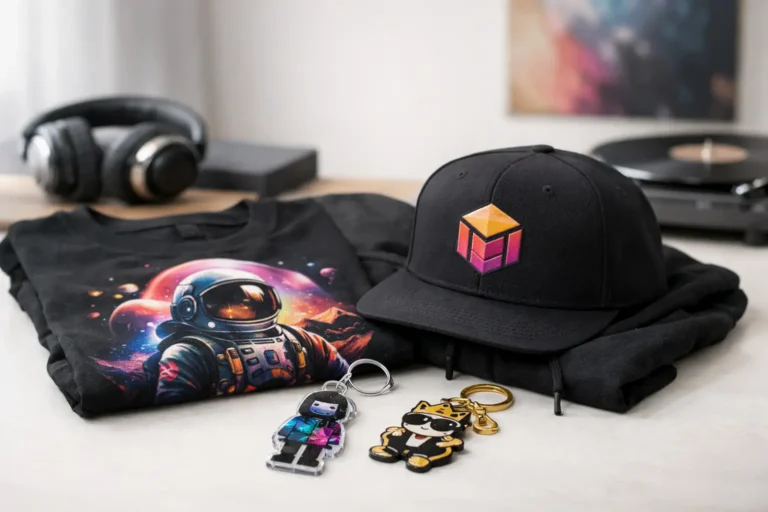
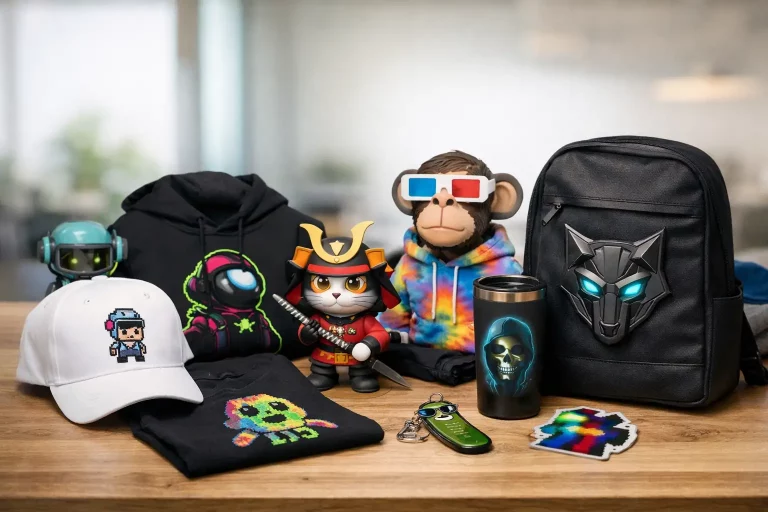
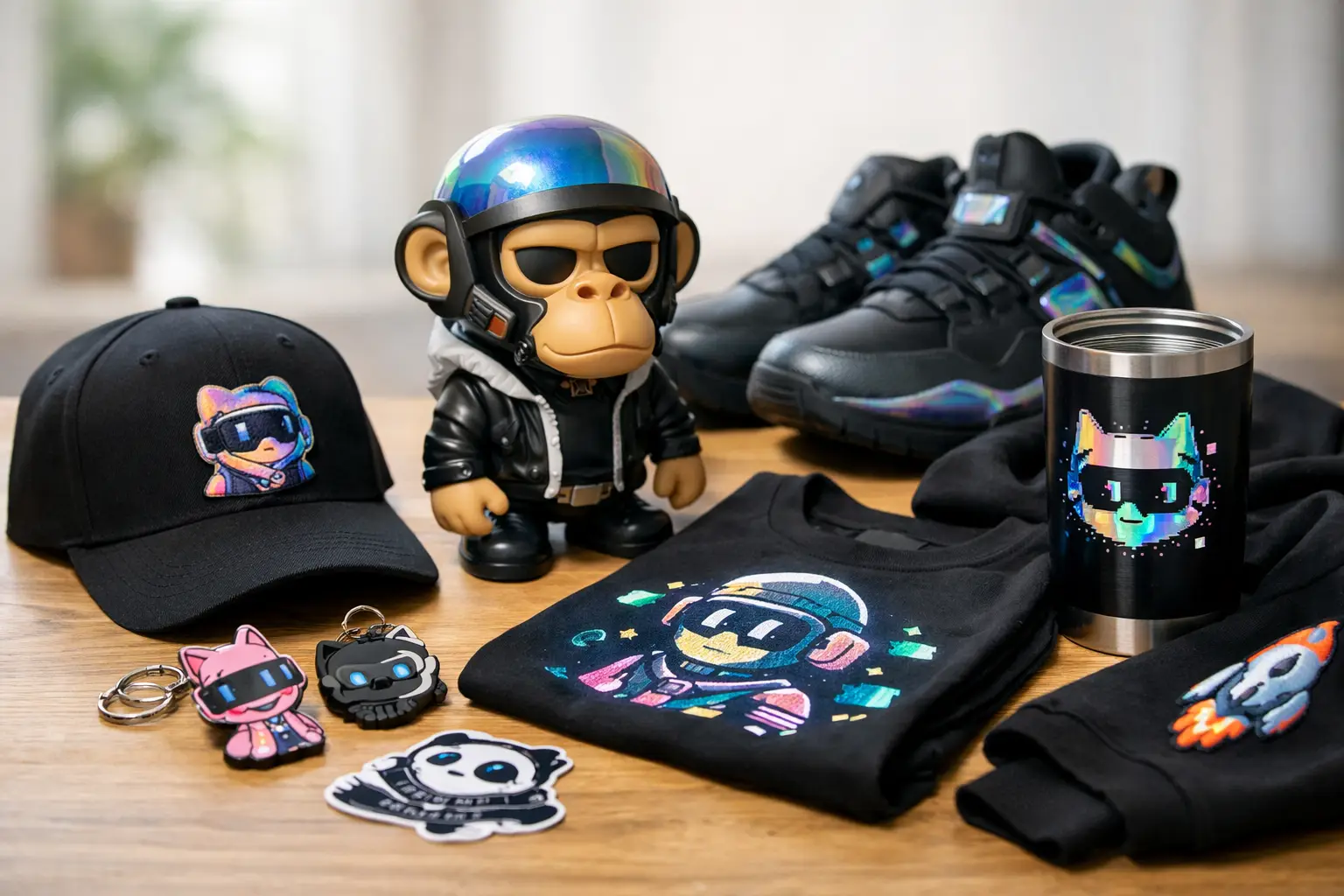
Apparel leads for obvious reasons. Tees, hoodies, sweatshirts, caps, and outerwear are the easiest way to make digital culture visible offline. They are also the pieces that let communities build a recognizable look. A strong hoodie can become part of a project’s identity in the same way a PFP becomes part of someone’s profile.
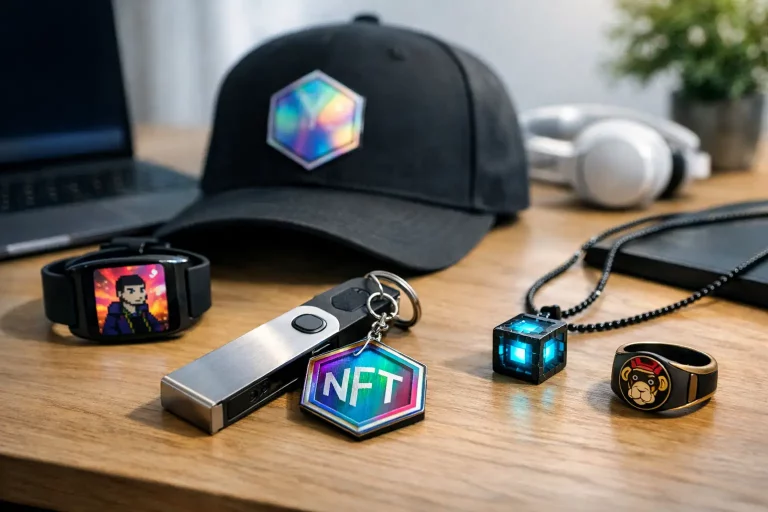
Accessories matter more than some brands think. Bags, patches, stickers, mugs, posters, and even towels or blankets can carry a community into everyday spaces without forcing a full fit. Not everyone wants to wear loud graphics head to toe. A smaller item can still signal taste and affiliation.
The right category depends on the audience. If the community leans fashion-forward, prioritize silhouettes and quality details. If it skews collector-heavy, posters, patches, and smaller collectible items may land harder. If it is global and online-first, on-demand production can keep the offer flexible without requiring huge inventory bets.
The trade-off between hype and wearability
Every NFT brand wants a drop that gets attention. The smarter question is whether people will keep wearing it after the reveal post. Hype gets clicks. Wearability builds staying power.
The sweet spot is merch that can move in both lanes. It should be recognizable to insiders but still look good outside the community bubble. That usually means balancing statement pieces with cleaner staples. A front-heavy graphic hoodie might drive social buzz, while a more understated embroidered cap becomes the everyday winner.
This is where a lot of collections get stuck. They over-design for holders and under-design for real wardrobes. If every product screams for attention, people save it for niche moments. If the collection includes a few lower-key pieces, the merch becomes part of daily rotation. That is how a brand moves from novelty to actual lifestyle presence.
How partnerships raise the floor
Recognized NFT brands and artists bring built-in trust. That matters because the merch space around Web3 is crowded with low-effort copycats and generic crypto graphics. Official collaborations cut through that noise. They tell buyers the project approved the direction, the art has context, and the product belongs to the culture it represents.
Curated partnerships also improve quality control. When a merch platform works with known Web3 names, the bar tends to rise across design, storytelling, and product selection. The result feels less like a random print shop and more like a legitimate fashion and collectibles destination.
That distinction matters to buyers who care about provenance. In Web3, origin stories count. People want to know the merch is connected to the project, not just inspired by it from the sidelines. Authenticity is not a buzzword here. It is part of the value.
Why on-demand production fits the space
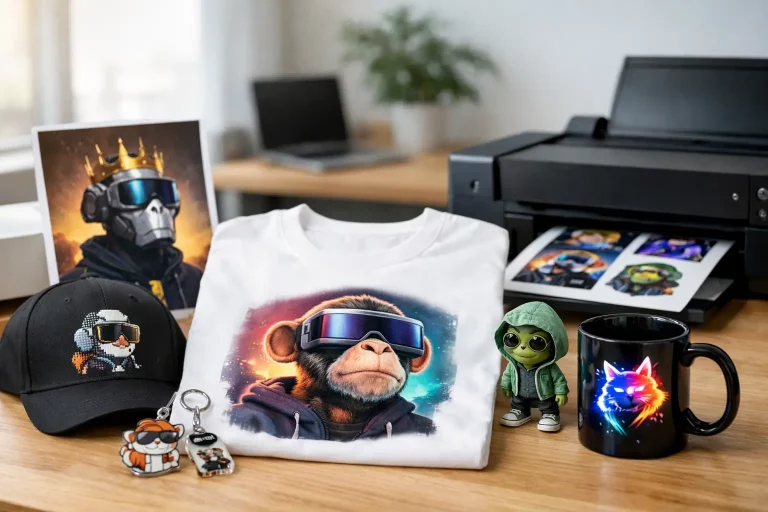
NFT culture moves fast. On-demand production fits that pace because it lets brands launch without sitting on piles of stock. It also gives communities access to a wider range of products without the friction of large minimums.
That model is not perfect for every situation. If a project wants heavyweight specialty cuts, custom trims, or complex packaging, a traditional production run might offer more control. But for many communities, on-demand hits the right balance between flexibility and reach. It keeps drops lean, supports global fulfillment, and reduces waste from overproduction.
It also lowers the barrier for experimentation. A community can test what resonates – oversized hoodies, graphic shorts, collectible posters, premium mugs – without treating every launch like a massive inventory gamble. That matters in a market where tastes shift quickly and momentum is everything.
What buyers should look for before they cop
The first check is simple. Does the merch feel official, considered, and tied to a real NFT identity, or does it look like generic crypto apparel with a logo pasted on top? If the answer is the second one, keep moving.
Next, look at the product mix. A solid merch destination should offer more than one token item. Communities are not one-size-fits-all, and the catalog should reflect that. Streetwear staples, accessories, and collectible formats create more ways for people to join the culture on their own terms.
Then there is fulfillment. Web3 is global by default, so buyers expect easy checkout, flexible payment options, and straightforward delivery. If crypto payments are available, that is a plus, but the bigger point is convenience. Friction kills impulse, and merch often lives on impulse plus identity.
A platform like NFT Merch works because it treats physical products as a real extension of Web3 brands, not an afterthought. That is the difference between browsing random novelty items and finding pieces that feel connected to a movement.
The bigger play behind merch for NFT communities
The best merch does not just monetize attention. It extends the brand world. It gives members something to wear to events, post online, gift to other collectors, and keep long after market cycles cool off. In a space where timelines move fast and narratives change overnight, physical merch creates a kind of permanence.
That permanence has cultural value. It helps a digital community take up space in the real world. It turns usernames into recognizable style signals. It makes the project feel bigger than a feed, a floor price, or a single season of hype.
And that is really the point. When merch is done right, it is not extra. It is infrastructure for identity. Own the culture. Wear the legacy.