Licensed Artist Merchandise Guide
The difference shows up fast. One tee feels like a cheap cash-in with a random graphic slapped on blank stock. The other feels like part of the culture – built with the artist, tied to the project, and worth wearing beyond the timeline. That gap is exactly why a licensed artist merchandise guide matters, especially in Web3, where ownership, provenance, and identity already shape how people buy.
If you collect digital art, hold project assets, or move through NFT communities, merch is not just extra inventory. It is a physical signal. It tells people what you back, what you found early, and which artists or communities you believe deserve a place off-chain too. But licensed merch is not all the same, and unofficial merch can blur the line if you do not know what to look for.
What licensed artist merchandise actually means
Licensed artist merchandise is product made with permission from the artist, brand, or rights holder. That sounds basic, but it changes everything. The artwork, logos, character treatments, and brand language are being used legally, with approval, and usually with direct involvement from the people behind the project.
In practice, that can mean a formal collaboration, a limited drop, or an approved retail partnership. It can also mean the artist has reviewed samples, signed off on graphics, chosen product categories, or helped shape the visual direction. When that happens, the merch carries more than a design. It carries intent.
That is why official merch often feels sharper. The fit, print placement, packaging, and product mix usually reflect the artist’s actual brand world instead of a quick attempt to monetize attention.
Why this matters more in Web3
In Web3, authenticity is not some background detail. It is the whole game. Communities care about source, receipts, creator rights, and whether something is genuinely tied to the project or just farming hype.
A strong licensed artist merchandise guide has to start there. If a brand built its audience on verified ownership and direct creator support, then unofficial merch works against the culture. It strips out the relationship between creator and community and replaces it with imitation. That might still sell, but it does not carry the same weight.
There is also a status layer here. Wearing official merch from a recognized NFT artist or community sends a very different signal than wearing something that only looks close enough. For many buyers, that difference is the point. You are not buying fabric. You are buying alignment.
The easiest ways to spot real licensed merch
The best licensed drops usually do not hide their source. They make the partnership clear. You should be able to tell who the artist is, who the merch partner is, and why the product exists.
Look at how the product is presented. Is the collaboration named clearly? Does the brand speak in a voice that feels connected to the artist or project? Are the graphics original to the drop, or do they look like pulled images pasted onto a generic mockup? Good licensed merch usually has stronger art direction because there is actual creative ownership behind it.
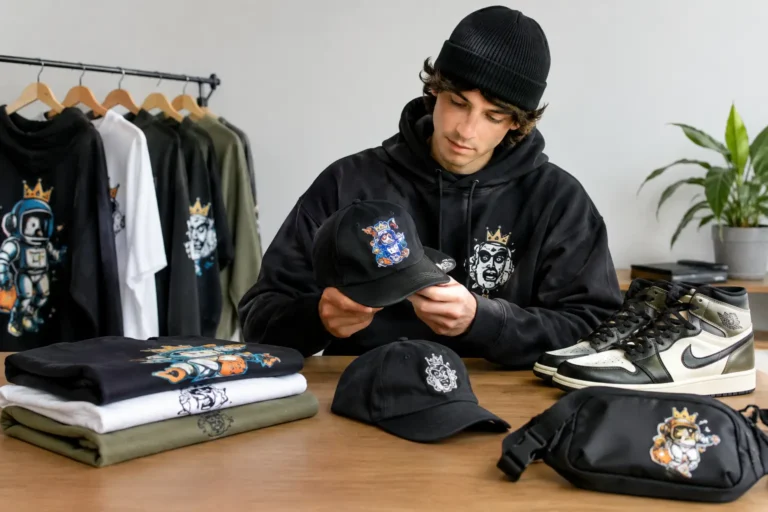
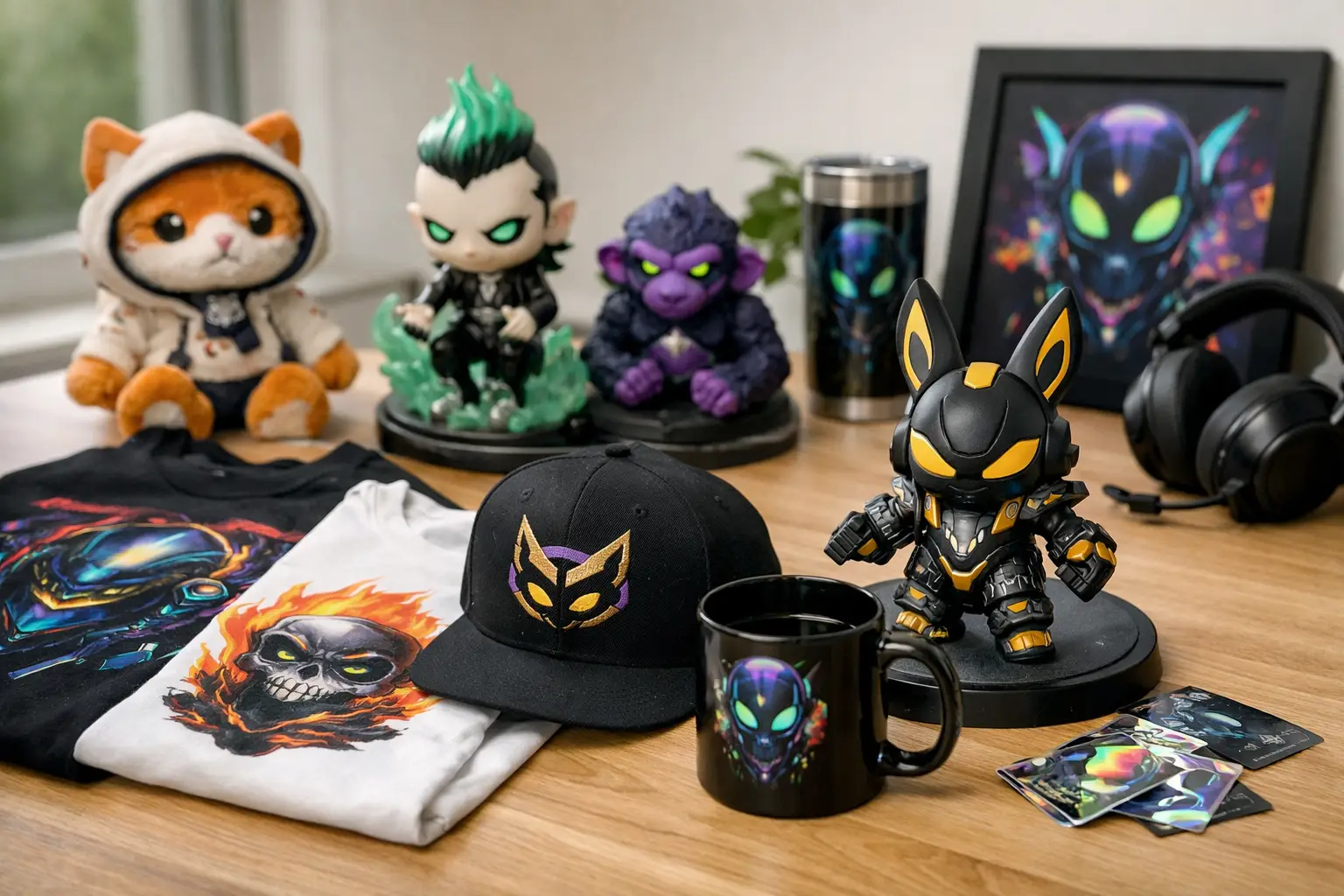
Product range matters too. Real partnerships often go beyond a single print-on-anything setup. You will usually see curation – maybe tees and hoodies first, then accessories, posters, caps, or home pieces that make sense for the audience. That does not always mean bigger is better, but it often means more thought went into the line.
The strongest trust signal is consistency. If the artist is established, the merch should feel like a natural extension of the project, not a side hustle wearing its skin.
Licensed artist merchandise guide to quality
A licensed artist merchandise guide should talk about quality, because official rights do not automatically guarantee a great product. Some licensed merch is still underwhelming. The smart move is to judge both the legitimacy of the partnership and the standard of the item itself.
Start with the blank or base product. Streetwear-minded buyers know the difference between a lightweight promo tee and a shirt with structure, better cotton, and a fit that actually works in rotation. The same goes for hoodies, caps, and bags. If the brand is positioning the drop as premium, the product should back that up.
Then look at print method and artwork handling. Detailed artist work can fail fast if it is poorly translated to fabric. Fine lines, gradients, texture, and color depth all need proper production choices. Some graphics work beautifully as direct prints. Others need embroidery, patchwork, oversized placement, or specialty finishing to hold the original energy.
This is where licensed merch has an edge when done right. Because the artwork is approved, the production can be built around protecting the design instead of cutting corners around it.
Limited drops, evergreen pieces, and what to buy first
Not every licensed release should be approached the same way. Some drops are built for scarcity. Others are designed to give a wider community access to the brand through staple pieces. Both models work, but your buying strategy should change based on what the release is trying to be.
If a drop is clearly limited, speed matters. You are buying for cultural relevance, collection value, and the fact that the piece may not come back in the same form. In that case, lead with the product most tied to the collaboration story – usually the hero hoodie, tee, or cap.
If the collection is more evergreen, think in terms of wearability. Buy the piece that fits how you actually move. A graphic tee might get more real use than a louder statement jacket. A poster or mug might make sense if you want to bring the art into your space without forcing the fit.
There is no rule that says the rarest item is the smartest buy. Sometimes the best pickup is the one you will use enough to keep the artist visible in real life.
The trade-off with on-demand production
On-demand production makes a lot of sense for artist merch, especially in niche communities and global markets. It cuts waste, lowers inventory risk, and lets brands test more concepts without overproducing. For buyers, it also means access – you can often get official merch without waiting for a giant pre-order cycle or fighting through regional stock limits.
The trade-off is timing. On-demand pieces may take longer than mass-produced retail stock, and some shoppers still expect instant dispatch. That is fair, but the upside is a more flexible model that supports a broader range of artists and designs without dead inventory sitting around.
For Web3 brands, that model fits the culture better than people admit. It is adaptive, direct-to-community, and built around demand rather than guesswork. When quality control is strong, on-demand does not feel like a compromise. It feels like a smarter pipeline.
Why unofficial merch keeps missing the mark
Unofficial merch often chases visibility, not meaning. It copies the most recognizable asset, throws it onto the easiest product, and relies on the audience not looking too closely. Sometimes it is cheaper. Sometimes it ships faster. But it usually lacks the two things that make artist merch worth owning: permission and point of view.
That matters even more with digital artists and NFT-native brands. These communities are built on creative ownership. When merch ignores that, it is not just a legal problem. It feels culturally off.
And from a style perspective, unofficial product often looks exactly how it was made – rushed, generic, and disconnected from the actual identity of the project. If you care about design, that gets old quickly.
How to buy with better instincts
Use a simple filter. Ask who approved it, who produced it, and whether the product feels true to the artist. If you cannot answer those questions, slow down.
Then think about your reason for buying. Are you collecting a moment, repping your community, supporting an artist, or building a wardrobe around digital culture? The answer changes what makes a product worth it. Some buyers want exclusivity. Others want daily wear. Some want both.
If you are shopping across Web3 drops, it helps to buy from platforms and retail partners that treat merch like brand-building, not just printing. The best operators understand that physical product is part of the lore. That is where a curated model stands out. It brings artists, communities, and product standards into the same lane instead of making buyers sort through noise alone.
One good licensed piece can do more than ten generic crypto shirts ever will. It can hold the visual language of the project, carry the artist’s approval, and still work as an actual fit in the real world. That is the bar.
Own the culture carefully. The best merch is not just official. It feels earned, designed, and connected to something bigger than the graphic on the front.