10 Top Products for NFT Holders
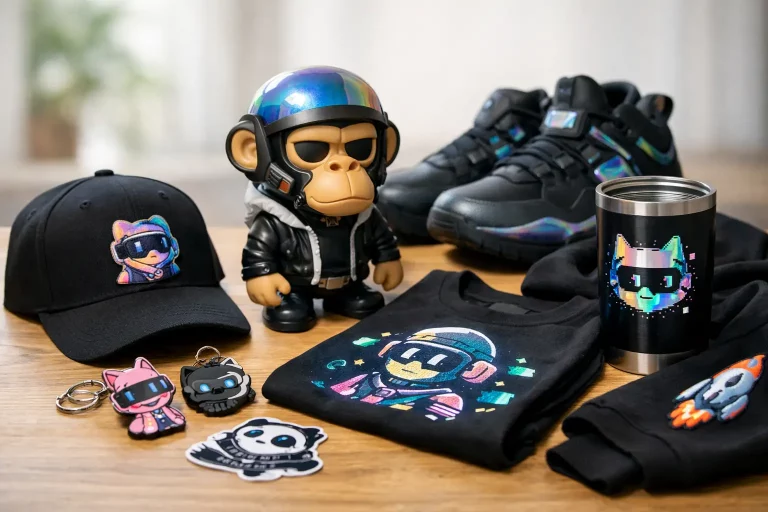
Owning a blue-chip PFP or backing an emerging artist onchain is one thing. Showing that identity in the real world is another. The top products for NFT holders are not random crypto-themed throwaways. They are the pieces that carry community, taste, and status offline – the kind of merch that tells people you are not just watching the culture, you are part of it.
For NFT holders, product choice is never just about function. It is about signal. The right hoodie, cap, poster, or patch can say more about your place in Web3 than a wallet screenshot ever could. But not every category hits the same. Some products are built for daily wear. Some work better as collectible flexes. Others only make sense if the artwork, print quality, and brand collaboration are actually strong.
What makes top products for NFT holders worth buying
The best merch for NFT collectors sits at the intersection of identity, design, and legitimacy. If a product looks generic, misses the visual language of the collection, or feels like a low-effort print job, it does the opposite of what holders want. It weakens the signal.
Strong NFT merchandise does three things well. First, it translates digital art into physical form without flattening what made it special in the first place. Second, it feels wearable or usable beyond a novelty purchase. Third, it comes from a source that understands the culture. In Web3, unofficial merch is easy to spot, and that matters.
That is why the best categories tend to be products with a real lifestyle role. Streetwear works because it already lives in the same space as exclusivity, drops, identity, and community. Accessories work because they travel. Home goods work when the art deserves to be displayed, not buried in a wallet app.
1. Graphic hoodies that carry the collection properly
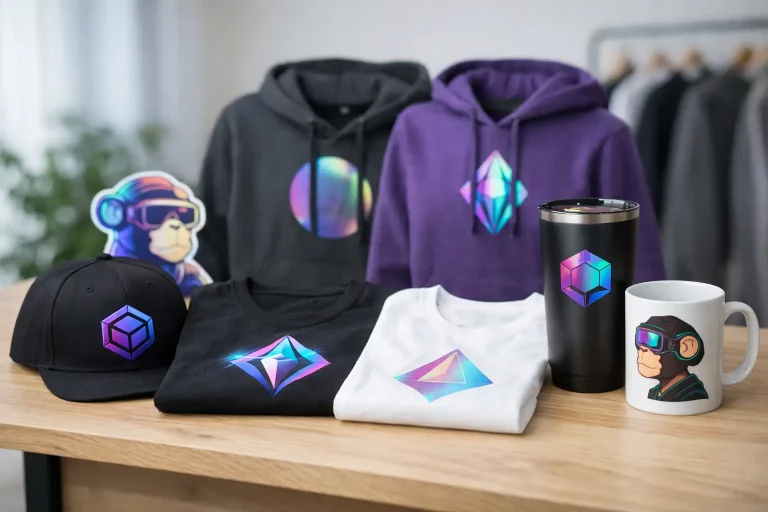
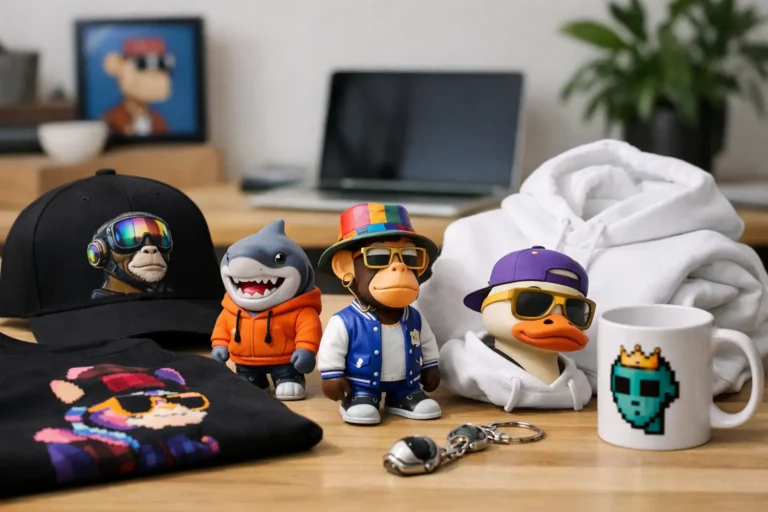
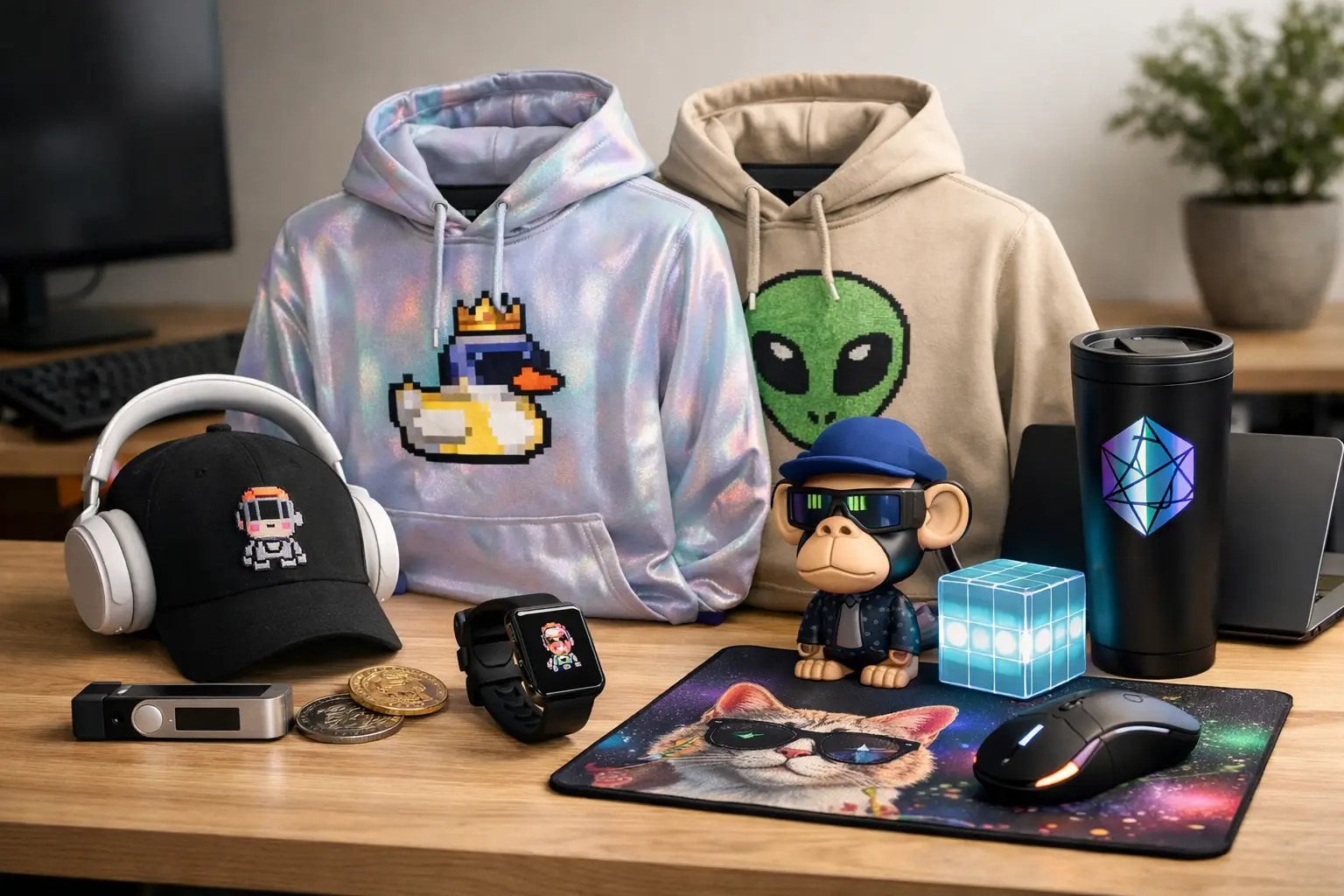
If there is one category that consistently lands, it is the hoodie. A good NFT hoodie gives artwork room to breathe, has enough presence to feel like a statement piece, and fits naturally into streetwear rotation. For holders, that matters. You want something you can wear to an event, a meetup, a conference, or just out in the city without it feeling like costume merch.
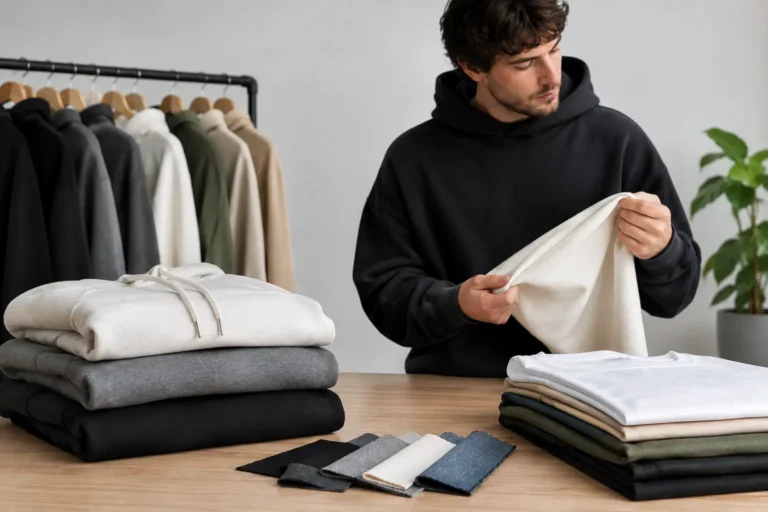
The trade-off is obvious. Hoodies only work when the print execution and garment quality are right. If the art is scaled badly or the blank feels cheap, the whole thing falls apart. But when the design is clean and collection-aware, a hoodie becomes one of the strongest offline signals in Web3.
2. T-shirts with art-first design
T-shirts are the most flexible entry point for NFT merch. They are easier to style, easier to collect, and easier to wear year-round than heavier pieces. For many holders, a T-shirt is the first physical item that makes an online identity feel real.
The difference between a strong shirt and weak one usually comes down to design restraint. Not every piece needs massive logos and loud wallet-core energy. Sometimes the best shirt references the project through color, iconography, or a specific character treatment that collectors recognize instantly. That insider feel gives it more value than generic crypto slogans ever will.
3. Caps that work beyond the timeline
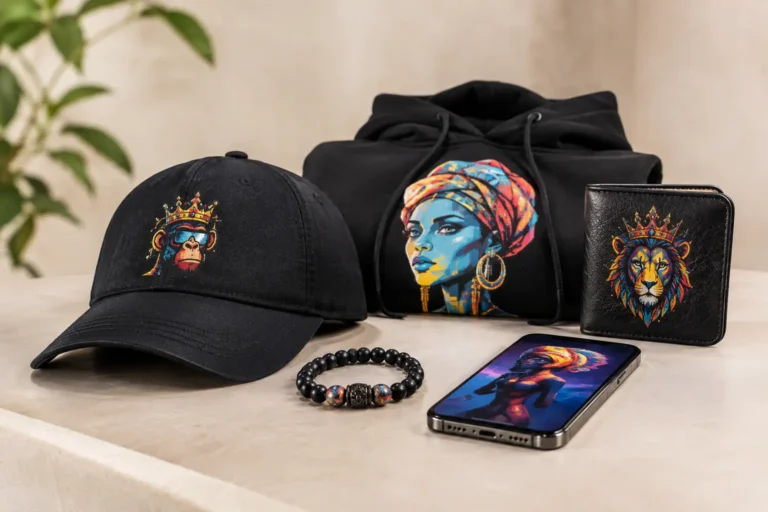
Caps are underrated in Web3 merch. They are compact, wearable, and easy to pair with everyday looks. More importantly, they offer a quieter way to represent a collection. Not every holder wants a full front-and-back graphic moment every time they leave the house.
A cap works best when the branding is tight. Embroidered marks, subtle insignias, or minimalist project identifiers usually outperform overdesigned panels. For holders who want to rep the culture without shouting, this is one of the smartest buys.
4. Posters and wall art for collectors who want display value
Some NFT art belongs on a wall. That sounds obvious, but plenty of projects never make the jump well. Digital files can feel flat when printed if the artwork is not handled carefully. The top poster products for NFT holders succeed because they respect the original art direction while giving it a physical presence.
This category is especially strong for collectors who treat their space like part of their identity. A framed print or poster does more than decorate a room. It shows what communities and creators you back. The only caution is that wall art needs stronger visual standards than apparel. If the artwork is not worth looking at every day, it is not worth printing.
5. Patches and stickers with real collector energy
Not every product needs to be expensive or oversized to matter. Patches and stickers hit a different part of collector behavior. They are affordable, easy to stack, and naturally tied to customization. Put a patch on a jacket or a bag, and suddenly the item becomes your version of the culture.
These products also make sense for NFT communities with strong symbols or recognizable traits. They are less about premium fashion and more about modular identity. The catch is that they need sharp design and good material quality. If they feel cheap, they become throw-ins. If they look considered, they turn into low-cost collectibles people actually keep.
6. Bags that bring utility into the mix
Tote bags, crossbody bags, and other carry pieces are strong picks because they sit at the intersection of style and use. NFT holders go to events, travel with tech, carry laptops, bring gear to coworking spaces and conferences. A bag that ties into a recognized project can work daily while still carrying that community stamp.
This is also where design maturity matters. Bags do not have to scream. In fact, they often work better when they do not. Clean graphics, smart placement, and project branding that feels integrated rather than pasted on will carry much further than novelty-heavy execution.
7. Sweatpants and shorts for full-set appeal
Streetwear has always been about the full fit, not just the hero piece. That is why bottoms deserve more attention in NFT merchandise. Sweatpants and shorts can extend a collection into something more complete, especially when paired with a matching hoodie or crewneck.
These products are not for every holder. Some people want a single statement item and are done. Others want a coordinated look that feels like a drop, not just merch. For that buyer, matching apparel sets create more status because they feel intentional. They also bring NFT branding into categories that most generic merch shops ignore.
8. Mugs, blankets, and home pieces that make digital culture livable
Not every NFT holder wants to wear their collection every day. Some want to live with it. That is where mugs, blankets, and similar home products come in. They are practical, giftable, and surprisingly effective at making digital ownership feel tangible.
This category works best for holders who already spend time curating their workspace or home setup. A mug on a desk or a blanket in a media room can carry the same identity value as apparel, just in a softer way. The risk is novelty fatigue. Home goods need strong design and real usability, or they become shelf clutter fast.
How to choose the right NFT product for your lifestyle
The smartest buy depends on how you actually move. If you attend events, apparel and caps usually give you the most value because they travel with you. If you are more art-led and collector-minded, posters and display pieces may feel more meaningful. If you want lower-commitment ways to rep your community, patches and stickers make sense.
It also depends on the project itself. Some NFT brands have visual identities that belong on heavyweight hoodies and oversized tees. Others translate better through minimal accessories or home goods. The right product should feel native to the collection, not forced onto it.
Authenticity matters too. In this space, official collaborations and curated drops carry more weight than random print-on-demand knockoffs. That is part of why platforms like NFT Merch resonate with holders who care about real brand alignment, not just artwork slapped onto basics. In Web3, provenance is not just for tokens.
Why the best products for NFT holders are about more than merch
At its best, NFT merchandise is not a side product. It is a continuation of ownership culture. It takes digital affiliation and gives it texture, scale, and presence. You are not only collecting an asset. You are wearing the story, carrying the signal, and building a physical layer around the communities you believe in.
That is the real reason certain products rise above the rest. They do not just look good on a product page. They help holders show up offline in a way that feels authentic. And in a space built on identity, access, and belonging, that is what turns a product into part of the culture.
The smartest move is simple: buy the piece you will actually use, but make sure it is worthy of the community behind it.