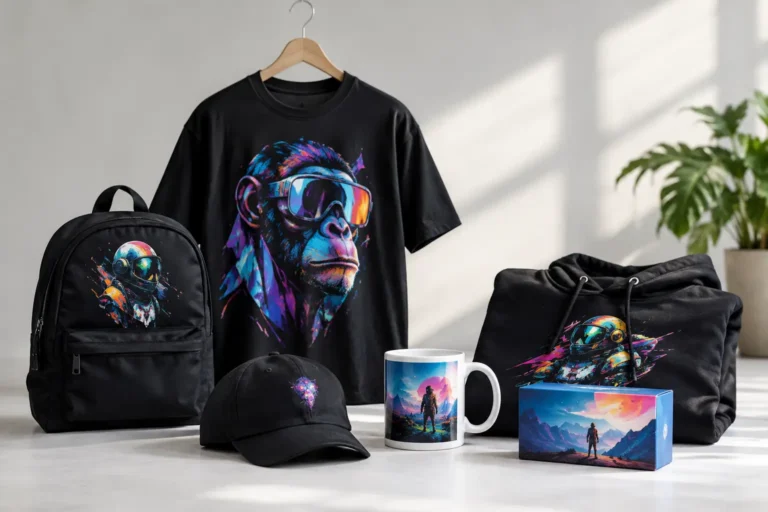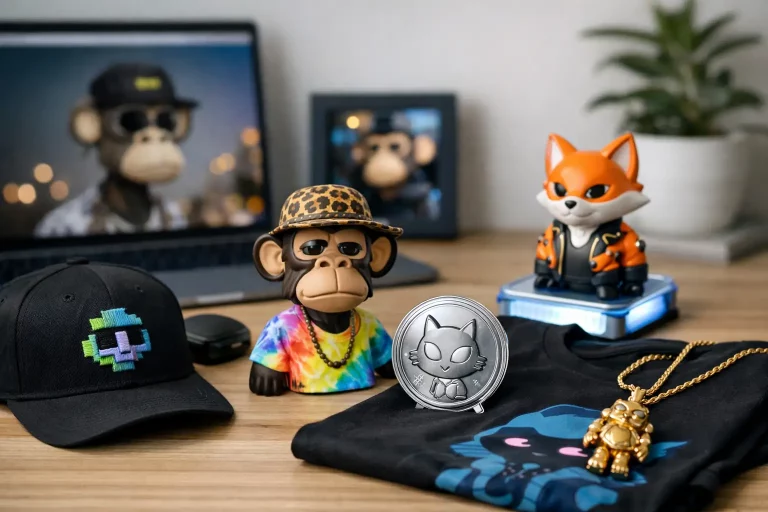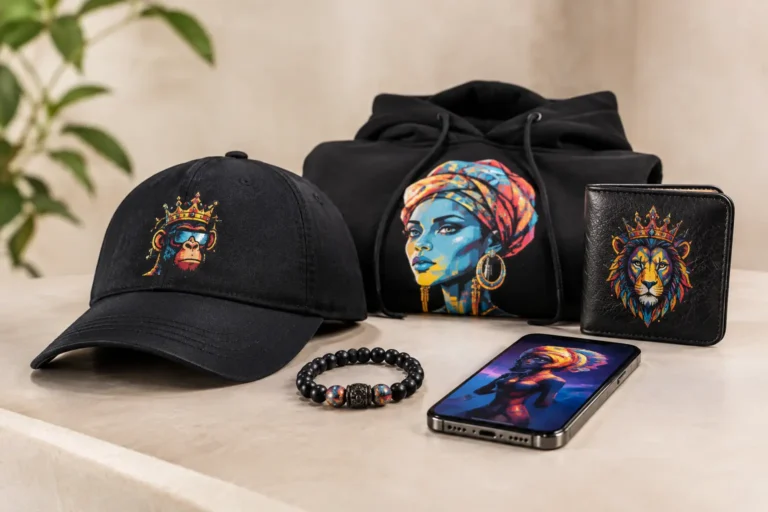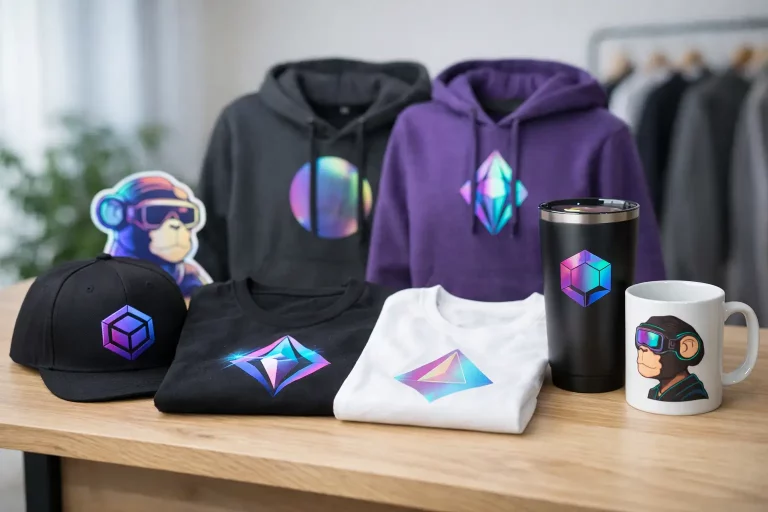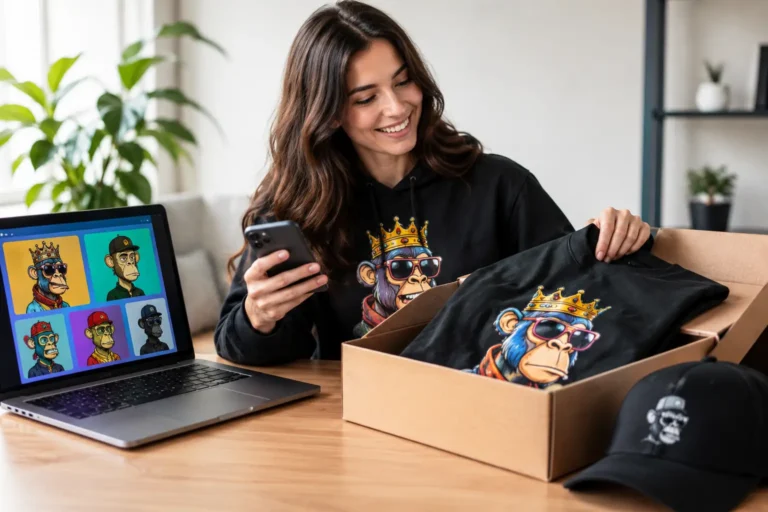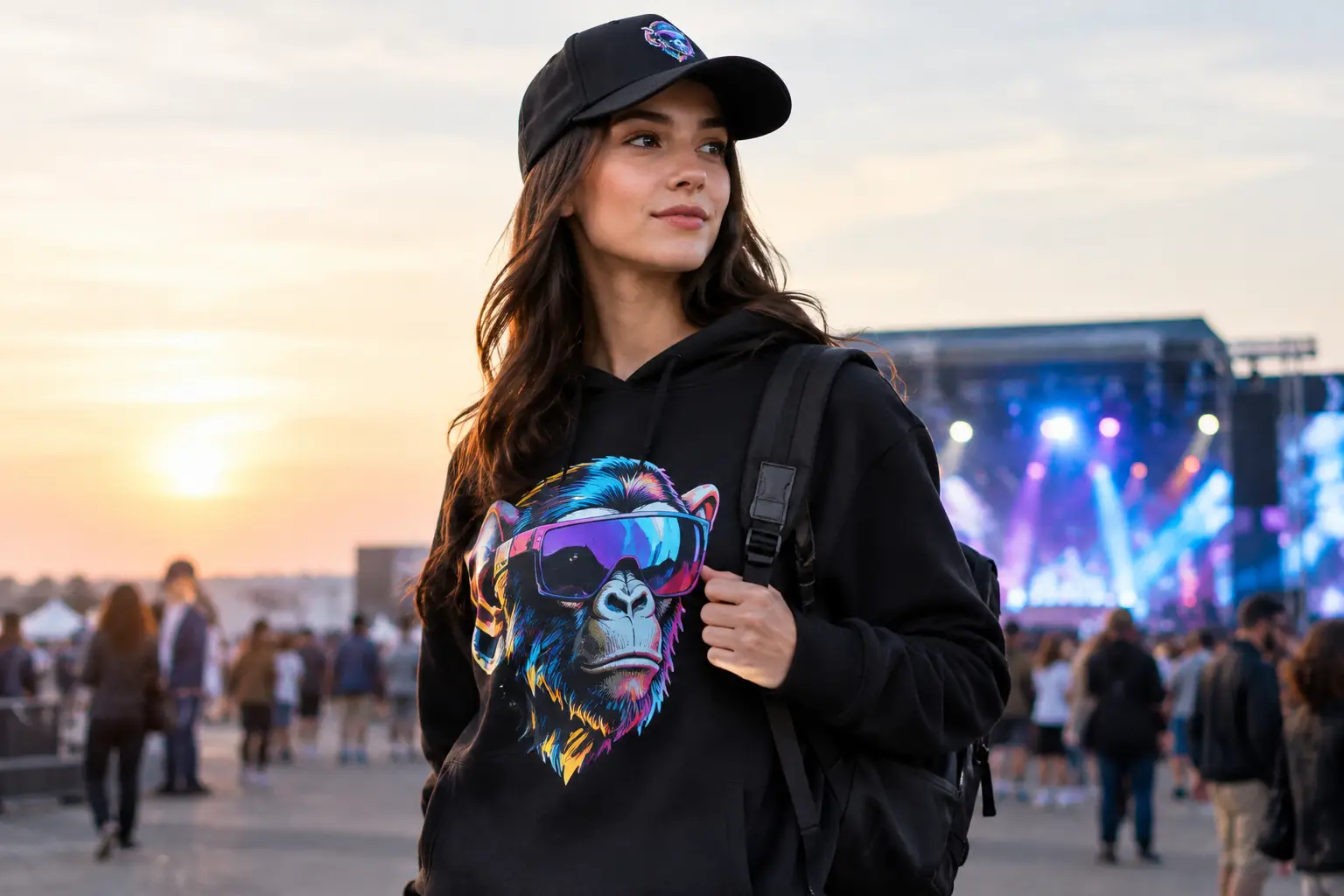
NFT Apparel for Events That Builds Real Presence
A profile picture can fill a timeline. A standout hoodie can fill a room. NFT apparel for events gives your community a physical signal that travels beyond the wallet, the server, and the feed. When collectors meet face-to-face, what they wear can turn a quick nod into a conversation, a new connection, or the proof that someone was there before the drop became history.
For Web3 communities, event merch is not just a logo printed on a tee. It is a badge of participation. The right piece carries the visual language of the project, the energy of the crowd, and enough design credibility to get worn long after the conference lights go down.
Why NFT Apparel for Events Hits Different
Events compress internet culture into a few high-voltage days. At a convention, gallery opening, creator meetup, token-gated party, or IRL community dinner, everyone arrives with the same goal: find their people. Apparel makes that easier.
A recognizable graphic on a cap or heavyweight tee acts like a real-world wallet connection. It tells other attendees what world you are part of without forcing an introduction. For the wearer, that matters. For the brand, it creates visibility that feels earned rather than bought.
The strongest event pieces also avoid the trap of looking like standard corporate giveaway gear. People do not want another thin shirt with a giant sponsor mark across the chest. They want streetwear with a point of view: clean artwork, intentional color, a silhouette worth keeping, and a reference that community members immediately understand.
That distinction is where authenticity lives. A collector may wear a piece because it represents a project they believe in, a creator whose work they follow, or a moment they do not want to forget. The apparel becomes proof of culture, not promotional clutter.
Start With the Room, Not the Product
Before choosing a hoodie, tee, or accessory, get clear on the event itself. A packed crypto conference floor, a late-night warehouse party, and an intimate digital-art exhibition ask for different energy.
For a large conference, visibility and comfort usually win. Graphic tees, caps, tote bags, and lightweight layers are easy to wear all day and easy to spot across a crowded venue. A bold back print can work especially well because it gets seen while people move between panels, booths, and side events.
For a private holder gathering, exclusivity should lead. A limited hoodie, embroidered crewneck, or numbered patch can feel more like a membership artifact than a handout. Keep the design coded to the community rather than spelling out every detail. The best pieces reward people who already get it.
For creator-led events and gallery moments, let the art do more of the talking. A wearable print, a subtle sleeve hit, or a refined monochrome design can give the work space to breathe. In this setting, oversized logos may undercut the visual impact.
The question is simple: what should someone feel when they put this on? Connected, early, recognized, selected, or ready to rep the movement? Start there, then choose the product.
Build a Drop People Will Actually Wear Again
Event apparel works hardest when it does not look event-specific at first glance. Put the date too large on the front, cover every surface with sponsors, and the piece becomes a souvenir that stays in a drawer. Make it wearable on an ordinary Saturday, and it becomes ongoing community media.
A strong approach is to create one hero piece with enough presence to anchor the drop, then add smaller entry points. The hero might be a heavyweight hoodie with a graphic that captures the event’s visual theme. Supporting pieces can include a tee, cap, patch, sticker pack, or tote that lets more people join the moment at different price points.
Keep the collection coherent without making every item identical. Repeat a color, type treatment, symbol, or character detail across the range. This creates a shared identity in photos and on the event floor while giving people a reason to choose the item that fits their own style.
Material and fit matter as much as artwork. A sharp design on a poor blank does not build loyalty. Consider the climate, the venue, and how long people will be wearing the piece. Heavy fleece has status and staying power, but it may not be the right call for a summer festival. A relaxed tee can become the default conference uniform, while a cap handles long days outdoors and travels easily.
Make Scarcity Mean Something
Web3 audiences understand supply. That does not mean every event item needs artificial scarcity, but it does mean vague claims of exclusivity will get ignored fast. If a piece is limited, explain what makes it limited.
Maybe it is available only during the event window. Maybe it is reserved for verified holders, available at a specific meetup, or tied to a collaboration that will not be reprinted. These rules turn a product into a timestamp. They give the item a story that goes beyond the checkout page.
There is a trade-off. Extremely small runs can build heat, but they can also leave enthusiastic community members out. If broad participation is the priority, use an open preorder period and reserve a special detail for attendees, such as an event-only patch or alternate print. If status is the priority, a capped run can be the right move. Be clear either way.
On-demand production can be especially useful for communities with global members or uncertain turnout. It removes the pressure to guess exact sizes and avoids stacks of leftover merchandise after the doors close. The event can still feel exclusive through its design, access window, or community context, not just through a risky inventory bet.
Give the Design a Real-World Job
Good event merch does more than look right in a product mockup. It has work to do in motion, in photographs, and across a room.
Think about the distance test. Can someone recognize the project or visual system from several feet away? This does not require an oversized logo. A signature character, icon, color block, or strong typographic treatment can carry recognition with more style.
Then think about the camera test. Events create content fast. Attendees will post mirror shots, group photos, stage clips, and recap carousels. Strong apparel gives those images a visual anchor. A considered back graphic, sleeve detail, or high-contrast mark can make the community feel present in every frame.
Finally, think about the ownership test. Would a person wear this if nobody at the event knew what it meant? If the answer is yes, you have made fashion. If the answer is only yes because it is free, you have made a giveaway.
Turn the Event Into a Community Signal
Merch should not sit quietly at a table. Give it a role in the event experience. Use it to identify hosts, volunteers, creators, or early supporters. Let attendees know there is a limited event piece before they arrive, but keep enough mystery that seeing it in person still lands.
A coordinated look can also create a stronger group presence. When a few recognizable people wear the same collection around a venue, the project feels alive. That momentum attracts questions naturally: Who are they? What is that graphic? Where did they get it?
For online-first communities, the post-event window matters too. Share the visual language again through member photos, creator styling, and future drops that reference the moment without copying it. The goal is not to force hype. It is to make the people who showed up feel seen, then give everyone else a reason to be there next time.
NFT Merch approaches this space as wearable culture, pairing recognizable Web3 identities with physical pieces designed to hold their own beyond the event floor. That is the standard worth aiming for: merch that feels official, looks intentional, and gives the community something real to carry forward.
The best event apparel does not chase attention for one night. It creates a signal people choose to wear when the event is over, the group chat is quiet, and the next chapter of the culture is already loading.