Print on Demand NFT Merch That Actually Hits
A random hoodie with a pixel ape slapped on the chest is not the move. Web3 buyers can spot lazy merch fast, and once it feels off-brand, it is dead on arrival. That is why print on demand NFT merch has become more than a production model – it is now a test of taste, legitimacy, and how well a brand can carry its digital identity into the real world.
The appeal is obvious. NFT communities already live around ownership, status, and belonging. Merch gives that culture a body. It turns a PFP, artist signature, or collection lore into something you can wear to an event, post on your feed, or rep in daily life. But the gap between “we should make merch” and “people actually want to buy this” is where most projects get exposed.
Why print on demand NFT merch makes sense
For Web3 brands, inventory can kill momentum. You do not always know whether a drop will sell 50 units or 5,000. A traditional wholesale run forces you to guess, front cash, and sit on leftover stock if the audience does not convert. Print on demand keeps things lean. Product is made when the order lands, which lowers risk and lets a project test categories without locking itself into a giant production bet.
That flexibility matters in NFT culture because attention moves fast. A collection mints, a collab trends, a creator gets heat, and the window to capitalize can be short. With on-demand production, brands can launch quickly around moments that matter instead of waiting through long manufacturing cycles that miss the wave.
There is also a brand alignment angle. Web3 audiences like innovation, but they are not blind to waste. Producing closer to demand feels smarter than stacking boxes of dead stock in a warehouse. It is not a perfect sustainability story – print on demand still has shipping and production costs – but it usually beats overproducing merch nobody asked for.
The real challenge with print on demand NFT merch
Speed and low risk sound great, but they do not fix bad creative. If anything, print on demand exposes weak concepts because there is nowhere to hide. You need graphics that translate beyond the timeline, product choices that fit the audience, and a point of view strong enough to feel collectible.
The best NFT merch does not look like corporate swag. It feels like part of the universe. A strong drop pulls from the project’s visual language, inside references, and community status markers without becoming unreadable to anyone outside the Discord. That balance matters. Too generic, and it looks fake. Too insider-heavy, and the product becomes niche to the point of being unwearable.
Quality is the other pressure point. Web3 shoppers will pay for a piece that feels premium and connected to the brand, but they will not keep coming back if the blanks are weak, the print fades, or sizing is inconsistent. On-demand does not have to mean cheap. In fact, if the positioning is premium streetwear, the product has to back it up.
What actually sells in NFT merch
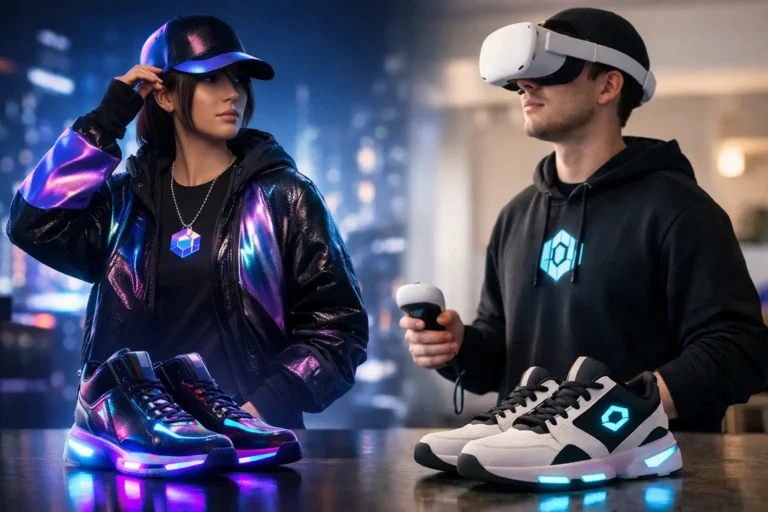
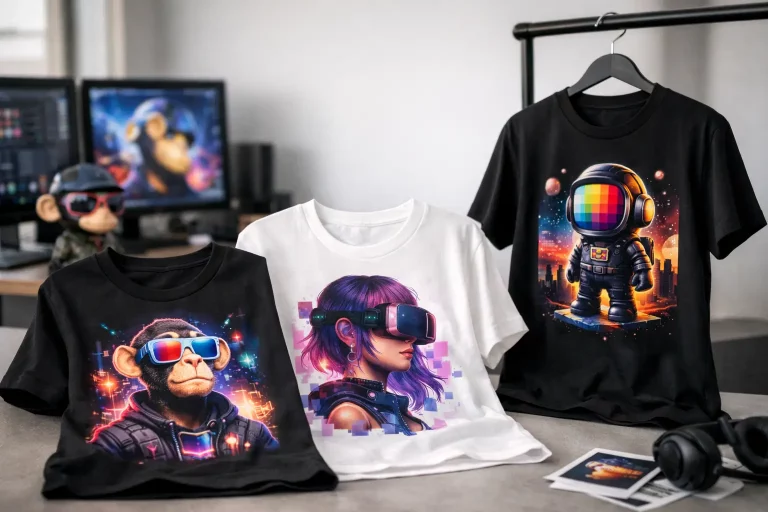
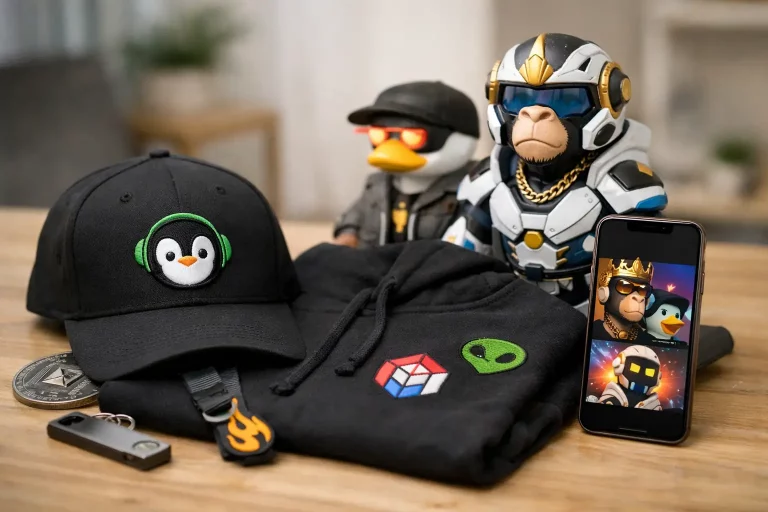
Apparel leads for a reason. Tees, hoodies, and sweatshirts give communities the clearest path from online identity to offline expression. They are visible, wearable year-round, and easy to style into streetwear fits instead of looking like conference freebies.
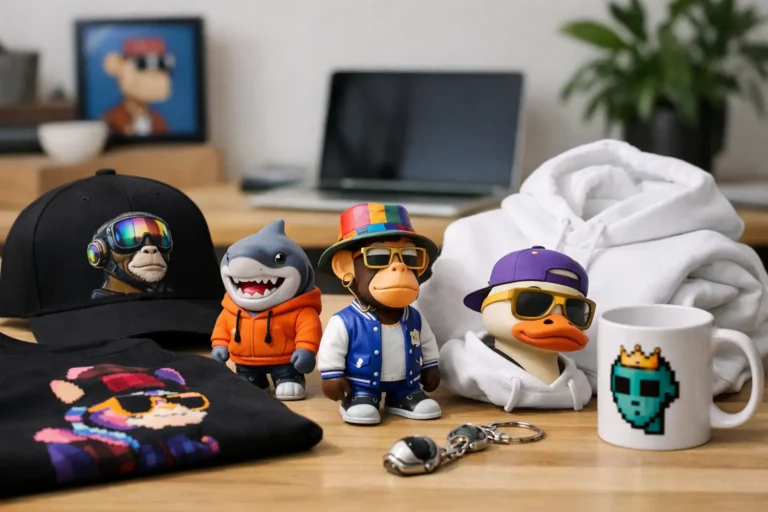
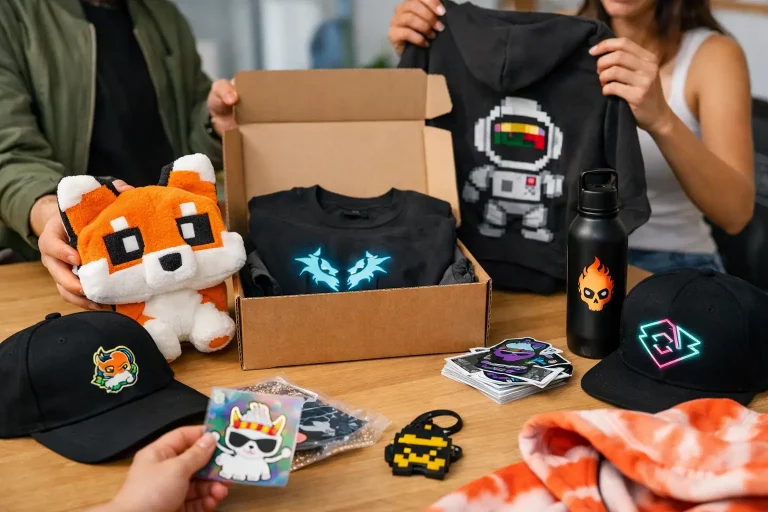
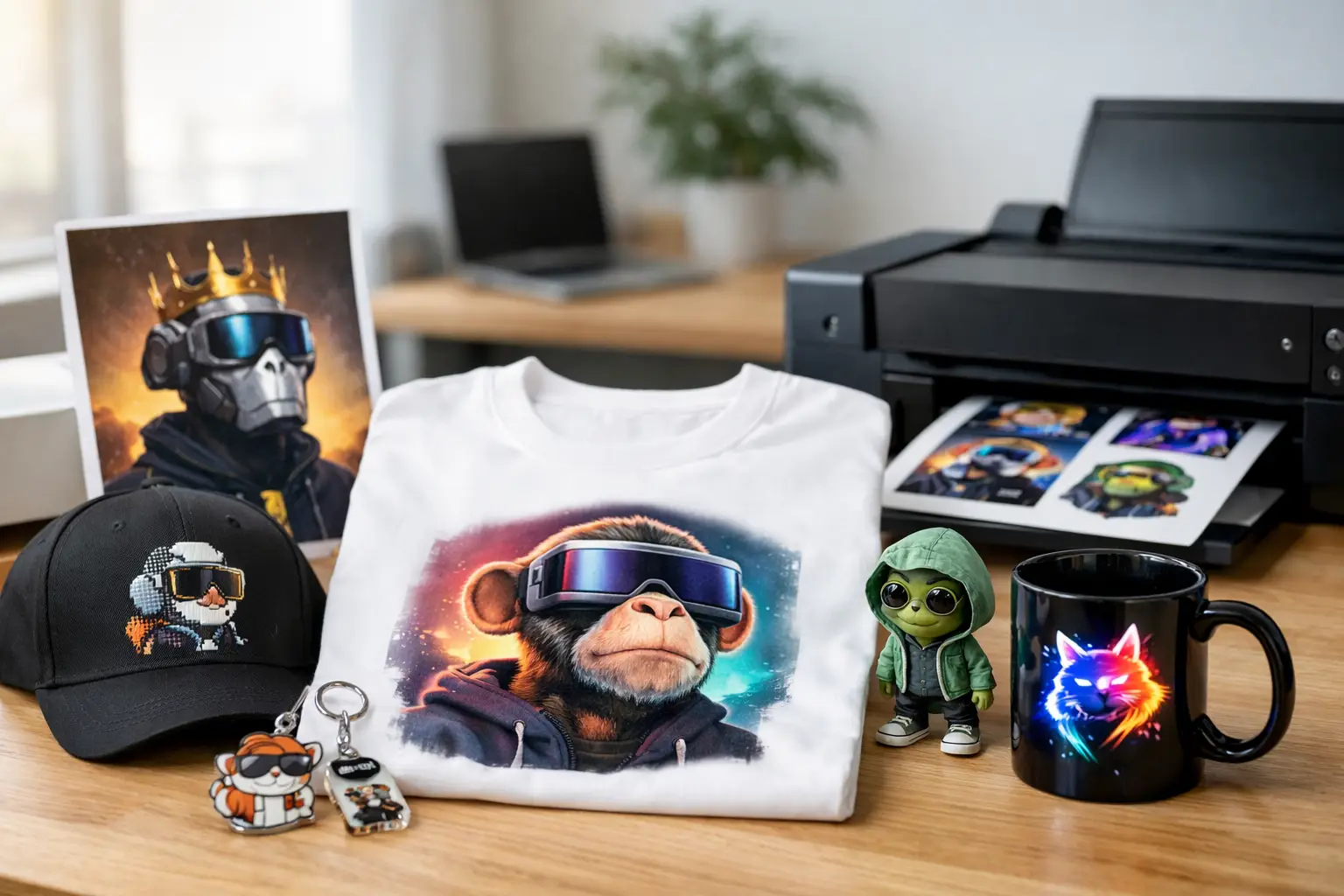
But the strongest stores do not stop there. Caps, bags, patches, posters, mugs, and stickers work because they let buyers enter at different price points and levels of commitment. Someone may not grab a heavyweight hoodie on impulse, but they will pick up a patch or poster tied to a project they love. Accessories also let collectors build a fuller world around the brand.
Then there is the flex factor. Limited-feel products matter in Web3. Even when a store uses print on demand, the design can still carry drop energy through artist collabs, time-sensitive releases, or collection-specific art. People are not only buying fabric. They are buying proximity to the culture.
Authenticity beats generic every time
This is where a lot of stores lose credibility. They treat NFT merch like a keyword category instead of a culture category. That produces copy-paste products, uninspired graphics, and unofficial designs that feel detached from the actual projects people care about.
Authenticity changes the entire equation. When merch is tied to recognized NFT brands, named artists, or real community collaborations, it lands differently. It feels earned. Buyers are not wondering whether the design was scraped from a profile picture and uploaded to a cheap storefront. They know the drop has a relationship to the culture it represents.
That trust is a conversion engine. In Web3, official matters. Community-backed matters. Artist-approved matters. If a shopper is choosing between a random crypto tee and a product tied to a real collab, the authentic version wins almost every time, even at a higher price.
How to build print on demand NFT merch people want
Start with identity, not product. The question is not “what can we print?” It is “what part of this brand do people want to wear?” Some projects are loud and graphic. Others are minimal, coded, and more lifestyle-driven. Your merch should match that energy instead of forcing every collection into the same template.
From there, product selection should follow behavior. If your audience is fashion-forward and active in streetwear culture, lead with stronger apparel silhouettes and better blanks. If the community is collector-heavy, posters, patches, and smaller accessories may convert faster. A broad catalog can work, but only when the hero products are clear.
Design should do more than reproduce the NFT artwork at full size. Often the better move is to reinterpret the world around the art. Think iconography, slogans, secondary graphics, or subtle references holders instantly recognize. That gives the piece more longevity and keeps it from feeling like a billboard.
Pricing needs some discipline too. Web3 consumers will spend, but they expect value signals. Premium pricing works when the drop looks intentional, the product quality is visible, and the collaboration is credible. If the design feels thin and the mockups look generic, high pricing reads as cash grab energy.
Where brands get the model right
The model works best when it combines curation, speed, and a real understanding of community taste. That means not flooding a storefront with endless low-effort SKUs. It means selecting products that fit the brand, creating drops with purpose, and making the buying process easy for global customers who may want to pay with card or crypto.
It also means thinking beyond a single sale. Good merch stores build repeat behavior through fresh collaborations, category expansion, and steady product quality. In that sense, print on demand is not just a fulfillment method. It is an operating model for keeping a brand relevant without overcommitting inventory every time a new idea hits.
That is why curated platforms stand out more than generic print shops. A store that understands NFT culture, works with established names, and presents merch like fashion instead of novelty product usually wins the trust battle faster. NFT Merch is a clear example of that shift – less random crypto apparel, more legit brand-led drops built for people who actually live in the space.
The trade-offs are real
Print on demand is not magic. Production times can be longer than pre-made inventory, especially during high-volume periods. Margins can also be tighter depending on the product and print method. If a project wants ultra-custom construction, cut-and-sew complexity, or luxury-level finishing, standard on-demand options may not be enough.
There is also a creative ceiling on some products. Not every design belongs on every blank, and not every category will feel premium in an on-demand format. The smart move is knowing where the model performs best and where a different production route makes more sense.
Still, for most NFT brands, artists, and communities, the upside is hard to ignore. You get speed, lower risk, broad product access, and the ability to turn digital culture into physical product without betting the whole treasury on inventory.
Why this category keeps growing
People want receipts for the communities they belong to. Not just wallet screenshots or profile pictures, but physical proof they were part of something. That is the long game for NFT merch. It is not just apparel attached to a trend. It is a wearable layer of digital identity.
As Web3 matures, the merch that lasts will be the merch that respects design, community, and product quality. The winners will not be the loudest stores. They will be the ones that understand that culture cannot be mass-produced, even when the product is made on demand.
If you are building, collecting, or repping in this space, the standard is simple: own the culture in a way that still looks good off-screen.