Wearable Web3 Identity Trends Shaping Streetwear
A profile picture can win attention on a timeline. A hoodie can hold it in the real world. That is why wearable Web3 identity trends are moving beyond logo placement and into something more valuable: physical signals of the communities, art, and onchain history people genuinely stand behind.
For Web3-native collectors, clothing is no longer just merch after a mint. It is proof of taste, a conversation starter, and a way to bring a digital affiliation into rooms where wallet addresses mean nothing. The strongest pieces do not beg for recognition. They give the right people a reason to recognize you.
Wearable Web3 identity trends are getting more personal
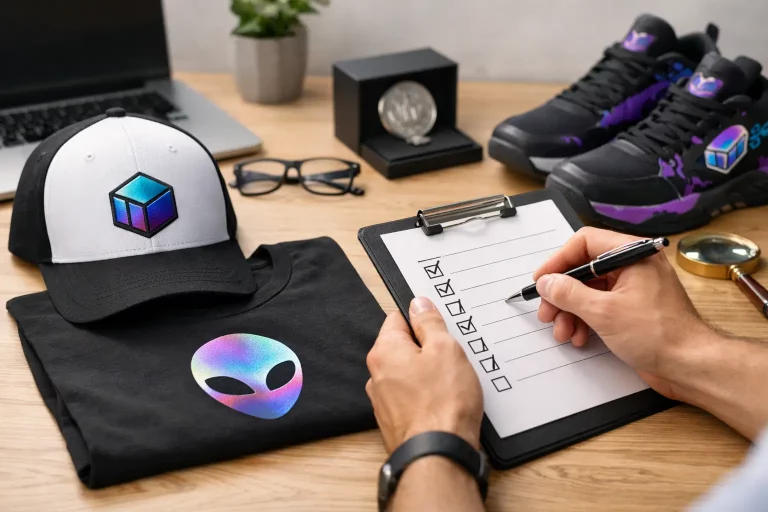
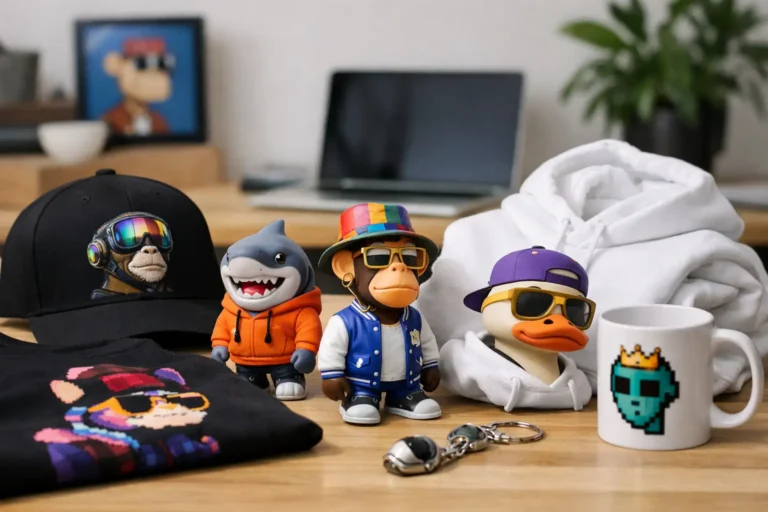
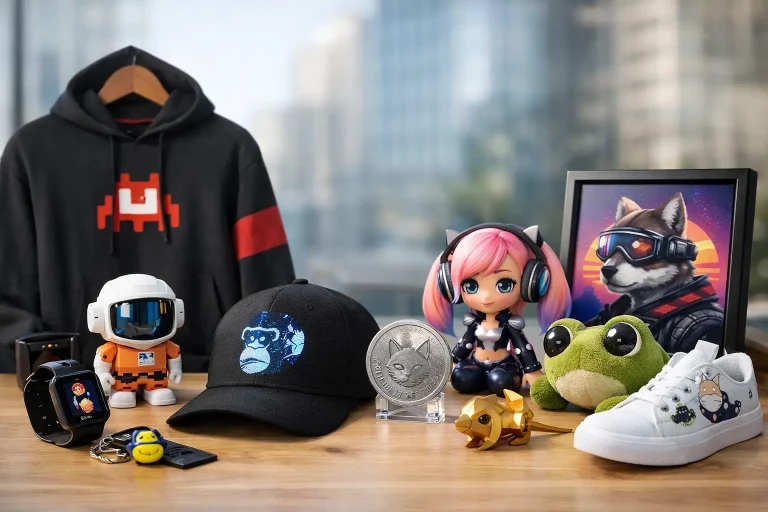
Early crypto apparel had a predictable look: giant token logos, stock blockchain graphics, and enough neon to light a conference booth. It had a moment, but culture moved on. The new standard is more selective. Collectors want garments that feel like real streetwear first, with references that reward people who understand the project, artist, or lore behind them.
That shift matters because identity in Web3 is rarely one-dimensional. Someone can be a holder, a builder, a digital art collector, a community moderator, and a fan of a specific illustrator at the same time. A well-designed tee, cap, or patch lets them signal one part of that identity without turning their outfit into a pitch deck.
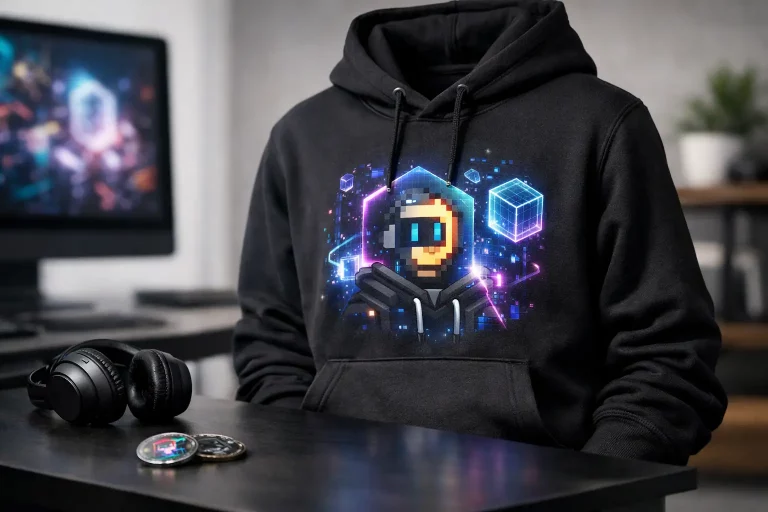
Subtle visual language is leading the move. Think character silhouettes, coded phrases, collection traits, limited colorways, and graphics pulled from an artist’s actual visual universe. The best designs carry the energy of the community without copying the generic crypto aesthetic.
There is a trade-off, of course. If a design is too insider, it may not land beyond the Discord. If it is too obvious, it can feel like promotional swag. The sweet spot is a piece that looks intentional to anyone while carrying deeper meaning for the people who know.
From digital flex to real-world belonging
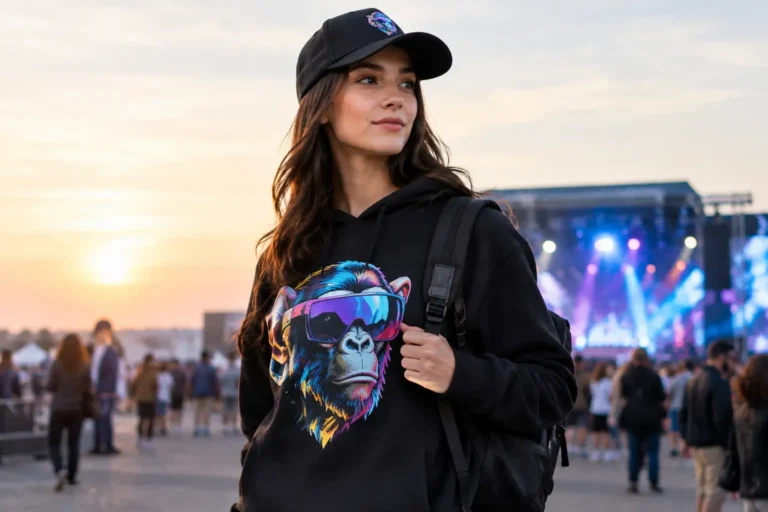
NFT ownership made digital status visible, but it also left a gap. Your collection can be displayed on a marketplace or social profile, yet it cannot walk into a gallery opening, a festival, or a coffee shop before you do. Wearable merch closes that gap.
This is not about replacing the digital asset. It is about giving the identity around it a physical form. A limited-run sweatshirt from a recognized collection can tell a richer story than a random luxury logo because its value comes from shared context. It says: I was early, I care about this art, or this is my corner of the internet made tangible.
Community-led drops are especially powerful here. When members help shape a graphic, vote on a color palette, or rally around a release, the finished product becomes a shared artifact. People are less likely to treat it as disposable clothing because it records a specific era of the community.
That is also why scarcity still matters, but not in the lazy sense of putting a countdown timer on everything. Limited editions work when the limitation is connected to a meaningful moment: an artist collaboration, a collection anniversary, a live event, or a holder-focused release. Artificial rarity fades fast. Cultural relevance lasts.
The return of the collectible garment
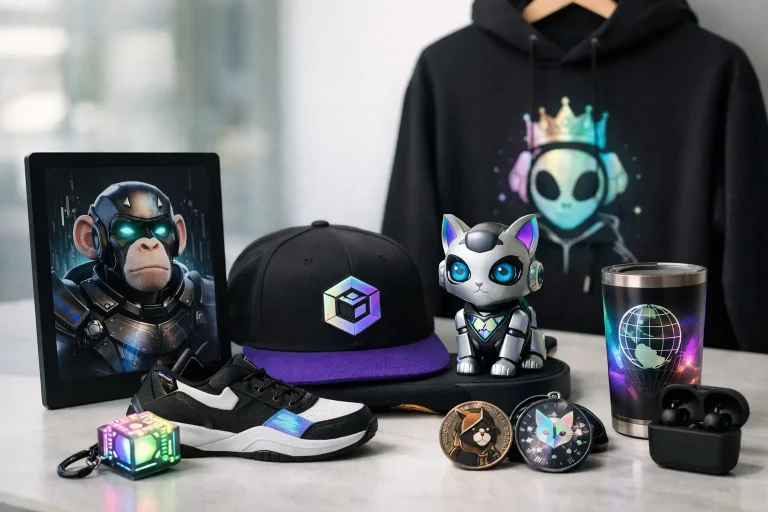
Streetwear has always understood that a garment can be a collectible. Web3 adds provenance, participation, and a global community to the equation. A physical item can be paired with a digital collectible, an access pass, or a recorded purchase history, but utility should support the piece, not rescue weak design.
Nobody wants to scan a QR code just to prove they bought an ugly shirt. The garment needs to earn its place in a wardrobe on its own. Digital extras become compelling when they extend an already desirable object, whether that means entry to a private event, a future drop opportunity, or a collectible certificate tied to the release.
Design is becoming the real status signal
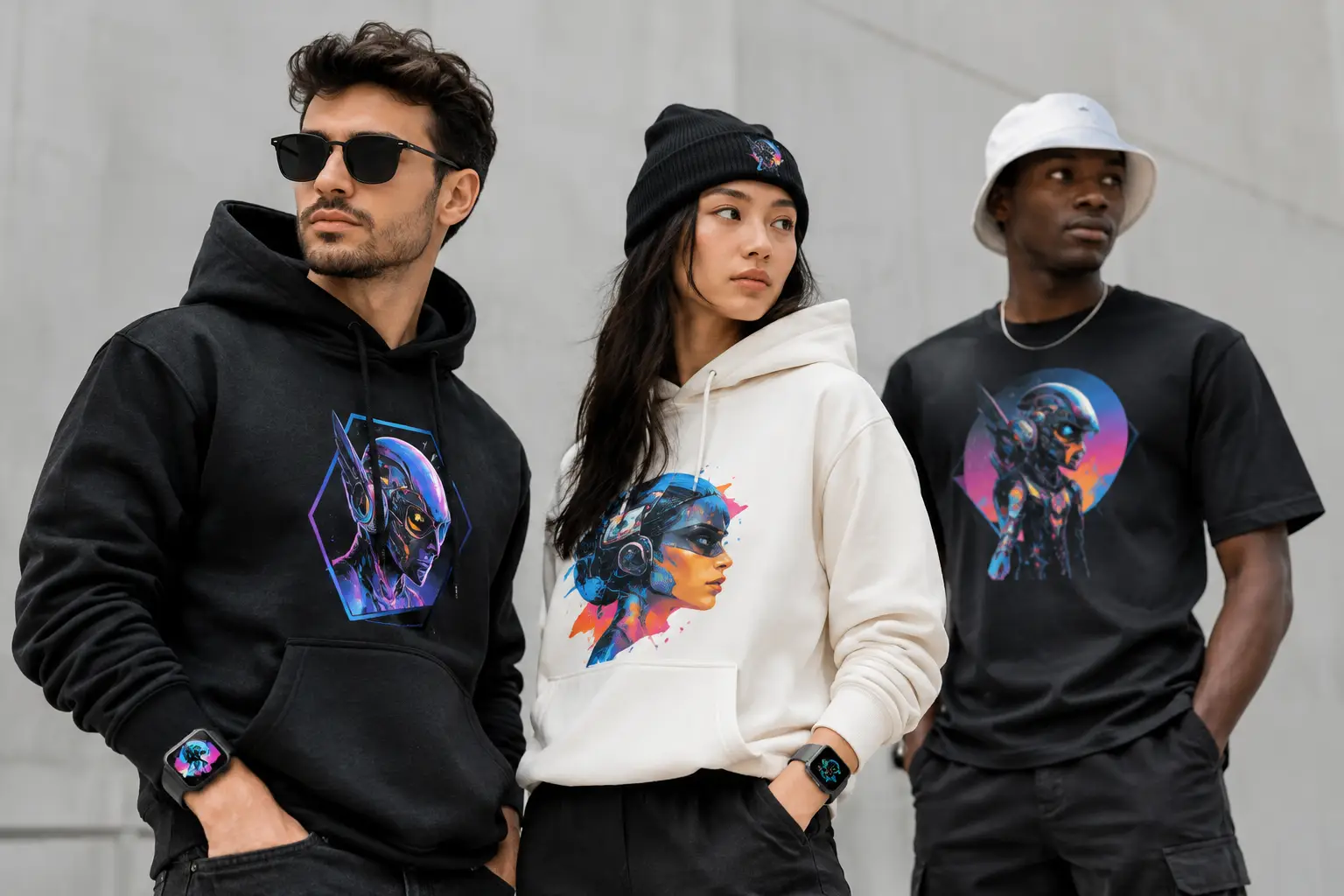
The next wave of Web3 merch is less interested in shouting “I own crypto” and more interested in showing discernment. That puts design at the center. Premium blanks, considered placement, durable prints, and art direction that feels native to the source community are not optional details. They separate a piece worth keeping from a forgettable giveaway.
This is where digital artists have a serious advantage. Their work often comes with established visual worlds, dedicated audiences, and recognizable motifs that can translate across apparel, accessories, posters, and home goods. The challenge is protecting the original work while adapting it for physical production. A screen graphic, embroidery detail, or woven patch should feel like an interpretation, not a flattened image file pasted onto fabric.
Color is doing more work, too. Rather than defaulting to black with a bright logo, brands are building palettes that reflect the mood of a collection. Washed neutrals can give a lore-heavy project an archival feel. Bold primary colors may suit playful character-led communities. Technical tones and reflective details can reinforce a more futuristic identity. There is no universal Web3 look, which is exactly the point.
Fit has become part of the message. Oversized tees and heavyweight hoodies still carry cultural weight, but not every community wants the same uniform. A clean cap, fitted long sleeve, tote, or subtle embroidered crewneck may feel more natural for collectors who want their affiliation present without making it the whole outfit.
Utility should feel earned, not forced
Wearable Web3 identity is often discussed as if every item needs a blockchain feature attached. That is not the direction the culture is taking. The more mature trend is selective utility.
A garment might provide early access to a future release, connect holders at a pop-up, or offer a verification layer for a numbered edition. Those features can deepen ownership. But a product does not become culturally relevant because it has a token gate. It becomes relevant because the community wants to wear it, photograph it, trade it, and keep it in rotation.
On-demand production also has a role in this evolution. It gives communities the freedom to support more niche designs without forcing huge inventory bets. That can mean less waste and more room for distinct creator-led capsules. The trade-off is that on-demand drops need clear expectations on production time and sizing. Transparency is part of premium service.
For a retailer curating recognized Web3 brands, the opportunity is not to manufacture hype from scratch. It is to give existing culture the quality physical expression it deserves. NFT Merch operates in that lane: bringing established digital art and community identities into pieces people can actually wear beyond the feed.
What smart collectors will look for next
Expect the strongest releases to feel less like merchandise and more like evidence of membership. They will have a point of view, a clear connection to the source culture, and enough design integrity to survive after the initial launch buzz.
Collectors are also becoming more intentional about what they buy. A closet full of random logo tees does not build identity. A smaller rotation of pieces tied to artists, projects, and moments that genuinely matter does. That is the difference between consumption and curation.
The brands that win will respect that distinction. They will collaborate with artists instead of treating art as decoration. They will listen to communities without letting every design become a committee project. And they will understand that ownership is emotional as much as technical.
Your digital identity already has a story. Choose the pieces that make it worth seeing offline.