NFT Merch Drop Case Study That Built Real Belonging
A wallet can prove ownership. It cannot start a conversation across a crowded room. That is where physical merch earns its place. This nft merch drop case study follows a representative Web3 collection that turned digital affiliation into a focused streetwear release, without treating its community like a list of checkout conversions.
The premise was simple: members wanted more than a profile picture, a Discord role, or another announcement graphic. They wanted something recognizable in real life. Something that looked good even to people outside the timeline. The goal was not to print a logo on a blank tee. The goal was to give a digital culture a uniform.
The Brief: Make Ownership Visible
The collection had a strong visual language: expressive character art, a recognizable color system, and a community that used inside jokes as social currency. Its audience was globally distributed, highly online, and allergic to lazy brand moves. They would support a drop that felt native to the project. They would spot a cash grab instantly.
The merch brief centered on three decisions. First, the pieces had to work as streetwear, not conference swag. Second, holders needed early access, but non-holders needed a route in. A strong merch drop can widen a community’s cultural reach without diluting the status of the people who built it. Third, production had to stay flexible. No one wanted pallets of leftover inventory sitting in a warehouse because a meme had a short shelf life.
That made on-demand production the right operational fit. It reduced upfront inventory exposure, allowed worldwide fulfillment, and kept the collection focused on art direction and community rather than stock forecasting. The trade-off is real: on-demand drops require clear delivery expectations and disciplined product selection. You cannot hide an unfocused catalog behind a low minimum order quantity.
NFT Merch Drop Case Study: The Product Edit
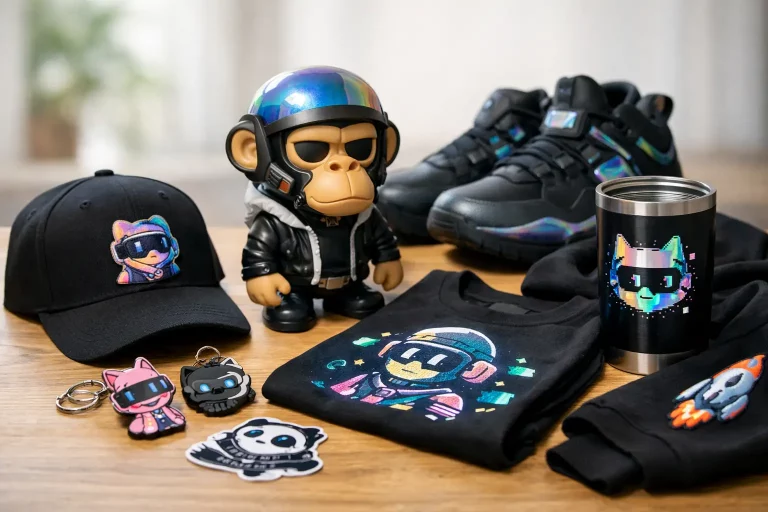
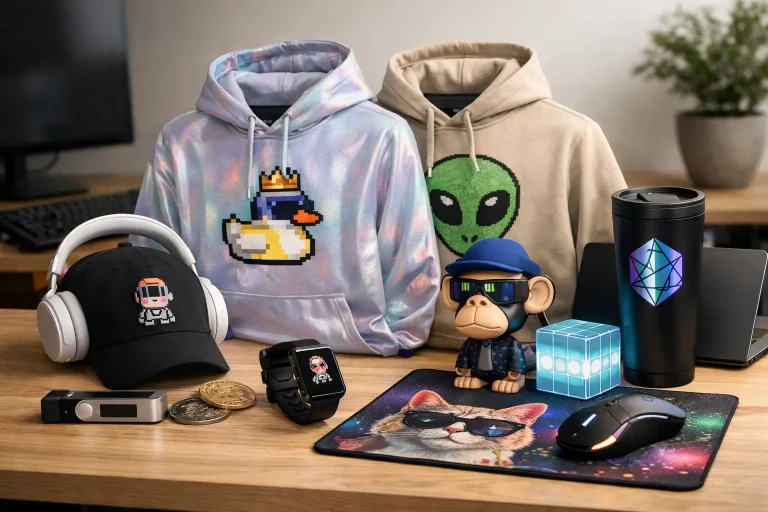
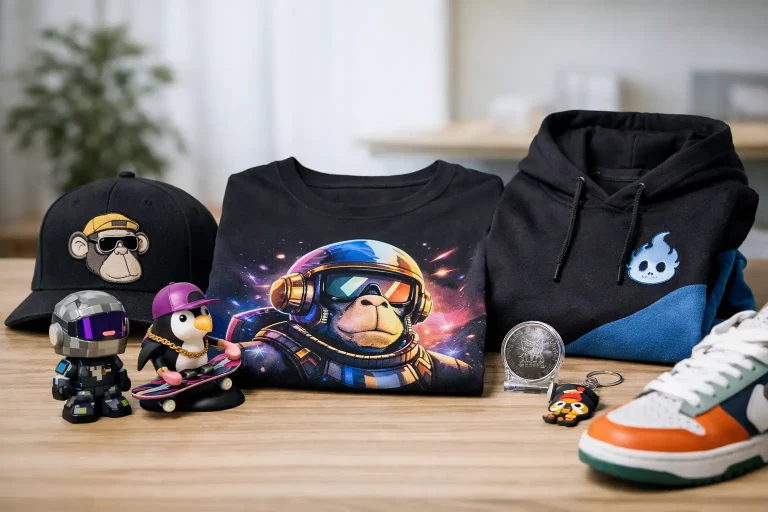
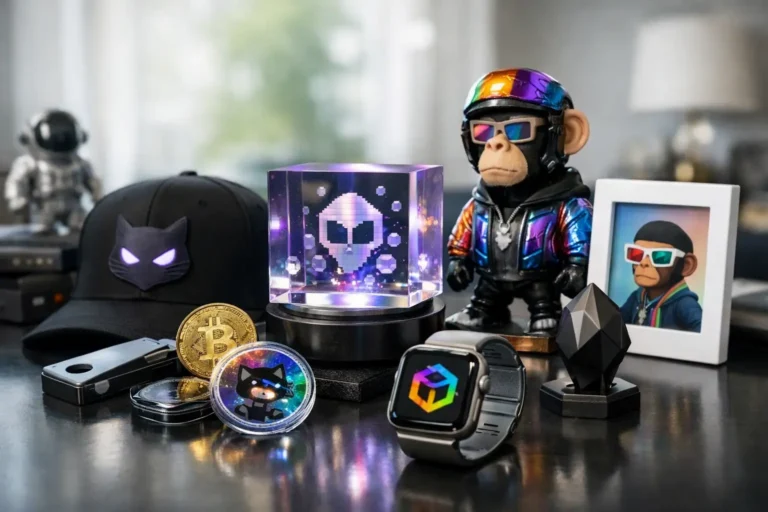
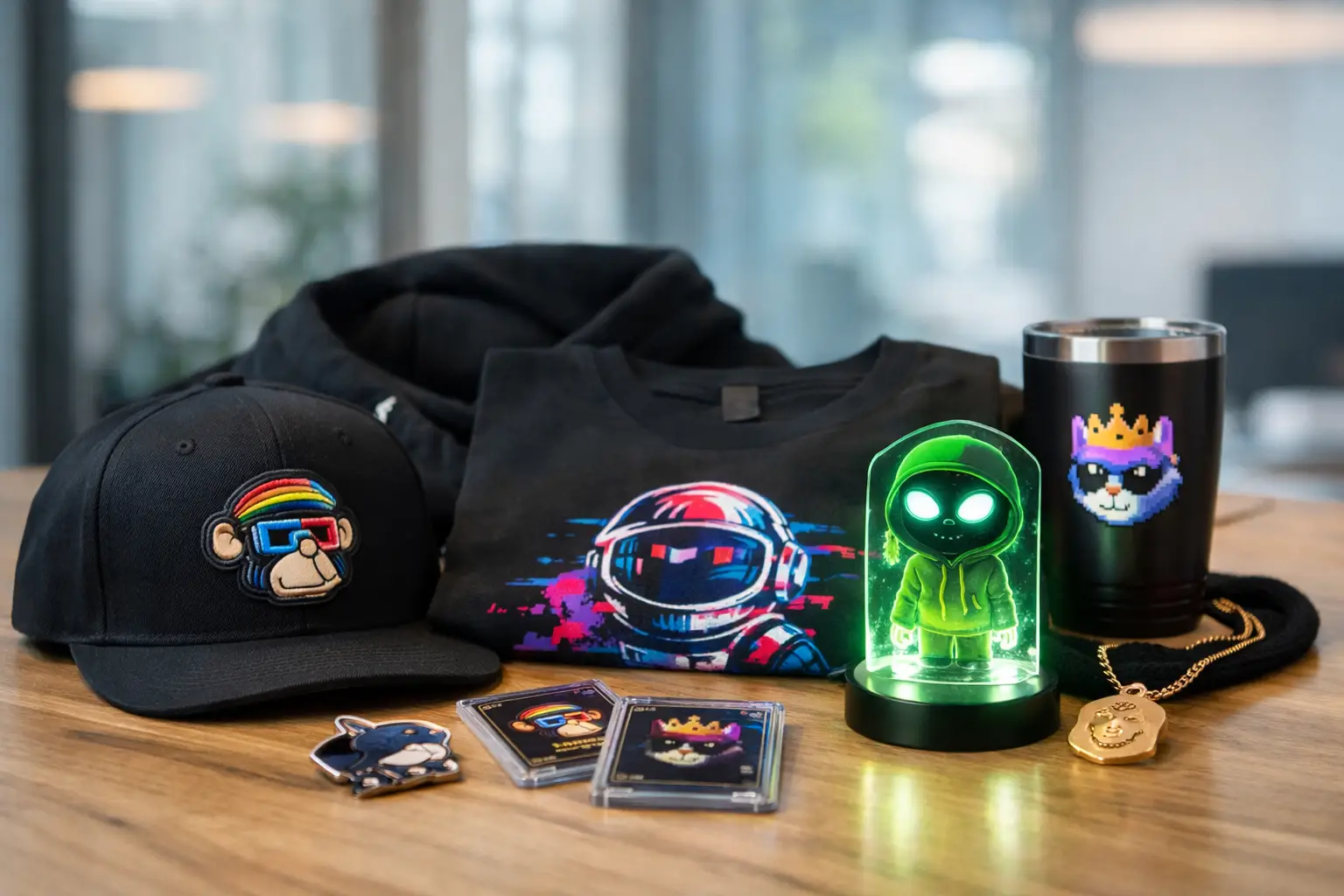
Instead of launching 30 products at once, the drop opened with a tight edit: a heavyweight hoodie, graphic tee, embroidered cap, woven patch, and poster. Each piece had a role. The hoodie was the statement item. The tee gave newer supporters an accessible entry point. The cap and patch offered lower-commitment ways to signal affiliation, while the poster served collectors who wanted art for their space.
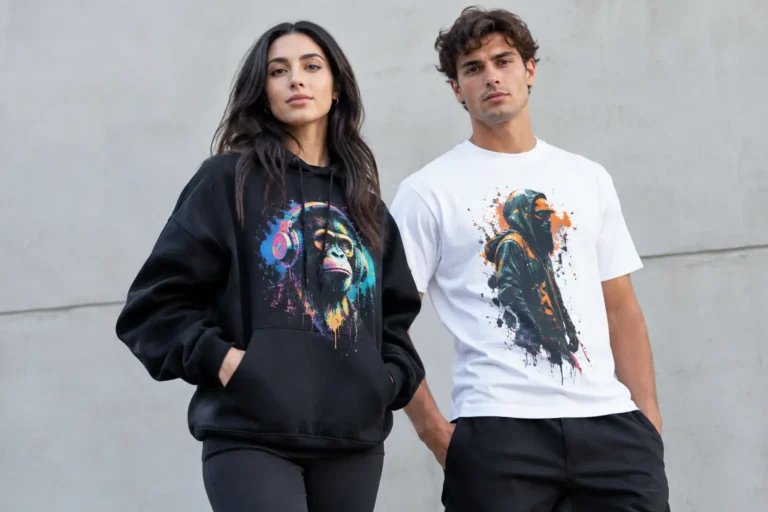
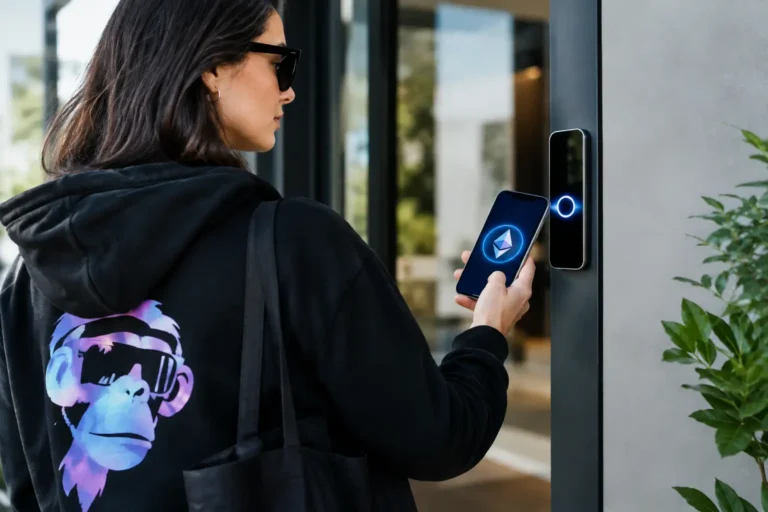
The artwork did not simply repeat the project avatar. The front of the hoodie used a minimal chest mark, while the back carried a large, distorted character treatment with a release-specific phrase. The tee leaned into an insider reference that community members would recognize without explanation. The cap used embroidery rather than a full-color print, keeping it understated and wearable beyond launch week.
This is the difference between merch and merchandise. Product selection should express the community’s visual codes, then translate them into pieces people already want to wear. If the design only makes sense as a screenshot, it is not ready for a garment.
The release also avoided artificial scarcity on every item. The hero hoodie had a limited order window, creating a genuine moment around the drop. Core tees remained available on demand after launch. That split mattered. Limited pieces reward attention and create collectibility. Always-available essentials let new fans join later, when the hype cycle has cooled but affinity remains.
The Launch Was a Community Moment, Not a Product Page
The campaign did not begin with a hard sell. It began with cues. Cropped artwork, fabric close-ups, and short references to community lore appeared before the full collection was revealed. The intention was to build recognition first. A good teaser makes people feel like they are already in the room.
When the lookbook landed, it showed the products in real settings rather than floating on white backgrounds alone: a hoodie layered under a jacket, a cap worn on a city walk, a poster pinned near a desk setup. The visual message was clear. This was not costume crypto apparel. It was a real-world extension of a digital identity.
Holder access opened first through a simple verification flow, followed by public access. The early window was not framed as a technical perk. It was framed as respect. The community that carried the project deserved first shot at its physical chapter.
The public release then invited adjacent audiences into the culture. This is a valuable move for projects with recognizable art. A person does not need to own an NFT to appreciate a well-designed hoodie, but buying it can become their first meaningful touchpoint with the brand. Merch can act as a bridge between collectors, streetwear fans, digital art followers, and people who simply want something with a point of view.
What Made the Drop Feel Authentic
Authenticity was not achieved by adding crypto terms to product copy. It came from consistency. The references were specific, the design language was already owned by the community, and the rollout respected the audience’s intelligence.
The drop also gave members material to share. Buyers posted fit photos, unboxings, and their own interpretations of the graphics. That kind of participation is more valuable than generic reach because it builds social proof inside the circles that matter. A community member wearing a piece in public becomes a walking signal: I was there, I get it, this is part of my identity.
For NFT Merch, that is the core opportunity. Digital communities move fast, but physical objects give their culture weight. The right product can outlive a market cycle because it captures an era, a visual movement, or a shared joke that members still carry with them.
The Metrics That Actually Matter
Revenue matters, but it is not enough to judge a Web3 merch drop. A launch can sell quickly and still miss the bigger opportunity if the products feel disposable or only reach a small group of high-spend buyers.
A stronger evaluation looks at the mix. Did holders use their early access? Did public buyers convert, showing that the project has appeal beyond its existing wallet base? Which product received the most repeat social sharing after delivery? Did the hero item create demand for a second colorway, or did buyers gravitate toward the quieter essentials?
The team also watched where friction appeared. If customers abandoned at payment, more options may be needed. If international buyers asked about delivery timelines, launch communication needs to be clearer. If one item generated size exchanges or fit concerns, that is a product-page issue worth solving before the next release.
These signals shape better drops than vanity metrics ever will. The point is not to chase a one-day sellout at any cost. It is to build a merch rhythm that people trust, anticipate, and wear long after the announcement disappears from their feed.
What the Case Study Reveals About Web3 Merch
The lesson is not that every NFT project needs a hoodie. Some communities are better served by prints, accessories, patches, or a single collectible piece. The product must match the culture. A serious art-led project may need a gallery-quality poster. A meme-native community may win with a graphic tee that feels instantly quotable. A gaming ecosystem might build momentum through caps, bags, and functional layers.
What does not work is treating physical goods as an afterthought. Generic blanks, recycled artwork, and vague promises of exclusivity will not create belonging. Web3 audiences have seen too many rushed launches. They know when a drop was designed for them and when it was designed at them.
The best merch strategy sits at the intersection of identity, design, and access. Give the community a piece that feels earned. Give newcomers a reason to step closer. Keep the operation lean enough to move with culture, but intentional enough to protect the brand.
Your next drop does not need more products. It needs one clear statement people will be proud to wear when the screen is off.