Can NFT Holders Buy Physical Products? Yes.
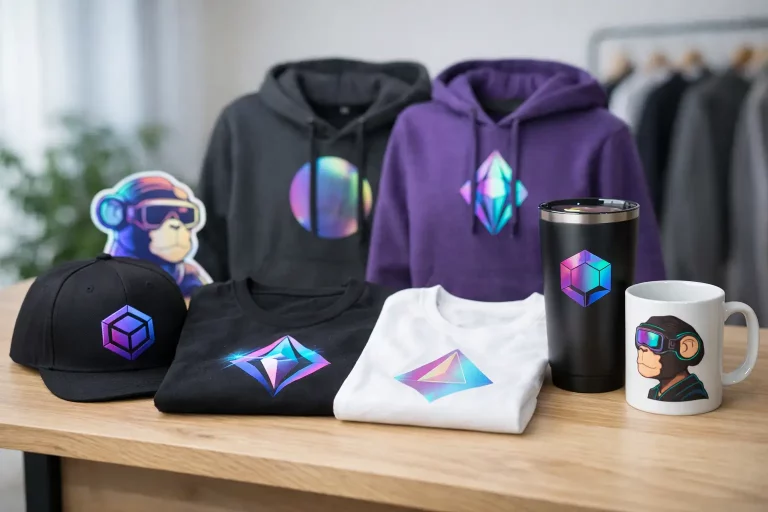
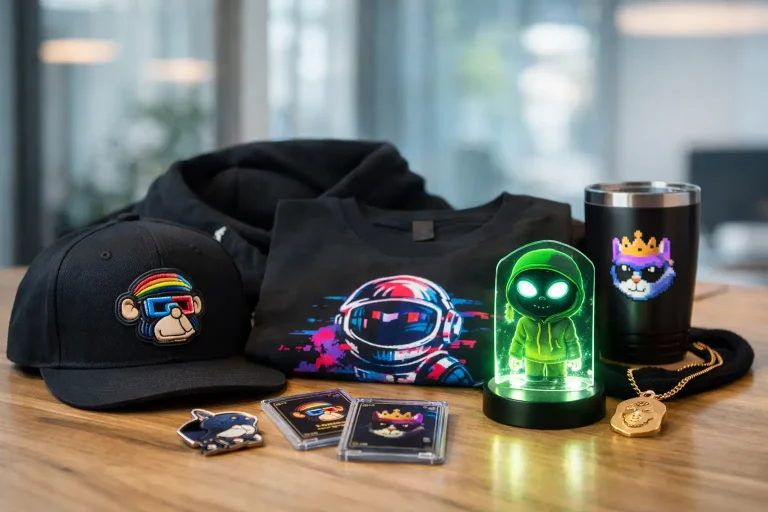
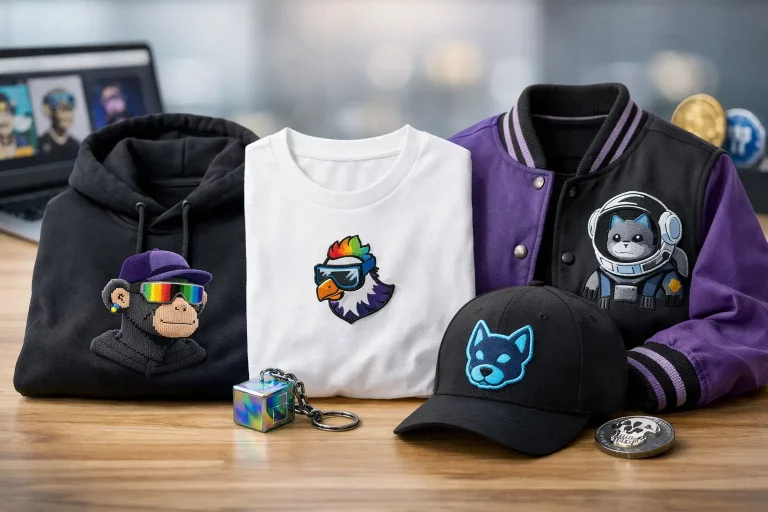
Your PFP lives on-chain. Your hoodie should not have to. The answer to can NFT holders buy physical products is a clear yes – and the best drops do more than put a logo on a blank tee. They turn the project, art, and community you backed online into something you can wear, carry, collect, and recognize in the wild.
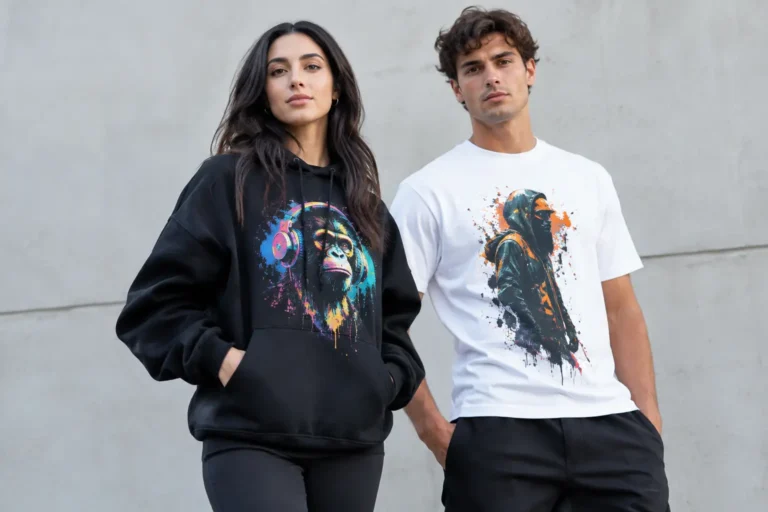
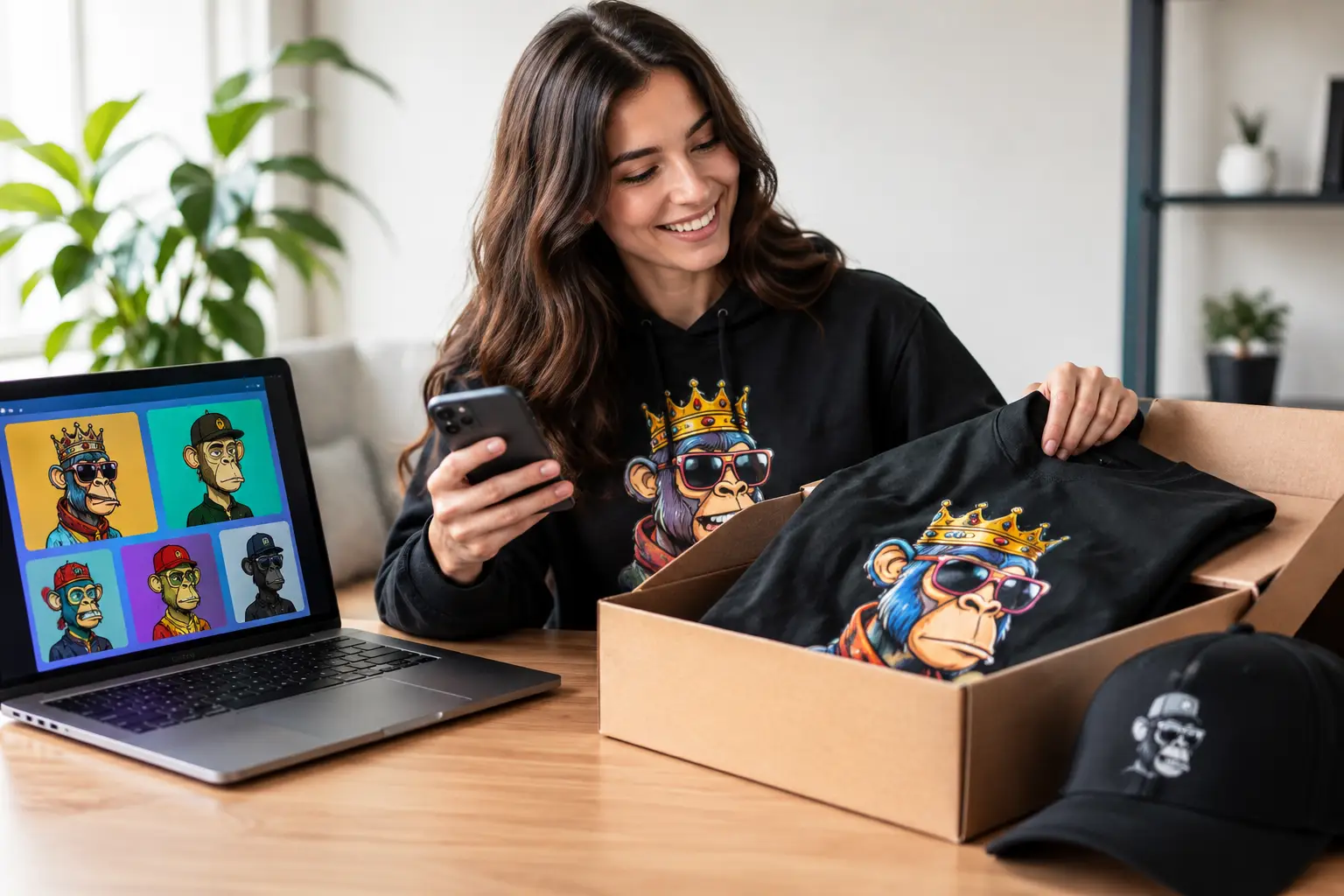
For Web3 communities, physical merch is part style signal and part proof of participation. A cap at a meetup, a poster in your workspace, or a heavyweight hoodie on the street makes a digital affiliation visible without needing to open a wallet app. That is the real bridge between ownership online and culture offline.
Can NFT Holders Buy Physical Products With Their NFT?
NFT holders can buy physical products in two main ways. The first is the same way anyone shops: choose the item, check out with a card or supported crypto, and have it shipped to your door. Holding an NFT is not required unless the brand has chosen to make a particular product holder-exclusive.
The second is token-gated shopping. In this setup, you connect the wallet that holds a qualifying NFT. The store checks ownership, then gives you access to a private collection, an early release, a special price, or a claim page. Your NFT acts as the pass. It can verify that you are part of the community without forcing you to expose your wallet balance or share more information than the purchase requires.
The key distinction is simple: owning an NFT does not automatically entitle you to free physical merch. That right needs to be written into the project terms, drop announcement, or collection utility. Some projects offer a complimentary redemption. Others give holders first access. Many simply create merch that lets fans and collectors buy into the visual language of the community.
Physical Merch Is More Than a Checkout Perk
Digital ownership can feel abstract until it has a real-world counterpart. Physical products give NFT communities a shared uniform, but not in a corporate way. Think limited-run graphics, artist-led details, references that insiders catch, and pieces that still work as streetwear if someone has never heard of the collection.
That matters because a great NFT project is rarely just an image. It is a set of signals: the art direction, the humor, the origin story, the people in the Discord, the builders, and the collectors who were early. Official merch carries those signals into everyday life with more credibility than a random upload-to-print marketplace listing.
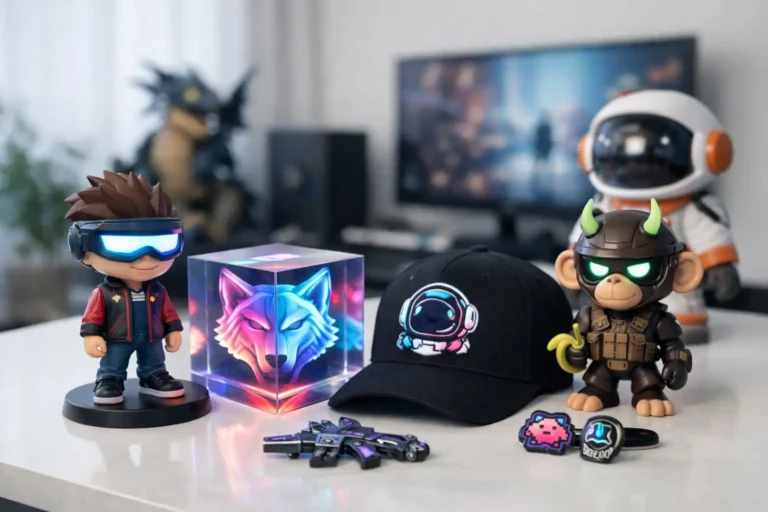
For collectors, the value is not always resale. Sometimes it is simply having a physical artifact from a project that shaped a moment in internet culture. For brands, it is a way to reward the core community while reaching the people who may become the next wave of holders. For artists, it is another canvas with a different kind of permanence.
How Token-Gated Physical Product Drops Work
A token-gated drop should feel simple on the customer side, even if there is smart wallet verification behind it. Usually, the process runs like this: connect a wallet, confirm that it holds the required NFT, select the approved item or size, then complete checkout with the available payment method.
The wallet connection proves eligibility. Checkout handles the practical part: shipping address, payment, taxes, and order confirmation. You may be able to pay in crypto, but many buyers still prefer a card. The point is choice. Community access can be on-chain while the buying experience stays familiar.
Brands can structure access in different ways. A holder-only drop may limit sales to a specific collection. An allowlist can reserve a time window for early supporters before public release. A discount code may be tied to wallet ownership. A claim can let each eligible wallet redeem one item, sometimes with shipping charged separately. These mechanics solve different problems, so the right approach depends on whether the goal is exclusivity, broad visibility, or a clean reward for long-term holders.
There is also a trade-off. Tight token gating makes a release feel rarer and can protect the culture around it, but it limits reach. A public drop can grow the brand beyond existing holders, but needs thoughtful quantities and clear design direction so the merch does not lose its meaning. The strongest projects often use both: holder-first access, then a public release for anyone who wants to wear the story.
What to Check Before You Buy
Not every product featuring NFT-inspired art is official. Before spending, check whether the seller is an authorized partner, whether the artist or project is named clearly, and whether the product details are specific about materials, fit, and fulfillment. Authenticity is not just a badge on a product page. It shows up in the relationship to the project and the quality of the piece itself.
If a drop is tied to your wallet, verify the exact collection required before connecting. Use the official announcement channels you already trust, not a link sent by a stranger in a direct message. A legitimate store may ask you to connect a wallet to verify ownership, but it should never ask for your seed phrase or private keys. Never enter either one. No hoodie, no matter how rare, is worth losing your assets.
Read the claim rules as closely as you would a mint. Look for the claim window, wallet limit, whether the NFT must remain in your wallet through redemption, and whether shipping is included. If the NFT is listed, transferred, or moved before the eligibility check, you might lose access. The details matter most when the item is limited.
For regular purchases, focus on the same things you would with any serious streetwear order: sizing, production timing, shipping region, care instructions, and return policy. Made-to-order merch can mean less dead stock and more size flexibility, but it may also take longer to produce than a warehouse-ready item. That is a fair trade when the product is made for the community rather than mass-produced for everyone.
Crypto Payments, Cards, and the Real Cost
NFT holders do not need to pay in crypto to buy physical products, although crypto payment options can make a Web3-native purchase feel more direct. Paying with a card is often easier for budgeting and can avoid the uncertainty of network fees. Paying with crypto may be the better fit when you are already active on-chain or want to transact from your preferred wallet.
Whichever route you choose, account for the full cost. That can include sales tax, shipping, carrier charges, and, for international orders, import duties. A limited drop can also sell out before you finish a transaction, especially during a holder-only window. If the piece matters to you, know your size and have your checkout details ready before access opens.
NFT Merch brings this idea into focus with official Web3-inspired streetwear and accessories built for collectors who want their digital identity to move beyond the timeline. No minimum order is needed, and on-demand production means you can choose the pieces that fit your rotation instead of buying merch just to chase a bundle.
The Best Physical Products Feel Like Belonging
The strongest NFT merch does not rely on a giant logo to prove where it came from. It has enough confidence to speak to the people who get it. A subtle embroidered mark, a graphic pulled from the project lore, or a color palette that instantly reads as a certain community can carry more weight than a loud print ever could.
That is why quality and context matter. A digital collectible may be one-of-one, but physical products create shared presence. They make it easier to spot your people at a convention, a gallery opening, a local meetup, or just across the room. You are not replacing the NFT. You are giving its culture somewhere else to live.
When you buy, choose the piece you will actually wear or use. Let your wallet open the door if the drop is gated, but let the design earn a place in your life. The culture is strongest when it leaves the screen and shows up with intention.