The Future of Artist Merch Is Physical Proof
A profile picture can signal your tribe online in seconds. A heavyweight hoodie does it on the street, at an event, in a coffee line, and everywhere the timeline cannot reach. That is why the future of artist merch is not about putting an image on a basic tee. It is about turning digital identity into physical proof of membership.
For Web3 artists, NFT projects, and culture-first communities, merch is becoming a real-world extension of ownership. The strongest pieces carry more than a logo. They carry a shared reference, a recognizable visual language, and the quiet flex of being early enough to know what it means.
The Future of Artist Merch Is Identity, Not Inventory
Traditional artist merch was often built around promotion. A tour date tee, a quick drop, a souvenir from a moment that passed. That model still has a place, but it is no longer the ceiling. Digital-native communities expect products that feel connected to the world they joined, collected, or helped build.
The difference is emotional as much as commercial. A fan buys a generic shirt because they like an artist. A community member wears a considered piece because it represents who they are aligned with. In Web3, that alignment can be tied to a collection, a creator, a meme, a wallet history, a Discord role, or a visual movement that only insiders fully understand.
That makes authenticity non-negotiable. Anyone can copy a familiar character, screenshot a JPEG, or print a buzzword. But official merch has context. It comes from the project, the artist, or a trusted collaboration that understands the culture behind the design. The product is not trying to borrow credibility. It already has it.
For collectors, that distinction matters. For creators, it protects the value of their intellectual property. And for the community, it keeps the signal clean.
From Digital Collectible to Wearable Artifact
NFT culture taught a generation of internet-native collectors that digital assets can hold social value. The next move is making that value tangible without reducing it to novelty. A good physical release should feel like an artifact from the same universe as the original work.
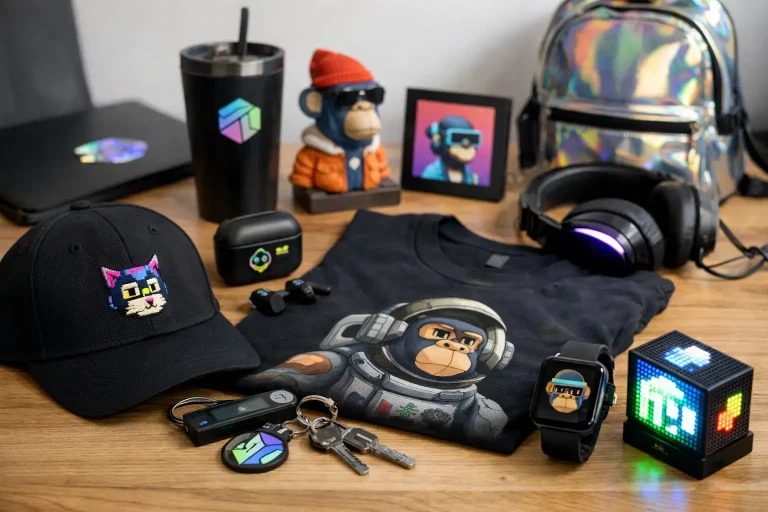
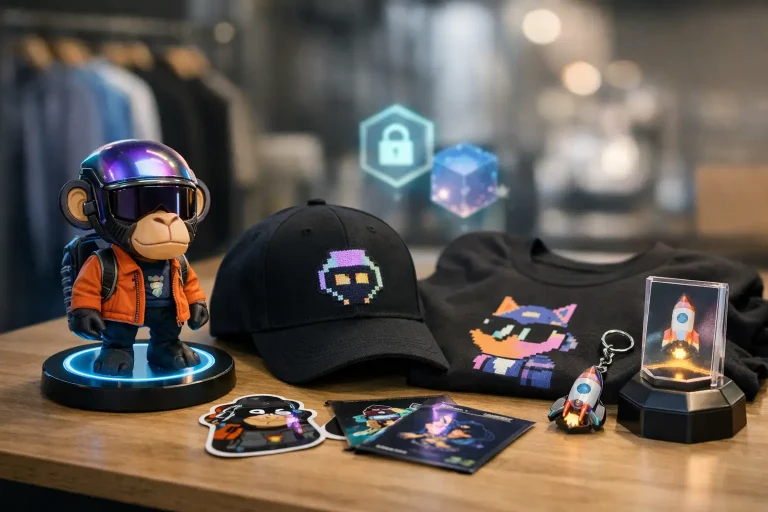
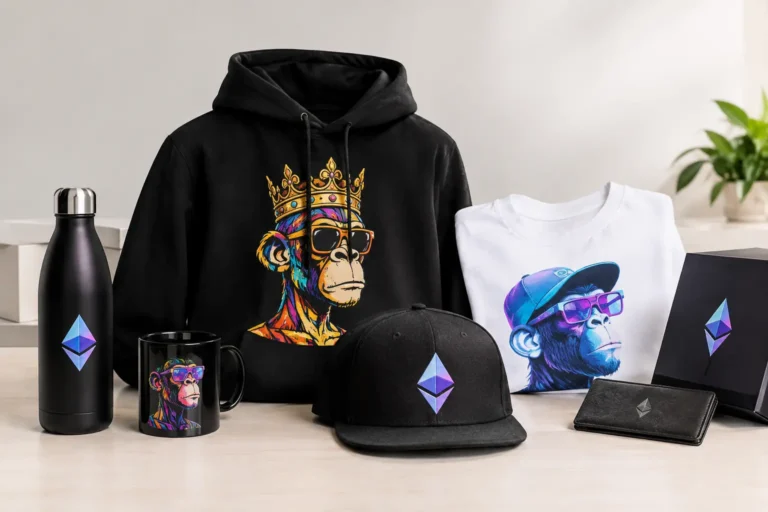
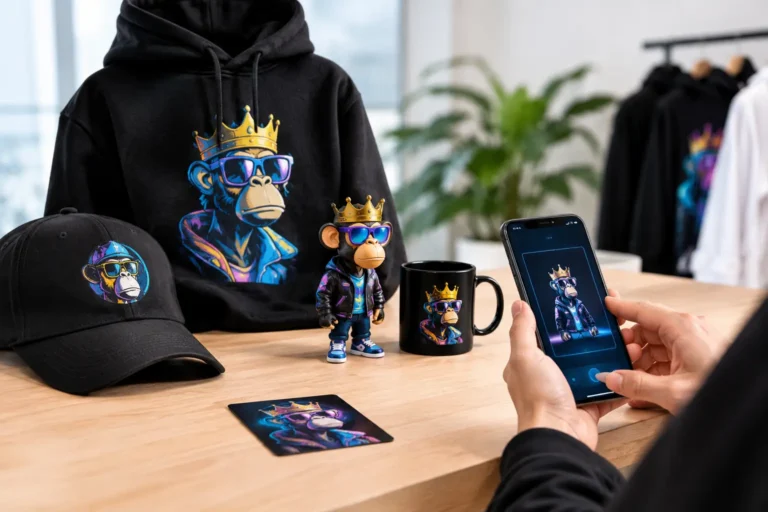
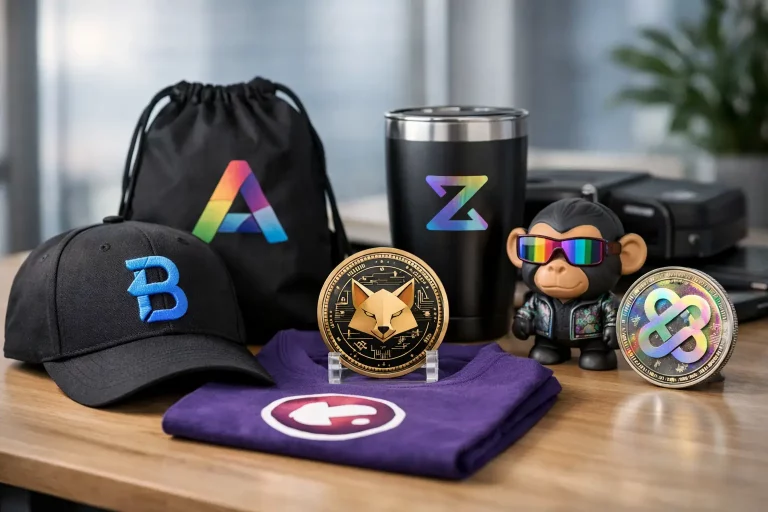
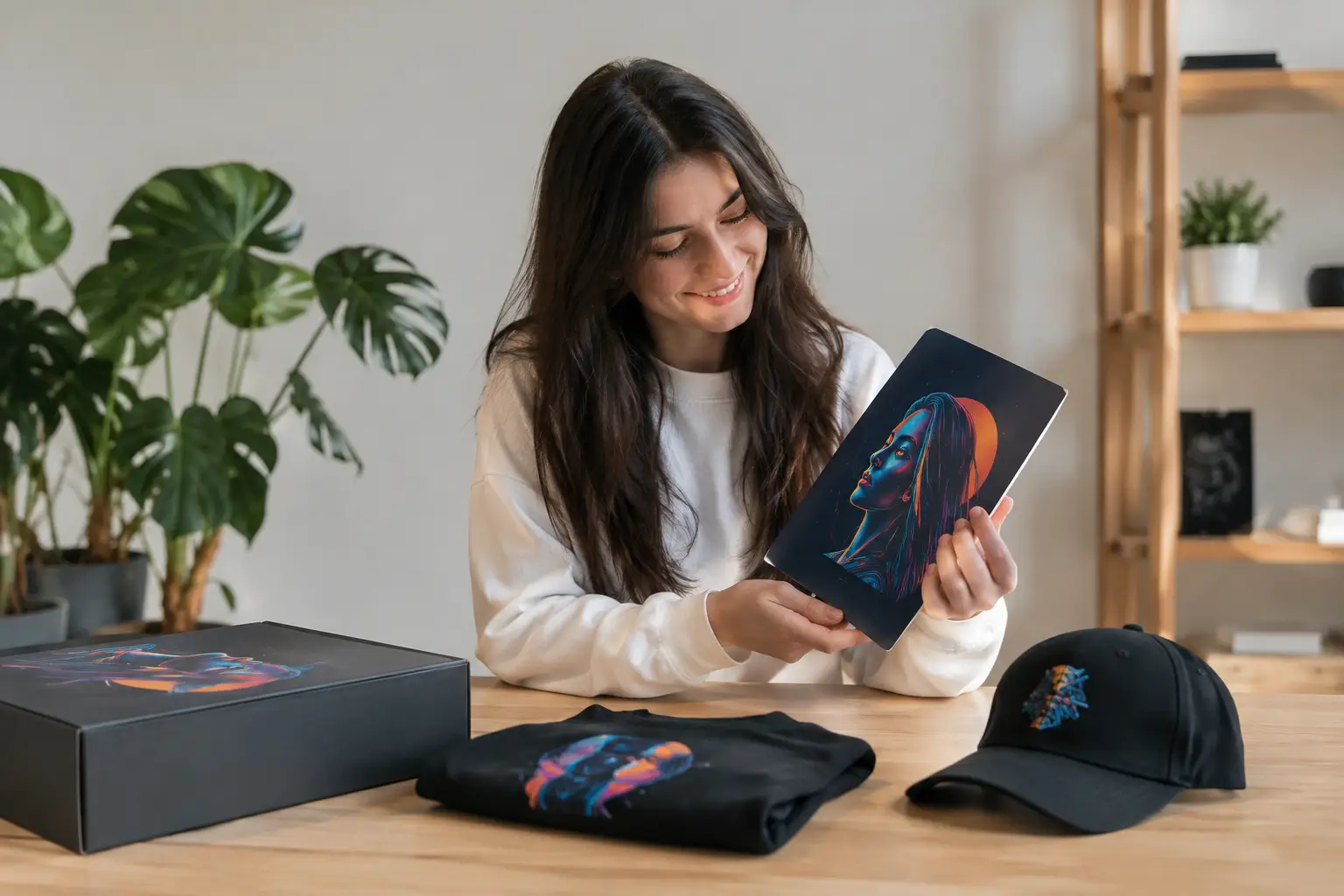
That can mean a washed black tee with a restrained chest mark and a large-format back graphic. It can mean an embroidered cap that reads like a badge rather than an advertisement. It can mean a poster, patch, tote, blanket, or mug that gives a collector another way to live with the art beyond a browser tab.
The product category should follow the community, not a generic merch checklist. Streetwear may fit a PFP project with a bold visual identity. Home goods can make more sense for a digital artist whose work belongs on walls and desks. Accessories can work for a community built around events, travel, or a specific inside joke. There is no universal winning SKU. There is only the right object for the right world.
That is also why design quality will separate memorable drops from forgettable ones. The future belongs to pieces people would want even if they had never heard the word NFT. Strong typography, intentional color, premium blanks, and details that reward a second look make the difference. The blockchain connection adds meaning. It should not be asked to carry weak design.
Scarcity Has to Feel Earned
Limited releases remain powerful, but artificial scarcity is losing its edge. A numbered drop with no point beyond urgency is just a countdown timer. A limited piece tied to an anniversary, an artist collaboration, a milestone, a holder event, or a specific era in a project’s story has a reason to exist.
There is a trade-off here. Extremely limited runs can reward early collectors and create heat, but they can also shut out the wider community. Open-edition windows give more people a chance to participate, yet may feel less exclusive. Smart merch programs use both. Keep a few grail-level releases rare, then create accessible staples that let new members wear the culture too.
On-demand production adds another useful option. It reduces the pressure to guess demand months ahead and cuts down on dead inventory. For global communities that move quickly, that flexibility is a serious advantage. The trade-off is that it requires thoughtful fulfillment expectations and quality control. Convenience is not a substitute for a piece that feels good in hand.
Community Utility Is Moving Beyond the QR Code
Physical merch does not need a complicated tech layer to be Web3-native. In fact, forcing every garment to scan, mint, or authenticate can make the experience feel more like a gimmick than a product. A great hoodie is still a great hoodie when the battery is dead and the app is gone.
Still, selective utility can add depth when it serves a real purpose. A token-gated early-access window can reward holders before a public launch. A hidden detail can point to a private community channel or future release. A serialized run can become a collectible record of a project’s first chapter. Digital provenance may matter for high-value pieces, artist editions, or event exclusives where resale and authenticity are part of the appeal.
The rule is simple: start with the item, then add the technology only if it makes ownership more meaningful. The best physical-digital experiences feel natural. They do not ask the customer to jump through hoops just to wear a hat.
Artist Merch Will Become a Community Media Channel
Every official piece worn in public is a tiny broadcast. It reaches people outside the holder list, outside the marketplace, and outside the algorithm. That matters because the next wave of community growth will not happen only on crypto-native platforms. It will happen wherever people see a graphic, ask about it, and get pulled into the story.
Merch can introduce a project without overexplaining it. A sharp design creates curiosity. A recognizable mark lets existing members find each other in the wild. At conferences, gallery openings, meetups, and festivals, physical pieces turn an online collective into a visible presence.
This is where creators should resist the temptation to make everything loud. Sometimes a full-front print is the right move. Other times, the strongest signal is a small embroidered icon that another collector recognizes instantly. Both can build community, but they serve different wearers. One wants to start the conversation. The other wants to know who is already in it.
For brands, the opportunity is bigger than one launch. Build a consistent visual system across tees, hoodies, caps, posters, and accessories, and each new release compounds the last. NFT Merch approaches this space as a curated destination for official Web3 culture, giving recognized projects and digital artists a way to translate their worlds into products people can actually live in.
What Smart Creators Will Do Next
The creators who win with merch will treat it as a long-term brand layer, not a cash grab after a mint. They will listen to what their community already wears, collect feedback without designing by committee, and release fewer pieces with a clearer point of view.
They will also get practical. Sizing needs to be dependable. Product imagery needs to show fit, texture, and detail. International buyers need clear delivery expectations. Payment should meet the audience where it is, whether that means card, crypto, or both. None of these details are glamorous, but they decide whether a first-time buyer becomes a repeat collector.
Most of all, smart creators will understand that merch is a bridge. It takes a digital relationship and gives it weight, texture, and a place in daily life. The next iconic artist merch drop may start as a token, a sketch, or a community joke, but it earns its legacy when someone reaches for it without thinking, puts it on, and takes the culture with them.