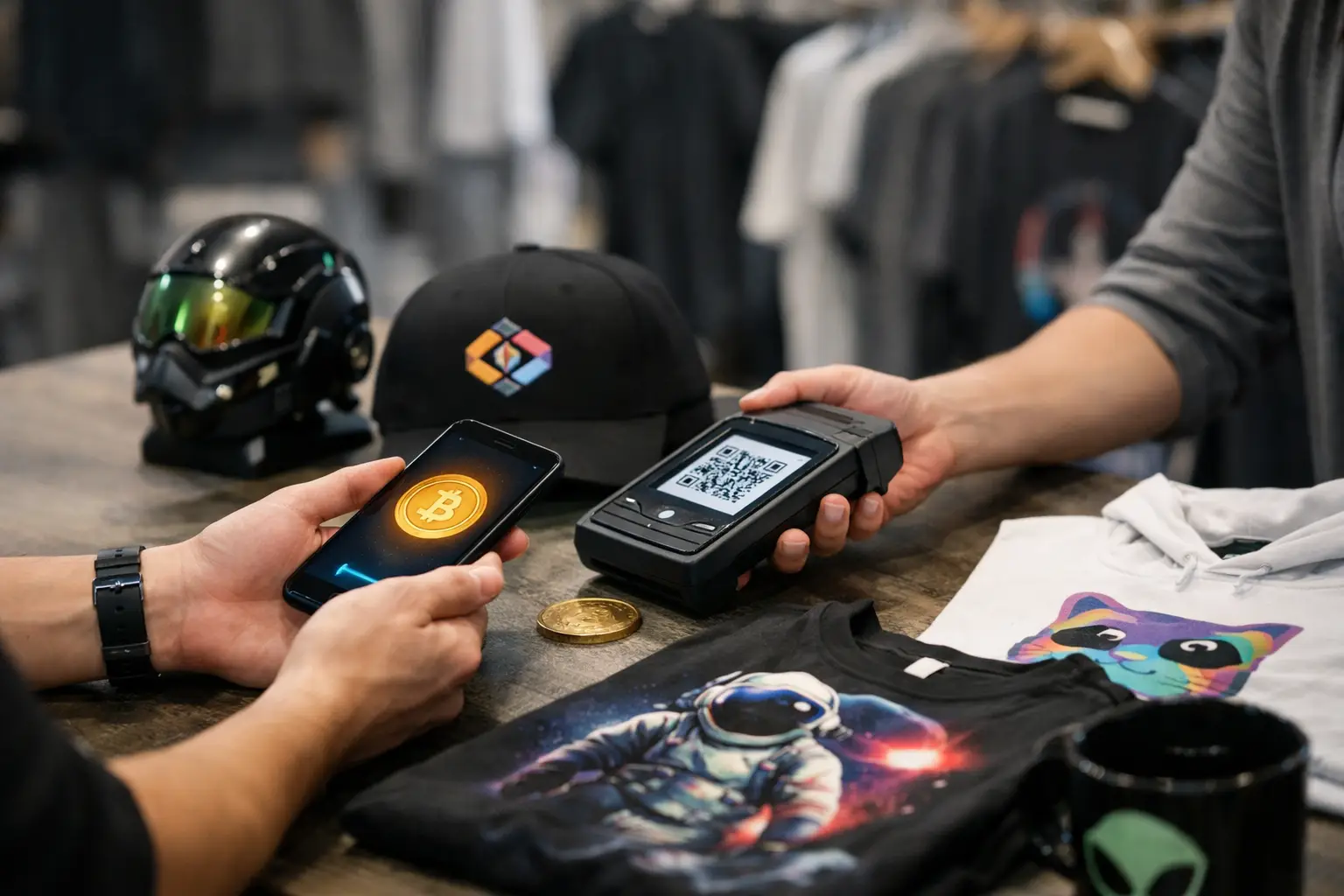
How to Pay Crypto for Merch Without Friction
You found the drop, picked the hoodie, and got to checkout only to wonder if paying in crypto is actually going to be easy or a total gas-heavy mess. If you’ve been searching for how to pay crypto for merch, the good news is this – it’s usually much simpler than people expect, as long as you know what to check before you hit send.
Paying with crypto for physical merch feels right in Web3 because it closes the loop between digital identity and real-world ownership. Your wallet isn’t just where you hold assets. It’s part of how you move through the culture. When you use crypto to buy merch tied to NFT communities, artists, and onchain brands, the purchase feels more native to the ecosystem than pulling out a card and pretending this world runs on old rails.
How to pay crypto for merch at checkout
Most crypto merch checkouts follow the same basic flow. You add your items to cart, head to payment, choose the crypto option, and then either connect a wallet or send funds to a payment address. The details vary by store, but the logic stays familiar.
In some cases, the price gets converted into a crypto amount at the moment you check out. That means your total might be shown in US dollars first, then translated into ETH, BTC, USDT, or another supported coin based on the live rate. Usually that quote is locked for a short window. If you wait too long, it may expire and refresh.
That part matters more than people think. Crypto moves. So does network traffic. If you’re trying to buy a limited drop, speed matters. You want your wallet funded, your preferred chain ready, and enough balance left over for any fees.
Start with the right wallet and the right coin
The fastest crypto checkout is the one you prepare for before the product page loads. If the store accepts ETH on Ethereum, but your funds sit on another chain, you’re already introducing friction. The same goes for stablecoins. USDT on Ethereum is not the same thing as USDT on Polygon or another network.
Before you buy, check which assets the store actually accepts. Common options include Bitcoin, Ethereum, and stablecoins like USDT or USDC. Some stores also support wallets through direct integrations, while others use third-party crypto payment processors that generate a one-time payment address.
If you’re paying from a self-custody wallet, double-check three things. First, make sure you hold the exact coin requested. Second, confirm you’re on the correct network. Third, leave a little extra in your wallet for gas or transaction fees if the chain requires it.
This is where a lot of failed payments start. People see the same ticker symbol and assume everything is interchangeable. It isn’t. Sending funds on the wrong network can delay the order or, in some cases, make recovery difficult.
What the checkout process usually looks like
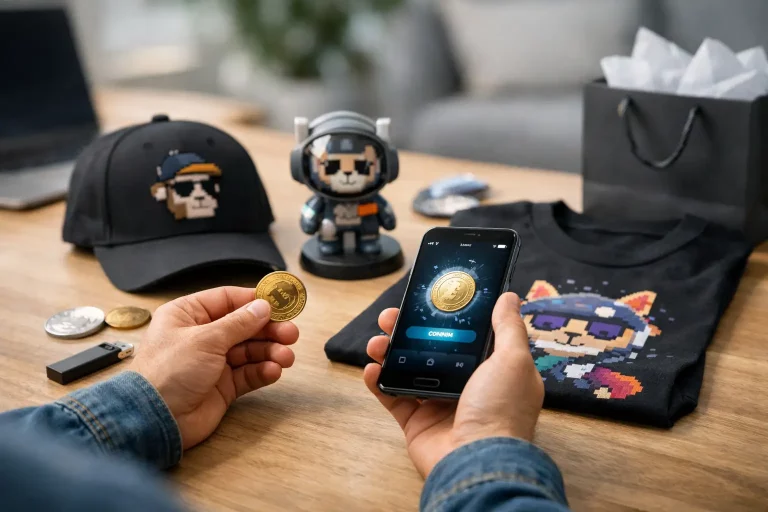
If the store uses wallet connection, you’ll often see a prompt to connect through a browser wallet or mobile wallet app. Once connected, the payment request appears and you approve it inside your wallet. That’s usually the smoothest path because the amount and destination are prefilled.
If the store gives you a wallet address instead, you’ll copy the address or scan a QR code, then send the exact amount manually. This works fine, but it leaves more room for error. Copying the wrong address, choosing the wrong network, or sending the wrong amount can all create problems.
For higher-value orders or limited collab drops, it’s smart to pause for ten seconds and review everything. Wallet address. Token. Network. Final amount. Crypto payments are built for ownership, not chargeback culture. That’s great when you want direct control. It also means accuracy is on you.
Network fees, timing, and why your total might shift
One reason people ask how to pay crypto for merch is that they want the upside of crypto without the annoying parts. Fair. But there are trade-offs, and fees are one of them.
Some chains are cheap and fast. Others can get expensive when the network is busy. If you’re buying a $35 tee and the gas fee is suddenly pushing the total way higher, it may make more sense to use a lower-fee asset if the retailer offers one. Stablecoins on efficient networks are often the practical move when you want predictable value and cleaner checkout math.
Timing also matters because many crypto invoices expire. If a payment quote is valid for only a few minutes, waiting around can trigger a recalculation. That doesn’t mean the store is doing anything shady. It usually means the processor is tracking live market prices and trying to protect both sides from volatility.
The cleanest move is simple: once you start checkout, finish it.
How to pay crypto for merch safely
Crypto-native doesn’t mean careless. If you’re paying for merch with digital assets, safety should feel automatic.
First, only buy from stores that clearly show their payment flow, accepted currencies, and order confirmation process. Legit retailers make checkout feel clear, not confusing. You should know what you’re paying, where you’re sending it, and when the order is considered confirmed.
Second, watch for fake checkout pages and copycat stores, especially around popular NFT brands and artist collabs. Web3 culture moves fast, and scammers know hype creates sloppy clicks. If the design looks off, the product mix feels random, or the wallet request seems unusual, back out.
Third, keep records. Save the order confirmation, transaction hash, wallet address used, and timestamp. If support needs to verify your payment, having that ready speeds everything up.
This is especially relevant for made-to-order merch. Since production often begins after payment clears, clean payment records help avoid delays.
Why some buyers choose stablecoins over ETH or BTC
There’s no single best coin for merch. It depends on what matters to you.
If you want to spend from assets you already hold and stay fully in crypto, ETH or BTC may feel natural. If you care more about price stability and easy budgeting, stablecoins usually make more sense. A $90 hoodie stays mentally closer to $90 when you pay in a stablecoin than when you’re watching a volatile asset bounce around during checkout.
There’s also the collector mindset. Some people would rather keep their long-term holdings untouched and use stablecoins for everyday purchases. Others like spending native ecosystem assets because it feels more aligned with the culture. Both are valid. The better option is the one that matches your habits, not somebody else’s thread on X.
Common mistakes that mess up crypto merch orders
The biggest mistake is sending the wrong coin or using the wrong chain. That is still the classic self-inflicted L. Right behind it is not accounting for fees, which can leave you with an underpayment if you try to send your full balance without leaving room for gas.
Another common issue is missing the invoice window. If the checkout quote expires and you send the old amount anyway, the payment may not reconcile automatically. Some processors can still sort it out, but it may require manual support.
Then there’s the exchange problem. Paying directly from an exchange account can work in some situations, but it can also create delays or mismatched references depending on the platform. Self-custody wallets are usually cleaner because you control the send process end to end.
Why crypto merch checkout keeps growing
Merch is no longer just promo gear. In Web3, it’s proof of taste, community alignment, and cultural signal. Paying in crypto strengthens that connection. It turns checkout into part of the same ecosystem as collecting, trading, minting, and building identity onchain.
That’s why retailers built for this space keep making crypto payments easier. The expectation now is simple: if a brand speaks Web3, the buying experience should too. Stores like NFT Merch lean into that reality by giving communities a way to wear the culture they already live online, with payment options that match how the audience actually moves.
If you’re buying merch with crypto for the first time, don’t overthink it. Use the right wallet, confirm the chain, leave room for fees, and pay attention to the checkout timer. Once you do it once, it feels less like a workaround and more like the obvious way to buy gear that belongs to your world.
Own the culture carefully. Then wear it like you mean it.