How to Spot Authentic Web3 Merch Before You Buy
A hoodie can carry your PFP into the real world. Or it can carry a blurry stolen image, a rushed print, and zero connection to the community you support. Knowing how to spot authentic web3 merch means protecting more than your wallet. It means making sure the culture on your chest actually belongs there.
Web3 has made ownership, provenance, and community status part of the conversation. Physical merch should meet that same energy. Whether you are buying a limited collaboration tee, a cap for your favorite NFT collective, or art-led accessories from a digital creator, authenticity comes down to a few signals that are hard to fake when you know where to look.
Start With the Official Relationship
The strongest authenticity signal is simple: can the seller clearly show why they have the right to use the artwork, project name, character, or logo?
Authentic Web3 merch usually comes from an official project store, a named artist, or a retailer that openly identifies its collaboration or licensing relationship. You should be able to see the connection in the product story, collection language, campaign assets, or announcements from the project and creator themselves. A real partnership is not shy about being named.
Be cautious when a storefront uses phrases such as “inspired by,” “fan edition,” or “Web3 style” while placing recognizable project art front and center. Fan culture can be creative and legitimate when it is clearly presented as fan-made work. But if a seller is trying to benefit from a project’s recognition without acknowledging where the art came from, that is a different signal.
Authenticity is not always about whether an item is limited or expensive. It is about permission, attribution, and a real tie to the culture it represents.
Check the Source, Not Just the Product Photo
A polished mockup proves almost nothing. Anyone can place a popular NFT image on a digital shirt template. Look beyond the image and inspect the seller’s overall presence.
Does the store have a distinct point of view? Does it curate recognizable communities and artists rather than throwing every trending token, meme, and PFP onto one page? Are product descriptions specific about the art, the drop, and the garment? Does the brand communicate in a way that shows it understands the space?
A credible merch destination treats a collaboration as a relationship, not a keyword. The difference shows up in the details: consistent visual direction, accurate names, thoughtful product choices, and language that respects the creator’s work.
How to Spot Authentic Web3 Merch in the Details
Once the partnership checks out, move to the product itself. Authenticity has a physical side. You are buying something meant to leave the feed and live in your rotation.
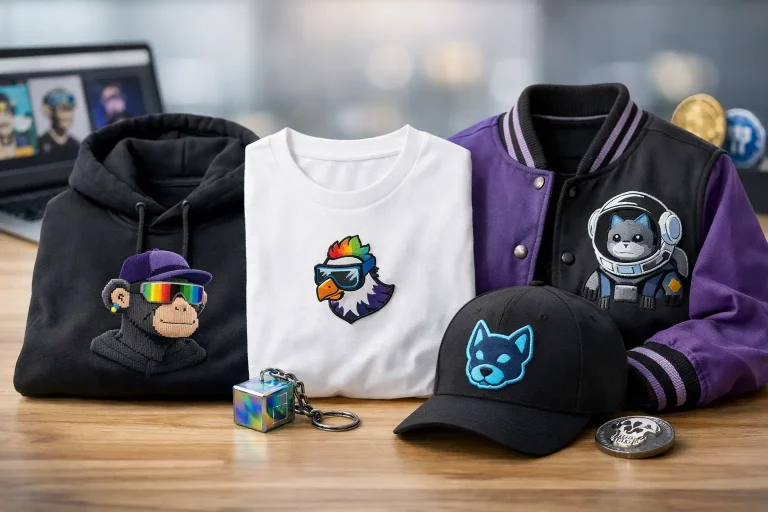
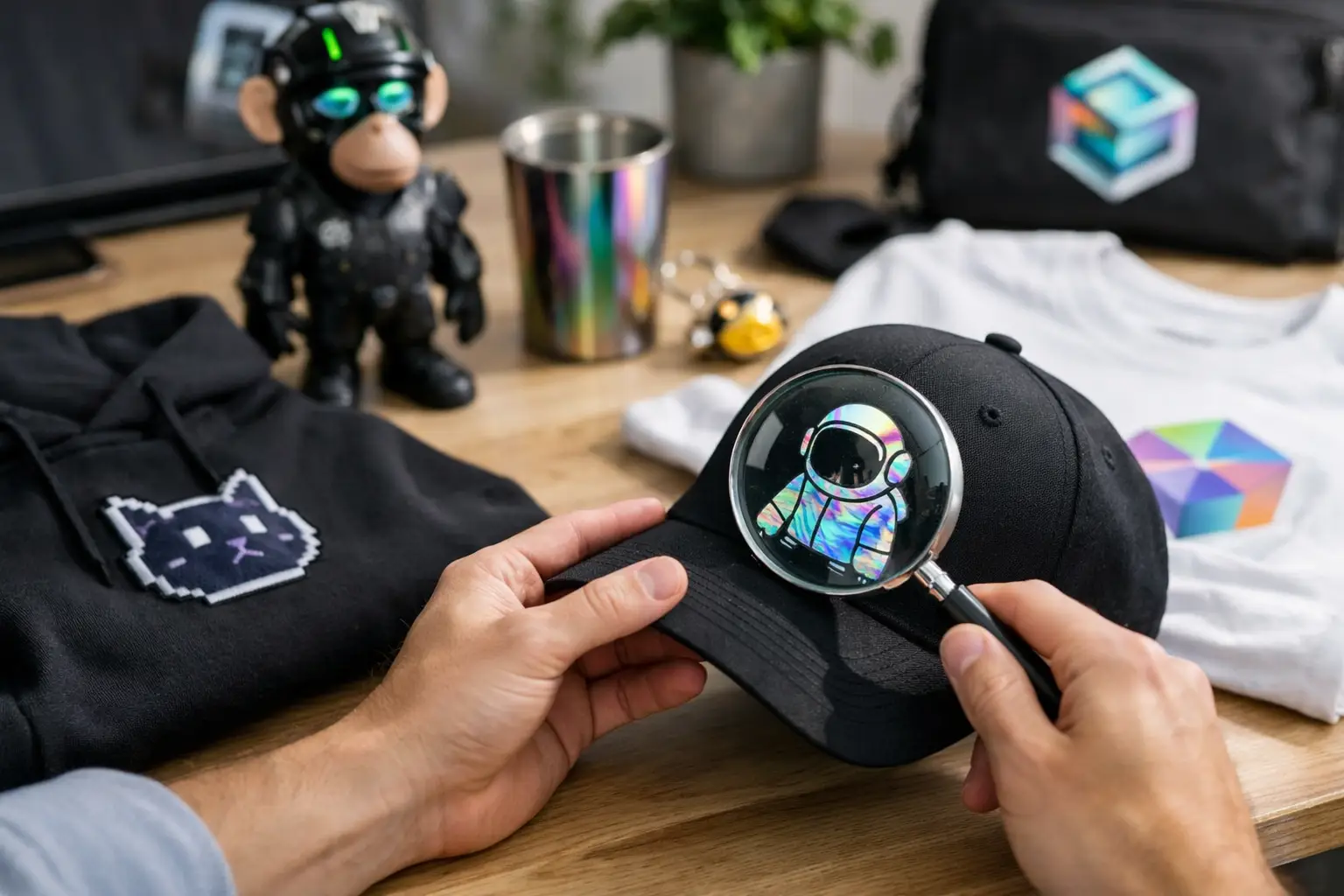
Start with the artwork. Official designs tend to preserve the visual code of the project or artist: the right color palette, line work, typography, traits, symbols, and tone. That does not mean every piece needs to be a literal PFP print. The best drops often reinterpret a digital identity through streetwear, using a small chest graphic, an embroidered mark, a back print, or a subtle woven-style motif.
What matters is that the design feels intentional. Poorly cropped art, warped logos, random fonts, pixelated images, and colors that are visibly off are all red flags. If the seller cannot get the design right on-screen, there is little reason to expect care in production.
Then read the product information. A trustworthy listing tells you what you are buying: garment type, fit, materials where relevant, care guidance, production expectations, and size information. It does not need to read like a factory specification sheet, but it should give you enough confidence to choose.
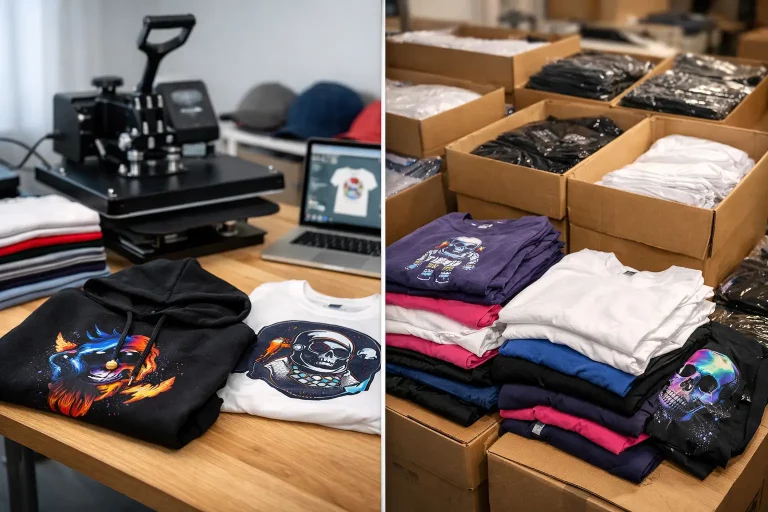
On-demand production deserves a quick reality check here. Made-to-order does not mean unofficial, low quality, or less collectible. It can mean less waste, broader size availability, and no need for a brand to sit on dead inventory. The trade-off is that fulfillment can take longer than a pre-stocked drop, and small production variations can happen. Good sellers set those expectations clearly instead of pretending every order ships at the speed of a mass-market warehouse.
Look for Proof That Matches the Community
In Web3, the strongest brands are built in public. That makes community validation useful, as long as you know what kind to trust.
Look for evidence that the project, artist, or established community channels recognize the drop. This could be campaign imagery that matches the project’s visual identity, a creator mention, an event activation, or a consistent history of working with known names. You are not looking for manufactured hype. You are looking for alignment.
Be skeptical of fake urgency. A countdown timer, “only 2 left” badge, or claim that a collection is “rare” is not provenance. Some authentic items are open editions. Some are made to order. Some are available only for a short window. Scarcity can be meaningful, but only when the seller explains what makes the edition limited and does not use pressure as a substitute for credibility.
The same goes for blockchain language. A store does not become authentic because it says “decentralized,” accepts crypto, or drops a wallet icon into the checkout. Those features may be useful, but they are not proof of authorization. Real credibility comes from the people and projects behind the product.
Separate Official Merch From Holder Utility
Some collections offer token-gated access, holder-only pricing, claim codes, or redeemable physical items. Others sell official merch to anyone who wants to rep the culture. Both models can be authentic.
Do not assume you need to connect a wallet for every legitimate purchase. In fact, you should be careful with any shop that demands a wallet connection before it has explained why. If a holder benefit is involved, the process should be clear: what is being verified, what access you receive, and whether connecting is optional for a standard purchase.
Merch itself also does not need an on-chain certificate to be real. A digital certificate can add collectibility or verify a numbered edition, but it is only valuable when the issuer is credible and the details are transparent. For most apparel, official authorization and quality execution matter more than a flashy claim of tokenization.
Watch for the Red Flags That Actually Matter
Not every imperfect store is a scam. Small creators may have limited photography, early-stage brands may be refining their fit guides, and international fulfillment can create shipping complexity. But a cluster of warning signs should stop the purchase.
Pay attention if you see several of these at once:
- Recognizable NFT artwork with no named creator, project, or licensing information
- Misspelled project names, outdated logos, distorted graphics, or generic AI-looking visuals
- Product pages with no sizing, material, production, or returns information
- Extreme discounts framed as “official” without any explanation of the drop or relationship
- Checkout behavior that feels unsafe, confusing, or overly aggressive about wallet access
- A store with no coherent catalog, community footprint, or evidence of previous work
One red flag may be a mistake. Five red flags are a business model.
Pricing also needs context. Official merch is not automatically premium-priced, and an affordable tee is not automatically suspect. But quality blanks, considered decoration methods, artist partnerships, global fulfillment, and small-batch economics all cost money. When a seller promises luxury-level scarcity for the price of a throwaway novelty shirt, ask where the corners were cut.
Buy for the Signal You Want to Send
The best Web3 merch does more than reproduce an image. It translates a digital world into something you want to wear repeatedly. That could mean a loud all-over print for a convention, a clean embroidered cap for everyday use, or a heavyweight hoodie that only fellow community members clock at first glance.
That is why fit and personal style still matter. A fully licensed piece that sits untouched in your closet is less meaningful than a well-made design you actually live in. Read the sizing details, think about your usual silhouette, and decide whether you want a collector statement or a daily uniform. Both are valid, but they are different buys.
Choose retailers that understand this balance. NFT Merch, for example, positions recognized NFT brands and Web3 artists as wearable culture rather than novelty graphics. That distinction matters when your clothing is part of how you show up in the room, at the event, and across your community.
Authentic merch is a physical receipt for your place in a digital movement. Buy the piece with a real story behind it, wear it hard, and let the people who know recognize it.