Streetwear Hoodie Quality Review for Real Wear
A hoodie can carry a PFP, a project mark, or an artist’s world into real life, but the graphic is only half the flex. A proper streetwear hoodie quality review starts with the piece underneath the design: how it feels on skin, how it holds its shape, and whether it still looks intentional after repeat wears. Digital identity deserves better than thin fleece and a print that fades before the season changes.
For Web3 collectors, quality is not just a product-spec issue. It is the difference between merch that feels like a giveaway and a hoodie that earns rotation in your real wardrobe. The strongest pieces make your affiliation visible without asking you to sacrifice comfort, fit, or longevity.
What a Streetwear Hoodie Quality Review Should Test
A quality review should not stop at “soft” or “comfortable.” Those words can describe almost anything straight out of the package. What matters is how fabric, construction, silhouette, and decoration work together over time.
Start by considering the hoodie’s intended role. A lightweight layer for spring has different requirements from a heavyweight, oversized piece built for cold-weather fits. Neither is automatically better. The issue is whether the weight, cut, and finish match what the hoodie promises to be.
For a streetwear piece, look at five fundamentals: fabric composition, garment weight, seam construction, fit retention, and print quality. These are the details that separate a graphic hoodie you wear once for the post from one that becomes part of your uniform.
Fabric weight changes the whole experience
Fabric weight is often described in GSM, or grams per square meter. Higher GSM generally means a denser, heavier fabric, though the feel also depends on the cotton, polyester, fleece finish, and knit structure.
A midweight hoodie is usually the easiest all-rounder. It layers cleanly, works across more seasons, and avoids the bulky feeling that can make a hoodie sit awkwardly under a jacket. A heavyweight hoodie delivers more presence: a firmer drape, stronger hood shape, and that premium, structured feel streetwear fans tend to chase.
But heavy does not always mean high quality. A thick hoodie with a rough interior, weak ribbing, or a boxy cut that twists after washing is still a miss. Likewise, a lighter hoodie can be a smart choice for travel, indoor wear, and warmer climates if the fabric feels substantial rather than flimsy.
Cotton-rich blends tend to offer the familiar soft hand-feel and breathability most people want. Polyester can add durability, shape retention, and faster drying. The right balance depends on use. If you want a relaxed, lived-in hoodie, prioritize comfort and a good brushed fleece interior. If you want a sharper garment that keeps its profile through frequent wear, a blend can be the better play.
Construction reveals whether it is built to last
Turn a hoodie inside out. The fastest quality clues are often hidden there. Clean, consistent stitching is a good sign. Loose threads, skipped stitches, puckering along seams, and uneven hems suggest a garment that may not hold up under regular wear.
Pay close attention to the shoulder seams, side seams, underarm area, cuffs, and waistband. These zones take the most stress. Reinforced seams and neatly finished interiors help a hoodie survive the repetitive movements of actual life: commuting, layering, washing, skating, traveling, or spending a long night at a community event.
Ribbing matters more than it gets credit for. Strong cuffs and a resilient waistband help the hoodie keep a deliberate silhouette. Once ribbing stretches out, even a great graphic can start to look tired. A hood should also have enough structure to sit well when worn up, not collapse flat like an afterthought.
The small hardware choices count too. If a hoodie has drawstrings, they should feel secure and proportionate to the garment. Metal eyelets can add polish, but they are not required for quality. What matters is that the details feel considered, not randomly added to imitate a premium piece.
Fit Is Part of Streetwear Hoodie Quality
Streetwear fit is personal, but bad proportions are not a style preference. A good oversized hoodie has room where it needs room – through the body, sleeves, and shoulders – while still creating a recognizable shape. It should look relaxed, not like you borrowed a size at random.
Before buying, check the garment measurements rather than relying only on labels such as small, medium, or large. Sizing varies widely between blanks and production runs. Compare chest width and body length with a hoodie you already wear often. That takes a minute and saves the disappointment of a piece that is too short, too narrow in the shoulders, or oversized in every direction except the sleeves.
Think about how you will style it. A cropped or standard-length hoodie can work with baggier pants without swallowing the entire fit. A longer, heavier hoodie brings a different energy and often pairs better with slimmer bottoms or shorts. There is no universal best cut. There is only the cut that supports the way you actually dress.
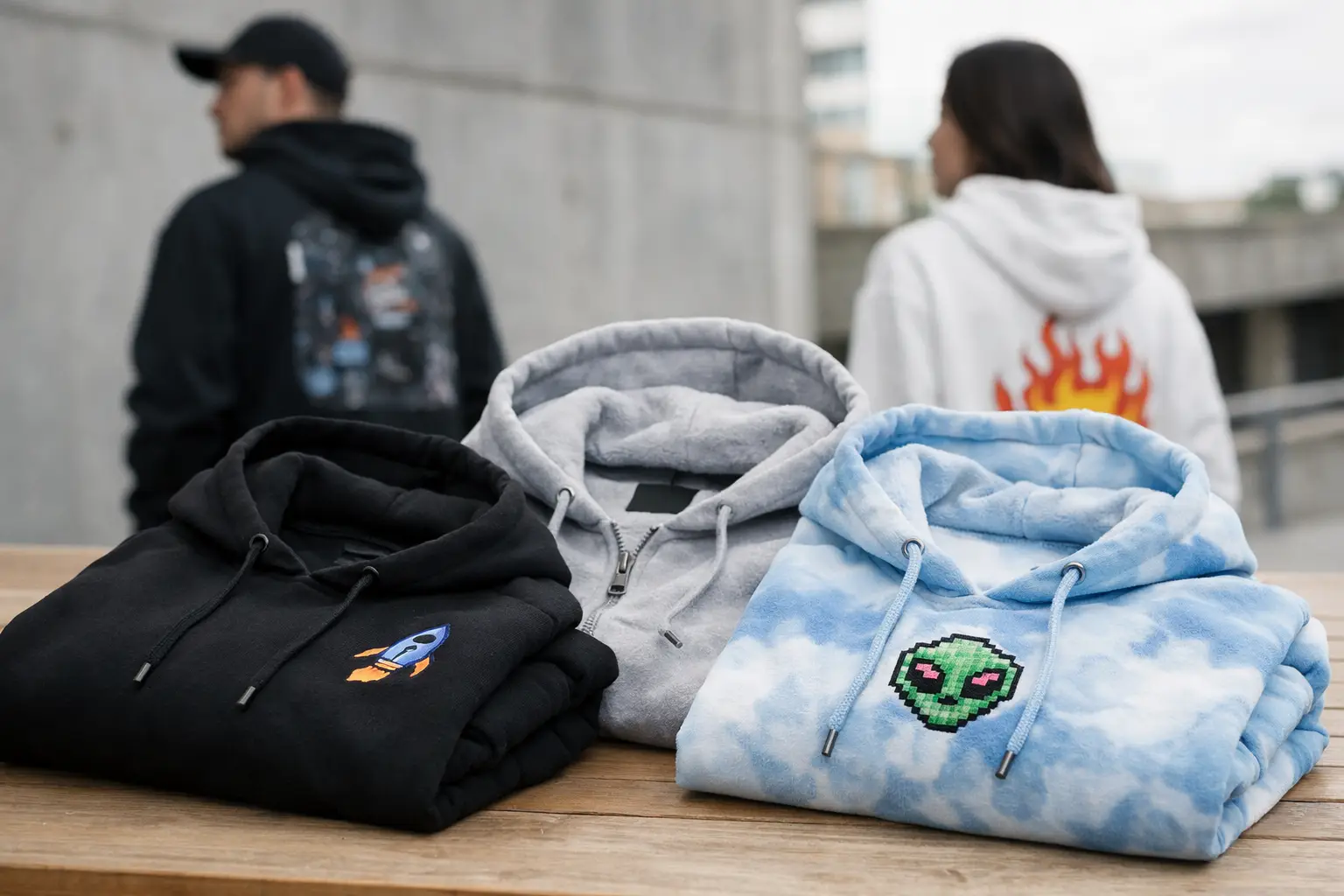
For collectors wearing community merch, fit also affects the artwork. A chest graphic can distort across an overly tight body. Back art gets lost under a hood that is too large or too low. The garment should give the design enough clean space to read as intended.
The Print Has to Match the Garment
A strong design printed on a weak base is still a weak product. But the reverse is true too: the best fleece in the room cannot rescue muddy artwork, poor placement, or a print that feels like a stiff plastic panel.
Different print methods create different results. Direct-to-garment printing can capture detailed art, gradients, and full-color digital aesthetics with a softer result when done well. Screen printing is known for bold, durable color and can be ideal for cleaner graphic work. Heat-applied transfers can deliver sharp detail, but their long-term performance depends on materials, application, and care.
There is always a trade-off. A vivid, high-coverage print may have more texture than a minimal one. Ultra-soft prints can feel more integrated with the fabric but may look less intensely saturated on certain garment colors. The goal is not one method winning every time. The goal is a print process that respects the artwork and suits the hoodie’s fabric.
Placement should feel intentional. Centered chest prints, oversized back graphics, sleeve hits, and discreet woven-label energy can all work. What does not work is design that lands too low, too high, off-center, or so large that it wraps awkwardly around the side seams.
On-Demand Production: The Honest Quality Trade-Off
On-demand merch makes sense for Web3 culture. Communities move quickly, artist worlds evolve, and no-minimum production lets fans buy the pieces they actually want instead of leaving warehouses full of unwanted stock. It also opens the door to global access and smaller, more focused drops.
The trade-off is that product consistency relies on clear garment selection, accurate artwork preparation, and production partners that treat each order as a real product, not a disposable print job. A thoughtful on-demand store should be transparent in its product descriptions, use realistic mockups, provide measurement guidance, and choose blanks that fit the intended price and streetwear positioning.
At NFT Merch, the point is not to paste a token reference onto generic apparel. It is to turn recognized digital art and community identity into physical pieces that can stand outside the feed. That standard should show up in the fabric choice, the print clarity, and the wearability of every drop.
How to Keep Your Hoodie Looking New
Even a well-made hoodie needs the right care. Wash it inside out in cold water, use a gentle cycle, and avoid aggressive detergents or bleach. High heat is the fastest route to shrinkage, weakened fibers, and stressed graphics, so air drying is the safer move whenever possible.
If you use a dryer, choose low heat and remove the hoodie promptly. Do not iron directly over the printed area. These small habits protect color, preserve the fleece feel, and help the graphic stay connected to the garment rather than cracking into the past.
The best hoodie is not the one with the loudest logo or the heaviest fabric spec. It is the one you reach for when you want your digital allegiance to show up in the physical world. Choose the piece that feels right before the camera comes out – that is the quality your wardrobe will remember.