10 Web3 Artist Merch Examples Fans Actually Wear
A wallet can prove you collected the art. Your outfit can show the room where you stand. The strongest web3 artist merch examples turn a digital signature, character, or visual world into something people want to wear beyond a conference, profile picture, or Discord call.
That is the standard. Not a logo slapped on a blank tee. Not merch that only makes sense to insiders staring at a token gate. Great artist merch gives a community a physical uniform while still looking sharp to someone who simply recognizes good design.
What Makes Web3 Artist Merch Worth Wearing?
Web3 culture is built around ownership, but ownership alone does not create style. A collector may hold a piece of digital art for years without wanting the image printed edge to edge across a hoodie. The best drops edit the source material. They choose one recognizable mark, one strange detail, one strong color story, then give it room to breathe.
Streetwear also needs a reason to exist after the mint hype cools. That can be a limited colorway, an artist-approved illustration, a hidden reference for holders, or a garment silhouette with real daily-wear appeal. The right answer depends on the artist’s visual language and the community’s habits. A maximalist character project can go loud. A fine-art digital creator may be better served by tonal embroidery and heavyweight basics.
Here are 10 web3 artist merch examples that show how digital identity can make the jump from screen to street.
1. The Signature Character Hoodie
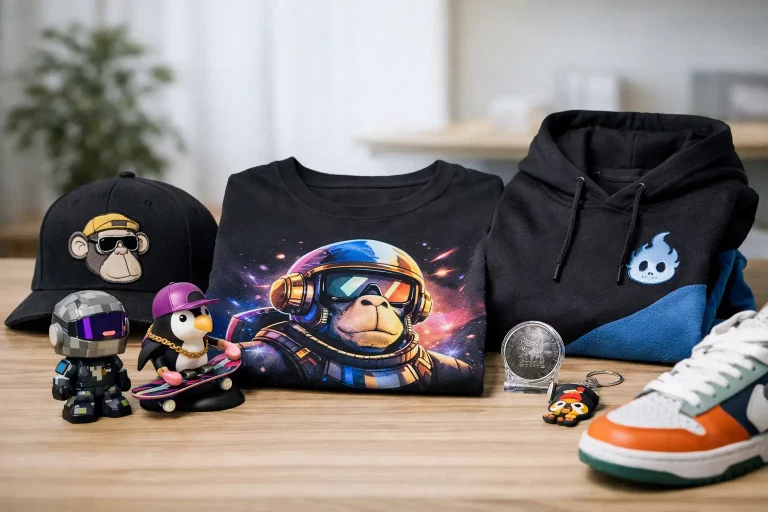
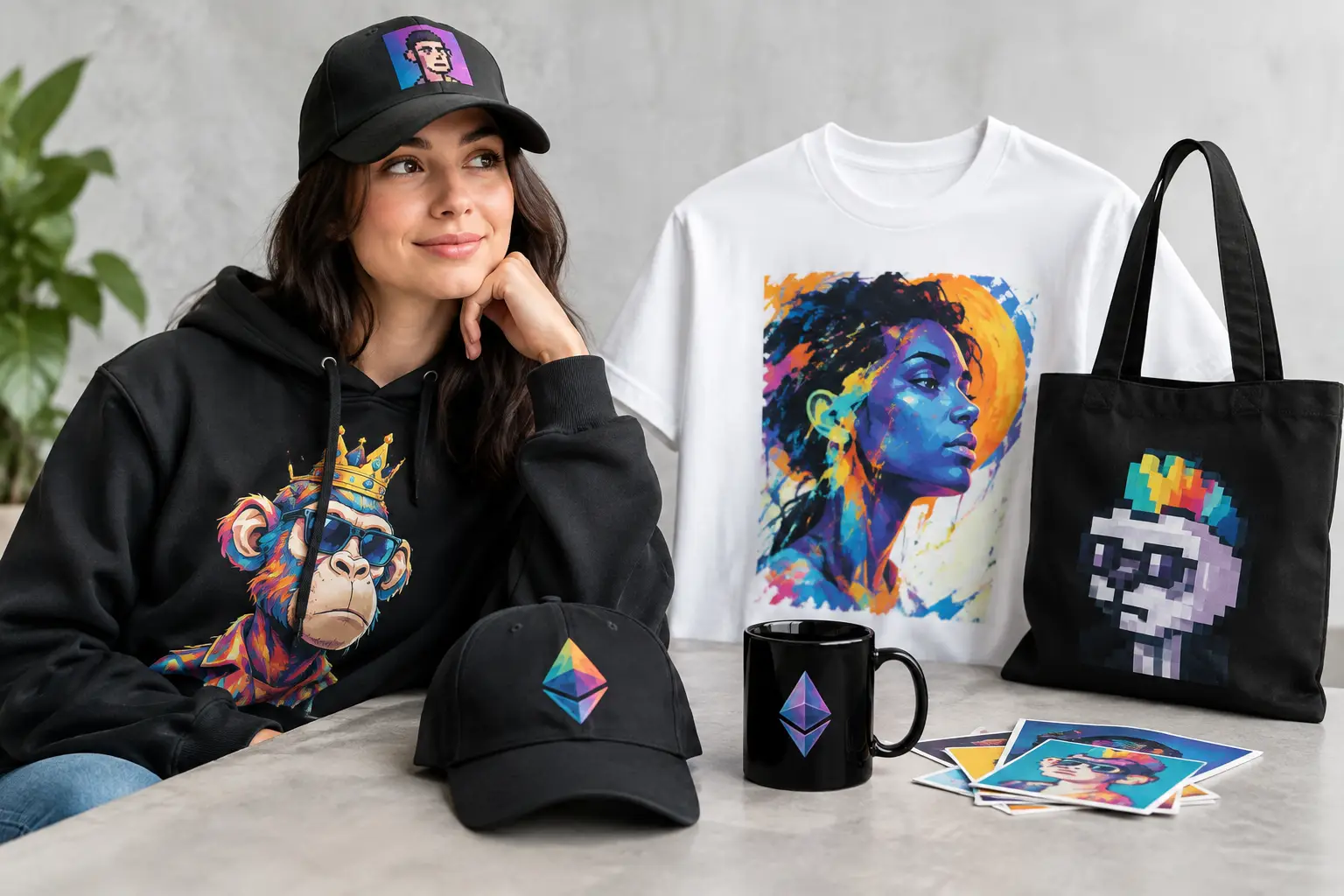
A character-led hoodie is the clearest bridge between an online collection and an offline crew. Instead of covering the garment in traits, use a single oversized character on the back, paired with a small chest hit or sleeve mark. It gives fans the full visual payoff without making the front feel like an ad.
This format works especially well for projects with instantly readable faces, mascots, or avatars. Keep the palette tight and the garment premium. A memorable character deserves more than a thin, disposable blank.
2. The Cryptic Graphic Tee
Not every fan wants to wear the main artwork literally. A cryptic tee takes an artist’s symbols, coordinates, on-chain phrases, sketch lines, or visual glitches and turns them into a graphic that rewards recognition.
Think of it as a nod, not a billboard. This is the kind of shirt another collector spots at a gallery opening or coffee shop, then asks about. The social signal is there, but it stays coded. That balance makes it more wearable for people who live in Web3 and outside it.
3. The Artist Edition Poster
Physical prints remain one of the most natural forms of digital art merch. A poster can preserve the composition and detail that may get lost on apparel, while giving collectors a lower-barrier way to bring an artist’s world home.
The key is curation. Choose a piece that holds up at scale, consider a numbered run or drop-specific treatment, and make the print feel intentional rather than like a screenshot exported from a marketplace. Posters are also ideal companions to apparel drops: one piece for the wall, one for the rotation.
4. The Embroidered Cap
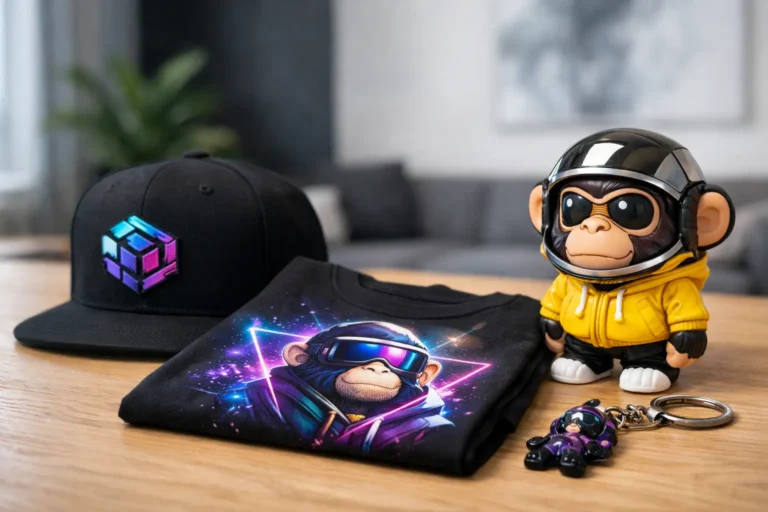
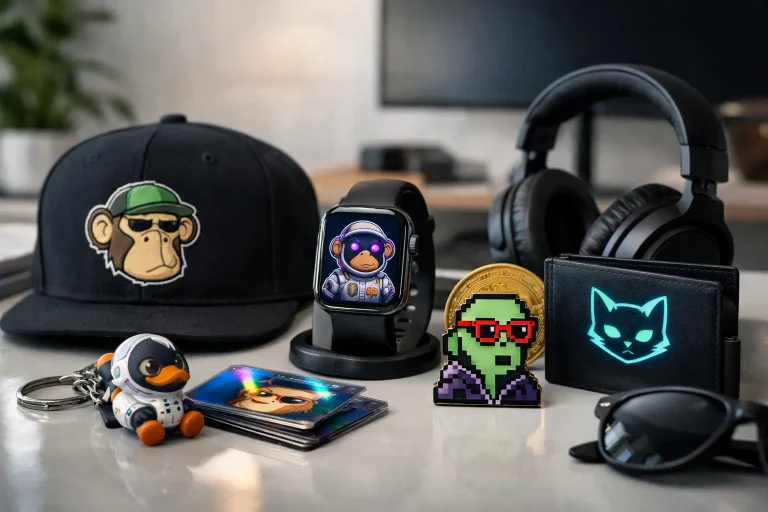
A cap is a small canvas with serious status potential. Embroidery gives an artist’s icon, monogram, or micro-character a clean, elevated finish that feels closer to a label than a souvenir.
This is the move for communities that want a quiet flex. A strong front mark, a side detail, and a considered cap color can carry the identity without overexplaining it. It also gives first-time supporters an accessible entry point into the drop.
5. The All-Over Pattern Set
Some artists build worlds from repeated motifs: eyes, flames, pixel creatures, hands, flowers, abstract forms, or surreal textures. Those elements can become an all-over pattern across shorts, shirts, swimwear, or a matching set.
This is not the place for restraint, and that is the point. Pattern-led merch works when the art already has a strong rhythm and color language. It feels collectible because it does not look like standard brand merchandise. It looks like the artist designed fabric.
6. The Patch That Marks Membership
Patches are small, inexpensive, and packed with community energy. A woven or embroidered patch can feature an icon, a drop date, a faction name, or a visual trait that only core fans understand. People can add it to jackets, bags, hats, and even display it with other collectibles.
For artists, patches are a smart way to create a physical artifact without asking every supporter to commit to a full garment. For collectors, they become proof of participation. The best ones feel more like a badge earned than a giveaway received.
7. The Utility Bag With a Hidden Reference
Totes, crossbody bags, and backpacks give artists a chance to build merch around movement, not just display. A bold external graphic can work, but the better detail may live inside: a custom lining, a printed message, a secondary pocket graphic, or a label that references a specific release.
Utility matters here. If a bag cannot carry the essentials, it will stay in a closet. When function and artwork meet, it becomes part of a fan’s daily kit – laptop, charger, sketchbook, wallet, and a piece of the community carried everywhere.
8. The Limited Colorway Sweatshirt
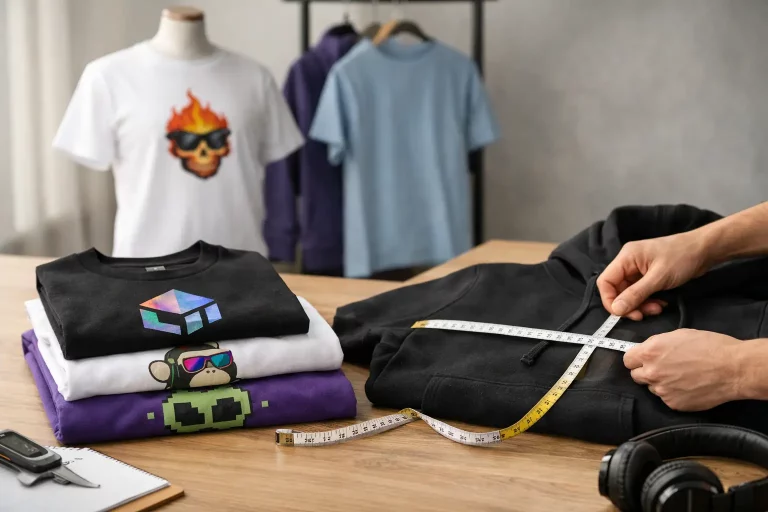
Sometimes the art is not the only collectible. The colorway can be the event. A heavyweight crewneck in an artist-approved shade, finished with a restrained graphic or puff print, can create the kind of drop people regret missing.
This approach works best when scarcity is credible. Do not call every item exclusive. Build the feeling through distinct design choices: a single release color, a short production window, or a collaboration that will not be repeated. Limited should mean something.
9. The Desk Object for Digital-Native Collectors
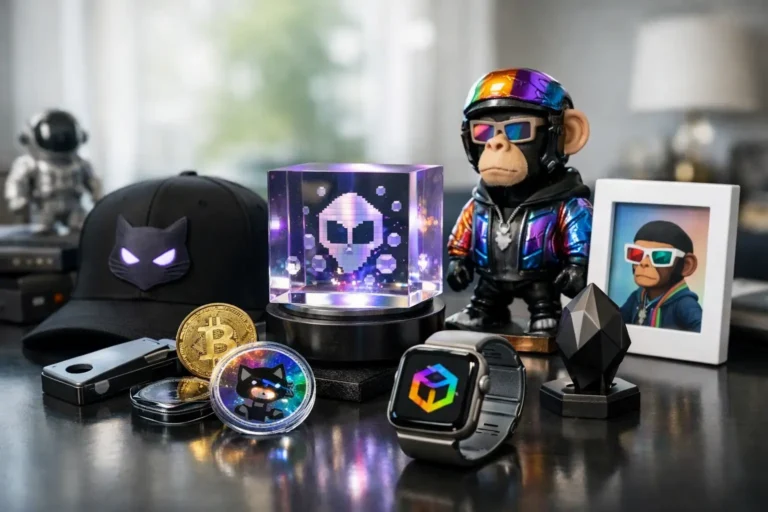
Web3 communities spend serious time at screens, which makes mugs, desk mats, stickers, and small accessories more relevant than they first appear. A mug with an artist’s surreal figure or a sticker pack built around recognizable motifs puts the work into a daily ritual.
These pieces should not be treated as filler. They are entry-level collectibles and high-volume culture carriers. A well-designed sticker can travel farther than a hoodie, showing up on laptops, water bottles, phone cases, and studio gear across the community.
10. The Collaboration Piece That Brings Two Worlds Together
The strongest collaborations do more than combine logos. They find overlap between an artist’s visual universe and a community’s identity, then create something neither could have made alone. That might be a jacket graphic shaped by a digital artist’s characters, a poster series for a creator collective, or a capsule that pairs a Web3 brand’s iconography with a guest artist’s style.
Authenticity is the whole game. Fans can tell when a collaboration is a cash grab. They can also tell when the artist had real input on the design, garment selection, and story. That is where a collaboration becomes a cultural artifact instead of promotional inventory.
Turning Digital Art Into a Real Merch Drop
A successful drop starts with editing, not printing everything. Pick the visual element that fans recognize first. Then decide what role the product should play: loud statement, everyday staple, affordable collectible, or premium limited piece. One clear role produces better merchandise than a crowded catalog trying to please every buyer.
Quality also protects the artist’s reputation. If the print cracks, the fabric feels weak, or the colors miss the source artwork, the physical product damages trust in the digital brand. On-demand production can be a strong fit because it reduces waste and removes minimum-order pressure, but it still demands careful art preparation and product selection.
At NFT Merch, the focus is on that translation: giving recognized NFT brands and Web3 artists a way to move from digital ownership into physical identity. The goal is not just to put art on products. It is to make pieces people reach for when they want to represent what they collect.
The Best Merch Feels Like a Signal
The next great artist drop does not need twenty products or a noisy launch calendar. It needs one or two pieces that make the right people feel seen. Make the reference sharp, make the product worth owning, and give the community something real to wear when the conversation leaves the timeline.