Guide to Web3 Merch Production That Sells
A hoodie can flop faster than a floor price if the merch feels generic. In Web3, people do not buy products just because a logo got printed on cotton. They buy signals. They buy proof of taste, proof of belonging, and proof that a digital identity can live offline. That is what this guide to web3 merch production is really about – turning community culture into physical product without losing the edge that made people care in the first place.
Web3 merch is not the same as standard creator merch. The difference is context. A typical ecommerce brand sells style or utility. A Web3 brand sells access, allegiance, and status inside a culture that moves fast and notices everything. If the fit is weak, the print looks cheap, or the concept feels like a cash grab, your community will clock it immediately.
What makes a strong guide to web3 merch production
The best merch programs start with identity, not inventory. That sounds obvious, but plenty of projects still begin with a blank product catalog and ask what they can slap artwork onto. That is backwards. Start with the role merch plays in your ecosystem. Is it a holder flex, a community uniform, a premium collectible, or an entry point for people who want in but do not own the asset? Your answer changes the entire production strategy.
A holder-only capsule might justify heavier blanks, custom trims, numbered packaging, and smaller runs. A broader community drop may need lower price points, simpler fulfillment, and product categories with fewer sizing headaches. There is no single right setup. The right setup depends on whether you are building prestige, reach, or recurring revenue.
Good web3 merch production also respects the fact that digital communities are not one-size-fits-all. Some want loud graphics and meme energy. Others want stealth wealth streetwear that only insiders recognize. If your project has built cultural capital through art direction, lore, or founder taste, your merch should extend that world. It should never feel like afterthought branding.
Start with the brand, not the blanks
Before choosing tees, hoodies, or accessories, define the visual and emotional lane. Ask what your community actually wants to wear in public. This is where many NFT projects miss. People may love the collection art online and still have zero interest in wearing a giant character print to dinner.
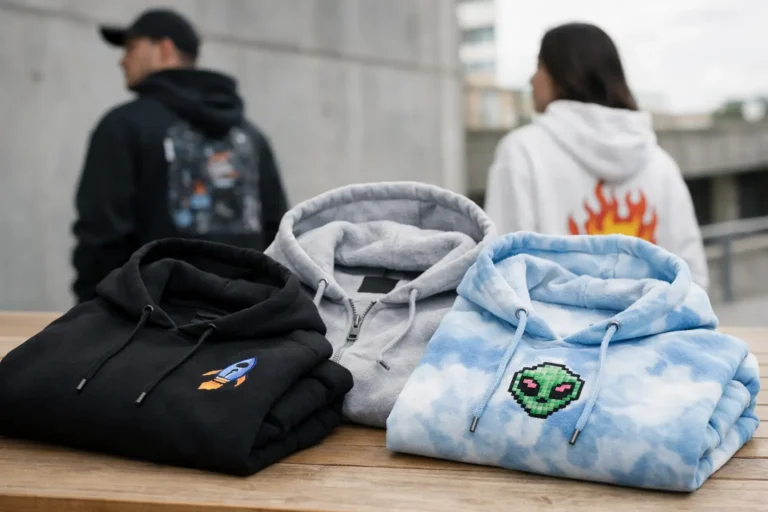
The strongest merch lines usually split into two lanes. One lane is explicit and collectible – bolder graphics, drop language, statement pieces, and artwork-forward designs. The other lane is wearable and repeatable – cleaner cuts, smaller hits, elevated embroidery, and everyday styling. You need both if you want more than a one-off hype spike.
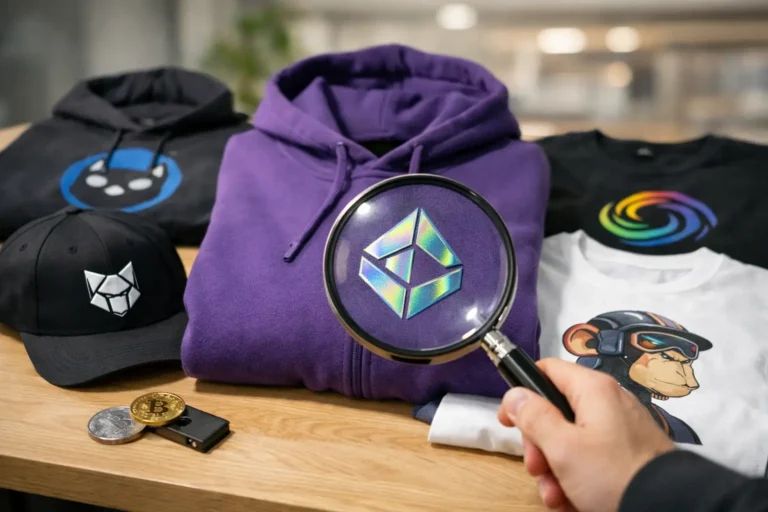
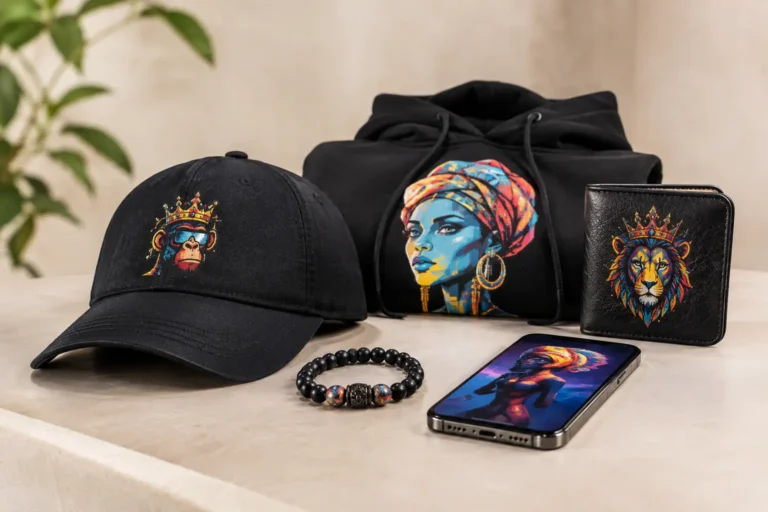
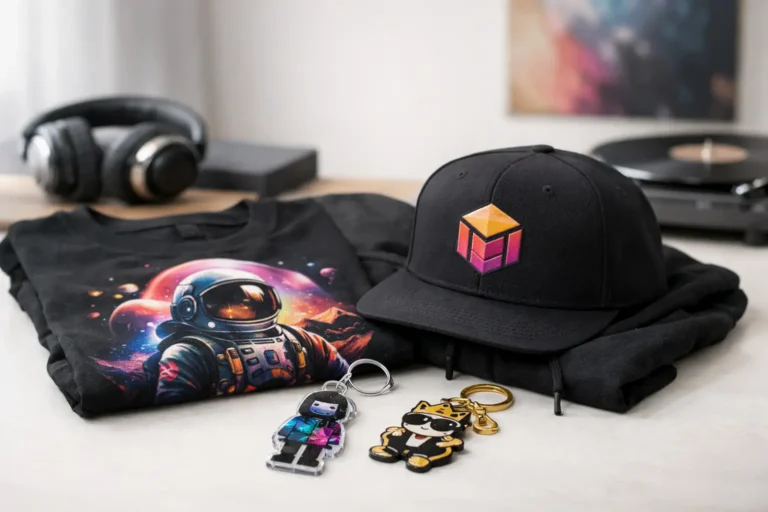
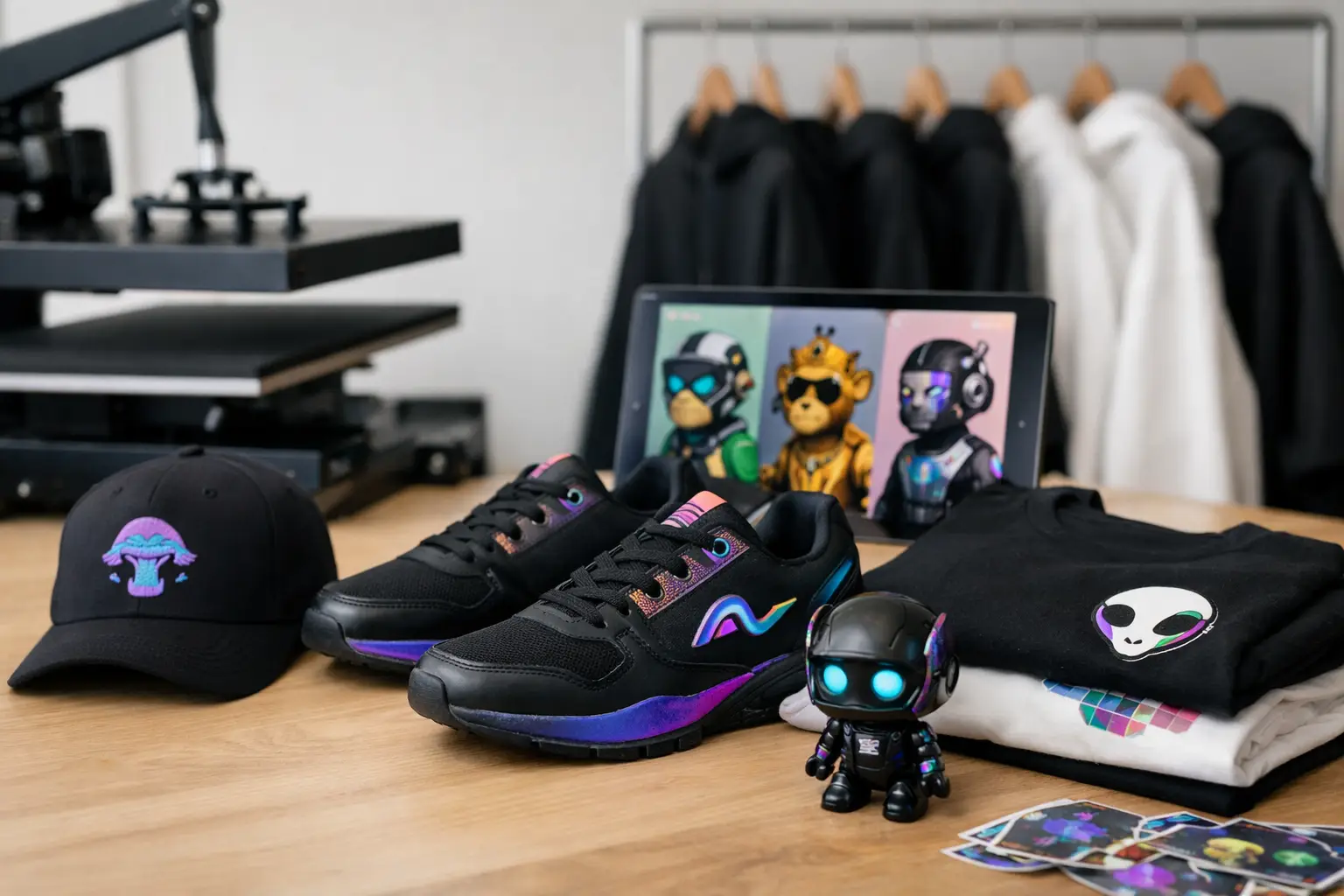
Product choice matters just as much as design. Tees and hoodies are the obvious starting point because they are easy to sell and easy to understand. But not every community is best expressed through basic apparel. Caps, posters, patches, bags, and mugs can outperform if the audience wants lower-friction buys or collectible add-ons. Accessories also let newer fans buy into the culture without spending premium apparel money.
That is where on-demand production becomes powerful. It lets brands test appetite without overcommitting to dead stock. For Web3 communities that live on momentum and experimentation, flexibility beats warehouse risk most of the time.
Materials, print methods, and the quality question
If the product feels cheap, the brand feels cheap. Simple.
Web3 buyers are used to paying for perceived value. They understand scarcity, provenance, and premium positioning. That makes them even less forgiving when a garment arrives thin, stiff, badly printed, or off-fit. Production quality is not a backend detail. It is part of the brand story.
Blank selection is the first call. Lightweight tees can work for lower-priced drops or warm-weather collections, but heavyweight cotton generally carries more authority for premium streetwear positioning. Hoodies need structure, softness, and enough weight to feel intentional. Caps need clean embroidery and shape retention. Posters need decent stock. Mugs need print durability. Every product has a baseline below which it stops feeling collectible and starts feeling disposable.
Then there is decoration. Direct-to-garment printing is great for color-rich artwork and on-demand flexibility, but not every file translates perfectly. Screen printing usually delivers stronger saturation and durability on bigger runs, though it comes with setup costs and less agility. Embroidery adds status and texture, especially for minimal branding, but it is not ideal for every graphic. Heat transfers can work in some cases, but they need careful use if you are trying to build premium perception.
This is where trade-offs matter. If you want broad SKU variety with low upfront risk, on-demand methods are often the smarter choice. If you want a flagship drop that feels built for collectors, a tighter product range with upgraded production can land harder. The right call depends on your audience, margins, and how much control you need over every detail.
Designing for hype is not the same as designing for wear
A design can get likes and still fail as merch. The feed rewards novelty. Closets reward repeat wear.
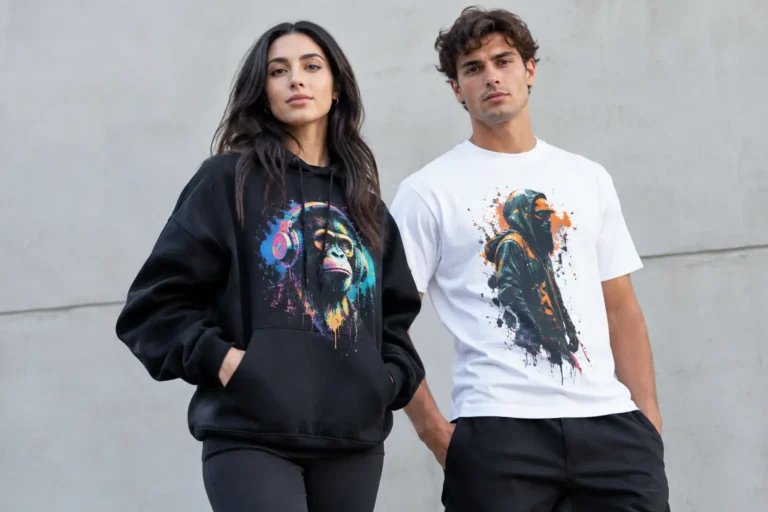
The best Web3 merch sits in the overlap between cultural signal and real style. That usually means understanding silhouette, placement, and restraint. A graphic that dominates a product page may feel unwearable in daily life. A tiny logo hit may look too quiet if your community expects louder flex energy. This is not a design problem. It is a positioning problem.
Drop planning helps. Build collections with roles. Let one piece be the hero. Let one be the easy everyday staple. Let one accessory carry the inside joke or deep community reference. That way your line feels considered instead of repetitive.
This matters even more when a project has a strong visual universe. NFT art can be hyper-detailed, chaotic, or highly narrative. Not all of that belongs on fabric. Sometimes the strongest move is abstraction – pulling a palette, icon, phrase, or motif from the original work instead of reproducing the full asset. That approach often creates merch with longer shelf life and stronger fashion credibility.
Fulfillment can make or break trust
Nothing kills drop energy like messy delivery. In Web3, trust is already a loaded issue. Communities have seen enough broken promises. If your merch operation produces long delays, poor communication, or inconsistent quality, the damage reaches beyond one purchase.
A clean production setup needs realistic lead times, transparent expectations, reliable global shipping, and customer support that does not disappear after checkout. International buyers especially care about this because surprise fees, vague delivery windows, and limited payment options create friction fast.
On-demand fulfillment solves part of the problem by removing the need to hold inventory, but it does not remove the need for strong operations. Product pages still need accurate sizing, clear mockups, and honest production timelines. If a piece is premium, say why. If a drop is limited, make sure the limitation is real. Web3 audiences respond to exclusivity, but they also know when scarcity is fake.
This is why curated, authentic merch platforms have an advantage over generic print shops. A real Web3 merch operation understands the culture behind the product, not just the file format. That difference shows up in assortments, quality control, and how the brand is presented. NFT Merch sits in that lane by focusing on recognized Web3 collaborations instead of treating every project like another upload.
Pricing, scarcity, and the economics of the drop
Pricing web3 merch is not just cost-plus math. It is part margin strategy, part brand signaling.
If you price too low, premium communities may read the product as low-value. If you price too high without clear quality or exclusivity, the drop starts to feel extractive. The sweet spot depends on the maturity of your audience and the role the product plays. Core staples should feel accessible enough to move. Limited pieces should feel elevated enough to justify the flex.
Scarcity works, but only when it matches actual demand and brand equity. Artificially limiting weak merch does not create hype. It creates leftovers and frustration. On-demand production can be a better fit for evergreen community pieces because it allows long-tail sales without tying up capital. Limited runs make more sense for collaborations, seasonal capsules, or design moments with genuine collector appeal.
A smart merch strategy often blends both. Keep a small permanent assortment for steady community identity. Then layer in exclusive drops that create urgency and conversation. That model gives you recurring revenue without losing the thrill of the release.
The future of this guide to web3 merch production
The next wave is not about printing more logos. It is about tightening the link between digital ownership and physical product. Token-gated access, holder-specific designs, redeemable claims, and merch that marks membership tiers all push physical goods deeper into the community stack. But the same rule still applies: the product has to be worth owning even without the mechanic.
Technology can sharpen distribution and exclusivity. It cannot save weak design or lazy production.
The projects that win will treat merch as brand infrastructure, not side revenue. They will understand that a great tee can do what a roadmap update cannot – put the culture on the street, in the wild, and in front of the next wave of people who want in.
If you are building for Web3, make pieces people would chase even if they had never seen the token chart. That is when merch stops being merch and starts becoming legacy.