Is Print on Demand Sustainable for Web3 Merch?
A hoodie should not exist just because a trend moved fast for 48 hours. That is the real question behind is print on demand sustainable: can merch let communities wear their digital identity without creating piles of unwanted product on the other side of the hype cycle?
For Web3 brands, the answer is more nuanced than a green label or a clean product page. Print on demand can be a materially better model than traditional bulk merch because pieces are made after someone chooses them. Less guessing. Less dead stock. Less need to clearance last season’s graphics into irrelevance.
But made-to-order is not impact-free. A shirt still needs fabric, ink, energy, packaging, and a journey to its final owner. Sustainability depends on what is made, where it is made, how it is shipped, and whether it earns a long life in someone’s rotation.
Is Print on Demand Sustainable? The Honest Answer
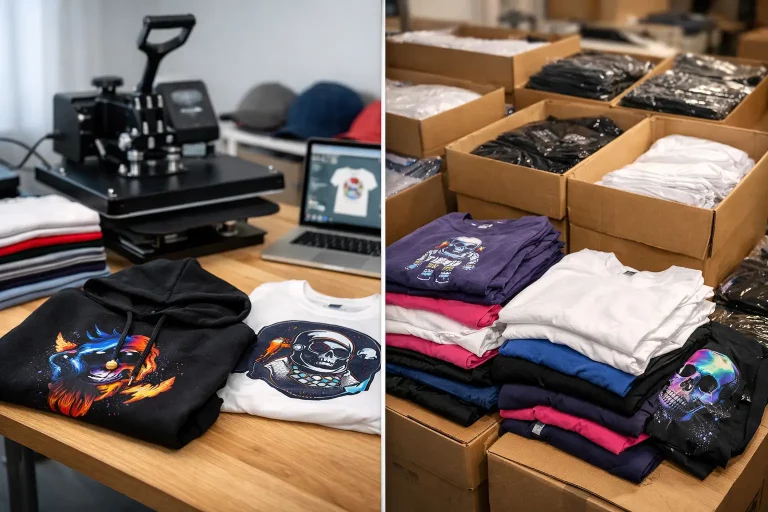
Print on demand is sustainable relative to many bulk-production models, especially when demand is unpredictable. Instead of placing an order for 500 tees and hoping the community buys in, a brand can produce one unit when one person actually wants it. That shift attacks one of fashion’s biggest waste problems: overproduction.
Traditional merch runs often rely on forecasts. Forecasts can miss. A collection may sell out, but it may also leave boxes of tees, caps, and hoodies sitting in a warehouse until they are discounted, destroyed, or forgotten. For a culture that moves at internet speed, from new collections to fresh creator collabs, inventory risk is real.
On-demand production makes more sense for long-tail designs, global communities, and drops where personal connection matters more than volume. Your community member in Los Angeles, London, or Seoul can order their piece without a brand gambling on shipping pallets of stock across borders months in advance.
That is a meaningful advantage. It is not a free pass.
Where the Environmental Wins Come From
The clearest benefit is that production follows demand. A made-to-order model can limit unsold inventory and reduce the resources tied up in products nobody chose. It also gives independent artists and NFT communities a way to release physical pieces without committing to expensive minimum order quantities.
This matters beyond spreadsheets. In Web3, identity is fluid. A collector may want a graphic that marks a specific era of a project, a creator collab, or a community milestone. Producing only what people claim keeps the physical layer closer to real cultural demand instead of manufactured scarcity backed by excess inventory.
Print on demand can also support distributed fulfillment. When an order is produced closer to the buyer, the shipping journey may be shorter than sending inventory from one central warehouse. The word may matters here. A global fulfillment network is only lower-impact when the order is actually routed intelligently and production is available near the customer.
Digital printing methods can be another positive, particularly for detailed art that would be difficult to produce efficiently through older setup-heavy processes. There is no need to create a screen for every small run, which is useful for limited designs and artist-led collections.
The Trade-Offs Behind the Drop
A single made-to-order item can still carry a substantial footprint. Cotton cultivation requires land and water. Synthetic fibers are fossil-fuel based and can shed microfibers over time. Dyeing, finishing, printing, and garment sewing all consume resources before a design is even applied.
Then comes fulfillment. One-off orders can mean more individual packages and less shipping efficiency than sending a consolidated bulk delivery to a store. Express shipping can add to the impact. Split shipments, where items in one order come from separate facilities, can add even more miles.
Returns are another hard truth. Apparel returns can trigger reverse shipping, additional handling, and sometimes disposal if an item cannot be resold. The most sustainable piece is not merely the one produced after checkout. It is the one that fits, gets worn often, and stays out of the return pipeline.
Print quality matters, too. A cracked print or a hoodie that loses shape after a few washes is not sustainable just because it was produced on demand. Durability is part of the equation. If a garment survives hundreds of wears, its impact is spread across a much longer useful life.
Materials Matter More Than the Marketing Copy
If you want more responsible merch, start with the blank garment. Look for suppliers that provide credible details on fiber content, garment weight, labor standards, and relevant material certifications. “Eco-friendly” without specifics is a vibe, not evidence.
Organic cotton can reduce reliance on certain synthetic pesticides and fertilizers, though it still requires water and land. Recycled polyester can reduce demand for virgin plastic-based fibers, yet it remains a synthetic material and should be considered honestly. Blends can offer performance and durability, but may be harder to recycle at end of life.
There is no universal winner for every product. A heavyweight cotton tee that becomes a daily uniform may be a better choice than a lighter “sustainable” option that gets worn twice. A recycled-fiber performance piece may make sense for activewear. The right call comes from matching material to use, then choosing quality over throwaway novelty.
For print on demand, ask practical questions: Is the garment built to last? Are water-based inks available where appropriate? Is product and packaging information clear? Can production happen near the intended customer base? A seller that shares useful specifics deserves more confidence than one leaning on vague green language.
Making Print on Demand More Sustainable
The model works best when brands and buyers act like stewards of the product, not just collectors of the moment. For brands, that means editing the catalog. A huge library of low-effort graphics can be technically made to order and still encourage disposable consumption. Fewer, stronger designs carry more cultural weight and create less noise.
It also means designing for repeat wear. A subtle embroidered cap, a heavyweight hoodie with an enduring mark, or a poster with art worth framing can outlive a loud, date-stamped meme. The goal is not to remove personality from Web3 merch. It is to make that personality worth keeping.
For buyers, slower choices have real impact. Check the size guide before ordering. Combine items into one purchase when possible. Skip rush shipping if you do not need it. Pick a design you will wear beyond the next market cycle, and care for it properly once it arrives.
Wash garments in cooler water, turn printed apparel inside out, and avoid high-heat drying when possible. These small habits help preserve prints and fibers. When the piece no longer fits your rotation, pass it on, resell it, or repurpose it rather than treating it as disposable.
At NFT Merch, on-demand production supports a simple principle: physical culture should be claimed, not stockpiled. The stronger version of that principle is intentionality at every stage, from the artist’s original graphic to the buyer’s final wear.
Web3 Merch Should Be Built for Belonging, Not Landfill
There is a tension worth owning. Web3 loves the drop: the reveal, the allowlist energy, the signal that you were there early. Physical merch can turn that moment into something real. But if every cultural pulse becomes another under-worn tee, the flex loses meaning fast.
The best merch behaves more like a collectible with a job. It represents a community, but it also performs in everyday life. It is constructed well enough to become part of a wardrobe, not an artifact that lives at the bottom of a drawer. That is where sustainability and status begin to align.
Limited runs can help when they reflect genuine demand and thoughtful design. Artificial scarcity alone does not make a product responsible. A piece earns its place through quality, relevance, and longevity.
Make the Flex Last
Choose merch that carries a story you still want to tell next year. Ask for material details, buy the correct size, avoid unnecessary rush delivery, and wear what you claim. The future of sustainable Web3 fashion is not less culture. It is culture with enough substance to stay in rotation.