Why No Minimum Merch Orders Matter
A 12-piece minimum can kill a good merch idea before it ever hits the timeline. That is exactly why no minimum merch orders matter in Web3. Communities move fast, memes change overnight, and the gap between a hot concept and a dead drop is usually just a few weeks. If you need to commit to bulk stock before testing demand, you are not building for internet culture – you are betting against it.
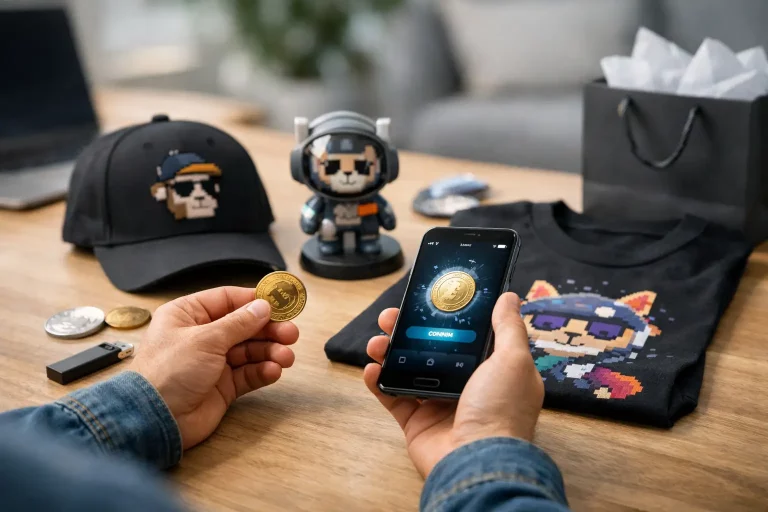
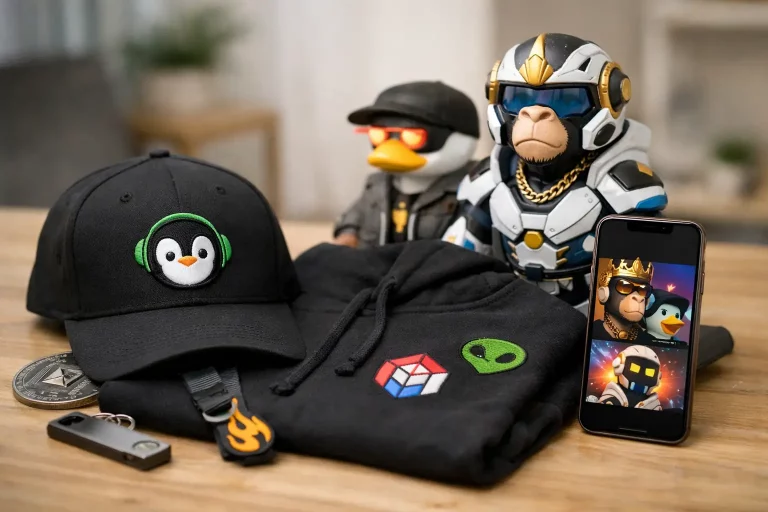
For NFT brands, collectors, and digital artists, merch is not just a product category. It is proof of presence. It turns a profile picture, a collection trait, or a shared onchain reference into something people can actually wear, gift, collect, and post. When there is no order floor, that translation from digital identity to physical product gets a lot cleaner.
What no minimum merch orders actually change
At a basic level, no minimum merch orders mean you can buy one hoodie, one tee, one mug, or one poster without being forced into a bulk run. That sounds simple, but the shift is bigger than convenience. It changes who gets to launch merch, how quickly they can react, and how much risk they carry.
A traditional bulk model rewards scale and punishes experimentation. It works if you already know demand is there, have storage lined up, and do not mind tying up cash in inventory. That is not how most Web3 communities operate. Many drops start as a moment, not a long-range forecast. A new collab lands, an artist gains traction, a community joke turns iconic, or a reveal sparks a design worth wearing. In those cases, speed beats volume.
No minimums also widen access. Smaller creators do not need to act like enterprise brands just to offer legit merch. Niche communities are free to serve their core audience without pretending they need mass-market numbers. And buyers can pick up one item because they genuinely want it, not because someone has to clear a minimum quantity.
No minimum merch orders fit how Web3 culture moves
Web3 does not wait for quarterly planning. It runs on launches, Discord energy, social momentum, and cultural timing. The merch model has to respect that.
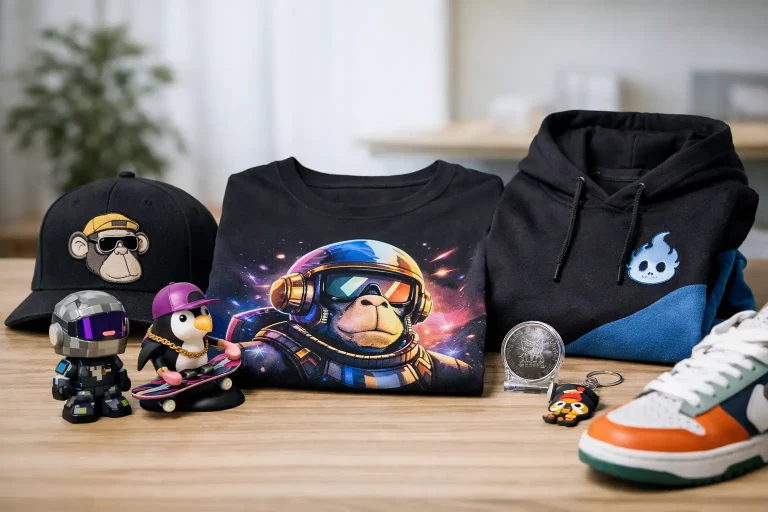
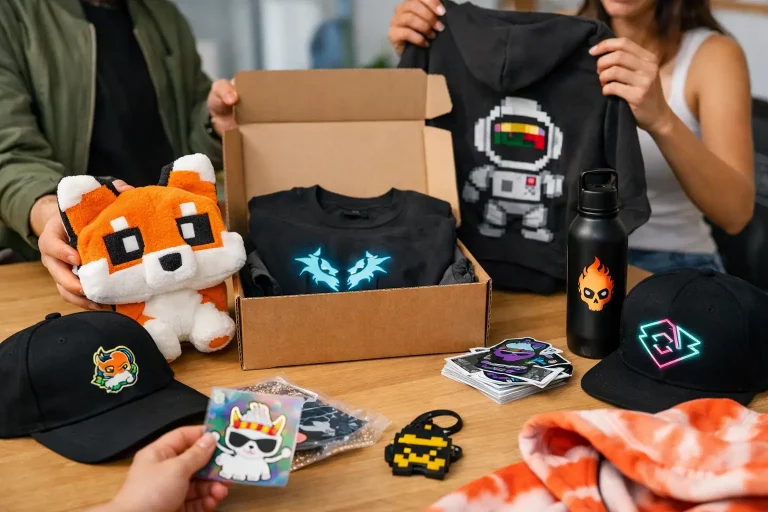
When a collection or creator wants to put out physical goods, the real goal is usually not to move boxes into a warehouse. It is to give the community a real-world layer. That might be a heavyweight hoodie that signals holder status, a cap tied to a collab, or a limited graphic tee that captures a specific era of the project. The product has to feel authentic, but the process also has to stay flexible.
This is where no minimum merch orders make sense. They let brands release smaller, tighter assortments without overcommitting. They let artists test a graphic before expanding into multiple cuts and colorways. They let communities run with relevance while the idea is still fresh.
There is a status angle here too. In streetwear and NFT culture, not every piece needs to be everywhere. Sometimes the strongest merch is made for the few people who get it. No minimums support that kind of selective drop strategy. You can serve a dedicated segment without forcing fake scale.
Why collectors and community members benefit too
From the buyer side, no minimums remove friction. You do not need a group order. You do not need to rally ten friends. You do not need to wait until someone else decides demand is high enough.
You see a piece that matches your identity, your collection, or your community, and you buy it. One item is enough. That matters because Web3 buyers are used to direct ownership. They want the piece when it hits, and they want a clean path from discovery to checkout.
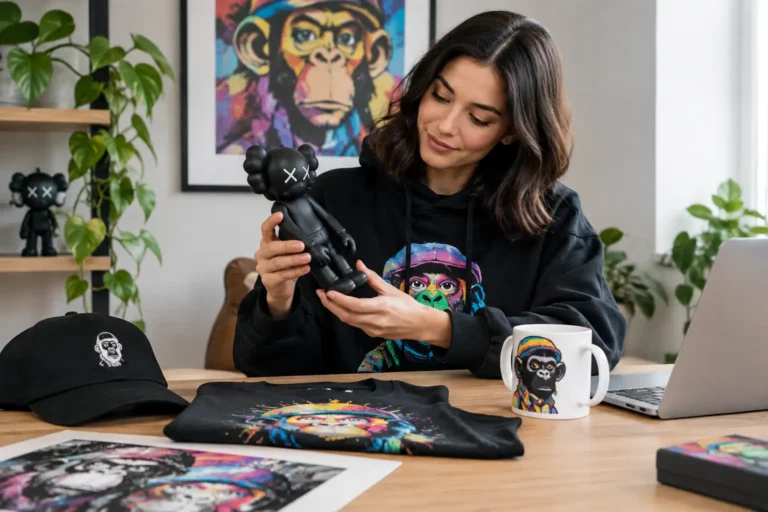
It also makes merch feel more personal. A single order is often a deliberate signal. You are not just buying apparel. You are choosing what part of your digital world deserves physical space in your closet, on your wall, or in your daily rotation.
That shift from bulk buying to intentional buying is good for quality perception too. When each purchase stands on its own, the standard rises. The garment, print, fit, and design all matter more because nobody is hiding behind volume.
The business case is stronger than it looks
Some people still hear no minimum merch orders and assume it is only a convenience feature. It is not. It is a smarter operating model for a lot of modern brands.
First, cash stays free. Instead of sinking money into inventory that may sit, brands can keep budget available for design, community building, content, and future drops. That is especially important for creator-led projects and emerging NFT brands where resources need to stay flexible.
Second, waste drops. Bulk production creates leftovers. Leftovers get discounted, stored, or trashed. None of that feels good for the brand, and none of it adds value for the community. Producing on demand is simply tighter. You make what people actually want.
Third, data gets cleaner. If a design sells one by one in real time, you get a clearer read on what the audience is pulling toward. That is useful when deciding whether to expand a graphic, push a collab further, or retire a concept before it starts dragging.
There is a trade-off, of course. Bulk manufacturing can sometimes offer lower per-unit costs, especially at high volume. If a project already has proven demand for thousands of units, traditional production may still make sense for certain items. But that is not the same as saying bulk is the better default. For many Web3 brands, the better move is to stay agile first and scale once the audience proves it.
What to look for beyond the no-minimum promise
Not all no-minimum setups are equal. The phrase sounds attractive, but the real value depends on execution.
Product quality comes first. If the blanks feel cheap or the print fades fast, the whole point gets lost. Web3 merch is identity wear. It has to look right, fit right, and hold up. Design credibility matters too. A strong community graphic on a weak garment still reads weak.
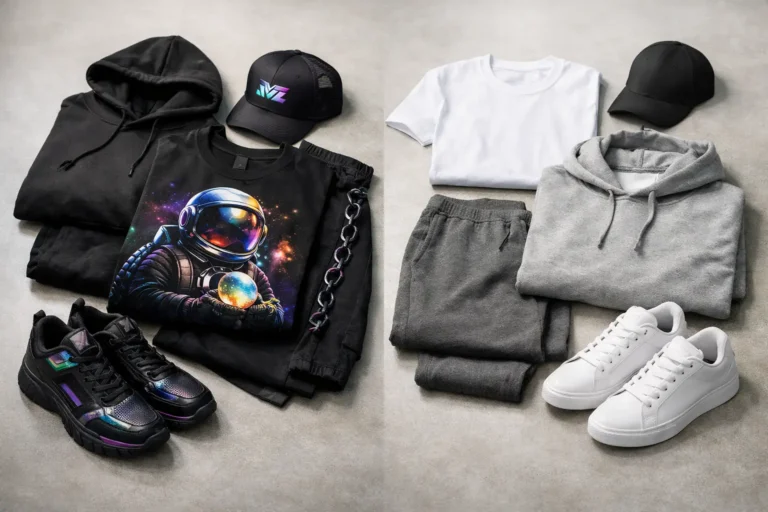
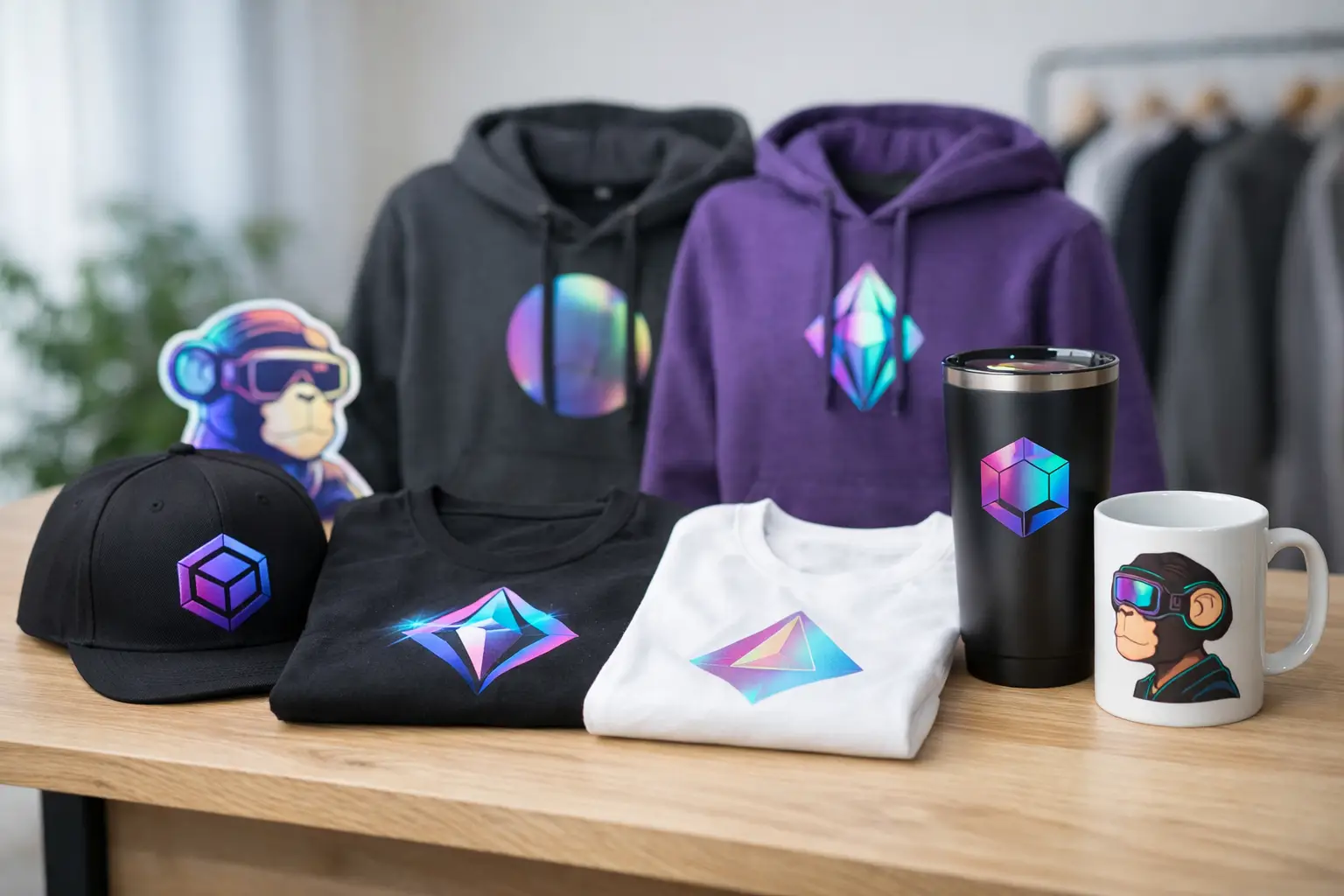
Range matters as well. A serious merch platform should go beyond basic tees. Streetwear-minded communities want hoodies, sweatshirts, hats, bags, posters, accessories, and seasonal pieces that feel part of a real brand universe. The wider the product mix, the easier it is to build a drop that feels intentional instead of random.
Fulfillment is another factor. Global audiences expect shipping options that match the internet-native way they shop. Payment flexibility matters too, especially in crypto-adjacent spaces where buyers expect modern checkout options.
And then there is authenticity. This one is huge. Web3 audiences can spot generic merch from a mile away. They want official partnerships, artist-approved graphics, and product stories that connect back to actual communities. If the merch feels disconnected from the culture, no minimums alone will not save it.
Why this model works for drops, not just basics
There is a lazy assumption that on-demand, no-minimum merch is only good for evergreen basics. In reality, it can work extremely well for drops.
Think about how many Web3 moments are time-sensitive. An artist collaboration, a collection milestone, a community inside joke, a seasonal capsule, or a post-reveal visual identity shift can all create a short, strong window of demand. In those cases, the goal is not always to push massive quantities. The goal is to make the right product available while the energy is there.
No minimum merch orders let brands move on that energy without locking into a giant inventory bet. They can drop fast, keep the offer focused, and let actual buyers determine what deserves a second run or broader release.
For a platform built around NFT culture, this is where the model gets especially sharp. The best merch does not just print art on fabric. It captures belonging. It gives digital communities a physical uniform. That is why curated, on-demand collections from recognized NFT brands and Web3 artists hit differently. They carry context.
The real point: less friction, more culture
Merch should not feel harder to launch than the idea itself. If a design is strong, the community is real, and the product feels authentic, there should be a direct path from concept to checkout. No artificial quantity hurdle. No forced overproduction. No warehouse-first thinking for a culture that lives online and moves at feed speed.
That is the real advantage of no minimum merch orders. They give creators, collectors, and communities a way to own the culture in physical form without dragging old retail limitations into a new digital space. For a brand like NFT Merch, that model fits the mission – authentic Web3 style, made to order, ready when the community is.
If your world already lives onchain, your merch should be able to move that way too.