How to Choose NFT Accessories That Feel Legit
Your profile picture lives on-chain. Your accessories have to work everywhere else – at a gallery opening, on the train, at a meetup, and in the photos that outlive the event. Learning how to choose NFT accessories is less about adding logos to your fit and more about finding pieces that carry real community signal without looking like generic crypto merch.
The right cap, bag, patch, or sticker says you know the culture. The wrong one can feel like a rushed print job chasing a trend that already moved on. Start with authenticity, then let design, function, and your own style do the filtering.
Start With the Project, Not the Product
NFT accessories hit differently when there is a real connection behind them. Before you choose a tote, cap, mug, or patch, ask a straightforward question: does this artwork, symbol, or character actually belong to the project or artist it represents?
Recognized collaborations and officially connected drops matter because Web3 culture is built around provenance. A familiar trait, collection mark, or artist signature has value because the community understands where it came from. That context turns an accessory into more than decoration. It becomes a physical signal of the spaces you collect in, create in, or simply believe in.
Look for clear project naming, consistent visual language, and product imagery that respects the original art. If a design uses a famous collection’s look but gives you no indication of its relationship to that collection, treat it carefully. Loud branding is not the same as legit branding.
This does not mean every piece needs to be an official holder-only artifact. Fan culture has a place in Web3. But be clear about what you are buying: licensed project merchandise, an artist collaboration, a community-made tribute, or a general crypto design. The best choice depends on whether you want verified affiliation, a fashion-forward nod, or a conversation starter.
Choose NFT Accessories for Your Actual Life
A collectible-looking accessory that never leaves its packaging is not necessarily a bad purchase. It is just a different purchase from something you plan to use every day. Decide which role you want the piece to play before checking out.
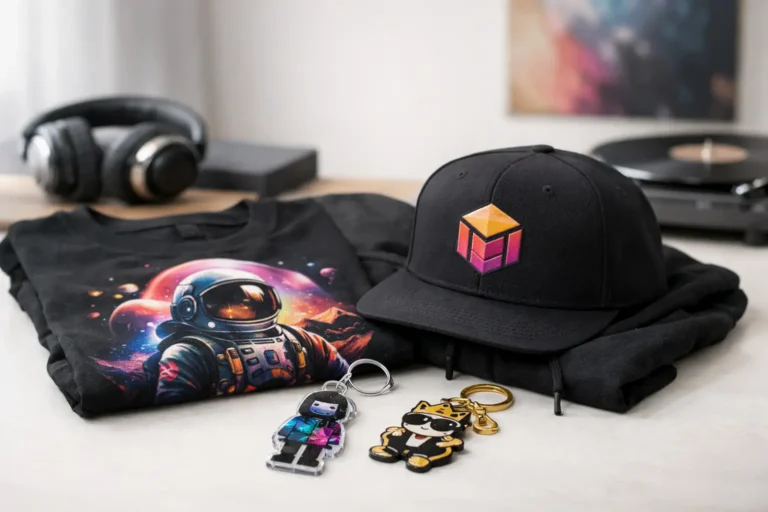
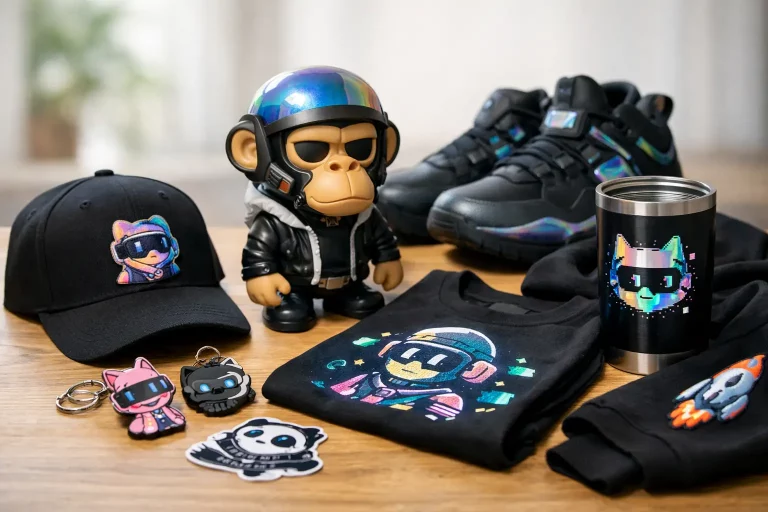
A cap or beanie is built for repeated wear and subtle signaling. A bag has to earn its space with capacity, straps, closures, and a design you will not get tired of after two weeks. Patches and stickers are lower-commitment moves – ideal for customizing a jacket, laptop, bottle, or travel case without rebuilding your wardrobe around one drop.
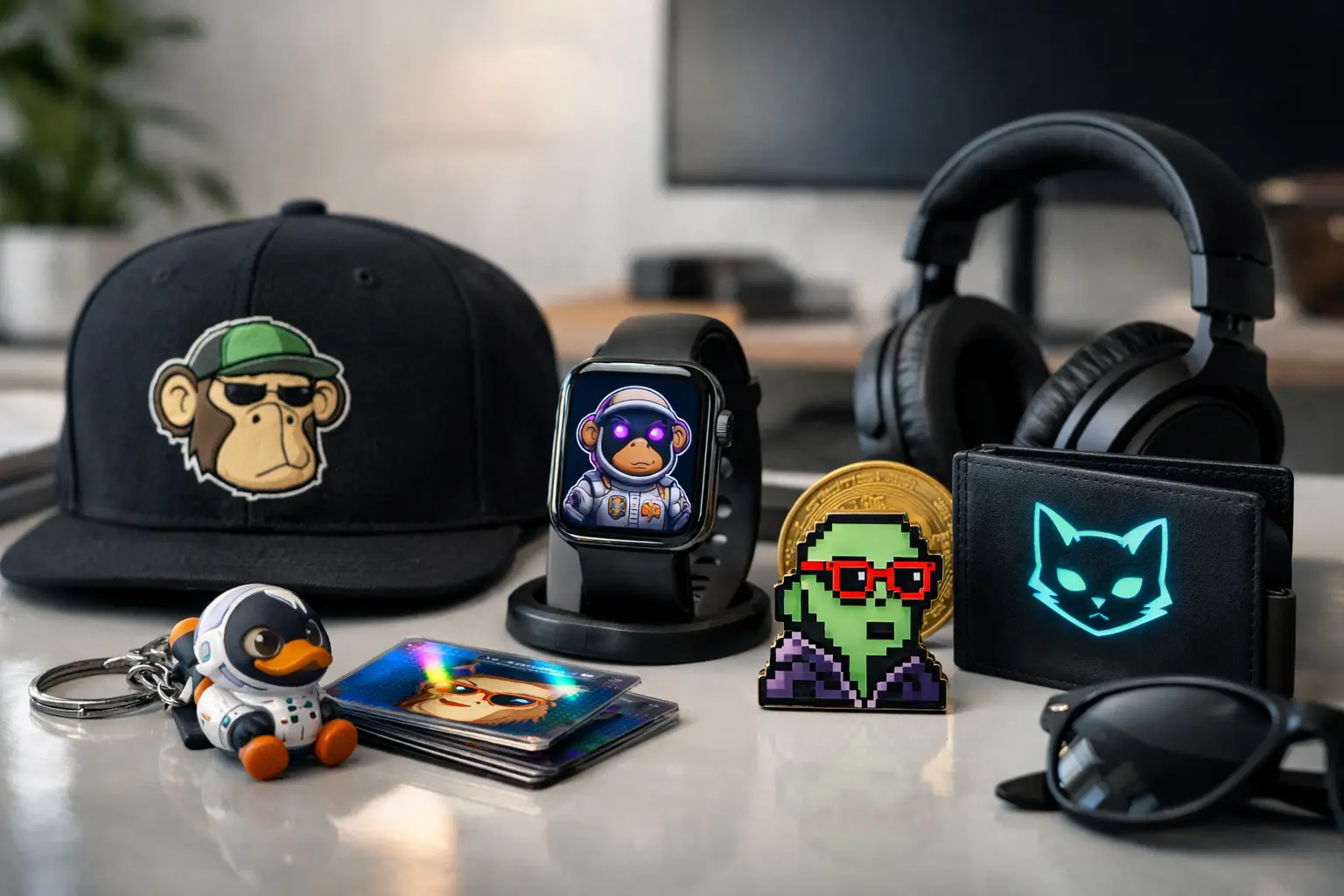
Think about where your digital identity shows up offline. If you travel for conferences, a durable tote or backpack makes more sense than another desk accessory. If your work setup is your main stage, a mug, poster, or sticker pack may carry more daily value. If your style is clean and minimal, a small embroidered mark can communicate more than a full-coverage graphic.
Streetwear is strongest when it feels lived in. Choose an accessory that fits into your rotation rather than forcing your rotation to fit it.
Match the signal to the setting
There is a time for an unmistakable PFP graphic and a time for a coded reference that only community members catch. Neither is automatically better.
Big, visual artwork works well for events, conventions, creative spaces, and content. It gives people an easy opening line: “Which collection is that?” Smaller marks often have more mileage in daily life, especially when you want the accessory to pair with different fits.
If you are new to physical NFT merch, start with one versatile piece. A neutral cap with a sharp logo, a black bag with an artist-led graphic, or a high-quality patch can become part of your personal uniform. Once you know how bold you want to go, add the louder drop.
Check the Design Beyond the Logo
A project can have legendary art and still produce a weak accessory. The design has to hold up in physical form.
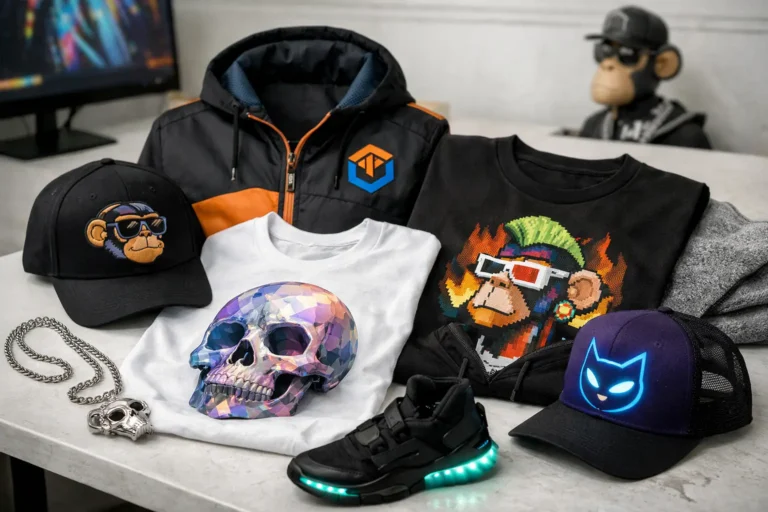
Pay attention to scale. Details that look perfect in a square social avatar can turn muddy when printed small. Fine linework may disappear on textured fabric, while a strong silhouette or high-contrast character often translates beautifully. On the other hand, a massive graphic can overwhelm a compact accessory if it has no breathing room.
Color also changes off-screen. Digital neon, gradient effects, and subtle shading can look different across materials and production methods. Product photography should make the material and finish clear enough for you to judge whether the design will read as intended. If the image only works as a glowing mockup, pause before buying.
The strongest accessories use the original art with intention. They may crop a character for a patch, turn a collection motif into an all-over pattern, or use a restrained logo placement that lets the construction do some of the talking. That is not watering the art down. It is design discipline.
Quality Is Part of the Flex
In Web3, people understand the difference between a screenshot and a verified asset. Apply the same standards to physical merch. A piece should feel good in your hand, survive real use, and still represent the culture after the hype cycle cools.
For bags, check the fabric, handle or strap construction, print placement, and whether the size suits what you carry. For caps, look at the fit style and how the decoration is applied. Embroidery can bring texture and a premium feel to simple marks, while a full-color print may be the better choice for complex digital art. For patches, clean edges and strong backing matter if you want them to stay put.
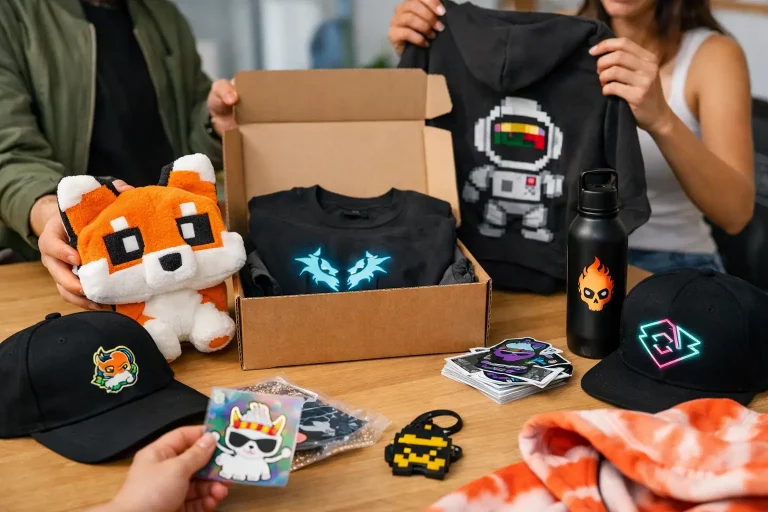
Print-on-demand production can be a smart fit for Web3 merchandise because it avoids forcing brands to sit on mountains of inventory. The trade-off is that some items are made after you order, so production and shipping timelines can vary. That is worth it when the store is transparent about expectations and the product is chosen for the right material and print method.
Do not confuse “limited” with “well made.” Scarcity can make a drop exciting, but construction, comfort, and design are what make it worth wearing again.
Make Sure It Works With Your Wardrobe
NFT culture is global, layered, and visually intense. Your closet does not have to be. The easiest way to get more wear from an accessory is to build around the colors and silhouettes you already own.
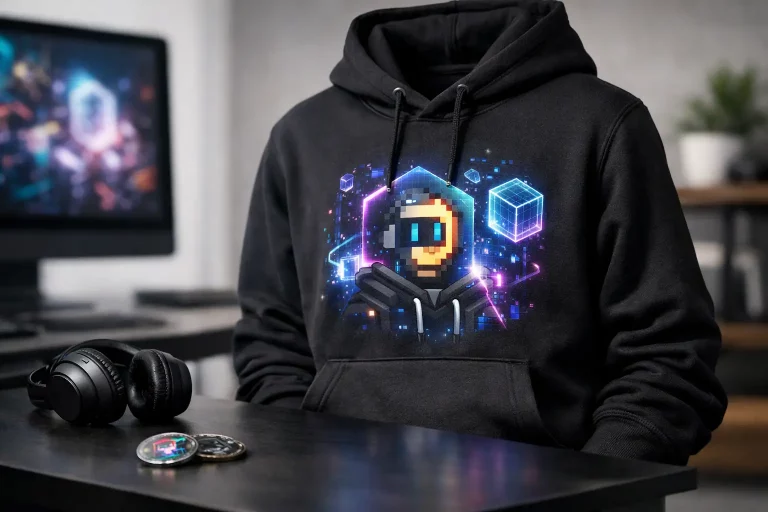
A loud character bag can be the hero against a simple hoodie, black pants, and clean sneakers. A graphic cap can sharpen an otherwise neutral fit. If your wardrobe already leans expressive, choose accessories with one shared color or texture so the look feels intentional rather than overloaded.
You are not required to dress like a walking roadmap to your wallet. One authentic piece can carry the message. In fact, contrast often makes the signal stronger: a refined outfit with a rare community patch, or a minimal travel bag with a recognized project mark, creates curiosity without trying too hard.
Before purchasing, picture three outfits or use cases for the item. If you cannot imagine three, it may be a collector piece rather than an everyday accessory. That is fine – just buy it for the right reason.
Think About Longevity, Not Just the Mint Moment
The most satisfying NFT accessories are connected to work you will still respect after the timeline moves on. That may be a blue-chip project, an emerging artist whose visual language feels original, or a community that has consistently shown up for its members.
Avoid buying only because a design is trending for a week. Instead, ask whether the project has a point of view, whether the artwork still stands on its own, and whether you would wear the piece if nobody recognized it immediately. If the answer is yes, you have likely found something with staying power.
This is where curated merch destinations can save time. A retailer such as NFT Merch can bring official-minded project and artist collaborations into one place, making it easier to browse by the culture you already follow instead of digging through random listings. Still, your taste is the final filter. The right accessory should feel like your community and your style intersected.
A Quick Final Check Before You Buy
Use four questions to cut through the noise: Is the project or artist connection clear? Will I use this in real life? Does the design translate well to this material? Would I still want it if the market went quiet?
If those answers are solid, you are not just picking up merch. You are choosing a piece of physical culture with a place in your rotation. Wear the art you stand behind, carry the community with you, and let the details do the talking.