Guide to Authentic NFT Merchandise
That random hoodie with a pixel ape slapped on the chest is not the same as real community merch. In Web3, the difference matters. A real guide to authentic NFT merchandise starts with one question: are you buying into a culture, or just buying a print?
Authentic NFT merch is more than branded apparel. It is proof that a digital identity can hold weight in the physical world. When a piece is tied to a recognized project, a known artist, or an official collaboration, it carries community value. It signals taste, affiliation, and access. That is why fake, low-effort, unofficial merch feels so off. It copies the look, but misses the point.
What authentic NFT merchandise actually means
Authenticity in this space is not just about whether the graphic looks correct. It is about source, permission, and context. Official NFT merchandise comes from the project itself, a verified partner, or a licensed creative collaboration. That connection matters because NFT communities are built on ownership, provenance, and status. The merch should reflect the same standards.
A legitimate drop usually has a clear link to the brand story. Maybe it is tied to an established collection, a featured Web3 artist, or a community activation. Maybe it is a limited capsule built around a specific visual language that holders instantly recognize. Either way, authentic merch feels intentional. It looks like it belongs to the culture because it actually does.
That does not always mean every authentic item is ultra-limited or token-gated. Some projects want broader reach. Others keep access tight. The point is not artificial scarcity for its own sake. The point is whether the merch has a credible relationship to the NFT brand behind it.
A guide to authentic NFT merchandise starts with the source
If you want to avoid fake drops, start where the merch comes from. Source is everything.
Official merchandise usually appears through known channels tied to the project, artist, or an established merch partner. You should be able to identify who is behind the product without doing detective work for an hour. If the store feels anonymous, the branding looks copied, or the collection appears with zero connection to the original community, that is your first red flag.
Real NFT merch retailers usually make their curation clear. They show which brands they work with, which artists are featured, and why a drop exists. That transparency is part of the value. In a market full of fast-copy designs and generic print-on-demand stores, curation is credibility.
There is a trade-off here. Big official stores are not the only place authentic merch can live. Some strong drops come from niche collab partners, smaller fashion labels, or artist-led shops. But even then, the relationship should be visible. You should know why that seller has the right to produce the merch.
How to tell official collabs from low-effort copies
The gap between an official collaboration and a fake is usually obvious once you know what to look for.
First, pay attention to design language. Real collabs tend to build on the project identity rather than just pasting an NFT image onto a blank garment. They use considered graphics, collection-specific references, typography, community symbols, and a point of view. Good merch feels designed. Bad merch feels exported.
Second, look at product storytelling. Authentic drops usually say something about the collection, the artist, or the concept behind the release. They are positioned as part of the culture, not just another SKU. If every product description sounds interchangeable, the seller is probably pushing generic inventory.
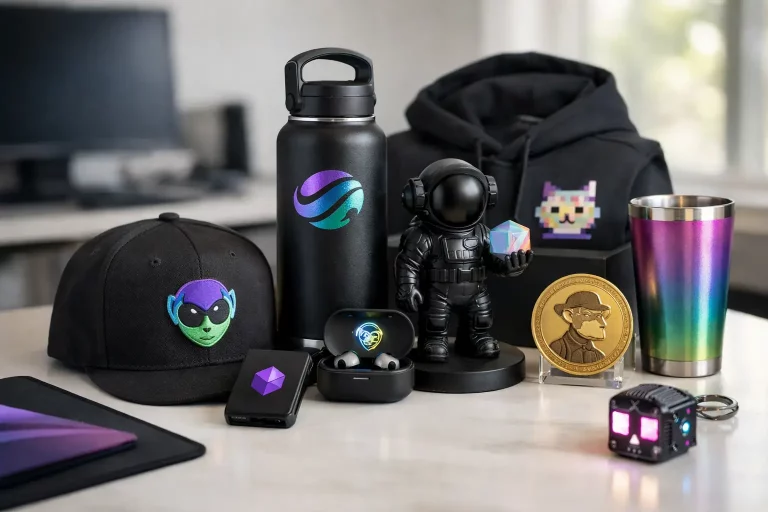
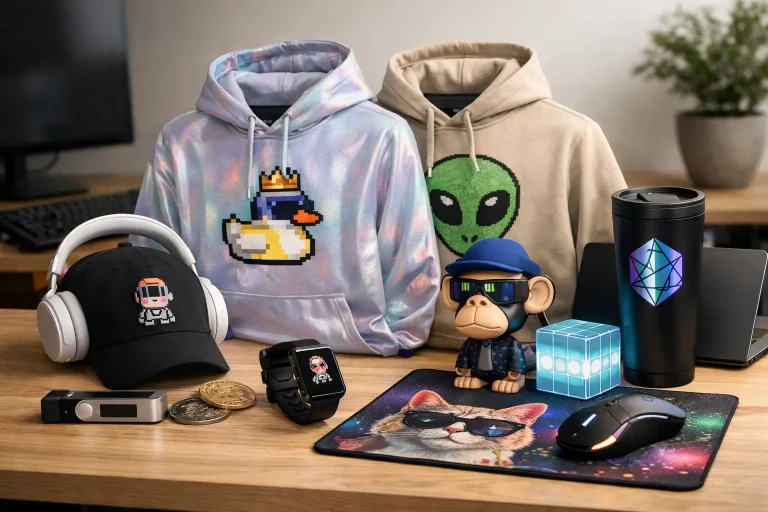
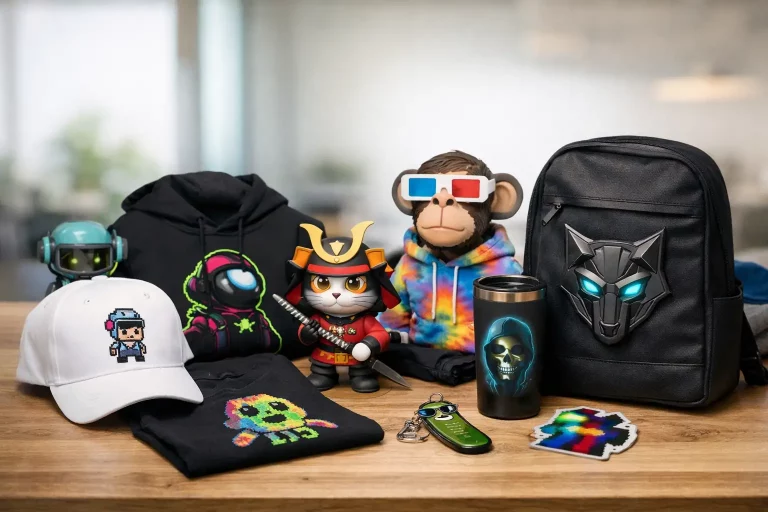
Third, check category depth. A serious merch destination does not stop at one lonely T-shirt. Strong NFT merchandise programs often span hoodies, caps, bags, posters, patches, mugs, and other pieces that let people wear or display their affiliation in different ways. Breadth alone does not prove legitimacy, but thoughtful assortment is a strong signal.
Finally, notice the quality of the brand relationship. If the seller names established NFT projects and artists in a way that feels concrete and consistent, that builds trust. If the site throws around Web3 buzzwords but stays vague about who it works with, keep moving.
Quality matters as much as authenticity
Official merch can still be weak merch. That is the truth.
A licensed design on a cheap blank is still a letdown. If you are spending money to represent a project you care about, the product should hold up in real life. Fabric weight, print quality, fit, finishing, and durability all matter. In streetwear-driven communities, quality is part of the flex.
This is where a lot of unofficial sellers lose the plot. They chase the art and ignore the garment. But people are not just buying an image. They are buying how that image feels on the body, how it lasts after washing, and whether it looks good beyond one Instagram post.
On-demand production can be a strong model here when it is done right. It reduces overproduction and keeps drops flexible, especially for global communities with changing demand. The trade-off is that production times may not match fast-fashion expectations. If the quality is there and the process is clear, many Web3 buyers are fine with that. They would rather wait for something legit than rush into mass-produced junk.
Why authentic NFT merch carries more cultural weight
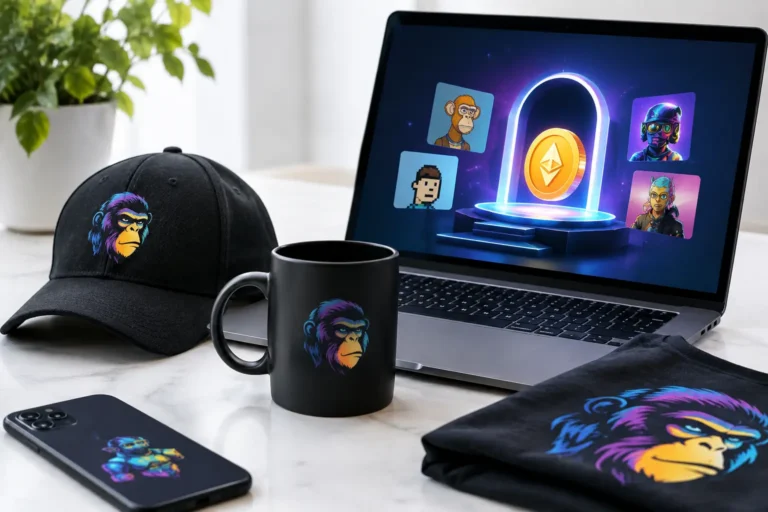
The best NFT merchandise does something simple and powerful. It translates wallet identity into real-world presence.
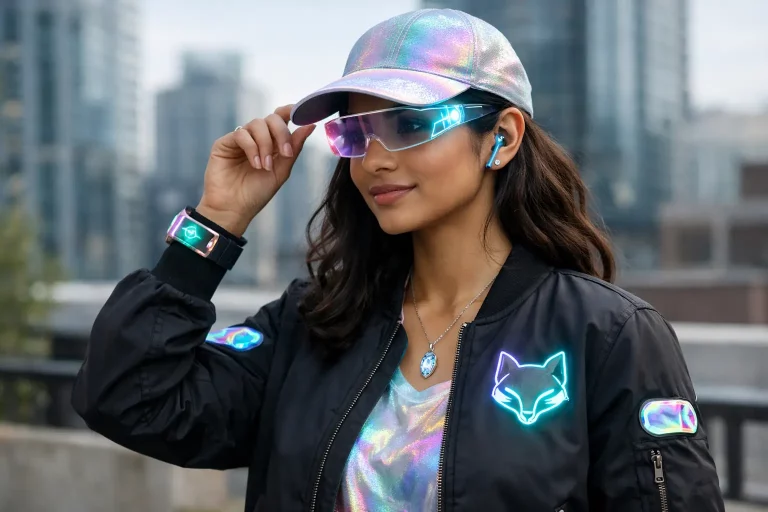
That matters because Web3 is social. Communities are built in Discord servers, on timelines, inside group chats, and across marketplaces. But culture does not stay on-screen forever. People want to wear what they stand behind. A hoodie from a recognized project, an artist-backed poster, or a clean cap from an official drop turns digital belonging into something visible.
This is why authenticity has status value. Anyone can copy a JPEG. Not everyone can create merch that a community actually respects. Real pieces carry context. They mean more at events, in content, and in daily wear because other people in the space can read the signal.
There is also a collector angle. Some people buy NFT merch purely to wear. Others treat it like a physical extension of their digital portfolio. Limited runs, exclusive collabs, and artist-backed releases can hold long-term meaning even if they were bought for style first.
How to shop smarter in a crowded market
The easiest way to shop better is to slow down before checkout. Hype moves fast, but fake merch moves faster.
Start by asking whether the project or artist is recognized and whether the retailer feels like a real destination rather than a pop-up cash grab. Then judge the product on its own terms. Would you still want this piece if you stripped away the Web3 label? If the answer is no, it may not be worth it.
Look for stores that combine cultural relevance with retail clarity. That means easy category browsing, visible product information, straightforward shipping expectations, and flexible payment options that match how modern buyers actually shop. If a store understands both fashion and ecommerce, that is a good sign. If it understands Web3 on top of that, even better.
It also helps to think about what role the merch plays for you. If you want a staple piece, go for clean essentials that can live in your rotation. If you are chasing community recognition, look for collaboration drops with stronger insider cues. If you are buying as a collector, the story behind the item matters more than volume.
For buyers who want all three – authenticity, design credibility, and a real connection to recognized NFT culture – curated platforms tend to stand out more than generic print shops. That is the difference between shopping merch and owning a piece of the culture.
The future of authentic NFT merchandise
The market is getting sharper. Early crypto merch often leaned gimmicky, loud, and rushed. Now the standard is rising. Buyers want cleaner design, better blanks, smarter collaborations, and products that feel native to both streetwear and Web3. That is a good thing.
As the space matures, authentic NFT merchandise will keep moving toward curated brand ecosystems, artist-led capsules, and on-demand models that support global communities without drowning them in excess stock. The winners will be the retailers and creators who understand that this is not about printing internet jokes on cotton. It is about making digital culture wearable without watering it down.
That is where platforms like NFT Merch fit naturally – not as generic merch suppliers, but as a bridge between recognized NFT brands and the people who want to wear that identity with intent.
Buy the piece that still feels right after the hype cools off. That is usually the one with real provenance, real design, and a real place in the culture.