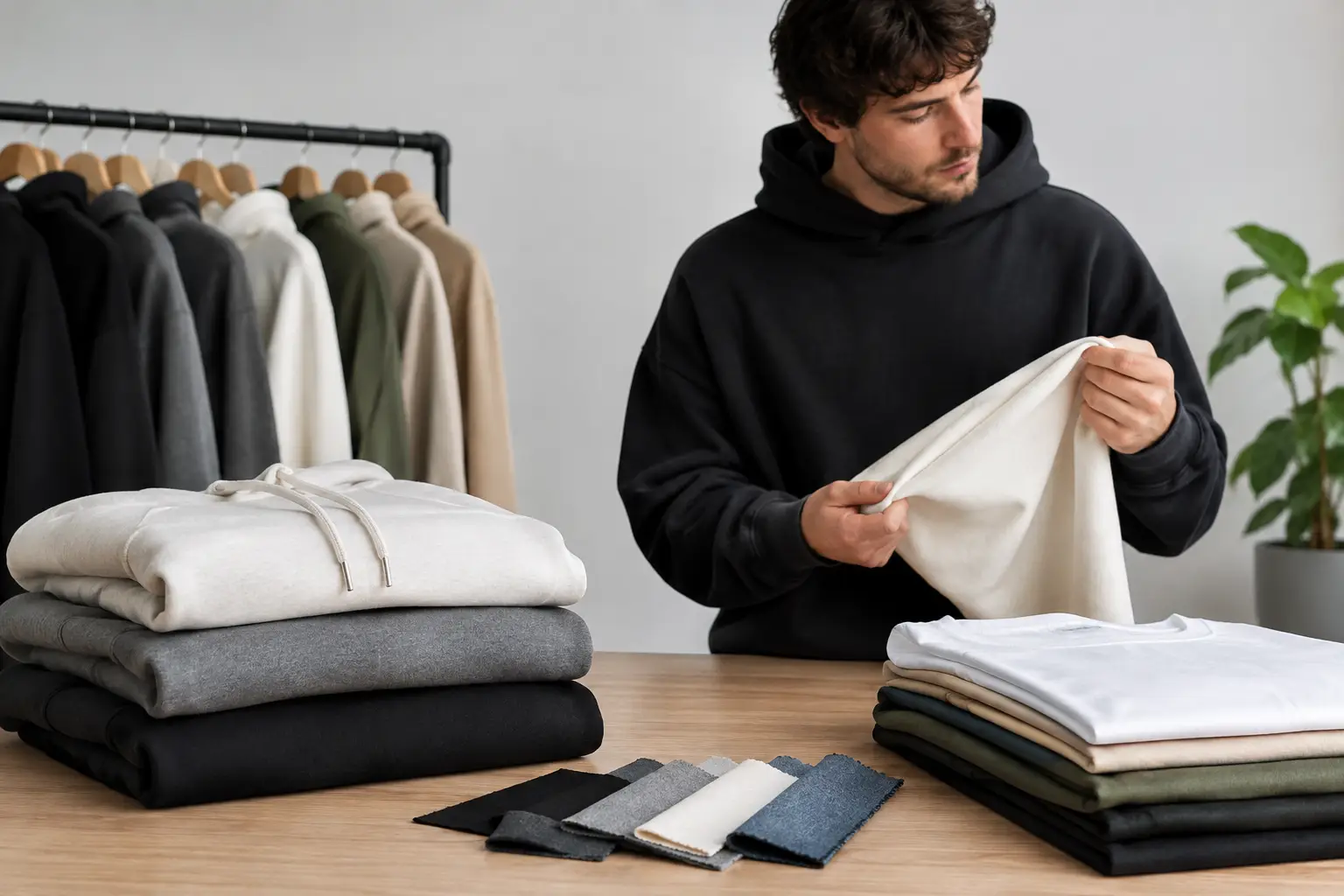
Streetwear Fabric Weight Guide for Better Fits
A graphic can be legendary, but the blank underneath decides whether people wear it once or reach for it every week. This streetwear fabric weight guide breaks down the numbers behind that decision, so your NFT merch carries the same conviction as the community, art, or collection it represents.
Fabric weight is not fashion trivia. It shapes the silhouette, the print result, the season, and the feeling of value when a package lands. A featherweight tee may be perfect for a sun-heavy festival drop. A heavyweight hoodie makes a PFP-inspired design feel like a uniform. Neither is automatically better. The right move depends on how and where your community lives.
Streetwear Fabric Weight Guide: Start With GSM
Fabric weight is usually measured in GSM, or grams per square meter. Think of it as the density of the fabric, not a direct score for quality. Higher GSM generally means more material in the same area, which can create more structure, warmth, and durability. Lower GSM often feels lighter, more breathable, and easier to layer.
GSM does not tell the whole story. Fiber type, yarn thickness, knit construction, brushing, and garment wash all change the final hand feel. A 220 GSM cotton tee can feel different from another 220 GSM tee if one uses a tighter knit or a heavier yarn. Still, GSM is the clearest starting point when you want to compare streetwear blanks without relying on vague words like “premium.”
For tees, the useful range usually runs from roughly 140 to 280 GSM. Sweatshirts and hoodies commonly sit between 280 and 500 GSM, while heavyweight outerwear can go beyond that. Those numbers should guide expectations, not replace touching the garment when possible.
T-Shirt Weights and What They Say
A T-shirt is the base layer of most community merch. It needs to support the art while holding its own in a fit check. Here is how the main weight bands tend to wear.
Lightweight: 140-160 GSM
Lightweight cotton tees are breathable, soft, and easy in hot weather. They work for summer activations, beach-ready capsules, or oversized artwork that needs an easygoing base. They also pack small and feel less restrictive under an open shirt or jacket.
The trade-off is presence. Lightweight fabric can cling more closely to the body, show a little more texture underneath, and lose structure sooner with frequent wear. If your design relies on a boxy silhouette or a big chest print with sharp visual impact, this category may not deliver the weight you expect from a streetwear piece.
Midweight: 170-200 GSM
Midweight is the everyday sweet spot. It has enough substance to feel considered, while remaining breathable enough for year-round wear in many climates. This range suits clean logo tees, artist collabs, and collectible graphics designed to move from screens to real life without feeling costume-like.
For many Web3 communities, a midweight tee is the safest first drop. It is accessible, practical, and flexible across global audiences. It also layers well under a hoodie or overshirt, which matters when a holder wants to rep their project beyond one season.
Heavyweight: 220-280 GSM
Heavyweight tees are where the streetwear signal gets louder. The fabric has more drape and structure, often creating a wider, boxier shape that holds away from the body. A well-cut heavyweight tee can make a minimal logo, embroidered mark, or full-back digital artwork feel intentional before anyone reads the design.
This is a strong choice for premium drops, limited releases, and art that deserves a gallery-wall frame. It feels substantial in hand and tends to photograph well, particularly with dropped shoulders and a relaxed fit. The compromise is heat. A 260 GSM tee may be too much for humid summers or people who prefer a closer, lighter layer.
Hoodie and Sweatshirt Weight: The Real Cold-Weather Flex
Hoodies are more than warmth. In streetwear, they are portable identity. The fabric weight changes whether a hoodie feels like a casual layer or the anchor piece of an entire fit.
At around 280-320 GSM, fleece hoodies and crewnecks offer a comfortable midweight feel. They are useful across mild fall, spring, indoor events, and everyday rotation. This range keeps the garment easy to layer under a jacket without creating too much bulk.
Between 330 and 400 GSM, you move into the heavyweight zone most people associate with elevated streetwear. The garment gains heft, warmth, and silhouette. Hoods can stand up with more shape, cuffs feel more secure, and oversized fits look deliberate rather than simply oversized. For a collector who wants an item that feels worthy of an exclusive collaboration, this is often the target range.
At 450 GSM and above, you are dealing with serious weight. These hoodies can feel plush, protective, and highly premium, especially when made with dense cotton-rich fleece. They make sense for cold-weather releases and statement pieces, but they are not universal. Higher weight means a higher chance of overheating, longer drying times, and a bulkier feel in shipping and storage. A heavy hoodie is a commitment, which is exactly why it can work for a true grail piece.
Weight Is Only Half the Story
A 350 GSM hoodie can be soft and floppy, or dense and architectural. Construction explains the difference. French terry has unbrushed loops inside, making it breathable and less insulating. Brushed fleece has a soft raised interior that traps heat and gives the familiar cozy finish. Both can use similar GSM numbers but serve different moments.
For tees, look at the knit. Jersey is the standard smooth knit used for most T-shirts. A tighter jersey knit generally feels cleaner, more stable, and better suited to crisp graphics. Open-knit cotton may feel airy and relaxed but can have less of the polished structure that streetwear fans expect.
Fiber matters too. Ring-spun cotton tends to feel softer and smoother than basic open-end cotton. Combed cotton removes shorter fibers for a more refined hand feel. Blends can add stretch, reduce shrinkage, or improve durability, but they may change how a print sits and how the garment ages. There is no universal best composition. The question is whether the fabric supports the drop’s intended identity.
Match the Weight to the Design
A large, detail-heavy graphic benefits from a stable surface. Midweight and heavyweight cotton can help the artwork read clearly and prevent the tee from feeling flimsy under a bold print. Fine line art, small chest logos, and subtle embroidery have more flexibility because they do not need the same visual foundation.
Minimal designs often look strongest on heavier blanks. When there is less artwork competing for attention, fabric, fit, and finishing become the message. A dense black tee with a small embroidered symbol can communicate more status than a lightweight shirt covered in oversized graphics. It is the physical equivalent of letting the wallet speak for itself.
Color also changes the experience. Black heavyweight cotton emphasizes depth and structure. White and pale garments can feel fresher at lighter weights, though heavier fabric helps reduce transparency. Garment-dyed or washed pieces may have a broken-in texture that softens a high-GSM garment, making it feel lived-in rather than stiff.
Choose for the Community, Not Just the Moodboard
A global audience does not share one climate or one wardrobe. A heavy fleece drop can land perfectly with collectors in colder cities while feeling impractical for supporters in Miami, Singapore, or Australia. The strongest merch programs give people options across weights and categories instead of treating one blank as the answer to every release.
Think about the job each item needs to do. A convention tee should be breathable enough for a full day on the floor. A limited artist hoodie can be built for presence, photography, and repeat winter wear. A creator’s daily logo tee needs washability and a fit that does not require perfect styling. On-demand production makes it easier to build a collection with those different use cases in mind, without forcing a massive minimum run.
Fit should stay in the conversation. A 180 GSM oversized tee may feel more streetwear-forward than a 240 GSM slim-cut tee because the pattern changes the silhouette. Read sizing information, compare body measurements to garments you already own, and account for whether the fabric is likely to shrink. Cotton garments can tighten after washing, particularly if they are dried hot.
Care Keeps the Fabric Looking Legit
Weight gives a garment potential. Care determines how long it keeps that character. Wash printed tees and hoodies inside out in cold water, use a gentle cycle, and avoid harsh bleach. Air drying is the safest way to protect print surfaces, color, and shape. If you use a dryer, choose low heat.
Heavyweight cotton can feel stiff after its first wash, then settle into a better drape after a few wears. Lightweight tees may feel softer from day one but need gentler treatment to avoid stretching at the collar. Never iron directly over a print or embroidery. Treat the design as the collectible detail it is.
The best fabric weight is the one that makes you want to wear the piece beyond launch day. Choose breathable fabric when the culture is moving outside, choose dense fleece when the drop needs gravity, and let the garment carry your digital identity with the same confidence it has on-chain.